

How Much Would It Cost To Buy A TV In 1966 Vs. 2026?
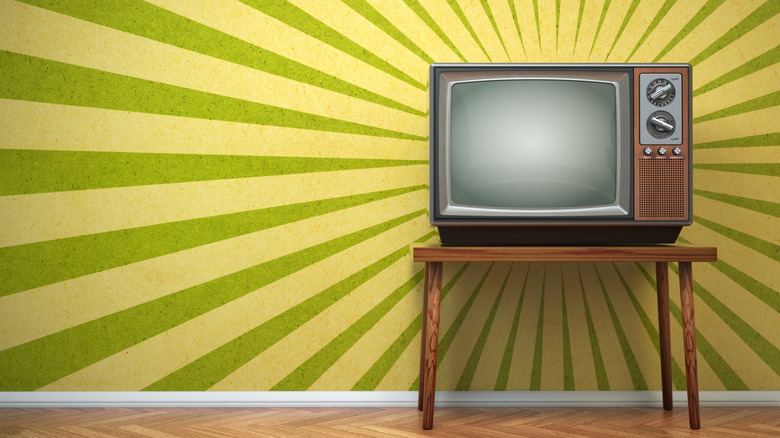
What a difference six decades can make when it comes to consumer goods. In 1966, the U.S. had just wrapped the '64-65 New York World's Fair, where maestros of technological innovation like Walt Disney dazzled millions. Back when Lyndon B. Johnson was president, the tech world was... well, not what it is today, to say the least. Sony was gung-ho over the TC-100 cassette recorder, integrated circuits were introduced to commercial computers, and TVs cost a lot of money—at least compared to how much they cost in 2026.
Looking back then, you'd probably be buying a TV at Radio Shack, Sears, or Montgomery Ward. You were also paying a lot. The average 19-inch color TV back then would run you upwards of $350, which when adjusted for inflation, costs roughly $3,300 in 2026 bills and coins. In 2026, a typical 55-inch 4K TV at Best Buy may only run you as little as $300, or as much as $2,500 for a flagship version with all the latest display tech. This large of a price difference is an example of technological deflation, where manufacturing efficiencies translate to reduced pricing for consumers.
The relative price difference means buying a TV in '66 was a far bigger deal than it is today, and they didn't even have wall-mounting and soundbars. Not to mention the fact that a TV in the '60s was more a piece of heavy furniture than an entertainment hub. You'd needed at least one pair of helping hands to get it from the car to the house. And depending on how small your living room was, you may have been sacrificing walkable floor space for a device whose screen was the size of a submarine porthole.
Pay more and get more, or pay less and get less (sort of)
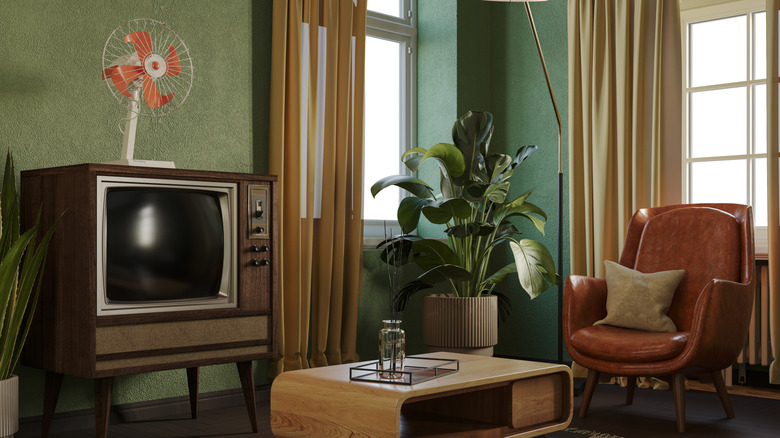
It's not just TVs that have changed since '66, the media landscape is entirely different, too. Back then, the internet was in its infancy and unavailable to the public, so smart TV features and streaming apps weren't anywhere close to reality. All programming was delivered via antenna. The bigger the receiver was, and the higher it was mounted, the better your shot at picking up local broadcasts could be. This was also an era when amplification and other antenna tech wasn't as advanced as it is now; the best you could do (in most cases) was adjust rabbit ears for improved reception.
But whatever stations your antenna picked up were yours to watch for free. Fortunately, antennas still exist in 2026, but free TV is getting harder to come by. FAST (free ad-supported television) platforms like Pluto TV and Tubi help to even the playing field, but we very much live in an age where movies and TV shows are routinely pay-walled, regardless of how new or old the media might be. In '66, you certainly would have paid more for TV hardware, but cable TV wasn't even a thing yet. Just imagine how our parents and grandparents would feel if they knew of the onslaught of paid entertainment they'd one day endure!
At the end of the day, it's a bit of a trade-off where buying a TV in '66 meant a higher upfront cost, but you could start watching free programming as soon as you were able to connect an antenna. In 2026, you'll pay less upfront, but much of the media landscape requires a monthly or annual fee. Inflation, deflation, and a 60-year gap in technology can bring a lot of change. At least some of it is beneficial to our bank accounts.