

8 Best TV Antennas That Just Work
We may receive a commission on purchases made from links.
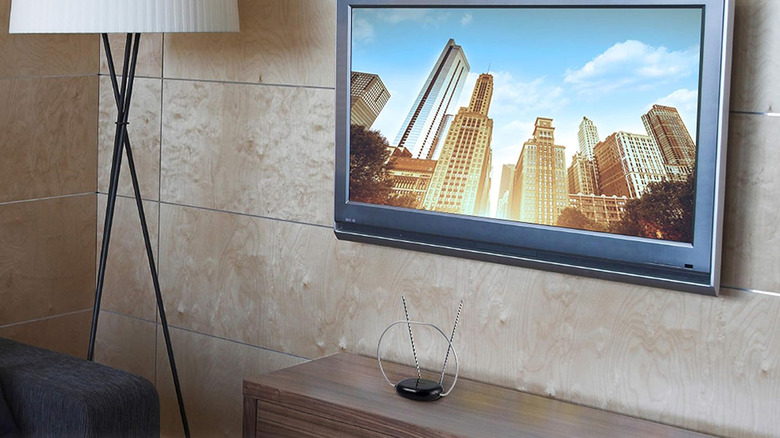
Even though most of our viewing content comes from paid streaming services these days, it's still possible to access free network news and shows via broadcast television. As the name implies, this type of TV signal is broadcast over the air by television stations, which is received by viewers using a home antenna. Despite the fact that cable TV overtook broadcast TV in most homes in the early 2000s, and streaming took over again in the mid-2020s, broadcast television still exists today.
Consumer Reports says that nearly 20% of households with only Internet and no cable use some sort of TV antenna to get local channels. Similar to gadgets that make retro audio feel modern, TV antenna tech has improved by quite a lot, but gone are the days where you had to DIY your own antenna. The FCC helps with this, as it runs a website that lets you put in your address to see which broadcast stations are in your area, and enthusiast sites like Rabbit Ears do the same.
So, if you want a cheap upgrade to your TV-watching experience, installing a TV antenna is actually pleasantly simple to do. You pick a TV antenna, plug it in, scan for channels, and enjoy. If you're stuck on which indoor TV antennas to get, we have assembled a list of these devices based on a mix of positive professional reviews and user ratings as well as modern designs and features.
What to look for in a TV antenna
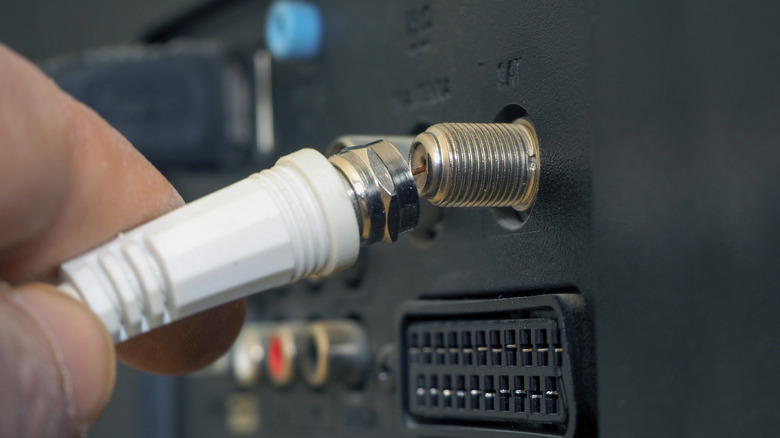
Before we begin, it's important to get some glossary terms and general information out of the way. To start, there are limitations to what TV antennas can do. You may browse around online and see antennas that boast 200 miles or even more of range and you may wonder why we're not recommending them here. The reason is because the Earth is curved, and the maximum reception distance a TV signal can travel is about 70 to 80 miles before the broadcast tower loses its line of sight with your antenna below the horizon.
Secondly, there are a lot of things that can obstruct antenna reception, including trees, nearby mountains, general elevation, and concrete. Thus, even if you do live within range of a tower and you get a great antenna, it's entirely possible that you may still have trouble receiving signal. Aside from those, you also have to point your antenna in the proper direction to get the best signal. No amount of money saves you from this process.
Finally, there is a difference between amplified and regular TV antennas. The biggest difference is range. Amplified antennas are rated to catch signals from further away because the amplifier takes the signal and amplifies it. If you use an amplified antenna when your signal is very strong, the amplifier doesn't know this and will overamplify the signal, breaking it.
Channel Master FLATenna
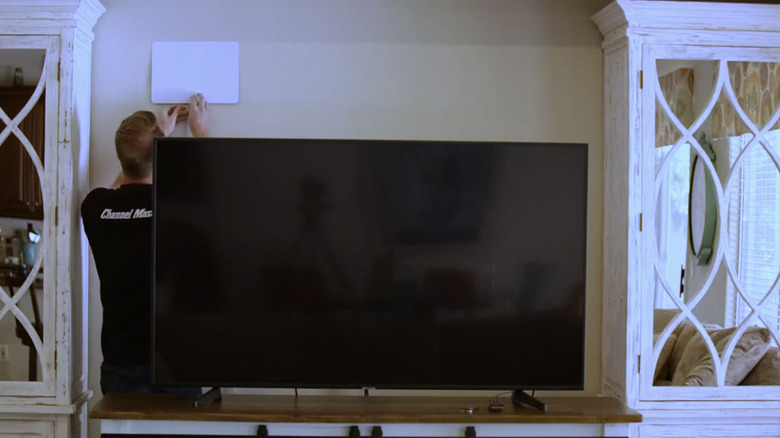
The Channel Master FLATenna is an excellent, basic option for a TV antenna. It's an indoor antenna that is very thin, which allows you to mount it to a wall or a window. It comes in the box with a 12-foot coaxial cable so you can get it nice and high for better reception. This is a non-amplified antenna, so its max range is 35 miles. That makes it best suited for suburban or urban use where you live in an area with good reception.
Setup is pretty simple. You plug it in, run a channel scan on your TV, and then start watching TV. Channel Master recommends moving the antenna around a little bit before sticking it to a surface to make sure your reception is good before permanent installation. Other than that, it just sits there and collects TV broadcast signals for you to watch. It doesn't get much easier than this.
Reviews for this antenna are solid across the board, including pro reviews and reviews on Amazon, so you shouldn't have any trouble getting it to work to its specifications. If you do surf around for this antenna, you may see it under the names FLATenna 35 (35 denotes the range in miles) or the FLATenna Duo, which has one white side and one black side. Rest assured, they are all the same product sans some minor cosmetic variations. Channel Master only sells the Duo now, which it has since rebranded to just the FLATenna.
Winegard FL5500A
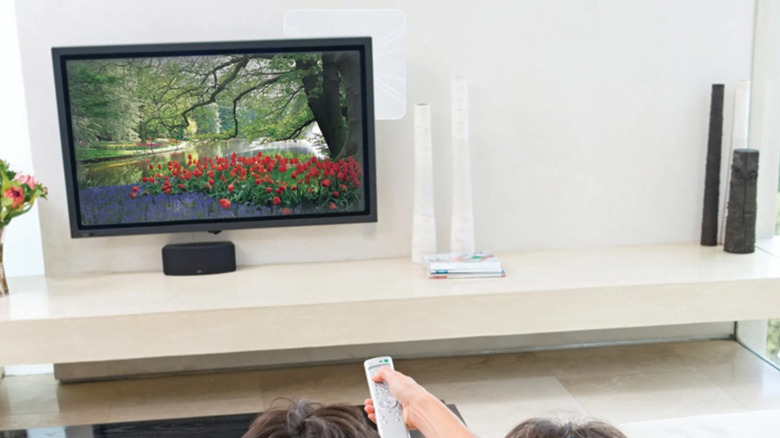
The Winegard FlatWave FL5500A is another flat-style TV antenna that competes directly with all of the other ones. Like the FLATenna and others, it features a white side and a black side, and you can mount either side to make the antenna less intrusive on whatever surface you intend to mount it. This one is heavily recommended by many people out there on the Internet with solid overall pro and customer reviews.
Winegard brings the goodies with this one, packaging the antenna with an 18.5-foot coaxial cable. The company also provides a mobile app on Android and iOS, which helps you locate broadcast towers in your area to give you an idea of the best mounting spots for the antenna. Like the FLEXtenna, the FL5500A has a white side and a black side, and you can mount either one based on your decor. This is also an amplified antenna, so its range is 55 miles, which is longer than the standard 35 miles. Like most flat-style antennas, all you have to do is plug and play, but you do need to plug in a USB cable to your TV to power the amplifier.
Winegard also has the TH-300 model, which has slightly longer range of 60 miles if you need some extra juice, and access to Winegard's RV Halo app, which physically helps you position this antenna for optimal service while providing security features for folks who plan on using it in an RV.
Mohu Gateway Plus
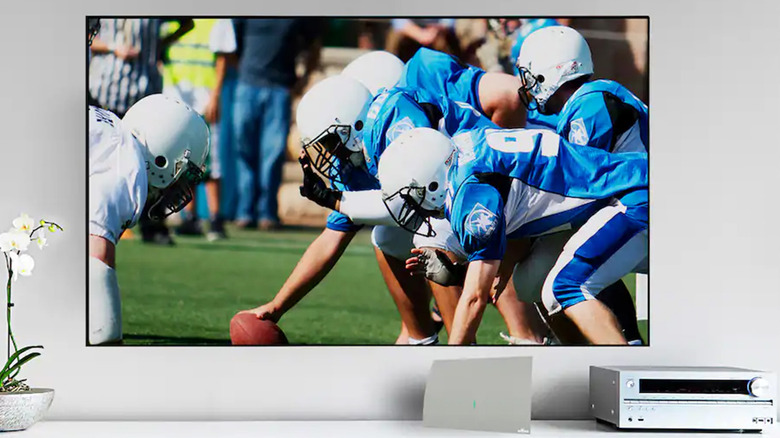
The Mohu Gateway Plus feels like it fits into modern entertainment setups a little easier than the peel-and-stick flat-style antennas. This antenna is a standalone device that you place on your entertainment stand or nearby shelf where it picks up broadcast TV signals and pipes them to your TV. It features a generally sleek-looking design that is omnidirectional. However, the white, smooth side houses all the indicator LEDs, so that's probably the one you'll want facing outward into the living room. Be prepared in case you need to angle it funny to get all your channels.
Mohu packed this thing with an amplifier with an optimal range of 60 miles, which is right up there with other amplified antennas. Customer and pro reviews alike say that the reception is excellent, although as we pointed out earlier, your results may vary based on environmental factors. Even so, most reviews agree that the reception is excellent, even if it has to be put near a window in some homes.
It also features a 10-foot cable, but it should be noted that the cable is permanently attached to this antenna, so make sure it's not set up in such a way where the cable is being bent funny to that it doesn't break. The only other thing to keep in mind is that this one is amplified, so if your signal is already good, the amplifier may actually make it worse. Otherwise, it's a solid piece of antenna tech.
Mohu Leaf 50
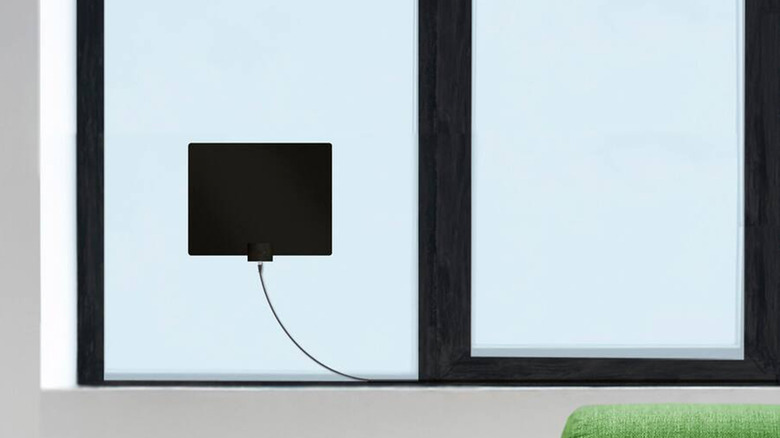
The Mohu Leaf 50 is Mohu's take on the paper-thin flat-style TV antenna. Unlike most of its peers, this one comes in only black, so it may clash with some decors. Otherwise, it's much like other flat-style antennas on paper. You move it around until you find a good signal, stick it to the wall (or window), scan your channels, and watch TV. It is an amplified TV antenna with a maximum range of 50 miles. That should be good enough for most city or suburban use cases. It also comes with a 12-foot coaxial cable and a six-foot USB cable to power the amplifier.
For the most part, reviews of this antenna are largely positive. It has the same pros and cons as other amplified flat-style TV antennas, but Mohu has an extra trick up its sleeve. The amp has a jolt switch, which is fancy TV antenna talk for a bypass switch. That means if you're getting a station that is over-amplified and looking bad, you can turn the amplifier off and watch that channel. It requires a little more manual control, so make sure you have easy access to the amplifier during setup. It's not unique to Mohu, but it is nice that the Leaf 50 has a jolt switch.
There is another model in this family called the Mohu Leaf Supreme Pro. It boasts 65 miles of range and a signal indicator but ditches the jolt switch in favor of a built-in amplifier.
ClearStream Eclipse 2
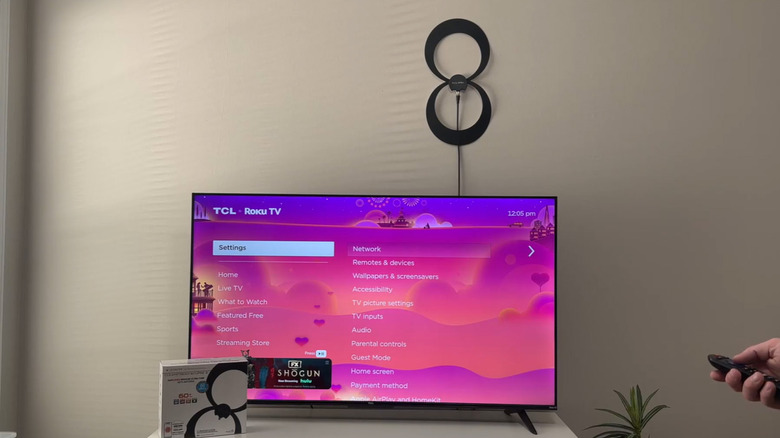
TV antenna makers are getting increasingly more creative with some models, and the ClearStream Eclipse 2 falls into that category. This is a loop-style model was discontinued after its initial release and then re-released due to popular demand, according to the product listing. In day-to-day use, it functions similarly to the flat, square TV antennas. You can hang it on a wall or near a window and the antenna pulls down signals from nearby broadcast towers. You set it up just like any other antenna, scan the channels, and you're off to the races.
Its design is the most unique thing about it, but it does stack almost all of the best possible features. There is an 18 dB in-line amplifier that comes with a jolt switch so you can turn it off if it's over-amplifying a specific channel. The amp plugs into a USB port on your TV and intelligently turns off when your TV is off, so it doesn't burn power. It comes with the usual stuff like NextGen TV as well.
Reviews for the Eclipse 2 are excellent, with reviewers pointing out that its design adds passive gain so that it doesn't rely entirely on its amplifier. It's rated for 60 miles of range and by all accounts, it works really well. The only difficult part is finding one, as it appears to only be sold on Antennas Direct's website. You can find even stronger models on Amazon, but we'll get to that shortly.
Philips Rabbit Ears
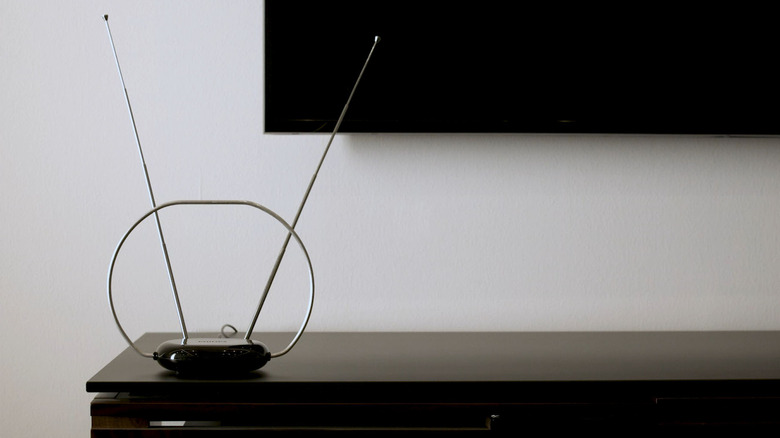
You may be surprised to learn that some companies still produce and sell the old-school rabbit ears like you used to see on TVs back in the 1980s. The Philips Rabbit Ears is arguably the best example. This is a standalone device that's meant for an entertainment stand or a shelf, and it comes with rabbit ears along with a loop to help bring in the signal better. This is also one of the least expensive options on the entire list, with the Rabbit Ears coming in at a scant $13, and you can buy a pack of six for $80 if you really want to.
This is one of those products where what you see is what you get. You set the device somewhere, plug it in, move it around until the signal is good, and then leave it there. This is not amplified, so its maximum range is 30 miles, making it best suited for households with strong broadcast signals. The five-foot coaxial cable is a bit short, but otherwise, there's very little to complain about here. Despite its old-school nature, it still supports NextGen TV. You also get a limited lifetime warranty.
There aren't a lot of professional reviews of this device, but there are a few and they all agree that this is a solid overall TV antenna. It's also featured on Consumer Reports' list of the best TV antennas. Based on all of that data, you really can't do any better for under $20.
Best Buy Essentials Indoor TV Antenna
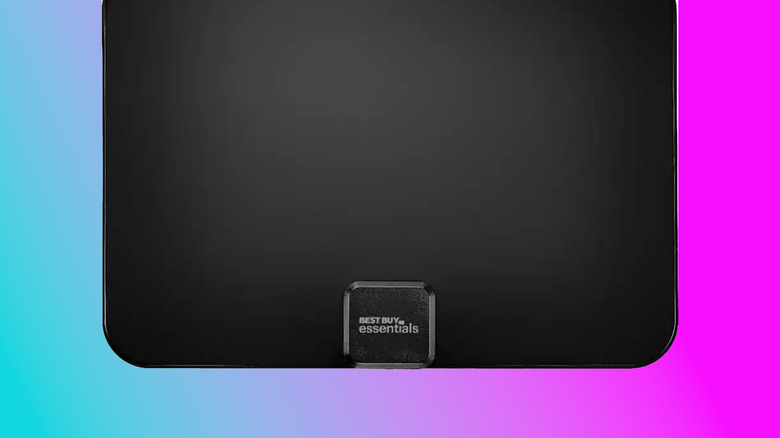
Philips has the market on the best budget TV antenna across all styles, but the Best Buy Essentials Indoor TV Antenna is arguably the best inexpensive flat-style antenna on the market. It costs a scant $20, which is much less than basically all of the other flat-style models on this list. There is the reality that you get what you pay for, but when compared to other budget TV antennas, this one does quite well and is consistently recommended as a value option if you look up TV antennas across the Internet.
It's quite similar to other flat-style TV antennas. You hang the thing wherever the reception is best, run the 10-foot coaxial cable to your TV, scan channels, and enjoy. The product is no frills, so there aren't any weird or special features, and that may be exactly what you're looking for. It doesn't have an amplifier, so the maximum range is 35 miles, similar to the FLATenna. There is a black and white side to help match your decor better. Otherwise, that's pretty much it. It does support NextGen TV, so it's also futureproofed for now.
Should you find yourself in need of an inexpensive amplified model, there is the Best Buy Essentials Amplified Indoor TV Antenna. It uses a slightly different design that lets it sit on a TV stand and an amplifier with a range of 50 miles. It's definitely much cheaper than most amplified TV antennas, but the reviews are middling, so we advise caution if you decide to check it out.
ClearStream MAX-XR
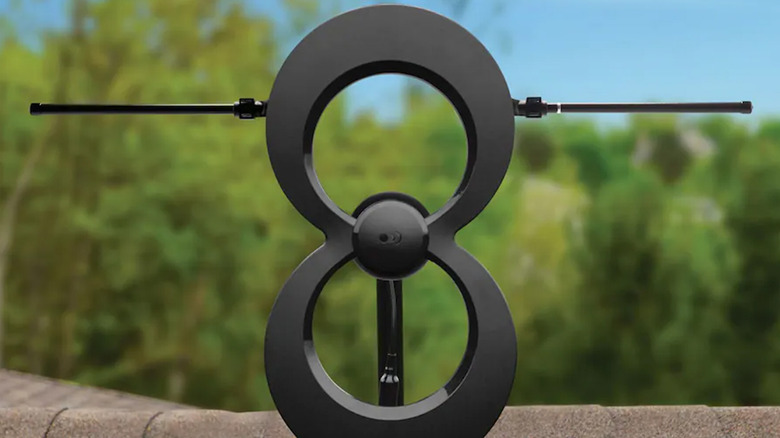
The ClearStream MAX-XR is the last option on the list, and it's arguably the most interesting. This antenna is in a family of indoor-outdoor antennas that can be mounted inside your house or, if the reception there is poor, can also be mounted on your roof. Devices like these are also suitable for mounting in attics, where their size won't be an eyesore in your living room but still much higher to get better reception. This is a multi-directional antenna with a range of 60 miles.
There's no doubt that this one is a bit different. All the other products on the list are made to be displayed in your living room. This one can be, but it's a little under a foot and a half tall and with the antennas fully extended, a little over two feet wide. It's hard to make that look good in a living room but the design is like that so that it can get as much signal as possible. Believe it or not, it gets that 60 miles of range without an amplifier. There is an amplified version of the MAX-XR if you need that little extra juice.
These antennas are made for rural areas. They pull in signal from about as far as is physically possible and they're durable enough to be mounted outdoors. ClearStream also sells the 2V and 4V, which are even bigger than the MAX-XR, but these really seem like they're more meant for attic or outdoor use.
How we chose these TV antennas
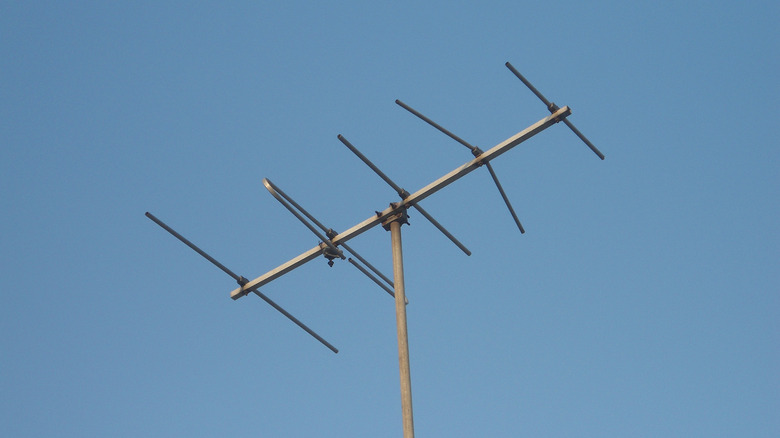
Surprisingly, it proved to be quite difficult to find eight indoor antennas to recommend based on our methodology. For starters, multiple antennas on the list, like the FLATenna, have been sold under other names and rebranded over the years, making it hard to track down devices that had good pro reviews, good customer opinions, and were still on sale. Given the amount of potentially unavoidable problems with interference and over-amplification, there was extra caution taken when any reviewer, pro or amateur, noted poor reception, just in case the problem was brick walls or trees instead of a problem with the units themselves. We also used more traditional authorities like Consumer Reports and recommendations on Reddit to help cull the list down further.
The list above contains the best products we could find, and they should work for most people. When installing, make sure to mount them high for better reception, but, as always, you don't want to have your TV mounted too high, as that's not optimal. Just remember that any antenna you buy may require some calibration, not unlike your smart TV, and taking a little extra time to do it right will yield more positive results.