

5 Sci-Fi Costumes And Props Reused For Completely Different Movies And TV Shows
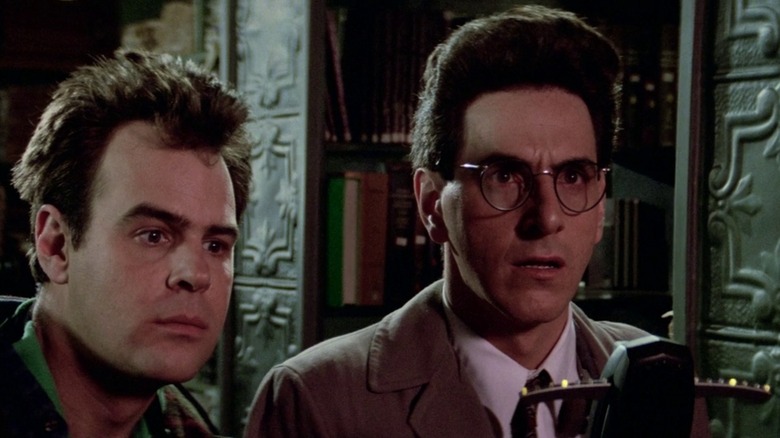
Movies and TV shows are not cheap to produce. Even after money is spent on writers, actors, and equipment, you still need to pay for sets, costumes, and props. Sure, CGI can help save some money, but actors never interact with them with the same level of physicality. But what happens when a movie or show is done shooting? Sometimes props are destroyed (especially if they came from a Stanley Kubrick film), and other times they're saved for personal collections, but some costumes and props are stored in vaults for later use.
Given the downright suffocating number of movie sequels seen these days, many costumes and props are saved for later use in order to provide a sense of consistency — and cut down on production costs. But every now and then, production teams dig into these filmography repositories and use them for projects with almost no connection to their original purposes.
While sometimes prop teams will reuse the costumes and props of lesser-known movies for their films and shows, once in a while they utilize something a little more recognizable. Maybe it was for a reference, maybe it was just easier to create a specific look by borrowing another studio's vision. Either way, here are some famous costumes and props from sci-fi films and movies that were reused for completely unrelated properties.
Godzilla
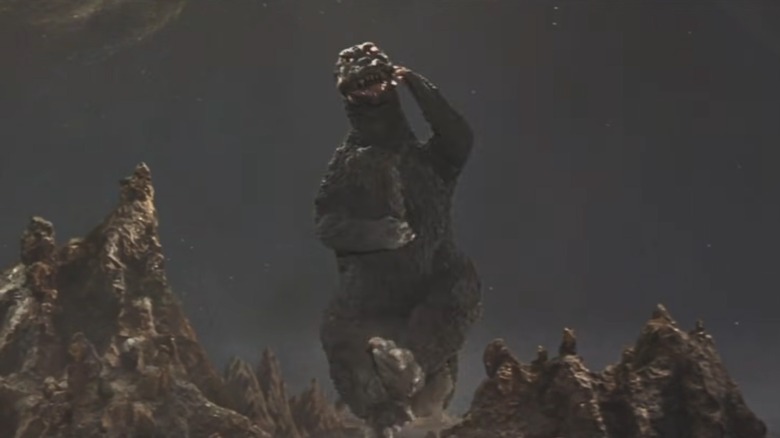
Long before he was a CGI creature, Godzilla was the original rubber-suited monster. Actors would step into suits that weighed as much as 220 pounds and stomp around miniature sets. While costumers often designed all new outfits to fit different aesthetics (or to give the actors more flexibility), a few Godzilla suits were reused between films. And one of the monster's co-creators used early Godzilla costumes for his personal projects.
While Ishirō Honda directed and wrote the first "Godzilla" film, Eiji Tsuburaya handled the special effects. As such, he is widely considered the father of the Japanese "tokusatsu" (literally "special effects") genre, and in 1963, he founded his own company: Tsuburaya Productions. This studio is mostly known for the "Ultraman" franchise, a series about titular hero (not to be confused with the DC villain of the same name), who grows to gigantic sizes to fight equally gigantic aliens and monsters.
For "Ultraman's" first season, most monster costumes were built from scratch, but one creature, Jiras (alternatively spelled Jirahs and Jirass), is infamous for reusing the head and body of two different Godzilla suits, giving the result a new yellowish-green paint job, and stapling a frill around the neck. Sadly, Jiras never returned in subsequent episodes or seasons, but its legacy lives on. On a side note, another monster, Gomess, which debuted in the prequel series "Ultra Q," was also originally a heavily modified Godzilla costume, but the changes were so extensive that Gomess returned later down the line. And to make the running gag come full circle, the Gomess that appears in the opening credits of "Shin Ultraman" is just a modified Shin Godzilla suit.
Bossk's flight suit
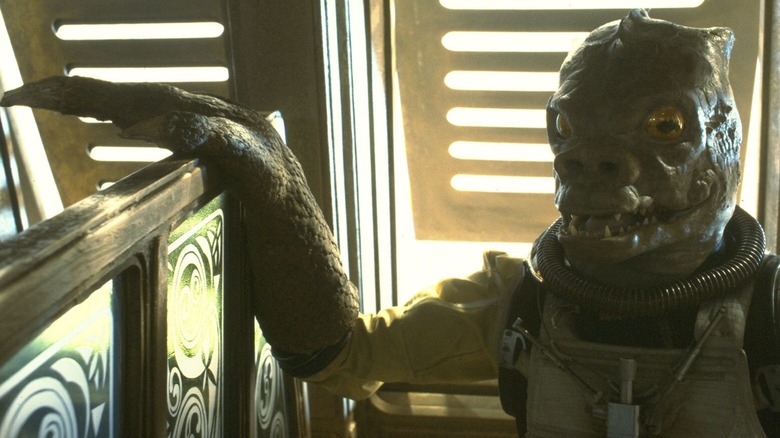
The "Star Wars" galaxy is full of iconic and recognizable aliens and characters. Sure, just about everyone loves Wookiees and their lore, but some characters left an impact despite only appearing for a few seconds. Just look at Bossk, the bounty hunter who effectively kickstarted the Trandoshan species and their antagonistic relationship with Wookiees. All of the bounty hunters in the original "Star Wars" trilogy stand out in their own way, but Bossk stands out more because he is basically a giant lizard person in a flight suit.
However, his flight suit doesn't look like any others seen in the "Star Wars" films because it is from a completely different universe. Not that audiences would know unless they lived in the U.K. almost two decades prior, as the outfit previously appeared in the "Doctor Who" serial "The Tenth Planet." This multi-episode story is noteworthy for both introducing the Cybermen and the concept of Time Lord regeneration — William Hartnell was replaced by Patrick Troughton in the final episode.
Interestingly, the suit wasn't originally a costume. It's actually a modified Windak high-altitude, high-pressure suit that was manufactured in the 1960s, which itself was modified from similar flight suits designed for pilots during World War II. Sometimes you can recycle a prop or costume multiple times if you take good care of it.
P.K.E. Meter
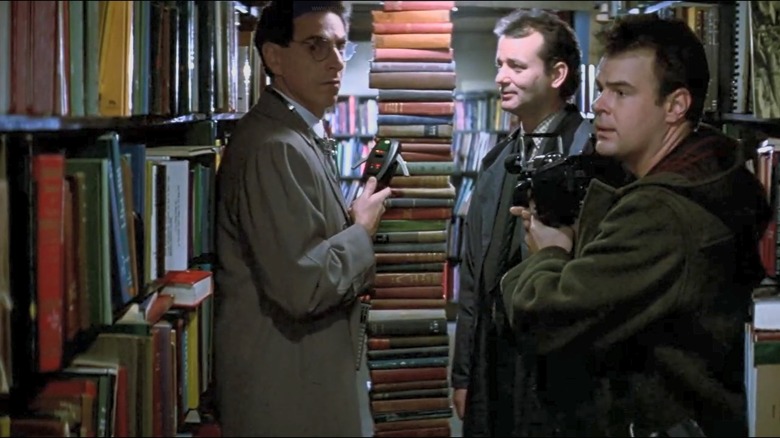
What is the most iconic aspect of the original "Ghostbusters" movies? Is it the characters (one of whom was almost cut from the sequel), the comedy, or the gadgets? Probably the gadgets, given how many people like to dress up not as existing characters but as their own Ghostbusters, complete with proton packs and ghost traps. In fact, Several films reused the P.K.E. Meter. In the original "Ghostbusters" films, the humble P.K.E. Meter is used to detect paranormal activity and residue.
While Egon Spengler's homemade ghost tracking device was redesigned for the "The Real Ghostbusters" cartoon (which ABC almost ruined with unnecessary meddling), the original P.K.E. meter's moving "arms" and flashing lights look just sci-fi enough to make a convincing piece of alien tech. Some filmmakers ran with that idea. The first and most noteworthy instance of reusing a P.K.E. meter comes from "They Live," the '80s sci-fi classic that stars Rowdy Roddy Piper. While the film is touted as an alien invasion movie, that does the synopsis a disservice, because in the movie, the aliens aren't invading; they've already won and control the world through subliminal messaging.
Although they do maintain a sizable force of active soldiers and use recycled P.K.E. meters as both communication and movement detection devices. The other — and less noteworthy — film to use a P.K.E. prop is "Suburban Commando." By sheer coincidence, this film also stars another famous wrestler, Hulk Hogan; only this time he's an alien (one of the few good ones from movies of that time) and uses the P.K.E. meter to track a stolen weapon.
Golden Chachapoyan Fertility Idol
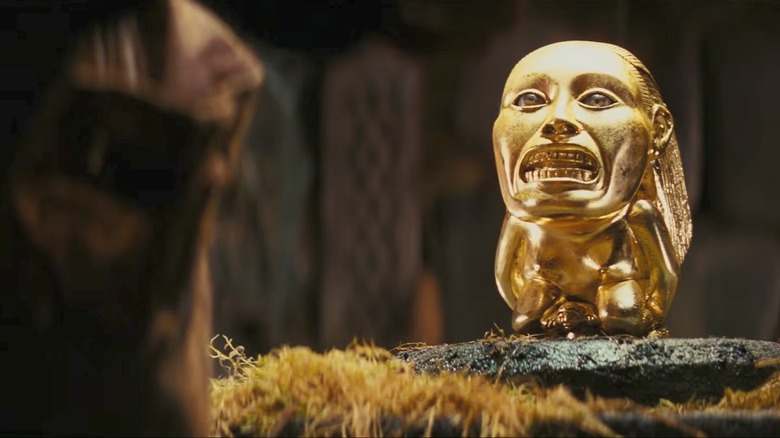
The opening sequence to "Raiders of the Lost Ark" is one of the most iconic segments in cinema history. It perfectly introduces Indiana Jones (and his fear of snakes) to audiences, not just showing his wit, but his resourcefulness too, when Doctor Jones retrieves a golden idol and runs from a rolling boulder. This particular segment has been referenced and parodied to countless times, but the actual idol has appeared in more movies than just Indy's first outing.
The golden idol (the Chachapoyan Fertility Idol) hasn't grown past its original use as a symbol of wealth and treasure. One of the first instances was in "The Majestic," a movie about a Hollywood screenwriter suffering from amnesia while also under suspicion of being a communist. The story revolves around the titular Majestic movie theater, and one of the first films it shows is the screenwriter's very own "Sand Pirates of the Sahara." During this film-within-a-film segment, the golden idol is a piece of treasure found in an ancient Egyptian tomb ... and used to knock out a professor.
As for the idol's second appearance, you can find it in "Spy Kids 2: Island of Lost Dreams" as a piece of random loot in a treasure vault. Admittedly, the Chachapoyan Fertility Idol has appeared in more than just these three films, but "The Majestic" and "Spy Kids 2" are the only instances of the prop popping up in unrelated properties. Everywhere else, it's either a callback to early "Indiana Jones" adventures or one of several "Indiana Jones" Easter eggs placed in "Star Wars" films.
Mobile Infantry Armor
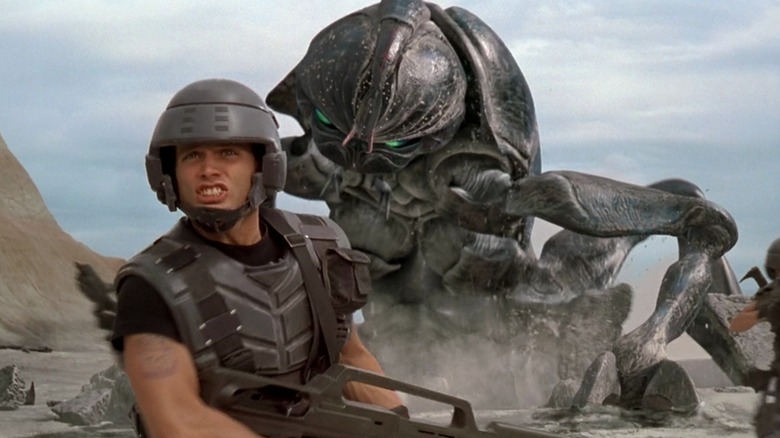
Many props and costumes become iconic and recognizable due to signature features. A rubber dinosaur suit can come in a variety of shapes, but give it spiky, coral-like dorsal plates, and it's suddenly Godzilla. A costume can also become iconic because it looks generic enough to appear in numerous sci-fi settings. In the film "Starship Troopers" — which started as a box office bomb but eventually blossomed into a franchise – the mobile infantry wear gray armor and helmets.
These props have a bit of greebling detail but are otherwise so spartan they border on generic, which was partially the point. Numerous studios jumped on this fact and borrowed the costumes for their projects. Sometimes the props were slightly modified to fit an aesthetic (the helmets were painted black for the failed 2001 "Planet of the Apes" reboot), but for the most part, they were left as is.
Due to the intentionally sparse design of the "Starship Trooper" armor, the costumes have appeared in probably more movies and shows than any other sci-fi props out there. You can see Alliance troops wearing them in several episodes of "Firefly," and the armor was also used in "Power Rangers Lost Galaxy," which is fitting since the main villains of that season are alien insects. The mobile infantry armor was even used to kit out CONSENT soldiers in the U.S./Japanese collaboration "G-Saviour," which is essentially, if not literally, a live-action "Gundam" movie in everything but name.