

China Dominates This Food-Tech Industry, And It's Not Even Close
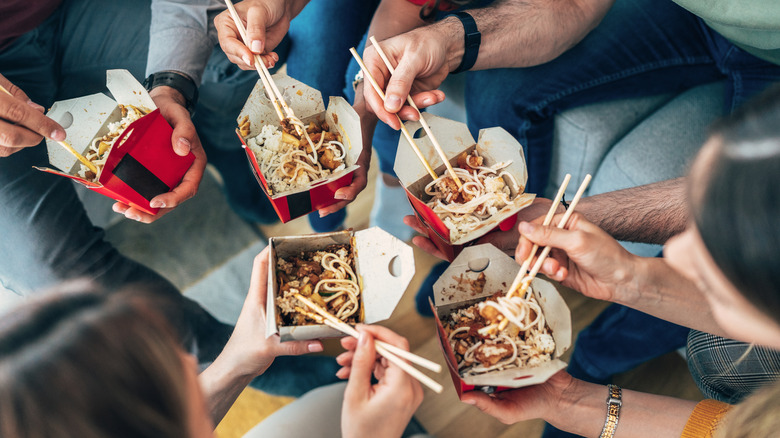
When was the last time you used a food delivery app? If you're in the U.S., it might have been a while ago, considering 33% of Americans order delivery once every month or less. If you're in China, however, it might have only been a few days. This is the world's largest market for food delivery, with a 2022 study finding over 60% of respondents ordered food multiple times a week.
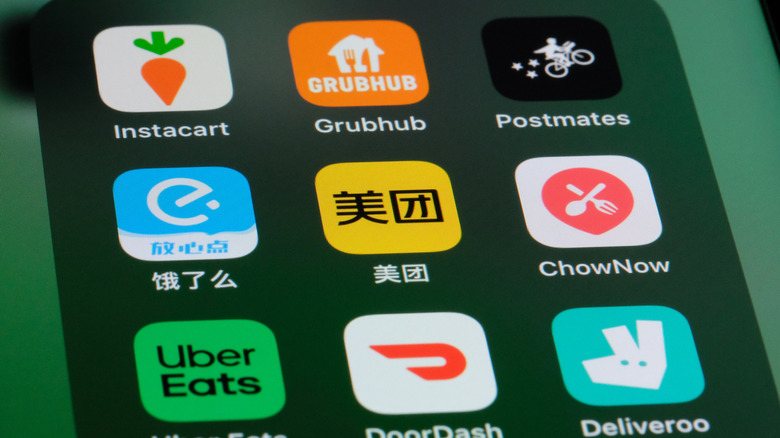
Just like in the U.S. where DoorDash reigns supreme, China has one major player in this space: Meituan, which is one of the most popular apps in China. Meituan currently has a market share of over 65%, though in recent years, it's faced steep competition from Taobao Shangou (formerly called Ele.me) and JD.com. However, despite a thriving market, until recently, Meituan was effectively losing money on each order.
The reason is simple: Meituan wanted to remain the market leader and invested heavily in subsidies, hoping to draw in new customers. Its rivals followed suit, ultimately spending billions of dollars and fanning the flames of a price war that regulators called "irrational competition." While good for consumers, this ultimately led to the top seven food delivery platforms being fined a collective 3.6 billion yuan (approximately $527 million USD) for failing to verify vendor's licenses and follow proper delivery safety procedures.
Why is food delivery such big business in China?
China is the world's second most populated country, but having a large number of citizens doesn't automatically explain why food delivery services are so popular. Research indicates that students order the most, followed by company employees, and over 87% live in cities or towns. This suggests time may be a contributing factor, though convenience and not wanting to cook have also been shown to play a part.
Price is significant, too — people typically spend less than 20 yuan ($2.98) per order and fewer than 5% would order if delivery fees exceeded 8 yuan ($1.20). When you compare this to DoorDash, which tacks on service fees, delivery fees, and small basket charges, it's easy to see why Chinese food delivery apps are an appealing option.
Food delivery is a huge industry, with Meituan alone employing more than 7 million drivers in 2025 — that's roughly the population of Indiana! With China's market projected to reach $925.8 billion by 2032, this doesn't seem likely to change any time soon. That said, China is no stranger to innovation, especially in this industry. Whether it's handling 250 million orders per day, delivering food via drone, or opening a restaurant staffed entirely by robots, China has shown that food-tech is just another market to be disrupted.