

These Discs Are Rated To Last For Centuries, Not Years
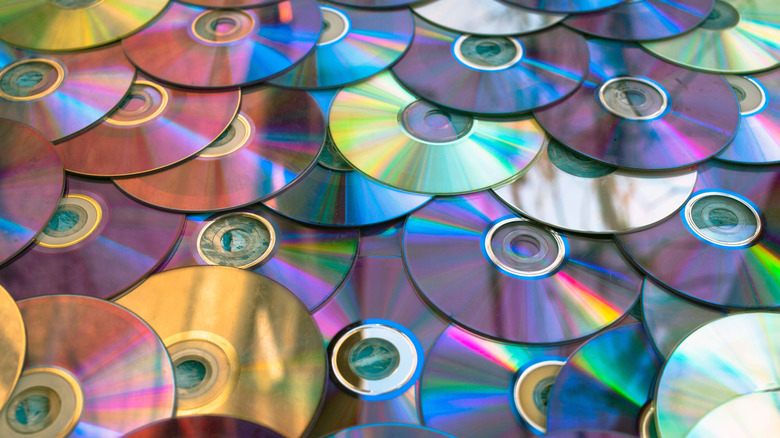
People have been sharing information for thousands of years, etching stories, records, and traditions into stone walls, wood, or clay. Despite humanity's technological progress, however, much of its digital culture and media could be lost to future generations. This is because the physical media currently used to store modern music, movies, and games will eventually degrade until it becomes completely unusable.
There may be an alternative, though: M-DISC. These may not look particularly interesting, but they're rated to survive up to 1,000 years, meaning they far exceed the lifespan of a typical DVD or Blu-ray. It's not just the creators saying this, either; in 2009, the US Department of Defense subjected a variety of archival DVDs to extreme temperatures, humidity, and light exposure. Only the M-DISCs made it through the testing with no data degradation. The National Institute of Standards and Technology conducted its own testing in 2022 and concluded that M-DISCs can preserve data for at least 100 years.
So what makes these discs so special? Data is typically written to optical discs by using lasers to interact with an organic dye layer, creating changes that the reader later converts into information. M-DISCs instead physically engrave data into a rock-like layer, preventing long-term degradation, but they can't be rewritten like some other media.
Why the M-DISC takeover might take a while
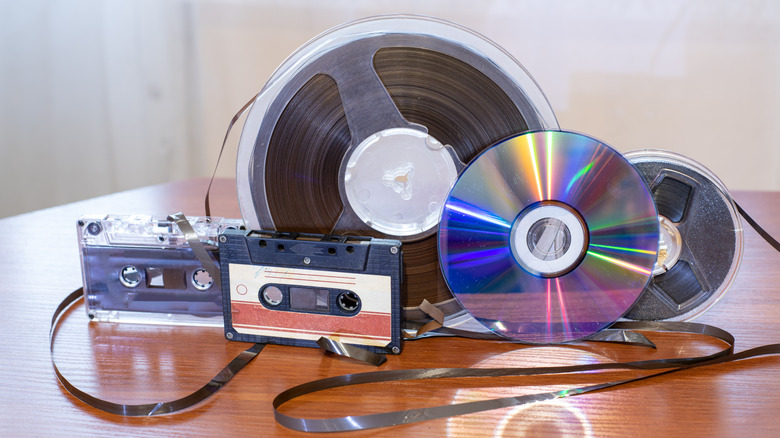
Unfortunately, M-DISC isn't a perfect solution for data archiving. While the discs themselves may last centuries, the devices used to play them likely won't. It's hard to imagine future civilizations manufacturing replacement parts for a 1,000-year-old media player when we may use completely different energy sources, languages, and technologies.
There are practical considerations too. For instance, premature failure is always a risk, with some tests revealing bad sectors after less than a year in direct sunlight. They're also more expensive, with 10 blank M-DISCs retailing for around $25 compared to $16 for Blu-rays. Finally, another organization could create the dominant medium, beating M-DISC like VHS beat Betamax in the 1970s. For instance, Microsoft is working on Project Silica, which involves etching data directly into borosilicate glass.
For now, at least, M-DISC seems unlikely to overthrow its more established rivals. Still, it never hurts to consider long-term data storage, since most hard drives fail before their time. If you have precious memories you'd like to pass down, consider saving them on something more secure than an old thumb drive. M-DISCs can hold up to 100GB of data, but to avoid putting all your eggs in one basket, make multiple copies of anything important.