

4 Reasons To Buy A Laser Printer Instead Of Dealing With Your Inkjet
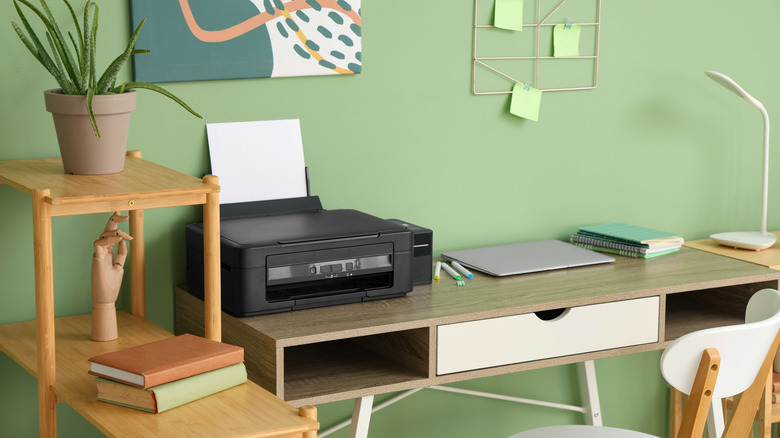
If you've used a printer in the last decade, there's a solid chance it was an inkjet model. This is the most common type, representing around 75% of all consumer printer sales in 2025, and they work by spraying tiny droplets of ink onto the page in a pattern that eventually resembles text or a picture. However, depending on what (and how much) you print, a laser printer may actually be a better fit.
One big reason is that laser printers work in a completely different way from inkjets. The laser transfers an image of whatever you're trying to print onto a photosensitive drum, which uses static electricity to attract a toner, which is typically a powdery printing medium. This toner is then melted and pressed onto the page. Although laser printers are often associated with office use, there are plenty of smaller, more cost-effective models intended for everyday printing at home too. You're not limited to black and white either, with prices for color laser printers usually starting at around $200.
So is a laser printer right for you and more importantly, is moving away from inkjet worth the hassle? This post will explore some of the biggest advantages of a laser printer so that you can make an informed decision and ideally, never have to clean a clogged print head again.
Laser printers have lower operating costs
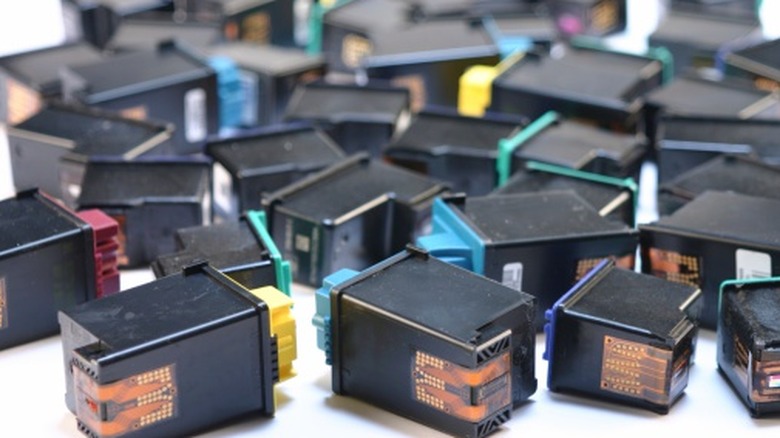
Inkjet printers are practically a default choice for so many people because they typically cost less upfront (frequently retailing for under $50, or free when buying a computer). But, over time, operating costs can build up. If you're running a business that requires you to print frequently, you probably already be spending more than you'd like replacing ink cartridges. A standard HP cartridge is enough for roughly 300–500 pages, whereas toner cartridges can easily double this without being too much more expensive.
There are two main caveats. First, prices vary between cartridge manufacturers and printer models, with some toner cartridges costing more than inkjet cartridges, and vice versa. Second, estimated page yields assume you're covering 5% of the page. Naturally, the actual number of printed pages will decrease as page coverage rises–say, for pictures or colorful presentation decks.
Laser printers are great for occasional use too, because unlike ink, toner never dries out. This means you can safely put your printer away when it's not required and won't have to worry about whether it's still going to be usable the next time you need it.
They're better for high-volume printing
Let's say you need to print a lot of material as quickly as possible. Perhaps you're creating shipping labels, flyers, or handouts. Laser printers really outshine the competition on tasks like these, often cranking out up to 40 pages per minute. For context, many entry-level inkjet printers struggle to deliver more than 15 pages per minute.
It's not just speed that gives laser printers the edge here, though. Most inkjet printers aren't designed for this kind of heavy usage in the first place. As a result, they usually don't have the same level of paper tray capacity, and as such, require more frequent manual intervention. Further, laser printers tend to be rated for higher monthly print volumes, making them the better choice for consistently heavy usage. Trying to push through using an inkjet isn't just inefficient, it increases wear and tear beyond intended limits, shortening your printer's lifespan.
Even though laser printers are better for higher volumes, you can't run them 24/7 without a break. Melting toner takes heat, and too much for too long can hurt components, making paper jams become more likely and potentially causing irreparable damage. Most laser printers have built-in temperature monitoring systems to avoid things getting that bad. You can also combat the heat by ensuring adequate ventilation, splitting large print jobs into smaller batches, and staying within the manufacturer's guidelines for continuous usage.
They offer higher quality prints (at least for text)
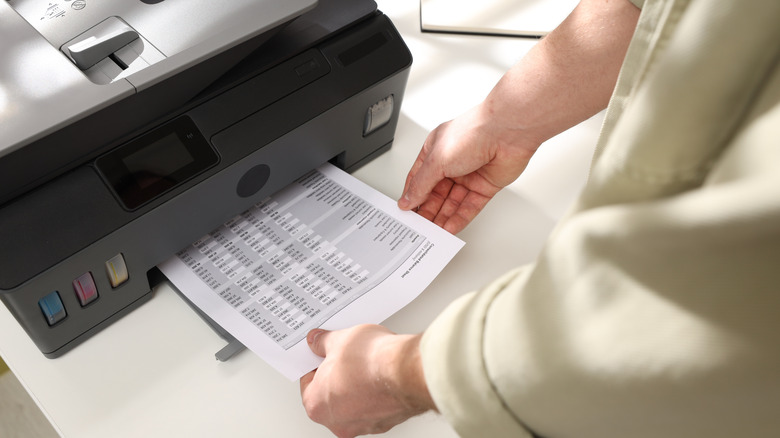
If your goal is to create high-quality printouts with sharp, clearly-defined text, laser printers are a far better choice. That's because of the physics behind ink itself. Ink is liquid, and as a result when it's placed on a page it doesn't stay there. Instead, ink seeps into the paper itself, spreading beyond where it originally landed, ultimately causing outlines to become less defined. Toner, on the other hand, is fused to the page with heat, creating text that's crisp, clean, and easy to read.
This can be a double-edged sword at times, though. For instance, laser printers can struggle to create smooth gradients, making them less suitable for printing photos with smooth color transitions or lots of shadows. That's part of why inkjet printers remain the go-to option for anyone primarily printing detailed photographs.
Another benefit of toner is that it's generally more resilient than ink. Not only is it more resistant to smudging, it's doesn't fade as much over time–assuming the documents are kept away from water and UV light. The quality of the paper used and exact composition of the toner have a part to play too, of course, but those qualities make it ideal for offices and archival needs.
Maintenance is more straightforward
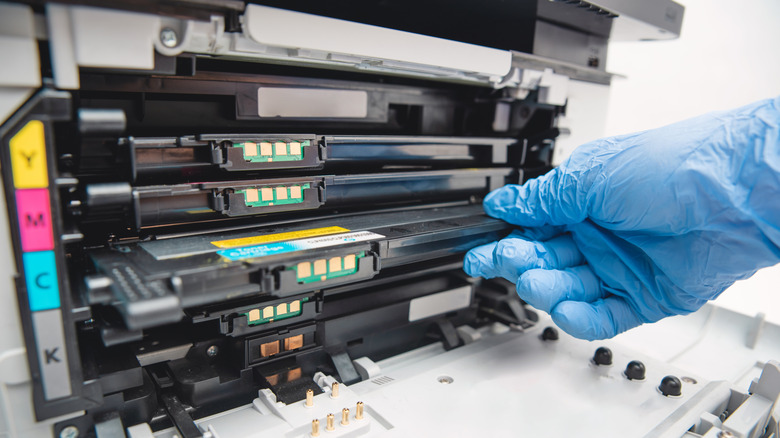
Finally, laser printers require less maintenance overall, and most issues have a simple, no-fuss solution. Toner is unlikely to clog or leak unless the cartridge fails, and while humid environments can cause the actual toner in the cartridge to clump, fixing it is usually as easy as giving it a gentle shake. You will occasionally have to clean the drum but there's often a built-in slider that makes this process quick and painless.
The tradeoff is that laser printers are more complex internally than inkjet printers, which means that you'll pay more for repairs. Generally, you can expect to pay between $95-150 hourly plus the price of any replacement parts. Take good care of it, though, and your printer could last for a decade or more. For additional longevity, make sure you choose your printer carefully–-Consumer Reports found that Lexmark and Xerox laser printers are less reliable, for example, so maybe consider Canon, Epson, or other reputable brands.
Laser printers might not be for everyone, but there's no need to choose an inkjet just because they're the most popular option. If you rarely print photos and are looking for an affordable way to create lots of high-quality documents, a laser printer might be just what you need.