

Your AMD GPU Can Also Use Nvidia DLSS 5 Now - But There's A Catch
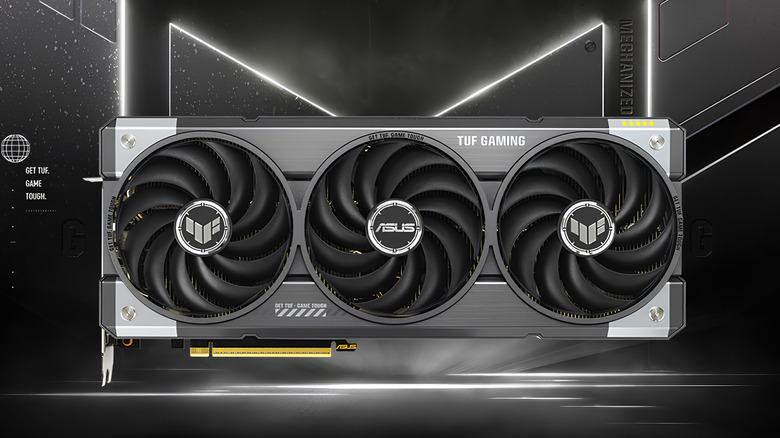
Does an AMD GPU have the ability to work with Nvidia's DLSS technology? Officially, no. But there's a breakthrough GitHub-based mod that appears to functionality bring DLSS to Radeon GPUs. DLSS is usually an Nvidia-exclusive technology that uses a combination of AI and in-game technologies to help increase the detail and speed of some games.
Nvidia's latest, DLSS 5, launched in fall 2026, and officially just for Nvidia's GPUs. So it's been surprising to see the technology work on AMD GPUs as well, using the aforementioned reimplementation on GitHub, called DLSS-NR on AMD. The software allows gamers to run DLSS 5 on Radeon RX 9000, 7000, and 6000 series cards, which stretch back to 2020.
At first glance, it looks like a translation layer has been implemented between AMD GPUs and DLSS. But on closer inspection, it appears this code is a full and comprehensive re-write of every DLSS neural network runtime specifically for AMD GPU architectures. To get it working, users will need the following:
- Windows 11
- AMD's Adrenalin driver 26.1.1 or later for their GPU
- A legitimate copy of the DLSS DLL files from a supported game.
While this impressive project is yet another unexpected reason for switching from Nvidia to AMD, it's more of a tech demo than a working project. Many people who have tried the technology say it takes a big performance hit. Still, it might help keep AMD Radeon gamers happy until RDNA 5 and the next iteration of its FidelityFX Super Resolution (FSR) eventually surfaces.
The brutal performance penalty
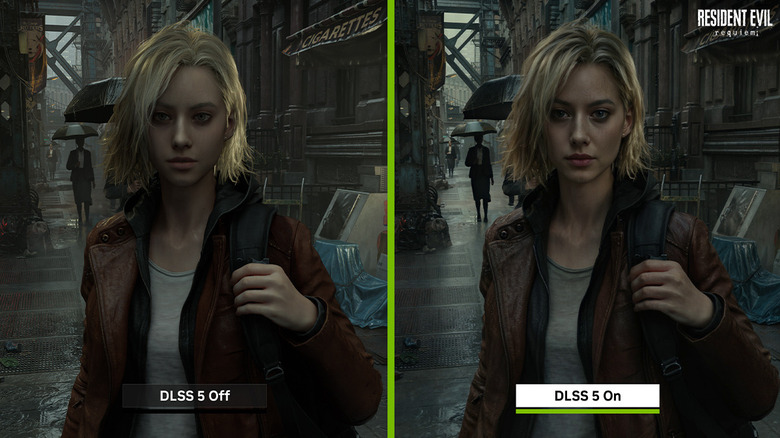
The problem with DLSS 5 implementation on AMD silicon is the massive performance hit. The problem is that the Nvidia-developed Tensor cores DLSS 5 runs from aren't in AMD GPUs. Instead, this system translates that information into code AMD GPUs can handle, but the platforms are different enough that it makes a difference.
We already know from early Nvidia DLSS 5 impressions that the tech is a massive resource hog on the hardware it's specifically designed for. So, it's no surprise that running the AI-heavy workload on chips it's not designed for would perform even worse.
When enabling the DLSS Neural Rendering toggle in Cyberpunk 2077 at 4K ray tracing ultra settings, for example, it caused an AMD Radeon RX 9070 XT to drop from 61 frames per second all the way down to an unplayable 9 fps. The mod developer is actively working to improve the state of DLSS-NR on AMD, highlighting that performance is reaching 90-100 fps at 1080p on an RX 9070 XT in recent builds. But until the application matures, this performance hit adds more to the disadvantages of buying an AMD GPU instead of Nvidia, at least when it comes to AI-enhanced gaming.
AMD's official roadmap and FSR
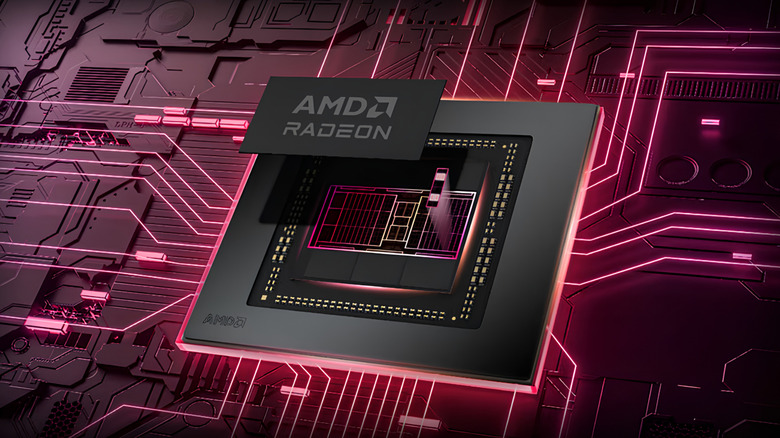
But what about AMD's upcoming official plans? Will AMD have their own version of DLSS 5? Well there's rumors of AMD launching their own equivalent on RDNA 5, a next-generation platform expected next year. Specifically, RDNA 5 is rumored to feature its own "Neural Lighting" technology, which is apparently on-par with DLSS 5.
AMD's official answer to Nvidia's technology is allegedly being built from the ground up to take advantage of AMD's specific hardware capabilities. That means whatever edge RDNA 5 may have will be exclusive to AMD's RDNA 5 silicon, rather than being broadly available for chips made by other companies.
Right now, AMD is continuing to rely on its FSR ecosystem for its current user base. The chip giant is also showing willingness with their approach to rolling out feature sets too. It expanded the machine-learning-based FSR 4.1 to older RX 7000 cards. While Nvidia maintains the lead in AI software, AMD's alternative approach offers a different set of advantages. AMD's simpler strategy provide more than enough VRAM, respectable pricing, and more open software practices, which is a stark difference to Nvidia's DLSS implementation historically.