

After Years Of Waiting, Apple Is Finally Releasing A New iMac
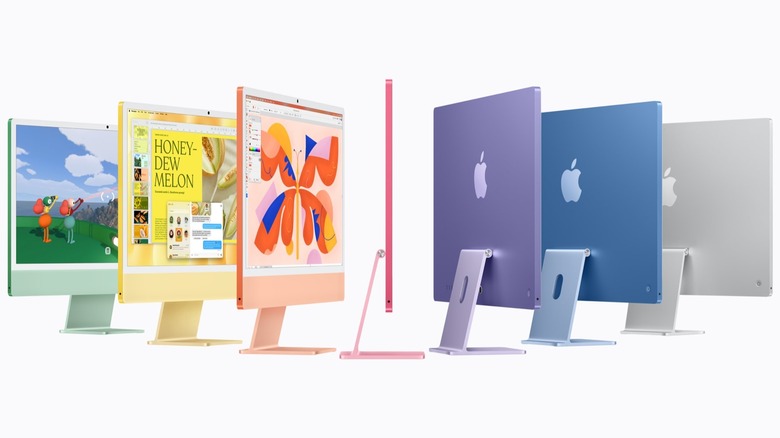
On October 27, Apple announced a new iMac and the new entry-level 14-inch MacBook Pro. Both machines look identical to their predecessors, with the M6 chip being the biggest upgrade. The designs of both devices remain the same, along with the displays, the ports, and the cameras.
The M6 chip has been around since August, when Apple first introduced it in the new Mac mini. This is a bigger upgrade for the iMac, since it hasn't been updated in two years now. That means the new model moves up from the M4 chip and skips the M5 generation altogether for the latest processing power. The 14-inch MacBook Pro was updated last year as well, so it's been upgraded from an M5 chip.
To be clear, this is not the long-rumored touchscreen MacBook Pro. Apple is holding a separate event on October 28, where it is expected to launch the higher-end 14-inch and 16-inch MacBook Pro models, which is where the OLED touchscreen and the redesign will appear.
The iMac finally gets a chip upgrade
The M6 processor brings up to a 12-core CPU and a 12-core GPU to the iMac, which is up from the 8-core or 10-core configurations the M4 offered, depending on which model you bought. Apple splits the lineup again, with the cheaper iMac on a 10-core CPU and GPU, and the step-up model on 12 of each; so both gain two cores. Apple says the M6 chip includes two super cores, four performance cores, and six efficiency cores on the CPU side, with hardware-accelerated ray tracing and Neural Accelerators in each GPU core.
Neural Accelerators move AI processing into the graphics cores rather than leaving it all to a dedicated part of the chip, which is typically called an NPU. Alongside them sits a Dual 16-core Neural Engine, which can handle double what the M4's single 16-core engine could. Apple puts on-device AI performance at up to 5x the M4 iMac, with up to 2x faster graphics. You'll notice these improvements the most when you're running an AI model locally, which spans from photo editing tools that clean up images to fill local language models.
Memory bandwidth climbs from the 120 GB/s of the M4 iMac, to 153 GB/s on 16GB configurations and 170 GB/s on 24GB or 32GB configurations. This means that the new iMac is quicker at moving data in and out of memory. You'll notice these improvements most if you have a lot of applications open at once, or often work with large video files. Storage performance improves over the M4 generation too. All of those figures are to say that anyone coming from an Intel iMac or an M1 model will notice the difference across everything, rather than in specific tasks. And if you're using a 2024 iMac, you'll notice improvements when running local AI models, opening multiple applications, or editing video.
Everything else about the iMac stays the same

The iMac's 24-inch design has not changed since Apple introduced it with the M1 iMac in 2021, and the M6 model doesn't change that. The seven colors carry over as blue, purple, pink, orange, yellow, green, and silver, with the same white bezels the machine has always had. The display is the same 24-inch 4.5K Retina panel at 4480x2520 resolution; with 500 nits of brightness, P3 wide color, True Tone, and the optional nano-texture glass. If you've been hoping for the larger iMac that has been talked about for years, you might be disappointed that it hasn't arrived. Don't be: The 2024 iMac's display was already the strongest part of the package, and that carries over to the new model.
Apple's N1 networking chip replaces the Wi-Fi and Bluetooth hardware in the M4 iMac with Wi-Fi 7 and Bluetooth 6. Wi-Fi 7 helps most on a congested home network, where it can use wider channels and two bands at once to hold a steadier connection. Bluetooth 6 mainly improves reliability with accessories.
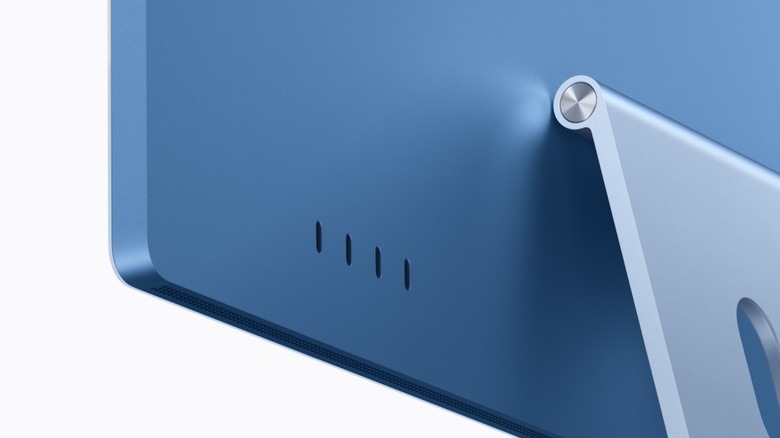
The ports, however, remain the same. The M6 iMac has up to four Thunderbolt 4 ports on the entry model, and four on the higher-tier configurations; though all four only support Thunderbolt 4 on the 12-core configuration. Gigabit Ethernet is optional on the cheaper specification and becomes standard higher up. The 12MP Center Stage camera with Desk View also remains unchanged, as does the headphone jack.
Apple announced a new 14-inch MacBook Pro, too
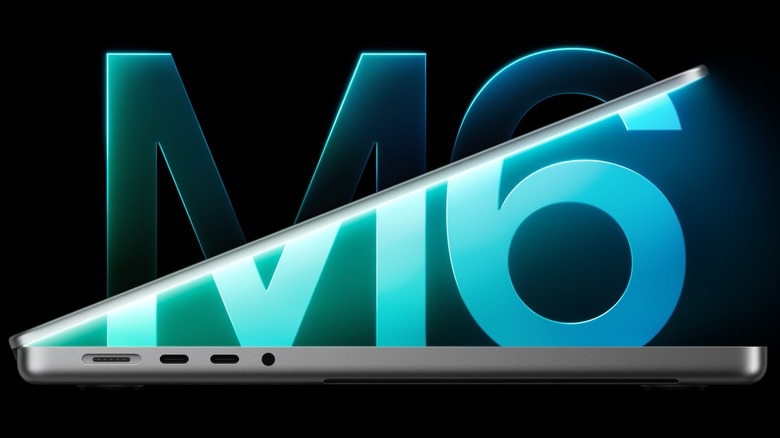
The entry-level 14-inch MacBook Pro has also been upgraded from the M5 chip to the M6. Like the iMac, it also keeps everything else the same, meaning the existing chassis, mini-LED display, and no touchscreen. It has the same 12-core CPU and 12-core GPU as the iMac and the Mac mini, with the same Dual 16-core Neural Engine and the same 170 GB/s ceiling on memory bandwidth. The N1 chip arrives here too, bringing Wi-Fi 7 and Bluetooth 6. Apple quotes up to 30% faster graphics and up to 25% faster AI workloads than the M5, with 16GB of unified memory as standard, and up to 24 hours of battery life, which the company calls the longest of any Mac.
If you're a little confused about where this machine sits in the Mac lineup, I don't blame you. Apple's updates to the premium MacBook Pro models are expected to arrive at the "Pro and Tell" event on October 28 with OLED touchscreens and a thinner design. Those machines will likely continue to come with the M5 Pro and M5 Max chips, since Apple hasn't introduced the M6 Pro or M6 Max. So the newest chip in the MacBook Pro lineup actually sits in the cheapest model, which is the entry point to the range.
That being said, having the M6 chip does not make the entry-level MacBook Pro the faster machine. The M5 Pro and M5 Max have additional CPU and GPU cores and much higher memory bandwidth, which is what makes the M5 Max MacBook Pro so powerful. Video editors, 3D artists, and coders will almost certainly fare better with the M5 Pro or M5 Max.
Pricing and availability
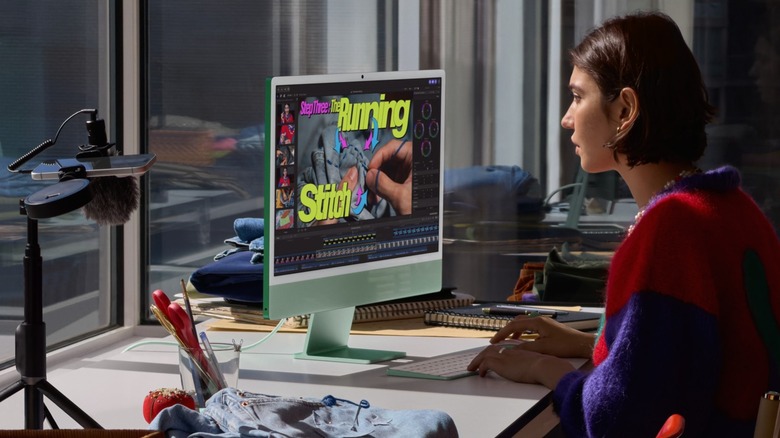
The M6 iMac starts at $1,499 for the 10-core model and $1,699 for the 12-core version, maintaining the higher prices Apple set when it raised them in June as part of a round of price increases across the Mac, iPad, and iPhone lineups. The 14-inch MacBook Pro starts at $1,999 with 1TB of storage, also unchanged from the M5 model it replaces. Education savings bring the iMac down to $1,449 or $1,599 and the MacBook Pro to $1,899.
Pre-orders for both Macs will open on October 28, before they ship on November 6. However, the current memory shortages could affect how quickly configurations become available, particularly on higher storage and memory options.
Most people using an M4 iMac have little reason to upgrade, since that machine is only two years old and should still easily handle everyday work. But, if you need more performance out of your computer or you're coming from an M1 iMac or an Intel model, the M6 iMac is more appealing since it covers four or five years of improvements at once. Macs tend to stay useful for a long time, so the outgoing models are also worth a look if third-party retailers discount them.