

The New M6 iMac Is Here, But I Think It's Missing 5 Major Upgrades

Following the announcements of an OLED iPad mini and the M6 MacBook Pro, Apple refreshed the iMac also with the M6 processor. Still, five years after the company introduced an all-new colorful and redesigned iMac with a proprietary chip, Apple hasn't done much more than update the processor and a few internal specs. I think it's time for the company to offer a new design to the iMac, introduce a new display technology, a bigger model, and more.
With the new iMac, besides the more expensive price point — an extra $200 compared with the previous version — it has a processor that can feature up to a 12-core CPU, two more than before, up to a 12-core GPU, and a new Dual 16-core Neural Engine. In other words, Apple says the new processor offers 2x faster graphics for intensive tasks than the M4, 2x faster AI compute, faster memory, and higher memory bandwidth for everyday tasks, editing photos, running on-device AI models, playing games, and more.
Apple touts the iMac as the best platform for AI, but it also talks about other features compared to the previous M4 model, including Wi-Fi 7 and Bluetooth 6 support, along with 2.5Gb Ethernet that brings 2.5x faster transfer of larger files, streaming content in high resolution, live gaming, and more. A new SSD also brings 2x faster reading and writing performance, in addition to up to four Thunderbolt 4 ports. Still, for anyone with an iMac, that's simply not enough reason to update for this model — but if Apple had added the upgrades below, this could be a more enticing update.
A redesigned model
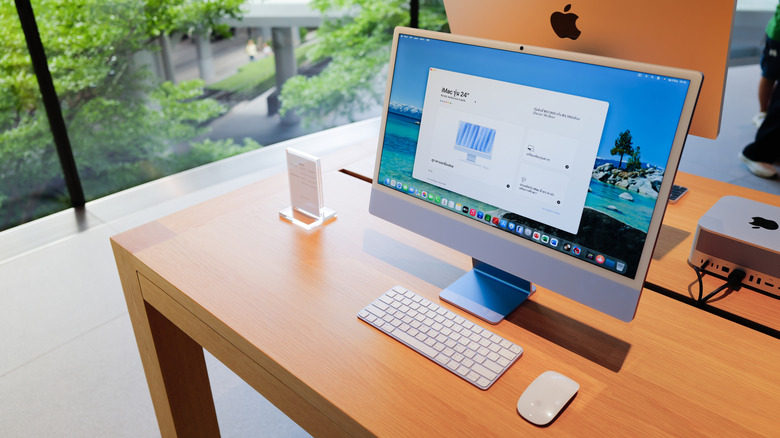
The iMac has existed for almost 30 years now, and 17 years ago, Apple introduced the unibody aluminum design. This model redefined Mac computers and its iconic design made it famous in pop culture before expanding to people's rooms, offices, and more. In 2014, Apple introduced a Retina 5K display on 27-inch models, and over the years, during the Intel era, the company refined this look with thinner bezels, and so on.
In 2021, as the company enjoyed amazing momentum with its own Apple Silicon, moving away from its Intel computers, Apple released the M1 24-inch iMac in seven fun colors, a 4.5K Retina display, and a revamp of its iconic design, now with white bezels and a more modern look. This computer was a success, and the same way we saw the aluminum iMac being part of pop culture, this one is also now in our everyday lives in receptions, offices, college labs, and more.
Still, after five years of this redesign, and Apple now introducing the fourth generation of this computer in the same seven colors and no design change, it's time for the company to once again refresh this computer — whether by offering new colors, a thinner model, or a computer with slimmer bezels. Buying a new iMac today feels like buying a dated product from half a decade ago.
A new display technology

With the new iMac M6 announced, Bloomberg's Mark Gurman reiterates that an upcoming model of this computer might get an OLED display. According to the journalist, both the MacBook Air and iMac with an updated screen are in tests by Apple, but the journalist doesn't offer a timeframe of when the company might release them. Still, with Apple recently releasing an iPad mini with an OLED display, and rumors suggesting a MacBook Pro with an OLED screen is imminent, it seems like Apple is slowly moving away from LCD (or mini-LED) to a different technology.
Among the benefits of OLED, Apple might be able to offer crisper images with more vibrant colors and deeper blacks. Unlike an LCD panel, the OLED screen allows Apple to control every pixel of the display, meaning that a black image actually offers turned off pixels, which helps to avoid blooming and even save battery life when streaming full-display content, using a black wallpaper, and more.
While a premium OLED display was reserved for "Pro" devices like the current iPad Pro, iPhone Pro, and soon a MacBook Pro, it's likely that the display available for this upcoming iMac might be similar to the one introduced for the iPad mini, in the sense that it won't offer ProMotion, but a fixed 60Hz refresh rate display.
Better Magic Mouse
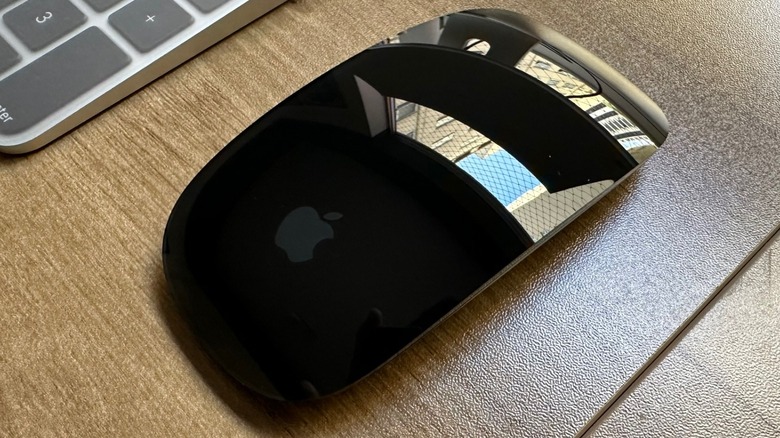
Every once in a while, Apple updates its Magic accessories, which are the Magic Keyboard, Magic Mouse, and Magic Trackpad. Even though the company does a great job of offering appealing colors for each iMac and its accessories, the Magic Mouse still suffers from a fundamental design flaw: it only charges from a USB-C port situated under the accessory. With that, users can't use the mouse while it's being charged.
While some Apple evangelists love to say that this is the perfect moment for users to take a break and prepare a coffee – as a few minutes of charge can ensure extra hours — the issue gets more noticeable as the Magic Mouse ages. At the beginning, users can get around a month without charging the device, but as the years go by, battery can drop considerably, and then this design fault becomes something that prevents users from doing their job, browsing the web, and more.
A redesigned Magic Mouse could offer a USB-C port in a different part of the mouse, ensuring users can charge it while still using it. After all, if other accessories like the Magic Trackpad and Magic Keyboard already offer the ability of being used while charged, Apple could do the same with the Magic Mouse and end years of a poor design choice. That said, in the meantime, you should ditch your current Magic Mouse for these superior alternatives.
A Pro variant
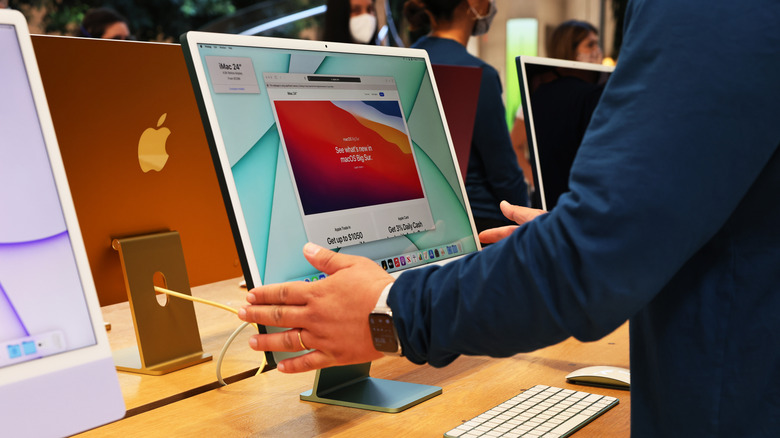
The 24-inch iMac has been available for over five years now. It's time for Apple to offer a more powerful desktop iMac with a Pro chip. In the past, the company brought different Intel processors to the iMac, over time offering more capable options. A strong case for this change is the Mac mini that since the M4 redesign, has had access to a Pro chip. This leveraged this CPU as the go-to option of developers, scientists, and customers wanting to build their own local AI servers.
Currently, Apple offers the Mac mini with the M6 and M5 Pro chips, and the company could've done the same with the iMac. With that, this inexistent model could've offered more RAM and more horsepower, as the M5 Pro offers up to an 18-core CPU, up to a 20-core GPU, up to 64GB of unified memory with 307GB/s of memory bandwidth, and an improved Neural Engine. Such upgrades would make the iMac a viable option for customers who need extra power.
A bigger display

If a Pro iMac would become a reality, then it would be possible that Apple could finally also bring another long-time request from users: a bigger display for the iMac. In the past, Apple also offered a 27-inch variant, which was more expensive, with a higher-resolution display. Currently, the company offers a bigger screen with its Studio Display offering, and two 27-inch models with different display technologies. Still, someone who would prefer an all-in-one solution can't find that with Apple.
Rumors have suggested that Apple tested a bigger display iMac but eventually scrapped this device. Still, 27-inch Intel iMac fans continue to expect a similar alternative from Apple, which, at some point, even offered an iMac Pro. If the company did introduce an iMac with a bigger display, it could offer a higher resolution, a more capable chip, and, obviously, a more premium price — and some customers would be really happy with that.