

The Inside Of NASA's Space Shuttle Smells Bad, But Landing Makes It Worse - Here's Why
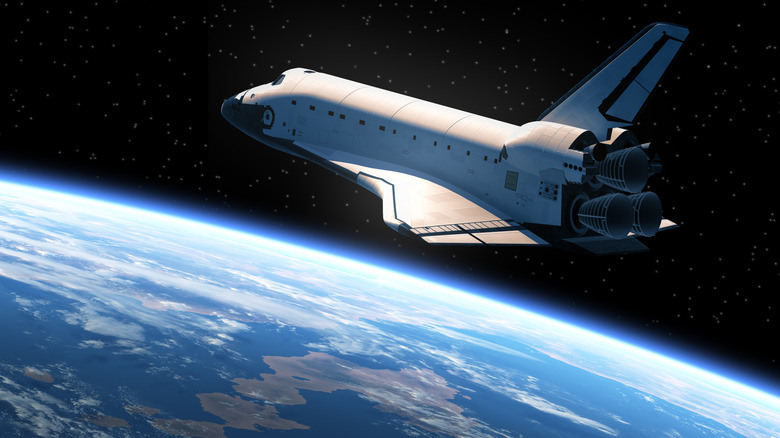
Astronauts possess a level of bravery that most people don't. They hurl themselves 350 kilometers into the sky towards the International Space Station, hoping to advance humanity's understanding of its place in the universe. However, in addition to the time spent away from their families, the physical and mental toll space travel takes, and the lack of gravity, there's another challenge for these interstellar explorers to overcome: both the space station and NASA's shuttles absolutely stink.
There are practical reasons for this. These are relatively confined spaces where multiple people live for six months at a time, meaning eventually, the smell of food waste, body odor, and trash begins to build up. There are air circulation and filtration systems, but these are designed to remove carbon dioxide and keep the air breathable, not keep things smelling fresh.
Additionally, these systems are designed for use in the vacuum of space — when the shuttle touches down on Earth, the Environmental Control System stops running at peak performance. After the ammonia-based coolant runs out (usually between 30 and 45 minutes after landing), the crew has to endure even more intense odors. On the plus side, in these situations, they're usually less than a few hours away from breathing fresh air again.
Being able to smell things in space is actually extremely important
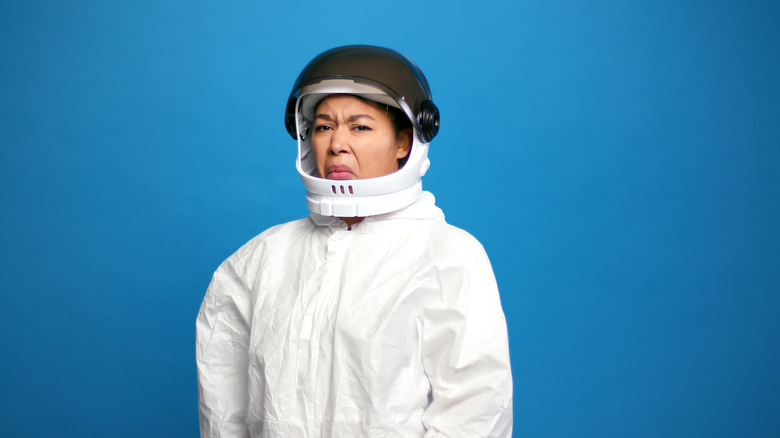
Unfortunately, astronauts can't just plug their noses. If a fire broke out onboard or ammonia began leaking, one of the first indicators that something was wrong would be the smell. For this reason, NASA actually has an odor evaluation panel that examines every spacebound item ahead of time to make sure it won't be a nuisance or interfere with astronauts' sense of smell.
A secondary issue is that there are only a limited number of different smells in a space shuttle or station. The human brain tends to filter out constant stimuli, meaning over time, astronauts may notice their sense of smell has dulled or even forget there's a bad smell at all. On their return, however, they can experience sensory overload due to all of our planet's varied scents. It's not all bad, though: astronauts returning from spacewalks have claimed that space itself has a unique smell.
This metallic smell has been described as similar to welding fumes, burnt steak, or walnuts, but descriptions seem to vary depending on who you ask. NASA even commissioned a chemist in 2008 to recreate this smell on Earth to help train astronauts to differentiate it from something more dangerous, such as a chemical leak. Naturally, nobody wants to spend all of their time immersed in bad smells, but ultimately, it's a small price to pay to live somewhere most of us can only dream of visiting.