

Apple Reveals A Simple Change That Could Save MacBook Users 5 Hours Of Battery Life
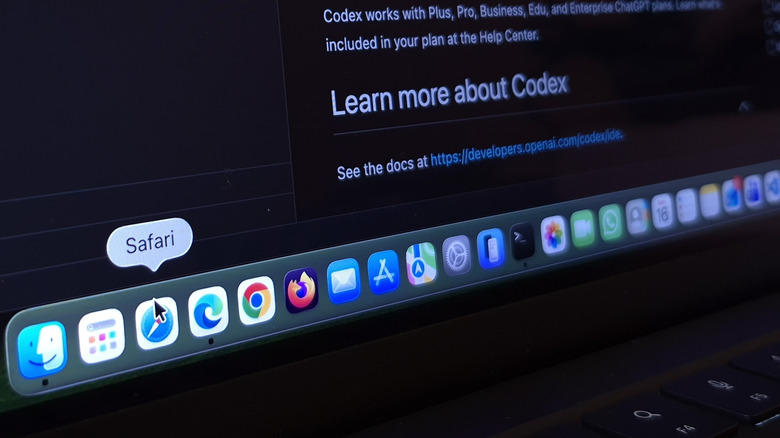
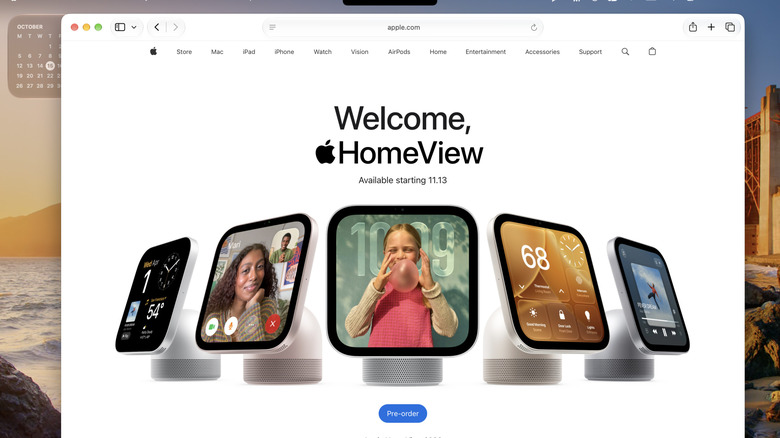
Google Chrome significantly leads Apple's Safari when it comes to users. As of this writing, it commands an estimated 66.36% market share compared to other browsers, according to Statcounter. Safari is second at 18.27%. Now, Apple, in its "Switch to Safari" marketing campaign, is claiming that Safari can give you up to five hours more of battery life when streaming video on a MacBook compared to Google Chrome.
Apple's campaign is on the nose about its intention to get you to ditch other browsers. However, Chrome will likely remain the dominant desktop and mobile browser for the foreseeable future, especially with Safari being trapped on Apple devices. Still, the battery life is a good incentive for MacBook owners who use Chrome to consider a switch.
Another thing Apple mentions in its campaign is that Safari is more private than Chrome. Indeed, Chrome's privacy issues are reasons why people consider ditching it. The browser is built to collect as much information about you to fuel Google's ad business and aggressive AI push (many users don't know Chrome quietly installed an AI model on their device). But with Safari, users don't need to worry about tracking, as Safari blocks trackers by default. This prevents companies from using them to create a profile based on your browsing activities to serve you "relevant" ads. Even though Apple Intelligence is integrated into Safari, it's built with privacy in mind and doesn't expose your data to Apple or third parties.
Tests reveal Safari is more efficient than Chrome on MacBooks
When conducting tests in August 2026, Apple streamed 1080p video on 15-inch MacBook Airs with M5 chips and 16GB of RAM. For the software, the MacBooks were running macOS 27 (Golden Gate). Chrome was using version 151.0.7922.76, and Safari was on version 27.0. The MacBooks were running on battery with the brightness turned up to roughly 50% (eight clicks from the bottom). And based on the results, Apple found that Safari offers up to five more hours of battery life on a single charge. Safari is Apple's product, so it's not surprising that the company would figure out a way to make the browser run more efficiently on its own hardware.
Apple also claims that Safari loads websites you visit frequently up to 35% faster than Chrome. To test this, Apple measured the speed at which 12 popular websites load under simulated networking conditions. It used the same MacBooks, macOS version, and Safari version as the battery life tests. However, this time, it used Chrome version 151.0.7922.138.
Despite Apple's push, Chrome remains popular
Despite Apple's push to get users in its ecosystem to switch to Safari, Chrome boasts attractive features. One of the reasons Chrome remains so popular is that it's still one of the fastest browsers around. A blog post published by Google in June 2026 stated that Chrome achieved a score of 469 (a 10% improvement) on JetStream 3. This is a benchmarking tool that measures how fast a browser can execute advanced JavaScript and WebAssembly. It also scored a 61 on Speedometer 3.1, marking a 5% improvement. This is another benchmarking tool, but it measures how responsive web apps are.
Another major reason why Chrome is favored is that it comes preloaded with many Android phones. Furthermore, it's available on almost every other major operating system, including Windows, Linux, Mac, iOS, iPadOS, and ChromeOS. Also, it seamlessly syncs data between devices, including bookmarks, browsing history, passwords, and extensions. On top of that, Chrome has a massive extensions library that can expand its capabilities, supporting tasks from productivity and creativity to privacy and security.