

This California Wind Farm Is Having A Topsy-Turvy Effect On Local Weather
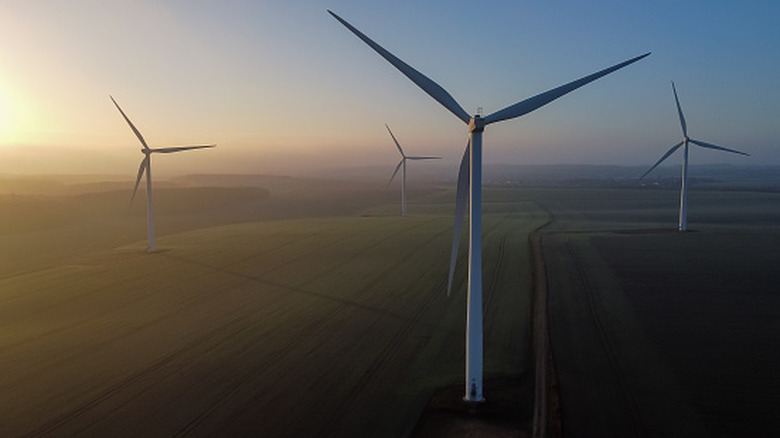
Fewer than two hours from the heart of Los Angeles, there is a wind farm. Here, at San Gorgonio Pass, over 600 turbines generate enough electricity to power thousands of homes. There are no greenhouse gases or harmful emissions to worry about either, aside from some low-level noise. In fact, this wind farm alone is estimated to prevent the release of nearly 1 million tons of carbon dioxide every single year. What's interesting about it, though, is that the San Gorgonio Wind Farm is changing the local climate ... just not in the way you might expect.
In 1989, meteorologists visited San Gorgonio and performed the first ever field campaign in an operational wind farm. The resulting data showed that areas downwind of the farm had higher near-surface air temperatures (typically measured at around two meters from the ground) during nighttime and the early hours of the morning. However, during the rest of the day, these areas were cooler than those upwind. So what exactly caused this phenomenon?
The researchers suggested that the turbines' rotors caused turbulence, mixing together warmer air from higher up with cooler air near the surface. This vertical mixing hypothesis hasn't yet been definitively proven but is supported by findings from a 2023 study that specifically examined how a turbine's wake impacts near-surface air temperature.
Wind farms are efficient energy creators but their full impact isn't yet known
Most of the existing research focuses on individual wind farms. This still provides valuable information for researchers, though it's difficult to tell whether each farm's location, surroundings, or other environmental factors has an outsized impact on the data. In 2022, a more-comprehensive review of 319 wind farms was performed. This confirmed that 61.13% of farms experienced warmer temperatures at night, though daytime temperature fluctuations were not found to be statistically significant.
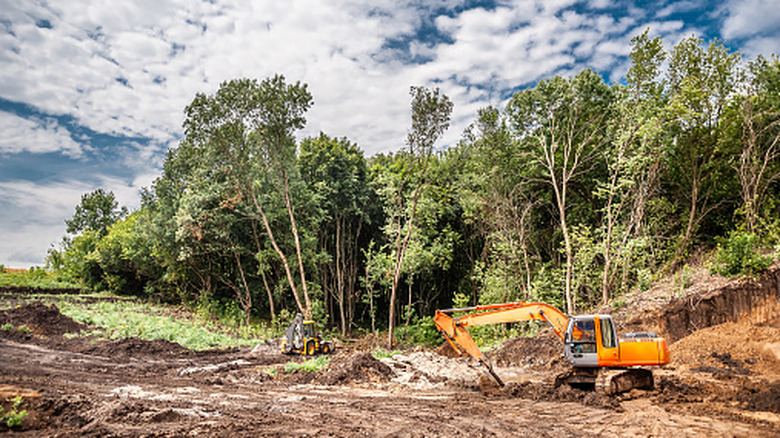
Much has been made about wind turbines' impact on wildlife but this study also found that around 60% had a negative impact on local vegetation, largely because building a wind farm necessitates the clearing of vast swathes of land. That said, given 40% of farms recorded a positive impact on nearby plant life, it's clear further research into wind turbines and their effects is needed. Still, with time, our understanding of wind turbines and their long-term impacts will only grow more concrete, leading to more-efficient energy production with fewer harmful effects. In the meantime, take comfort in the fact that even without future technological advancements, wind farms are still better for the environment than oil fields, cattle farms, or coal mines.