

Consumer Reports Calls This Popular Fitness Tracker A Great 'Low-Key' Option
We may receive a commission on purchases made from links.
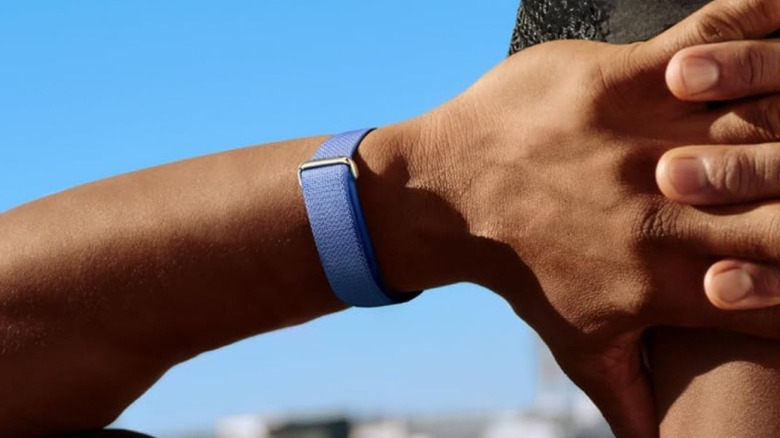
You can always count on Consumer Reports (CR) to home in on the pros and cons of new tech releases. The publication tests everything from TVs and laptops to headphones and fitness wearables. As for the latter, CR is very much a fan of the $100 Google Fitbit Air, a "low-key" wearable that punches well above its weight class. The Air doesn't have a traditional display, but a slew of onboard sensors still do all the health tracking; you just need to connect it to the Google Health app to sync all your data.
When it comes to metrics gathering, the Fitbit Air tracks heart rate, workouts, steps, sleep, and more. Half the time you may even forget your wrist is wearing it, which is exactly the kind of unobtrusive design Google was going for. Rocking an IP68 rating for dust and water resistance — as well as a 5 ATM rating — you won't have to worry about a sudden downpour ruining your jog. It'll also endure water pressure up to 50 meters (or about 160 feet).
Fully charged, the Air should deliver up to seven days of performance. However, we do have it on good authority from our colleagues here at BGR that you can actually get up to eight days of battery life before it's time to hook it up to a portable power bank or other charging gadgets. Once you plug it in, it should take just over an hour to go from zero to 100% replenished.
A Google Health Premium subscription unlocks additional Fitbit Air capabilities
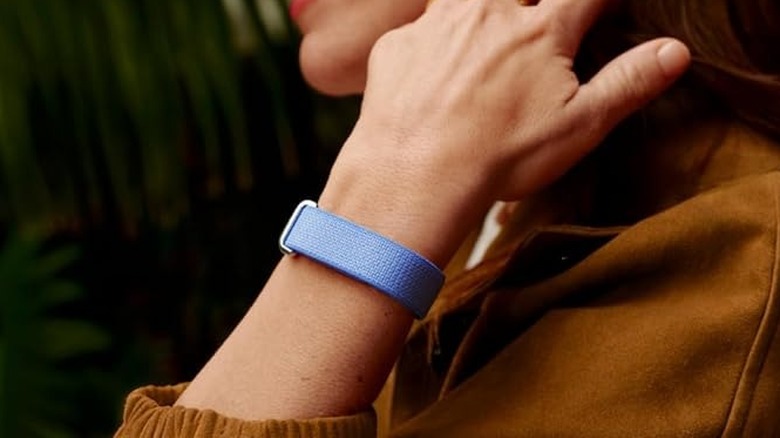
The Google Health app is the main software the Fitbit Air interfaces with, and there are a handful of features and settings that Google Health Premium members have access to. These include AI-powered coaching, customizable exercise plans, health and wellness suggestions, and more. That's all behind a paywall, though, so if one or more advanced features sound appealing, you'll need to consider the extra Health Premium ($10 per month or $99 annually).
One of the only drawbacks of a "low-key" wearable like the Air is the reliance on your phone or tablet. A big part of fitness tracking is the visual depiction of your results; unfortunately, the Air's lack of a display means you will have to rely on your phone. We've read a few reports that the sleep and nap tracking can be a bit hit or miss, and we've also heard that Gemini doesn't always provide the greatest fitness advice.
There's certainly no shortage of Fitbit devices to track workouts and calories with, but if you're looking to keep the gadgetry as minimalist as possible, the Google Fitbit Air should be a top consideration. It also doesn't matter if you prefer iOS or Android; the Google Health app is compatible with both mobile operating systems.