

5 Features I Want Apple Maps To Add As Soon As Possible
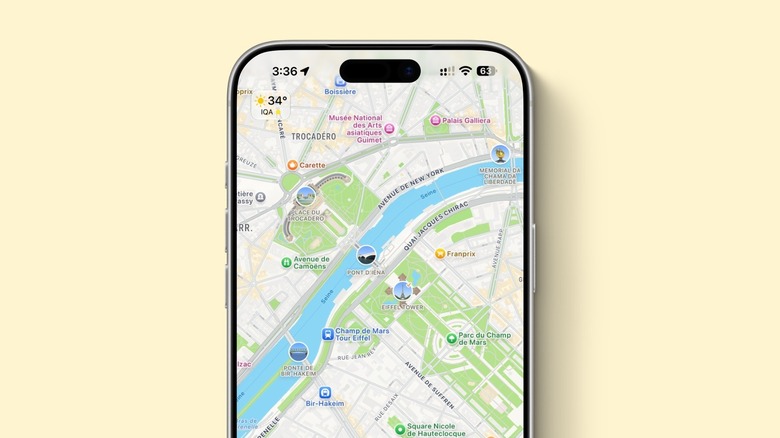
More than a decade ago, in 2012, Apple released Apple Maps alongside iOS 6 as a replacement to Google Maps as the default maps app on the iPhone and iPad. While its announcements of free turn-by-turn directions and 3D satellite effects grabbed attention, its launch was marred by unacceptable bugs like distorted landmarks and misplaced locations. The scandal marked one of the first big tests Tim Cook faced as CEO, having been promoted into the role in 2011 (He stepped down in 2026). With the poor reception, the top Apple executive in charge of the revamp, Scott Forstall, was fired, and Apple spent years catching up. In 2026, the Apple Maps app delivers a better experience and promises built-in privacy as its most compelling feature when compared to Google Maps. Still, there are several capabilities that I think Apple should add as soon as possible, including a Google Maps-like Timeline feature, an in-house review system for shops, and more consistency of services whenever I'm traveling abroad.
Even though Apple Maps has excellent features that top Google Maps, including granular control over routing directions, the service is missing key elements that feel like a natural standard from Google's offering.
As a result of the two apps being so different at times, I find myself using Google Maps to check a place out, and then I switch to Apple Maps because of its better integration between iPhone and AirPods or Apple Watch, giving me turn-by-turn directions and haptic feedback through a tap on my wrist. I do straddle the two services because sometimes Apple Maps can fail to find the address I'm seeking. It also sometimes has wrong business information, like reporting that a store is closed when it says it's opened. Overall, Apple Maps just feels emptier than Google Maps too. This is why I hope Apple adds these following features to Apple Maps as soon as possible.
Google Maps-like Timeline
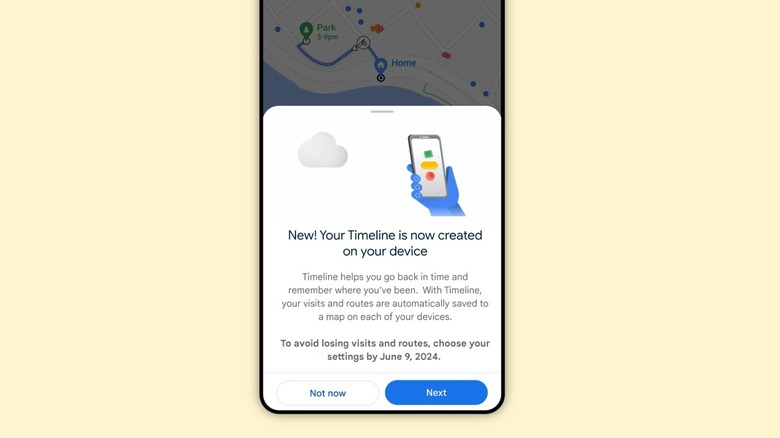
One of the coolest Google Maps features is the Timeline feature, which basically transforms the maps experience into a digital journal of people's lives. Right now, if you want to remember the name of that incredible fish and chips place you visited a few months ago, or double-check what time you arrived at home last Friday, Google can tell you, and Apple Maps cannot. Apple might argue such a journal could invade your privacy beyond the automated Journal app Apple designed to reflect on your day.
Getting back to Google, Apple's points about privacy aren't just marketing bluster. The biggest issue with Google's timeline feature is that Google Maps tracks more than your location data. In theory, Apple could process every bit of the timeline data entirely on-device and protect it with end-to-end encryption, meaning you could get all the spatial nostalgia, mileage tracking, and personal travel logs without feeling like your movement patterns are being monetized or uploaded to a server. But that may be easier said than done, considering how hard it was for Apple to resuscitate its Maps brand after that embarrassing launch.
Apple should still devote resources to making a Timeline feature part of its systems because it could improve your productivity by allowing you to search past routes, export your monthly mileage into expense reports to understand how much you spend with gas, public transportation, and so on. I know I'd have more fun if I could do that without having to worry about my data.
Ask Siri
Siri got a lot better with iOS 27, as the new Siri AI really leverages my experience with the iPhone, iPad, and Mac. However, there's a feature Google Maps recently introduced that makes both the personal assistant and Apple Maps years behind: Ask Maps. Basically, people can use natural language to search on the app for a special restaurant, book a table for four that's "close to work" and has a vegetarian option, and even plan a road trip with nice spots to see and eat in the meantime. Pretty nice, no?
Still, when we turn to Apple Maps, it's already hard enough to find new spots or an address if you misspell something or if you try to use natural language instead of stilted keywords. If Apple were to add an Ask Siri/Maps feature, this could be great for when people are driving, as it could tweak a complex route, like finding a gas station with clean restrooms or searching for dinner options that accommodate specific dietary restrictions, all of that with just a voice command. The more conversational Siri could even give you more information about a place, such as parking availability, estimated waiting times, and more without requiring the user to look at themselves.
On top of that, the Ask Siri feature would bring an important privacy layer that we currently don't have on Google Maps. Still, the reason why Google Maps is so good is due to its huge community of users, reviewers, and people putting their opinion in every corner where they go, which leads us to the next feature I wish Apple Maps had.
In-house review system for shops
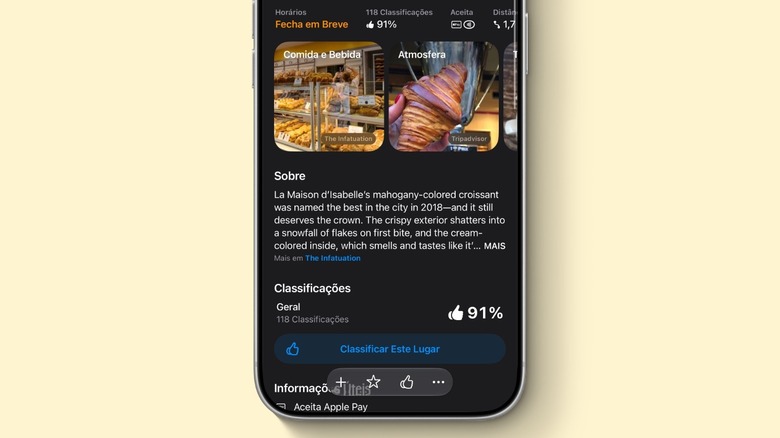
Currently, if you want to get real-time information about a business, or a place to visit, Apple Maps is definitely not the app to go. This is because the company relies on third-party apps like Yelp or a hollow thumbs-up system, on whether you recommend a location or not based on simpler questions, to bring you detailed data about a location. Still, if you've been using Google Maps for longer, and especially in the past year, you probably realized how having a huge community of people always feeding the platform can be useful.
In a matter of just a few taps, you can see updated information about a business opening or closing during a holiday, a customer's review of a new meal that just entered the menu, or a traveler having the dinner of a lifetime in a restaurant in your area that you didn't know existed. Still all of that can only occur because people can comment on Google Maps directly. The search giant is able to use its community to also help inform us about how crowded a restaurant, store, or park is — and what it looks like through photos and videos. That said, if Apple launched a native review system tied to Apple Accounts, the company could not only create an authentic community space with real people, but it could also likely help filter spam and paid-for fake reviews that can, sometimes, trick us when choosing a place to visit.
More consistency across different regions
Apple is an American company, and it likes to remind us all of such. After all, each device the company makes bears a label proudly saying it was designed in California. But there are other not-so-great tells if you live outside the U.S., or even if you travel abroad. The company often rolls out features and products in the U.S. first, or specific high-usage regions, and then slowly to others. Examples include the ability to add the driver's license and passport to the wallet, which still hasn't even been fully adopted throughout the U.S. half a decade after its release. Apple News has its own troubles, offering an extremely limited lineup of publications to a few English-speaking countries.
Apple Maps is no stranger to this trend. If you use the app in New York or Cupertino, the experience will greatly diverge from a random city in France, or, even in a large city in an underdeveloped country. The issue here is that offering a premium experience costs money and takes time, and even though Apple is one of the most highly valued and richest companies in the world, it expands its map functionalities slowly. That ultimately means you can go from stunning 3D landmarks, detailed lane guidance, and rich cycling routes to a basic vector map with missing details and stripped-down navigation tools, even now.
That said, if Apple truly wants to compete with Google, not only does the company need to put a lot more money on Apple Maps, but deliver new features for a wider audience quickly. For example, Google's Ask Maps feature was limited to the U.S. earlier this year, and it has now rolled out across the globe. Apple, on the other hand, recently released "Trending Restaurants" with iOS 27, and as of November 2026, it is still only available in select U.S. cities.
Find My integration
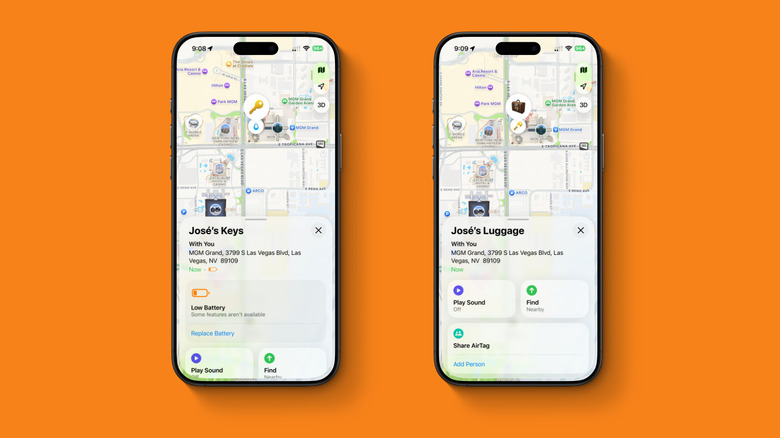
Last but not least, Apple Maps could get yet another feature Google Maps has: the ability to see where your friends are from the map app itself. Currently, Apple has two different platforms: Find My and Apple Maps. So, if you want to see if your friend is almost at the pizza place where you are scheduled to meet, you have to open the Find My app. The same is true if you want to go to where a family member is: you first need to open Find My, which will locate them, and then you have to ask it to provide you directions. From there, Find My will send you to Apple Maps with their coordinates punched in.
It's bad enough this feature needs a lot of taps before it works, but also a person can be on-the-go, meaning that the location can change, but Apple Maps won't really know that without even more tapping. If Apple Maps had a toggle that would merge Find My Friends with Apple Maps, then you could have a better overview of the maps while also easily seeing where your shared contacts are. Better than that, if you wouldn't want to see your friends on the map app all the time, you could theoretically toggle it off and then toggle it on when it's convenient — or for specific people depending on what you're planning.
Apple loves to refine its software, so these issues may be fixed in a future update. But until then, many of us will be forced to continue straddling Apple's and Google's worlds.