

Scientists Finally Captured An Image Of The Reaction That Destroys Nuclear Fuel
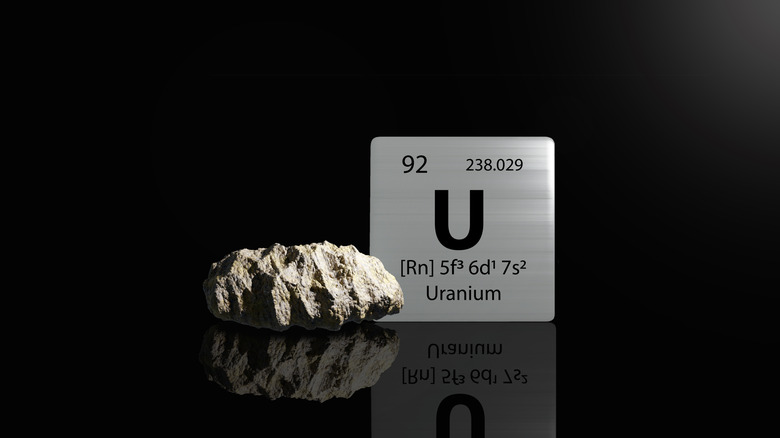
Hydrogen gas poses a massive threat to solid uranium by initiating a severe corrosion cycle that turns the dense metal into a highly reactive powder. It's a big deal for the nuclear energy sector to figure out this disadvantage and exactly how this metal–hydrogen interaction happens. The whole problem is how to safely manage depleted uranium used as radiation shielding for spent fuel, while also understanding how hydrogen degrades metals inside next-generation fusion reactors.
For over 75 years, scientists struggled to observe the exact point where the degradation reaction started. Traditional testing methods, which measured changes in overall gas pressure or total weight, lacked microscale sensitivity, leaving them effectively blind to the very first moments of corrosion. Much like water seeping into road cracks and freezing into expanding ice, hydrogen seeps invisibly into solid uranium, swelling from the inside out until the metal crumbles into a reactive powder.
Researchers at Lawrence Livermore National Laboratory overcame this technical barrier by adapting high-resolution optical profiling. By using white-light interferometry (WLI), which acts like an ultra-precise 3D camera, the team bounced light waves off the surface while recording a continuous topographical movie of the metal at a sub-microscopic level without ever touching the delicate sample. Old testing methods tried to catch this reaction by measuring total weight or gas pressure, which is like trying to detect a single cracked brick by weighing an entire skyscraper.
How white-light interferometry exposed the geyser cycle of hydride blistering
The interaction between hydrogen and uranium follows a distinct physical degradation cycle resembling a geyser. As hydrogen gas dissolves and diffuses into uranium, it eventually exceeds solubility limits and forms uranium hydride, which expands significantly and creates intense subsurface pressure. Real-time WLI tracking revealed the precise timeline from initial gas exposure to physical surface destruction.
When exposed to hydrogen at 122 degrees Fahrenheit and 2 psi, the uranium surface remained completely unchanged for 62 minutes before the very first hydride blister showed up. Once a blister reached its critical spallation (fragmentation) threshold, the protective metal surface burst open.
At 78 minutes, the first blister reached a critical size of 1.79 micrometers in height and 17.58 micrometers in diameter (a fraction of the width of a human hair), cracking the outer metal and releasing fine uranium hydride powder. Breaching the outer surface drastically accelerated the overall corrosion rate. Once the protective skin ruptured, fresh metallic uranium was exposed to hydrogen gas, accelerating surface hydriding until 42.7% of the surface area degraded within four hours.
Surprising discoveries, growth kinetics, and safer future nuclear storage
Continuous WLI imaging disproved long-held assumptions regarding where hydride blisters originate on a polished metal surface. Contrary to prior models, blisters did not preferentially form at casting pores. Focused ion beam sectioning revealed that growth centers aligned with uranium carbide impurities and microscopic structural cracks.
Cross-sectional tomography provided further insight into how hydride fronts migrate through bulk metal. Rather than drilling deep into the core, the subsurface hydride expands horizontally with an oblate (sideways) shape, spreading along the surface boundary.
Quantifying post-spallation reaction rates allows scientists to construct accurate, physically grounded corrosion models. The study measured a stable spall-front velocity (the speed at which the metal cracks and flakes off) of 0.91 micrometers per minute.
This process could lead to broader safety enhancements across the nuclear industry. Because depleted uranium is used to shield spent nuclear fuel, establishing precise degradation models helps engineers design safer long-term storage solutions. Furthermore, the mechanics behind this specific metal–hydrogen reaction provides scientists with a deeper understanding of how hydrogen degrades metals generally. This is crucial knowledge for engineering durable, plasma-facing components for future fusion systems.