

Are Lead-Cooled Reactors The Future Of Nuclear Power?
Nuclear energy has the potential to solve many of the world's energy problems. One nuclear reactor outputs the same amount of energy as 8.5 million solar panels, but currently, the United States only employs 96 reactors across 28 states. An increasing number of people are in favor of using nuclear energy — the growth is slow, but it's there – but how can scientists channel the power of the atom while minimizing the risks? A company from Sweden has a potential answer.
In May of 2026, Blykalla submitted a commercial application to build an advanced nuclear reactor park in Sweden, with intentions to do the same in the United States. Unlike traditional nuclear reactors, which generate electricity by using nuclear material to heat high-pressure water, which in turn boils regular water to spin a turbine, Blykalla's generators rely on lead as a coolant. While lead-powered reactors aren't new in the energy industry — the company Newcleo built a next-generation test reactor that uses molten lead — Blykalla's reactor stands out from the crowd. It made a deal with the organization Oklo and the U.S. Department of Energy (DOE) to bring its technology over from Sweden to potentially power the U.S.'s industries (primarily AI data centers).
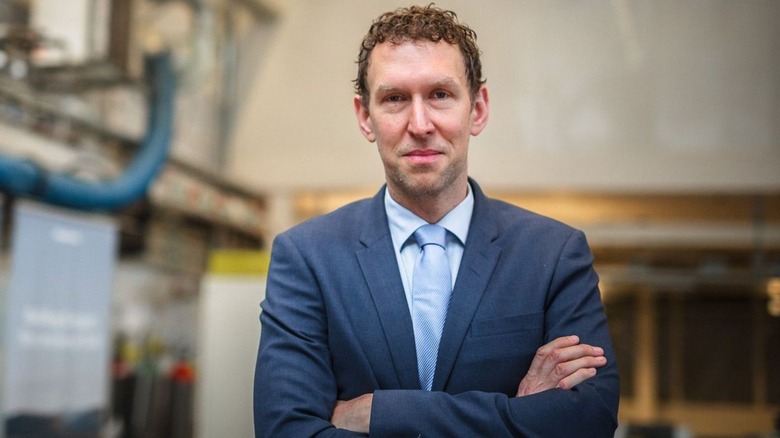
I recently had a chance to talk to Blykalla's CEO, Jacob Stedman, to learn more about what makes the company's reactors so special and, more importantly, safer and more efficient than the average reactor. It was an enlightening experience with a few surprises. If you are on the fence about a future powered by nuclear energy, this interview might finally win you over.
What is Blykalla?
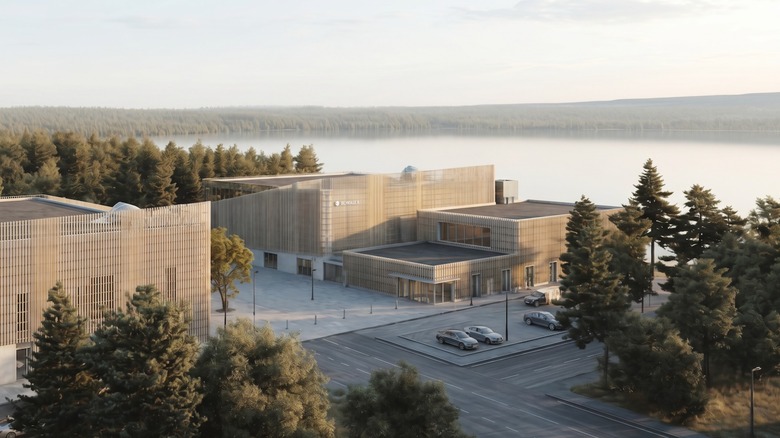
Before we begin and get into the meat and potatoes of the interview, a small introduction is in order. Blykalla is a Swedish provider of advanced small modular reactors (SMRs). Janne Wallenius and Peter Szakalos founded the company 13 years ago in 2013. According to Jacob Stedman, Blykalla began with a dream. Sort of. After the Three Mile Island incident, home to the worst nuclear disaster in U.S. history, Sweden held a referendum and voted on whether to phase out nuclear power.
The country didn't do so, but Wallenius, then a 12-year-old boy, asked himself why phase out nuclear power just because there are a few challenges? Wouldn't it be better to just overcome those challenges? Pretty forward thinking for a 12-year-old, but he won a particle physics contest on live TV several years later, so he knew his stuff.
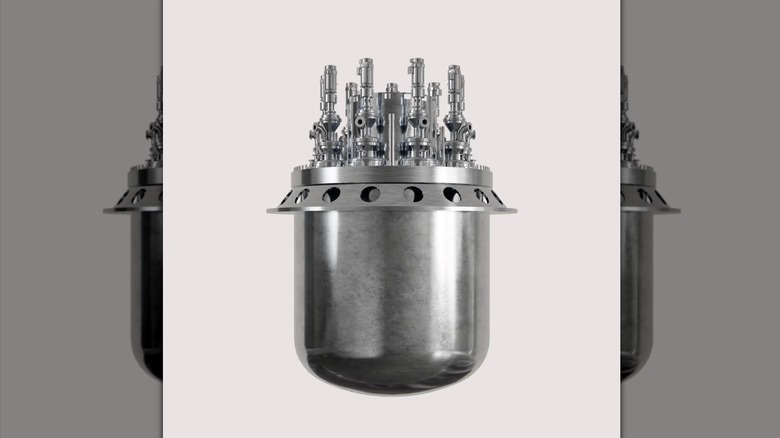
Blykalla's claim to fame is its Swedish Advanced Lead Reactor (SEALER). This lead-cooled reactor is tiny compared to traditional reactors, only taking up around 25 square meters (approximately 269 square feet). While the SEALER only has an output of 55MW (traditional nuclear power plants have an output of 1GW), its design has many comparative advantages. For instance, most nuclear reactors rely on pressurized water, but the SEALER's internal materials can operate at standard pressures, and emergency cooling (one of the processes that can potentially stop a nuclear meltdown) doesn't require additional electricity. What the SEALER lacks in pure power output, it more than makes up for in safety and scalability.
The materials are what matter
As previously stated, molten lead is the not-so-secret ingredient to Blykalla's SMR. The material keeps the nuclear cores cool (relatively speaking) and stable, but Blykalla didn't pioneer this technique — naval engineers who designed the reactors of Soviet submarines created the technology. Blykalla did perfect it, though.
Blykalla's SMR (and by extension all other lead-cooled reactors) depends on molten lead, as the element is very dense; so dense that you can pack 800 tons worth of the material into one reactor. And because of how the material's density shifts as it heats up, it can use convection to passively cool the core. Hot lead rises to the top, dissipates heat into the air, sinks to the bottom of the container, heats up again due to its proximity to the nuclear core, and starts the process over again. Jacob Stedman claimed that larger reactors with different coolants struggle to achieve this feat, but Blykalla's lead-cooled SMR accomplishes it in a container with an 18-foot diameter.
While much of Blykalla's reactor runs on the know-how of co-founder Janne Wallenius (and the 60 ex-Soviet nuclear scientists he worked with before founding the company), it would be nothing without the contributions of its other founder, Peter Szakalos. Szakalos is a material scientist who solved a major problem with lead-cooled reactors: corrosion. According to Stedman, Szakalos patented an entire family of steel alloys that are resistant to the corrosion caused by molten lead, and Blykalla uses these proprietary materials in the construction of their SMRs. If anything, this corrosion-proof steel is the unsung hero of Blykalla — the company's "core IP" in Stedman's words.
You don't have to duck and cover in case something goes wrong

Nobody knows the dangers of nuclear energy — and how much almost everyone laser-focuses on it — quite like nuclear engineers. When pitching a new reactor, they focus less on how green the energy is and more on how they guarantee their installation won't (or can't) turn into the worst nuclear disaster of all time. Blykalla is no different, but that's partially why it's worth a look.
Jacob Stedman pointed out that lead has another beneficial feat besides passive cooling: it's the best radiation shield humanity ever invented. Blykalla's reactor also uses lead as shielding to block virtually all of the radiation wavelengths that the reactor's core would emit. Hypothetically, if one of Blykalla's SMRs does indeed experience a runaway reaction that can't be stopped, the installation is designed to minimize the fallout. Usually, a nuclear reaction's byproduct (aka nuclear waste) is more dangerous than the material that created it. This is especially true during runaway reactions.
However, not only does lead block radiation, but it also binds to these byproducts, including iodine, rendering the material not exactly safe but nowhere near as dangerous as the alternative. According to Stedman's calculations, the lead in Blykalla's SMR could minimize the radius of the danger zone after a nuclear accident. Whereas prior events transformed areas with radii of 100 miles into No Man's Lands, Stedman promises that areas no more than a few hundred meters or yards wide would become irradiated.
Built to order, not the other way around
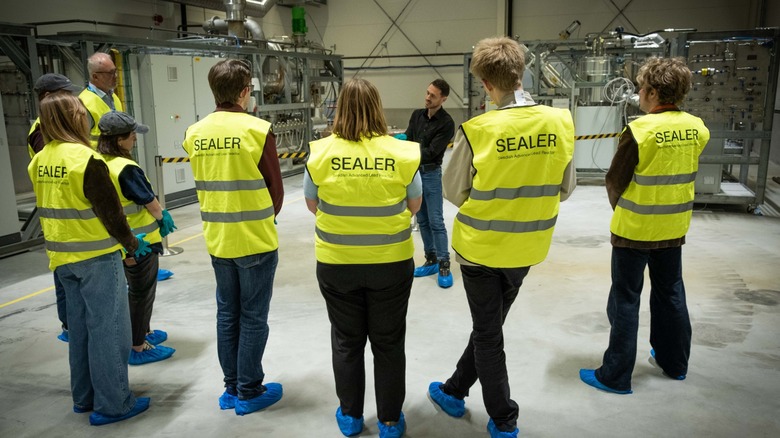
Normally, a lot of planning goes into constructing a nuclear power plant because the whole area around the reactor has to be built. Blykalla reduces some of the pressure by making the reactor fit the building, not vice versa. Stedman says that since the company's SMR is so small, Blykalla can build the reactor in quality-controlled environments and ship it out on flatbed trucks. Think of building traditional nuclear power plants like cathedrals. They're big and downright ornate, and location is paramount (nobody wants to be too far away from a cathedral; everyone wants to be far away from a nuclear reactor).
However, Stedman likened manufacturing Blykalla's SMRs to airplanes — when manufacturing is complete, you ship planes out to airports instead of building the airport around them. Another advantage of Blykalla's SMR and its (relative) portability is that you can build its housing plants just about anywhere. Blykalla promised to power AI centers with its SMR, which played a huge part in securing the aforementioned deals, and Stedman claims co-locating plants close to these facilities will be an important factor going forward.
Imagine a data center built with its own nuclear reactor; that's the future Stedman envisions. But that isn't the only industry that can benefit from Blykalla's SMR. Power plants that run on Blykalla tech can be built next door to refineries, steel mills, and mining operations. Even NASA wants to shoot a nuclear-powered rocket to Mars. According to Stedman, an SMR would not only be a compact power source, but if it were filled with uranium nitride, you could pack 40% more fuel into it than a reactor running on uranium dioxide — two oxygen atoms take up more space than one nitrogen atom.
Blykalla isn't a one-company show
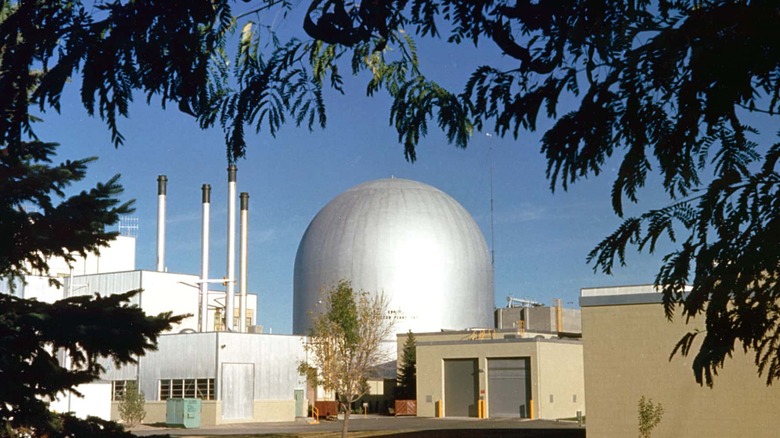
As stated in the intro, Blykalla is working with the DOE and Oklo to bring its technology to the U.S. Oklo is another manufacturer of nuclear technologies and specializes in reactors that "recycle" nuclear material. Technically, the company just makes reactors that use more of the fissionable elements than other nuclear plants, but that's what attracted Blykalla's attention.
Did you know that many nuclear fuel rods are thrown out with 90% of their potential power remaining? Jacob Stedman says that Blykalla decided to partner with Oklo because it could reduce the waste. Thanks to the collaboration with Oklo, Blykalla's SMRs use significantly more of the material before requiring a refill. In fact, Stedman claimed that Blykalla can take uranium rods that are considered "spent" and use them to "top up" the company's reactors, making them more sustainable. Stedman also clarified that Oklo isn't just Blykalla's partner; the company also invested in Blykalla.
Moreover, the CEO and co-founder of Oklo, Jake DeWitte, serves on Blykalla's board. According to Stedman, this intermeshing gives the companies access to the same supply chain partners and R&D, which not only ensures parts compatibility but also lowers costs. These benefits will help Blykalla "set up shop" in the U.S., and the company will return the favor, as Stedman stated Oklo is eyeing the European market as well.