

Gold Isn't What Makes Your Old Tech Valuable — Here's Why
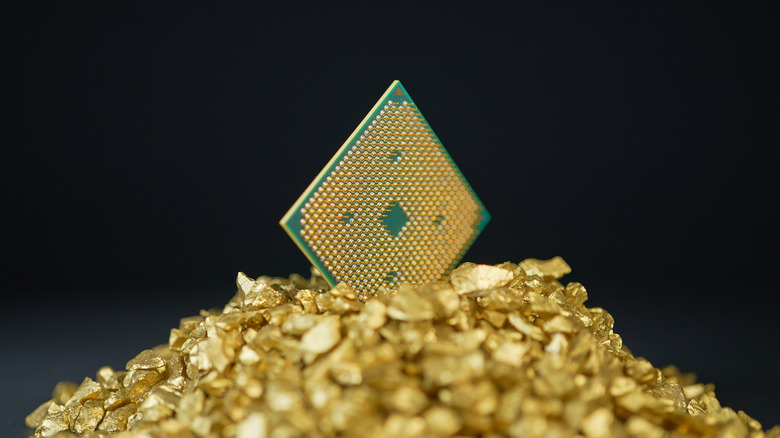
If you're interested in technology, you probably have an old phone tucked away somewhere, maybe a few outdated sticks of RAM, or a gaming console that's years past its prime. All of these contain tiny amounts of gold and other rare metals, but collecting, processing, and refining it is a complex and dangerous process that will likely cost more in materials than you'll ever make. The truth is that leaving your old devices intact is less work and also better for your bottom line.
Modern laptops contain about one-tenth of a gram of gold because it has excellent conductivity and doesn't corrode easily. That said, components are typically gold-plated, so if you're looking to profit, the gold first has to be separated from other metals — and even assuming a perfect extraction, 0.1 grams of gold is only worth around $12.80. Your laptop's RAM alone could fetch more than that, and people are willing to pay a lot for replacement parts, especially if the device they're trying to repair is no longer in production.
Sometimes, purchase price isn't even about the technology itself but what the hardware represents. For instance, some electronics from the 1970s are worth big money today either because they were instrumental in changing the tech industry or just plain unusual. Nostalgia is a huge factor too, and if you're skeptical about that, just know that used Nintendo 64s still sell for about $150 on eBay 30 years after their release.
If you can't sell your old tech, recycle it instead
Here's the thing: Precious metals are ... well, precious. There's only so much to go around and the tech industry demands huge amounts (3,600 tons of gold were mined in 2025 alone), which is how materials acquired through less-than-ethical means are able to end up in the supply chains of major electronics manufacturers. Worse still, this is completely unnecessary, as more than 50 million tons of e-waste is produced annually, meaning substantial amounts of rare minerals are added to landfills every single year.
This is why it's so important to recycle old hardware you no longer want. There are many ways to achieve this, such as donating tech to someone who would personally benefit from it or simply giving your device a new lease on life (old tablets make excellent e-readers and digital photo frames, for instance). There are also e-waste recycling companies that would be thrilled to accept outdated technology most people have no use for, like fax machines or landline phones.
As humans, we're quick to discard anything that no longer seems helpful. The next time you discover a forgotten piece of technology in your home, try to remember that it presents an opportunity to do good, whether by putting money in your pocket, teaching someone something, or reducing, even imperceptibly, the damage that is being done to the planet. Where old tech is concerned, the only bad decision is to thoughtlessly throw it away.