

10 '70s Electronics Nobody Wanted That Now Sell For Serious Cash
We may receive a commission on purchases made from links.
Electronics rarely appreciate in value. New technologies come out every few years, making the older tech obsolete. You either sell your old gear at a modest price, find interesting uses for it, or just trash it. But that's not always the case. Sometimes, older gadgets become collector's items.
A collector's item typically combines curiosity with scarcity. Experimental gadgets by otherwise well-known brands fit the bill perfectly. These are electronics that flopped on release but are now highly sought after
Then there are the short-lived electronics that were simply outpaced by technological innovations. This happens to all tech, of course, but some electronic gadgets are particularly ill-timed, getting completely superseded in just a couple of years, leaving them as curiosities for future examination. These electronics that nobody once wanted now sell for serious cash online and at auction houses. Let's go over some of these gadgets — maybe you will find something you have lying in your attic too.
Hewlett-Packard HP-01 Calculator Watch
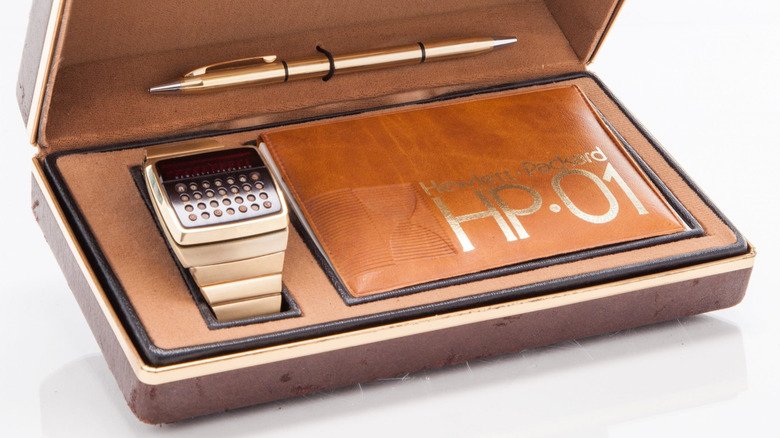
Casio calculator watches are an iconic '80s gadget that is even winning over smartphone wearers, but they weren't the first on the market. Before Casio popularized the calculator watch, a few other companies attempted their own versions with varying degrees of success. The first of these was Hamilton Watch Company's Pulsar calculator watch. It didn't find many takers, not least because the watch's capabilities themselves were rather limited, despite the calculator tacked on.
Hewlett-Packard released the first "calculator watch," equipped with six separate semiconductor chips and capable of parsing multiple complex data types. It was marketed as a watch that could not just function as a calculator but also as a calendar, an alarm clock, and even a timer. Which doesn't sound like much in the smartphone era, but was an unprecedented level of integration at the time.
It still suffered from issues: the LED display drained the battery too quickly, and the keypad required a stylus. It was also rather expensive, especially for the time. Casio would later solve these problems with an LCD display and a hand-operated keypad, gaining popular success that the HP-01 couldn't. But in the decades to come, the surviving copies of the unique watch would be considered incredible pieces of engineering, and if you happened to have bought one back then, you could sell it for $4,000 or even more for the gold-plated version.
Apple I computer
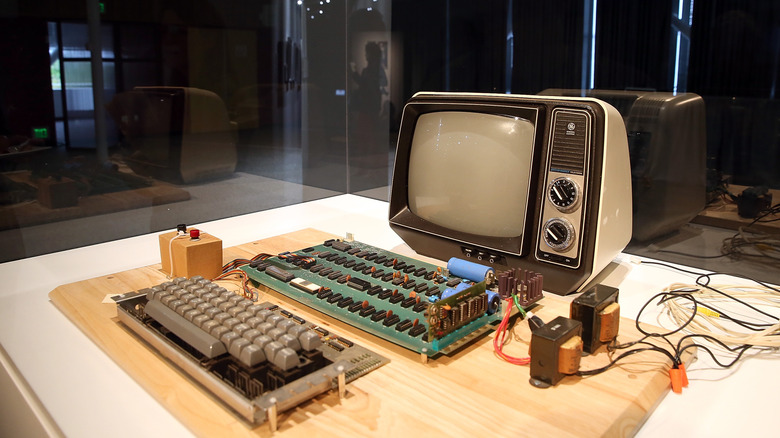
Apple is one of the world's biggest tech brands today, selling gadgets ranging from the iconic iPhone to the elegant MacBook. But when the company started, it only sold one thing — a personal computer, one of the first in the world. In a time when computers were sold to hobbyists as electronic kits to be assembled by the buyer, Apple offered a pre-installed computer that could be plugged into one's television. This computer was the Apple I.
It was a humble system, nothing like the sleek machines that Apple would come to be known for. The Apple I was simply an assembled electronic board, though most retailers sold them in wooden cases, creating a rather unusual-looking computer. The PC was moderately successful, putting Apple on the map and raising enough capital to begin operations with the Apple II. Owing to the ad hoc construction of the Apple I and the technical issues it created, the company discontinued the PC in just a year, even buying back some units and destroying them.
As a result, very few intact pieces of Apple's first product now survive, making it an incredibly rare and valuable collector's item. In the unlikely event that you still have an original Apple I computer in your possession, you can expect to sell it for an astronomical sum, with both collectors and museums looking to buy it. Functional Apple I machines in their rare wooden casings have been auctioned for $475,000.
Xerox Alto II
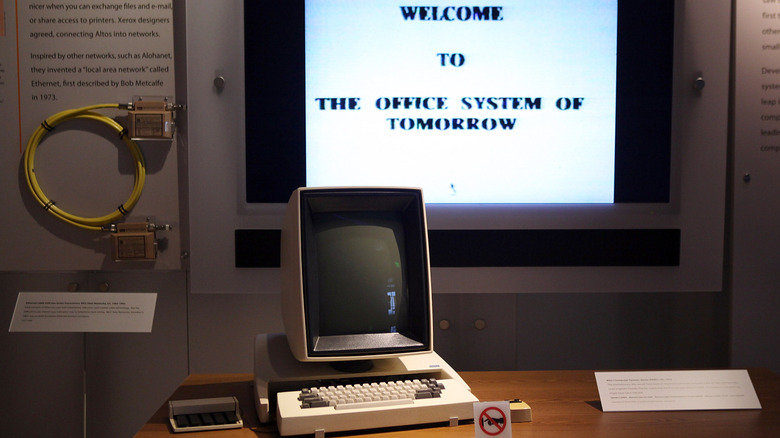
Apple is famous for making personal computers popular with its Apple line of computers, but it wasn't the first to do so. Xerox, better known for its iconic photocopier, was the first to make a personal computer with a Graphical User Interface (GUI). Called the Xerox Alto, it was a complete workstation, with a mouse, keyboard, and Ethernet connection attached, unusual for the time. The company would improve the computer to release the Xerox Alto II soon, enhancing the machine's multitasking capabilities.
But then why is the computer not better known? The fault lies with Xerox itself. The computer was never mass-produced or marketed to the public, but was kept as a curiosity for internal use and research. As a result, when Steve Jobs visited the Xerox PARC research facility and saw the Xerox Alto II in action, he realized the technology's potential and was able to capture that market undisputed. Xerox would later attempt to follow in Apple's footsteps, but by then it was too late.
This left the Xerox Alto as an extremely rare piece of history, one of the first PCs, yet with very few machines in the world because it was never commercially sold. Any surviving pieces of this historical computer are auctioned as genuine antiques at leading auction houses, fetching as much as $250,000.
Philips vintage VCR
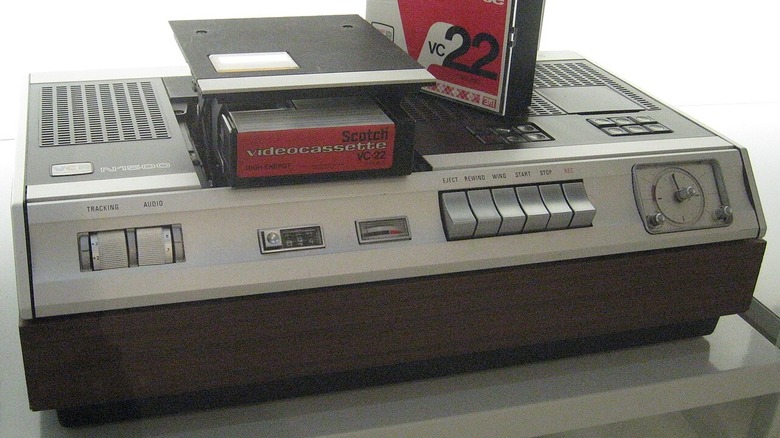
The VCR is one of the '70s electronics that shaped an entire generation, but several experimental products appeared before the VHS format revolutionized home media. The first to make a splash was Sony's U-matic VCR, which used tape cassettes instead of the open-reel format. It was too expensive for home users, though, and instead catered to commercial clients.
Then Philips introduced its Video Cassette Recorder (VCR) format. It was a somewhat bulky device that could record television programs onto large square cassettes, allowing people to watch their favorite shows and movies on demand for the first time. And in color, too, which was rare at the time, when tapes were still recorded in black and white. It was still rather expensive, however, and had many technical peculiarities, despite the challenges it overcame. As a result, it wasn't the most popular product, with very few being able to afford one.
The arrival of the VHS format made Philips VCRs redundant, offering much better features at a much lower price point and with smoother operation. Philips quietly retired the lineup, making it a rare vintage item in the hands of a few. Unsurprisingly, collectors now buy these VCRs at steep prices, with the first and oldest model selling for $2,000.
IBM Selectric II typewriter
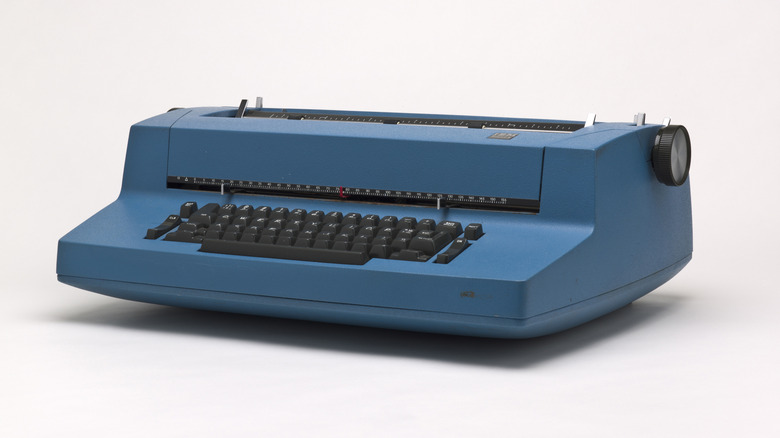
Back in the '70s, typewriters remained standard issue. Affordable, easy-to-use personal computers were still some ways off, which meant that offices around the world still relied on the typewriter to churn out documents. But the typewriters themselves were changing. The classic typewriter is a purely mechanical device, hammering out characters on an inked ribbon, requiring considerable force and leaving no room for error.
Electric typewriters appeared in the 1960s. The IBM Selectric was a market leader, becoming a common sight in offices and schools in the coming decades. In the '70s, IBM released the Selectric II. It was a curious typewriter — unlike any other model before, it featured a correction key. Using the key, it was possible to erase a character and retype it, serving as a pre-digital backspace key.
Today, the Selectric II isn't especially rare, but it's curious enough to sell well. A working model is worth anywhere from $150 to $250, depending on its condition. The Selectric II used little typeballs instead of the typical typebars, and these can sell for $200.
Polaroid Big Shot
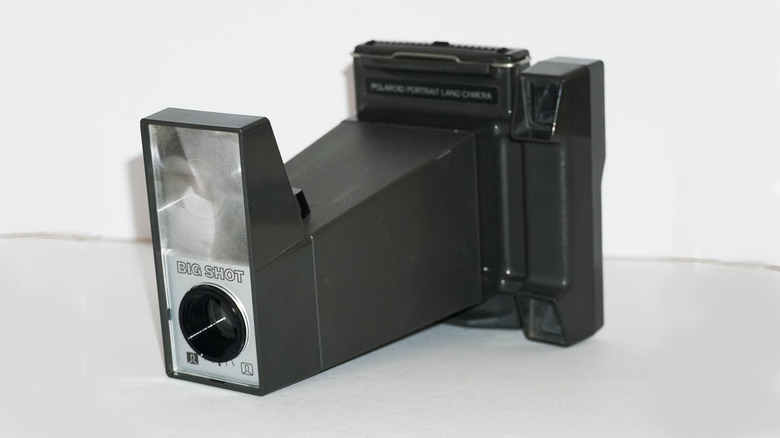
If you look into the iconic '80s tech gadgets that nearly every home had, the Polaroid will probably be at the top of that list. The idea of taking a shot and instantly getting a developed photo was incredible for its time, and the Polaroid SX-70 became a household phenomenon, making photography convenient and instantaneous for even normal users. But the SX-70 wasn't the only interesting camera that Polaroid made. A more unusual type of photo camera was the Polaroid Big Shot.
The Big Shot was a bulky, massive camera designed for portrait photography. To this end, it has a weird, blocky design that looks nothing like any other camera you have seen. The camera body is a chimney-shaped tube, with the lens at one end and the eyehole at the other. With no focal adjustment, which means you have to judge the distance very carefully to take any photograph. For the camera flash, you used "magic cubes", which were disposable flash bulbs that would provide the intense illumination needed for a shot and burn out.
This wasn't a camera meant for the average hobbyist, but for professionals willing to pay for specialized equipment. Such customers were few and far between. Today, a complete set of the Polaroid Big Shot camera is a novelty item that goes for $600 on resale platforms, or $200 for the camera alone.
Polaroid Polavision
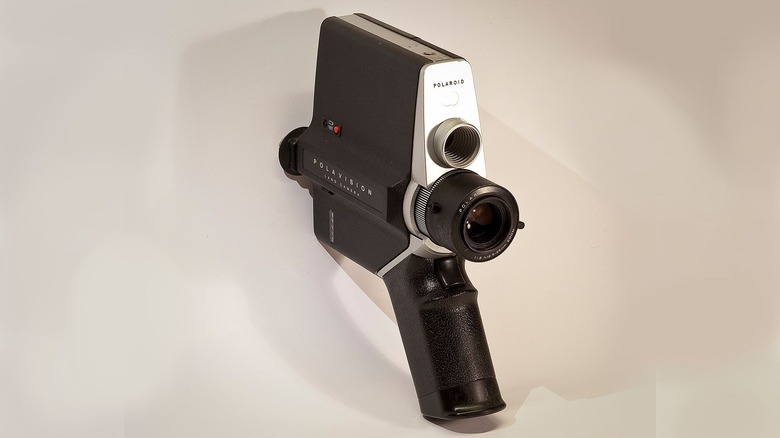
Polaroid still creates innovative products, such as a photo printer that doubles as an entirely different gadget, but the brand is no longer the icon it was in the 1970s. This dramatic reversal of fortune can be traced to one disastrous product — the Polaroid Polavision.
The Polavision was supposed to be the company's next big thing, one that would make it a household name again, put it ahead of competitors that were eating it alive, and secure the instant camera niche. It was basically a high-end camera, but for video. Unlike the instant film camera, however, it was anything but convenient. It could shoot only a couple of minutes of footage and develop it into a grainy film that looked worse than the cheapest film camera on the market.
The process was also cumbersome: you had to attach the Twi-Lite attachment to the camera, somehow shoot with the unwieldy result, and then plug the cartridge into the accompanying Polavision Player and pray that you saw something. It was a complete flop, and the investment in the product led to the company going bankrupt afterward. Now the Polavision camera set survives as a pricey symbol of the company's fall, selling for $800 in mint condition.
Fairchild Channel F
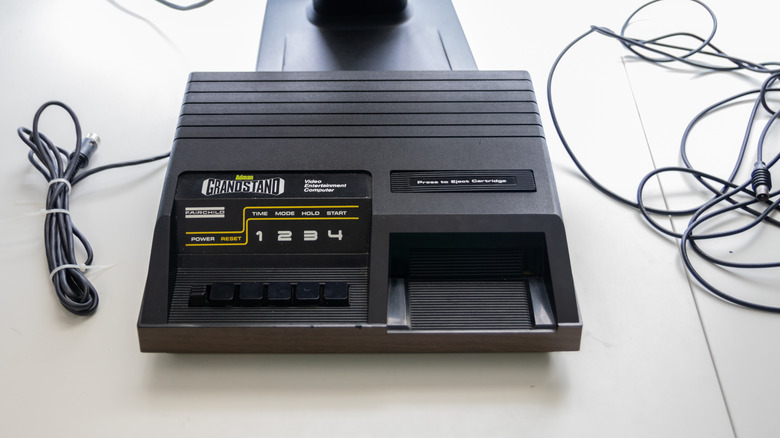
The console wars didn't start with the competition between PlayStation and Xbox in the 21st century, or even with the duel between SEGA and Nintendo toward the end of the previous one (if the names sound unfamiliar, know that before PlayStation and Xbox, '80s kids played on these consoles). No, the console wars started in the '70s, when multiple companies raced to be the first to make home consoles successful. We all know who won this war — the Atari 2600, thanks to its swappable game cartridges and improved graphics.
But Atari wasn't the first home console. That honor belongs to the Magnavox Odyssey, which launched in 1972 with extremely basic functionality, capable of only displaying monochrome dots. It was the Fairchild Channel F that would actually release a system with swappable game cartridges, offering the same flexibility Atari would later be known for. The problem was that it just didn't have the hardware capabilities to make the most of it.
The Atari 2600 would be released with twice as much RAM and a more powerful microprocessor, enabling more complex games while retaining the original selling point of a home console that used game cartridges. The Fairchild Channel F fell by the wayside, overtaken by Atari in every respect, and ceased production. It is still remembered as one of the pivotal first-generation consoles and commands a fairly high price in the collector's market. A complete-in-box unit of Fairchild Channel F goes for $600.
Eiki 16mm slot-load projector
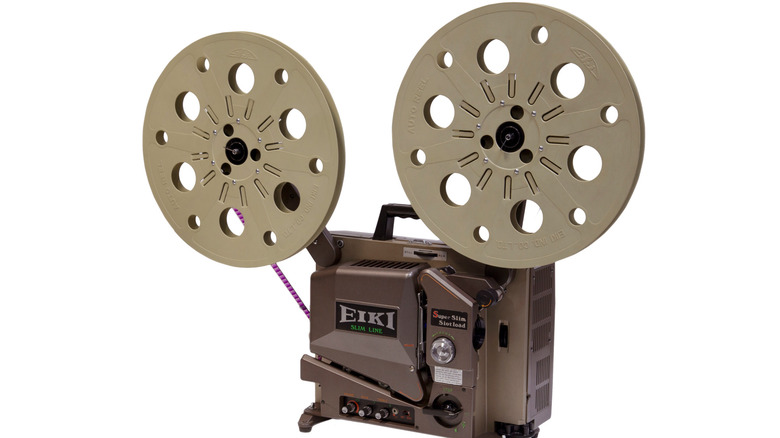
Film projectors are an old technology, working in tandem with filmmaking to let people view the recorded videos. That was how cinema started after all — powerful machines projecting a film reel on a giant screen for a crowd to enjoy. But home projectors are trickier. Vintage film cameras were bulky devices that recorded images on film. This means that projecting them also requires handling the physical reels, which makes projectors large and complicated.
Eiki, a little-known Japanese projector brand, was one of the first to solve this challenge with a slot-loading projector. Sporting an unusual design, the projector had two arms with spindles at the ends. You could simply slot a reel of film onto one spindle, an empty reel onto another, feed the ribbon, and it would get to work. This greatly simplified the process of projecting film, making it one of the few projectors that amateurs could use.
But as a Japanese brand, the company's reach was limited. The Eiki 16mm slot-loading projector did not get a direct global release and was mostly popular in film circles. As this was a time before digitization, smaller film communities relied on the Eiki projector to view recordings at home, as it was one of the few projectors small enough to carry around and set up easily. Now, the surviving projectors are a part of film history and can sell for $500.
Aiwa boombox
The invention of the transistor radio changed the way people listened to music, but it was the new technologies of the '70s and '80s that truly brought about a musical revolution. The Sony Walkman was one of the classic Sony gadgets that made the '80s so much cooler, bringing the ability to listen to audio cassettes on the go. But that wasn't the only audio technology to emerge from Japan during this period. The High-Fidelity or HiFi audio trend was also popularized at the time, with complex stacks of Japanese audio equipment promising the most accurate sound reproduction.
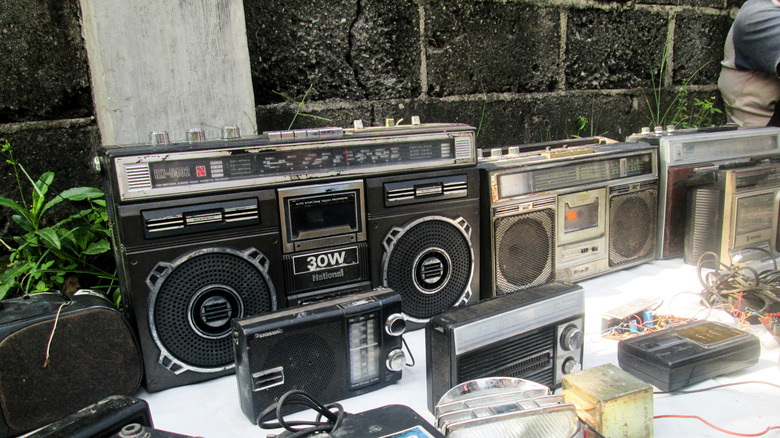
But a drawback of such high-quality audio setups was their lack of portability. You needed loudspeakers, amplifiers, and music players, creating a bulky setup you couldn't carry around. Enter the Boombox. Brands like Aiwa and Panasonic made the first boomboxes, combining miniature loudspeakers, an amplifier, and a cassette player into a single, fully featured, high-quality sound system.
The boombox ended up becoming iconic. It was a portable yet bulky device that could dish out heavy beats wherever it was placed, making it a symbol of the youth's rebellious cultural expression. And Aiwa, one of the creators of the technology, made some of the best boomboxes of the '70s. There were quite a few models, but you can expect a functional vintage Aiwa boombox to fetch $400 on the resale market for retro music fans.