

10 '80s Tech Items Nearly Every Home Had
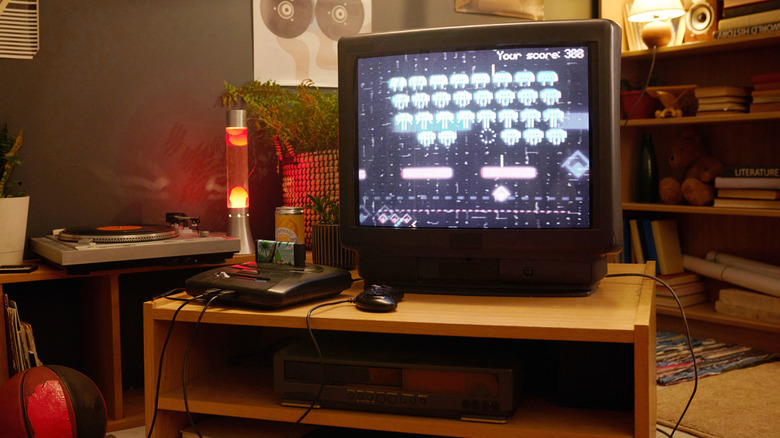
The '80s was a decade on the constant cusp of technological transformation, and, in many ways, this period was the last hurrah of analog devices. By the '90s, tech running on magnetic tapes, photographic film, and even simple computer chips would all be replaced by the advent of digital electronics. Digital devices were smaller, cheaper, and easier to use, but along the way, something was lost in translation.
Compared to the minimalistic design of modern devices, old-school analog gadgets were big and bold, and they had functional, purposeful designs that ended up defining a generation. Today, it's hard to think of life without a smartphone, Wi-Fi, LED TVs, or essential smart home gadgets, but back in the 1980s, the home looked much differently. To highlight the differences that have taken place over the last 40 years, here are 10 tech gadgets from the '80s that every home had to have.
VCR
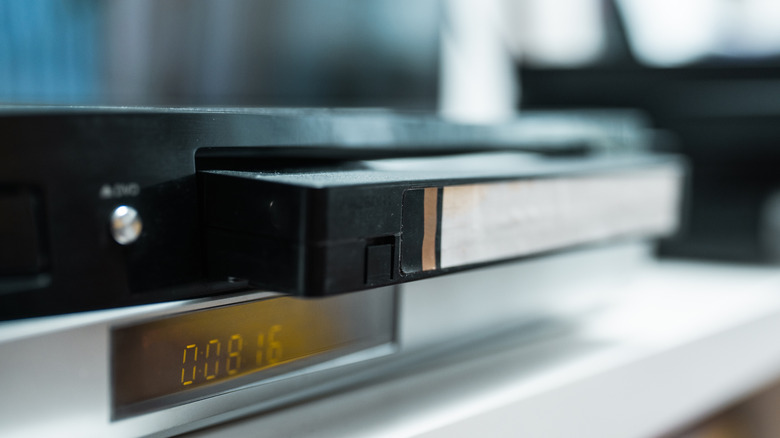
Long before binging and streaming was a thing, the only way to catch a movie or a show at home was to hope you were home at the time it aired and pray that nobody else in the house wanted to watch something different. Of course, you could also wait for the reruns. That all changed with the advent of the video cassette recorder, or VCR, which just happens to be one of gadgets from the '80s we can't help but love. The VCR became a staple in most homes, giving users more freedom than network TV allowed.
In terms of format, VHS quickly became the standard for VCR cassettes over Betamax, but both featured magnetic tapes used for audio cassettes to store analog video recordings. This allowed users to record and watch videos on demand for the first time in history. But the tapes themselves were still rather expensive, and it wasn't economical to simply buy and stock every new movie that came out. This gave rise to the whole video rental culture. Video rental stores would maintain a library of VHS tapes that you could rent to watch, giving home viewers access to a much larger collection than they could own themselves. And don't forget about the automatic VHS cassette rewinders that made it easier to "be kind, rewind" your rented movies.
Home stereo system
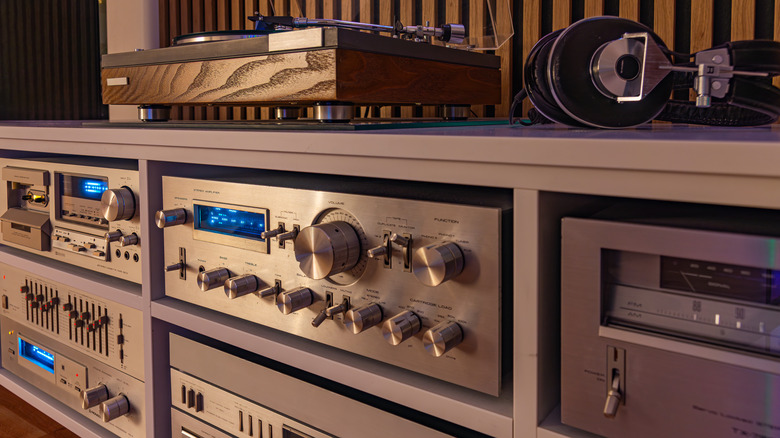
The '80s were also a time of a musical revolution. Cassettes had already made music portable; all that was left was a home audio system capable of reproducing those dulcet tones. This was the dawn of the home stereo system, with towering speakers and a bulky stack of complex audio components that worked together to make the magic happen. Even the turntable was modernized with Technics releasing its sleeker, smoother version that eliminated the jitters that usually came with playing records. The result was the high-fidelity home stereo system that delivered an audio quality and response better than anything seen before.
But not everyone liked the idea of investing in a bulky audio setup that you couldn't even move around. Boomboxes were invented in response to this need for portability and simplicity, combining stereo speakers, a cassette player, an AM/FM tuner, and a built-in amplifier to give the complete home stereo experience in a more compact package. Powered by batteries, you could carry a boombox anywhere. These devices were insanely popular with the youth, kickstarting the nascent hip-hop culture. Boomboxes still command high prices as collectibles, being one of those rare vintage tech products that could be worth thousands.
Atari 2600
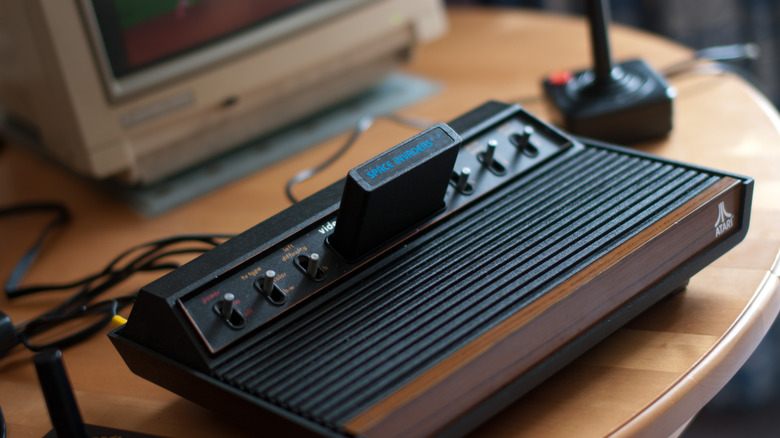
Most homes today will have a PlayStation or an Xbox in the living room, but back in the '80s, neither of these consoles existed. Video games were found in arcades, where you inserted coins to play a round. Some efforts were made to bring a version of this arcade machine home, but they were not very successful, owing to the fact that every machine came pre-baked with a fixed number of games and had no way to get more. While this approach worked for arcades, where you could simply pick another machine, for a home console, this was a death knell.
Then Atari created the Video Computer System (VCS). Deliberately named similar to the VHS, it had the same enticing premise — a system that could hook up with your television and play any Atari arcade game in the comfort of your home. The Atari 2600 played games through an inserted cartridge, which unlike arcade games allowed the system to offer unlimited expandability. For the first time, kids could play any game they wanted at home, with new arcade titles available as purchasable cartridges.
Soon, other consoles like the Nintendo Entertainment System (NES) and the SEGA Genesis followed suit, becoming some of the most popular gaming consoles that defined the '80s. The Atari faded into obscurity, unable to keep up. But for the early part of the decade, there was no console that was more iconic than the Atari 2600.
Corded phone
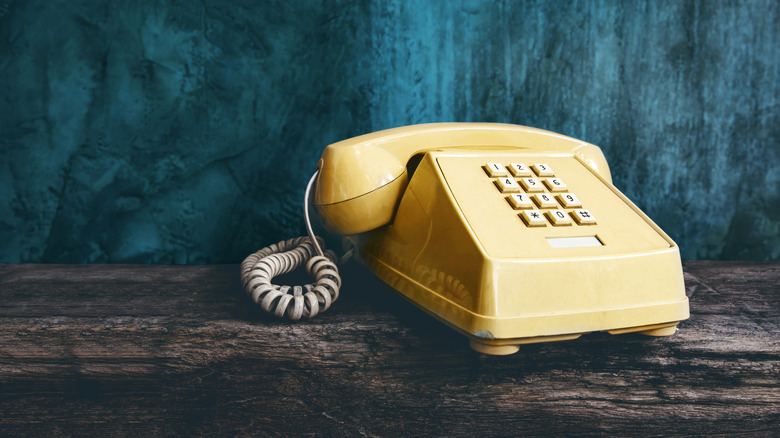
Telephones were not a new invention of the 1980s, being one of the electronics from the '60s that shaped an entire generation, but what did What changed in this decade was the economics of owning a phone. Telephones used to be prohibitively expensive, but as phones and phone service became more affordable, home phones became a feature in almost every house.
This created a revolution in telephone design. Sure, you could get a phone that just served its purpose, but most homes had a phone that could double as a decorative piece, not just a utilitarian device. Echoing this design philosophy, the market saw the arrival of a wide variety of bold telephone designs, from the retro to the futuristic. You might have had a gramophone-style phone in the living room, with a transparent phone in another, with little lights that glowed alongside the ringing.
There were also a lot of toy phones using designs of favorite cartoon characters, like Garfield or Mickey Mouse, or unusual styles like fake payphones. By the end of the century, cordless phones and functional designs would take over, giving the simple, sober phones that were just sleek plastic cases of unassuming colors.
Answering machine
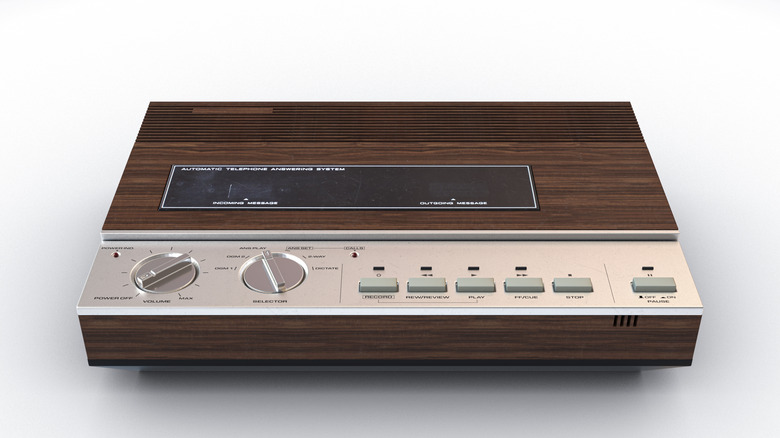
The utility of mobile phones goes beyond simply making phones convenient. They also made phone communication more reliable. Before the advent of portable phones, there was no guarantee that the person you were calling would even be able to answer. If you were outside when your phone rang, you would have no way to even know you got a call, let alone from whom. That is why, in addition to landline phones, all homes also had an answering machine.
The idea behind the answering machine was straightforward: a device that could play a pre-recorded outgoing message in case no one picked up the phone and record messages from incoming callers. Early answering machines used cassette tapes (either compact cassettes or mini cassettes), but later models used digital recordings. While the technology had existed way before the '80s, it was only in the early part of this decade that these machines became affordable enough to become a ubiquitous part of households.
CRT TV
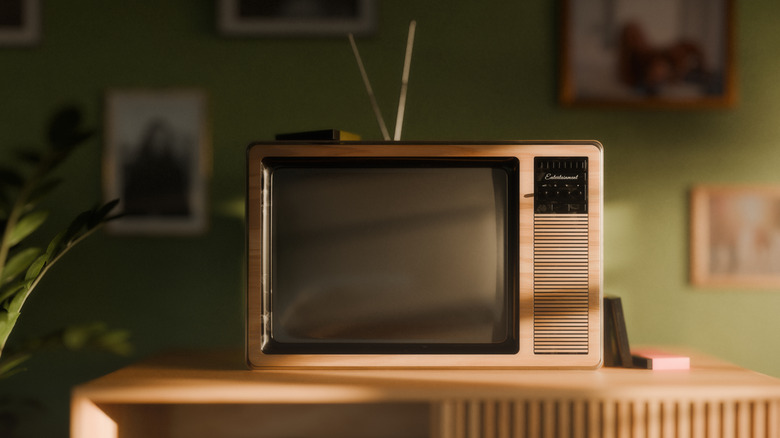
From Atari consoles to VHS players, we have already mentioned a couple of '80s gadgets that plugged into televisions, but the TV itself was different back then. Nowadays, we are used to sleek LED panels that stand up against the wall with barely any thickness, but before LEDs or even LCDs, there was the CRT TV. The CRT stands for cathode ray tube, the technology powering the TV, just like the light emitting diode (LED) of today.
Instead of a screen made of individual LEDs that glow in different colors, the screen was a specially treated surface bombarded with electron beams. The beams were carefully controlled by an electron gun at the back to trigger specific colors at specific points, and do it quickly enough to create a moving picture. As you might expect, this was a bulky contraption, with a huge box behind the display to host the whole electron gun and its control mechanisms.
But the bulkiness of the old CRT TV had its own charm. A television set of the '80s was done in a wood-paneled finish, with big dials beside the screen to tune channels. It resembled a piece of furniture more than a gadget, like most tech items of this time, and was a very visible part of the home's decor. Over time, even the CRT would be turned into a sleeker plastic contraption, adhering to the demands of modernism yet losing the aesthetic appeal of its '80s style.
Calculator watch
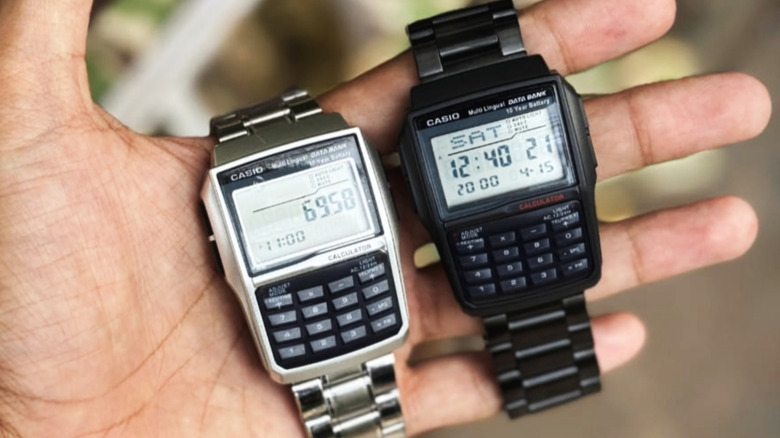
The '80s were an interesting time in terms of digital technology. It marked the beginning of microprocessors, better batteries, and even the new LCD technology that could drive small displays more easily than the bulky CRT. And with a clear need for a simple computing device that could be carried around anywhere and could perform basic digital functions, these tech elements helped create the earliest example of a "smart" watch, the Casio C-80 calculator watch.
While digital watches themselves were not a completely novel concept (a couple of overpriced models had been released before), the idea of a sleek and affordable calculator watch was. As the first example of a calculator watch, the Casio C-80 became a symbol of the '80s. These mass-produced calculator watches were as practical as they were fashionable, in a time when digital calculators themselves were very useful in classrooms and offices. Casio kept innovating on the concept throughout the '80s, later releasing the Databank calculator watch, which also came with the ability to hold entire address books, phone numbers, and even store appointments. This sparked a whole trend, with increasingly advanced digital watches hitting the market, including game watches that would play simple games like Pac-Man on little screens.
Polaroid camera
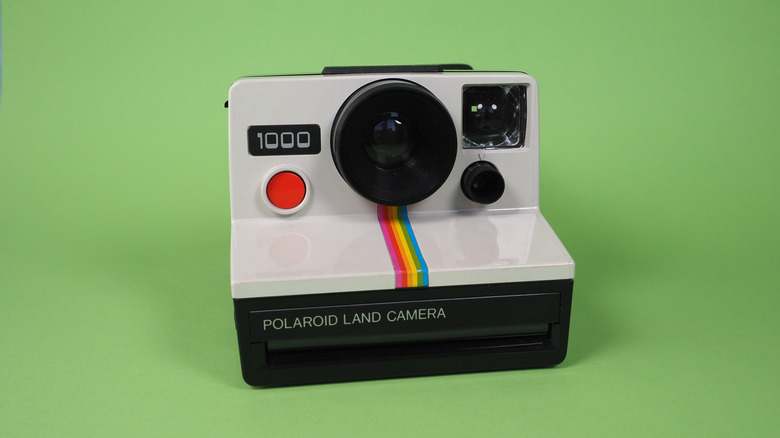
Before smartphones and DSLRs, photography in the '80s was a more involved process. You needed a bulky camera and rolls of expensive film. Clicking a photo didn't mean you could immediately see it either; the film had to be sent in to be developed, giving you the actual photographs a few days later. As you might expect, this kept photography limited to professionals, with only a few hobbyists dabbling in the complicated process.
But then, Polaroid changed everything. Founded all the way back in 1937, the company had constantly chased the ideal of an instant camera — a device that could click a photo and print it out immediately, removing the whole development process. This technology was perfected by the '70s, and by the early 1980s, every house had a Polaroid camera, letting anyone take a photograph easily.
The cost of film was still a barrier, but the sheer novelty of being able to immortalize a moment into an instant picture overcame such concerns. It also helped that the photographer did not need to worry about things like exposure and negative or positive film, since the camera automatically handled these details automatically. Even now, when the technology is pretty much obsolete, the instant camera is one of the pieces of dead '80s tech that will stir up emotions in every boomer.
Sony Walkman
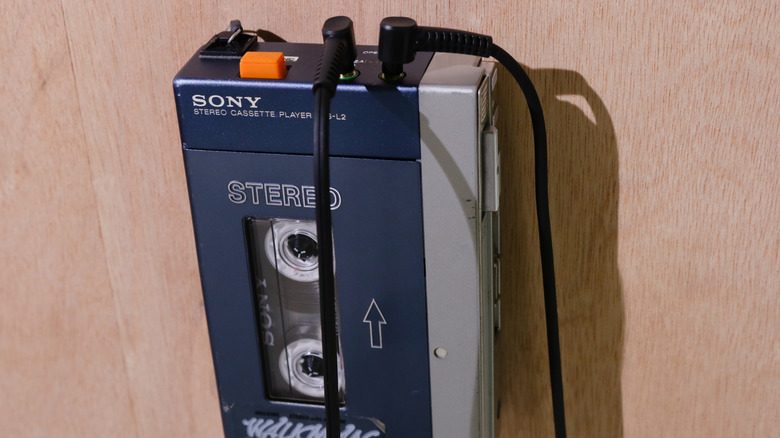
The concept of recording analog music on magnetic tape had been refined by the '80s, with audio cassettes bringing music to every home. The problem was playing the cassettes – you still needed to get a bulky cassette player and connect it to speakers to be able to listen to anything. So while the cassettes themselves were portable, the music listening experience still wasn't. Until the Walkman.
Developed by Sony in 1979, it was one of the classic Sony gadgets that made the '80s so much cooler. A technological marvel of its time, the Sony Walkman took the world by storm, offering a small, pocket-sized cassette player that could run on batteries. This is where the headphone culture started. For the first time, you could plug in some headphones into a portable music device and enjoy your music on the go. The Walkman sold really well, with virtually every house having one or more Sony Walkman models. It became so widespread that the term Walkman was used to refer to all portable cassette players.
Speak & Spell
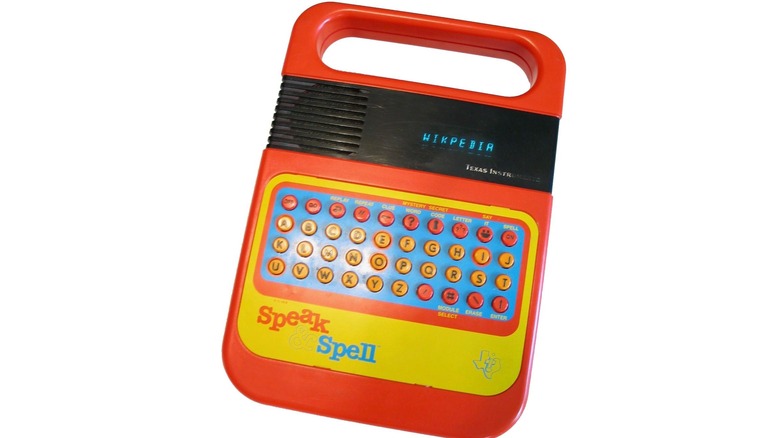
The '80s were also the period when computers were rapidly innovating. Texas Instruments is credited with creating the first integrated circuit, the microchip, in 1958, and in 1978, it had developed a speech synthesizer chip. Soon enough, Texas Instruments began looking for an application of its new tech and decided to create an educational toy, called Speak & Spell. This prompted kids to spell words using the keypad and it read the words back using a speaker, which verbally encouraged users for their efforts.
All this was done without the use of any recorded sounds on a magnetic tape, allowing the Speak & Spell to be surprisingly compact without the need for cassettes or bulky moving mechanisms. Its durable plastic case and raised buttons were key selling points for the toy, as any device meant for kids had to be durable and easy to use. As a result, Speak & Spell debuted as one of the first portable gaming consoles, and it can even be considered one of the earliest examples of a modern tablet. It even used cartridges like any console, containing the word libraries that allowed it to speak in a particular language and dialect. Despite its tiny LCD screen, tiny speakers, and simple keyboard, it was the most interactive portable computer of its time, and it became a staple in most households with kids.