

Can You Use A Pressure Washer To Clean Your Solar Panels?
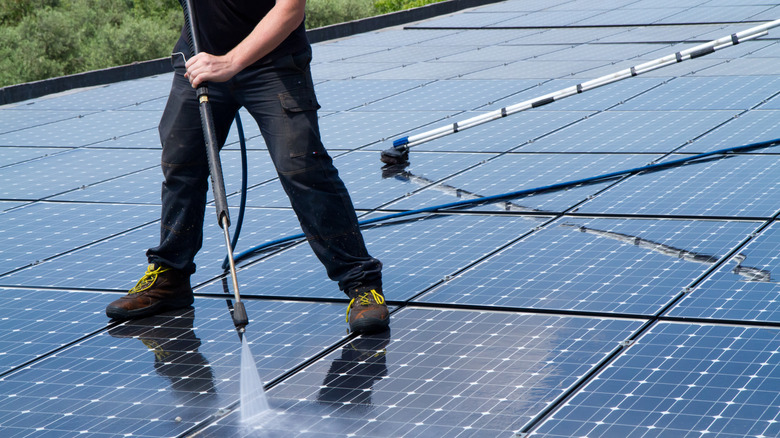
A good pressure washer is one of those essential gadgets every homeowner should have, but can you use one to clean your solar panels? The answer is generally no, as solar panel manufacturers strongly recommend against using a pressure washer. That's because the forceful water streams they use can strip the panels' anti-reflective coating, build up moisture beneath frame seals, crack the glass components, or even push debris down into the panels' inner workings. In short, these high-pressure jets of water generally do more harm than good when it comes to solar panels.
With that being said, solar panels absolutely need to be cleaned regularly. Otherwise, your solar panels could be losing most of their power due to dust, dirt, pollen, and other forms of debris accumulation. A thick coating of dirt can also make the panel run hotter, which may cause it to degrade faster. With all else being equal, solar panels last longer with proper maintenance, so let's discuss the safe ways to clean them without breaking anything.
How to safely clean solar panels without damaging them
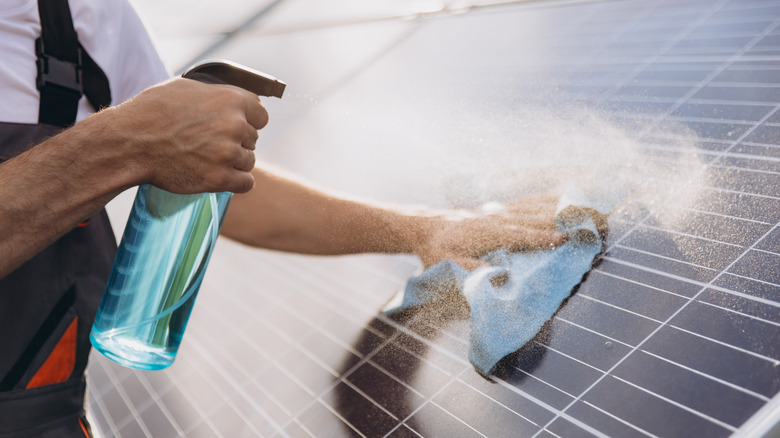
Instead of a pressure washer, you can use a garden hose with a soft sprinkle setting to rinse away everyday dust and debris. For deeper cleaning, use a soft-bristled brush, sponge, or microfiber cloth with a cleaning agent. You shouldn't use glass cleaner on your solar panels, though. Experts recommend a half-and-half mixture of mild detergent with warm water, as harsher chemicals can corrode metal frames or damage the panels' coating.
For hard-to-reach spots, a soft rubber squeegee or an extension pole can help you safely clean your panels from further away. If you're in a situation where a pressure washer is your only option for cleaning your panels from afar, it is possible to mitigate the possibility of damage by using a low-pressure setting with a wide-angle nozzle. This will minimize pressure on any particular point on the panel. Stay on the ground as you work to avoid both spraying the panel head-on and falling or getting struck by falling debris or parts.
In the winter, you don't need to worry much about the buildup of snow. Solar panels still work in the snow, and even though snow cover will reduce the efficiency of your panels, they will still absorb sunlight and generate enough heat to melt the snow quickly. In that sense, you can practically think of your solar panels as being self-cleaning after snowfall.