

How Much Would It Cost To Buy A 3D Printer In 2016 Vs. 2026?
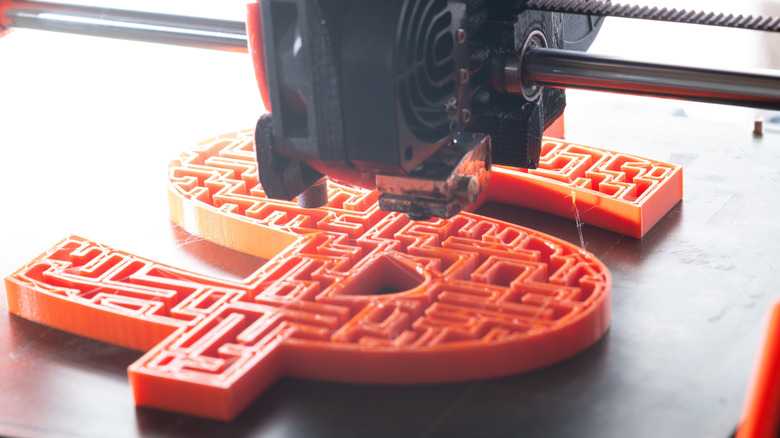
People often look back on previous decades and complain about how expensive everything seems to be nowadays. Thankfully, technology tends to become cheaper over time (current RAM crisis notwithstanding) as adoption grows and old devices are replaced by newer models. Let's say you wanted to get into 3D printing today: There are several multi-color printers available for under $300 and prices can go as low as $200 if you're fine with smaller, single-color prints. Best of all, you can print with plastic, resin, or more exotic materials like carbon fiber without significantly raising your budget.
Things used to be very different. Although 3D printing has technically existed since the 1980s, it was primarily used for industrial purposes and smaller, commercially available printers weren't readily available to hobbyists until closer to the 2010s. In 2016, even an entry-level printer like the Prusa i3 MK2 cost around $700, with more robust options like the LulzBot Mini retailing for $1,250 and resin printers such as the Formlabs Form 2 selling for around $3,500. For comparison, the modern-day equivalents to those (and their 2026 prices) are the Prusa MK4S (around $700 for the DIY kit), the LulzBot Mini 3 ($1,695), and the Formlabs Form 4 ($2,625).
Retail prices alone don't paint the full picture though, since they don't account for how the value of your money has changed. Thanks to inflation, every dollar spent in 2016 is now worth about $1.40, meaning the equivalent to a $600 printer back then would actually cost closer to $846 today. Similarly, a $600 printer purchased today would have cost approximately $425 in 2016 dollars. For the above examples, that works out to about $500 for the modern Prusa, $1,200 for the new LulzBot, and $1,850 for the Formlabs — all cheaper than their 2016 prices.
3D printing enthusiasts should plan for future hardware upgrades
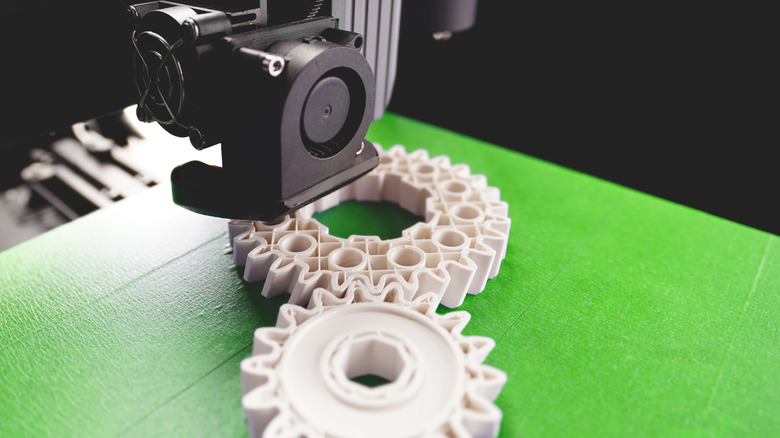
Sadly, 3D printers aren't yet something you can buy for life. Owners typically report lifespans of three to seven years, but if you subject yours to heavy usage, it's likely that components such as the nozzle, belts, and extruder gears will have to be replaced earlier. Many printer manufacturers sell spare parts, but it may also be possible to save some money by printing your own replacements.
Eventually, your device will stop functioning, stop being supported, or just become less financially viable to repair. As such, you'll have to upgrade to a newer printer, and this means paying modern-day prices. There are a couple of ways to insulate yourself against unexpected costs, though. You could opt for a more-expensive model in the hopes that it will last longer (although this isn't guaranteed). Alternatively, consider buying a used 3D printer — this can be a great way to try new technologies cheaply if you find one that's been properly cared for.
The last 10 years have been truly transformative for 3D printing and hobbycraft technology in general. It's now possible to create, at home, in under an hour, things that would have required specialist manufacturing tools in the not-so-distant past. If that thought doesn't get you excited about the next decade of advancement and innovation in 3D printing, not much will.