

10 Of The Least Satisfying Electric Vehicles To Own According To Users
The notion that electric vehicles aren't as satisfying to drive as their ICE counterparts is woefully dated. EVs have advanced by leaps and bounds since their inception, with major car brands going above and beyond to develop models that are satisfying to drive and feature all the bells and whistles present in gas and diesel vehicles, if not more. From the practical Hyundai Ioniq 5 to the iconic Tesla Model Y, the sheer number of options a prospective EV owner can browse is immense. Getting behind the wheel of these electric vehicles will feel incredible, especially given the amount of work that goes into meticulously crafting each and every part of this experience.
However, expecting the same level of care from every EV is unrealistic. Not every car manufacturer can hit the nail on the head when developing a state-of-the-art reliable electric vehicle, especially for newcomers who still need a few years to get their bearings together. While the following cars have some selling points, the sense of satisfaction that one usually enjoys from driving a brand-new EV is lacking. Drivers who purchased these vehicles have mixed opinions about them, as seen in their user reviews and testimonials.
Audi Q4 e-tron
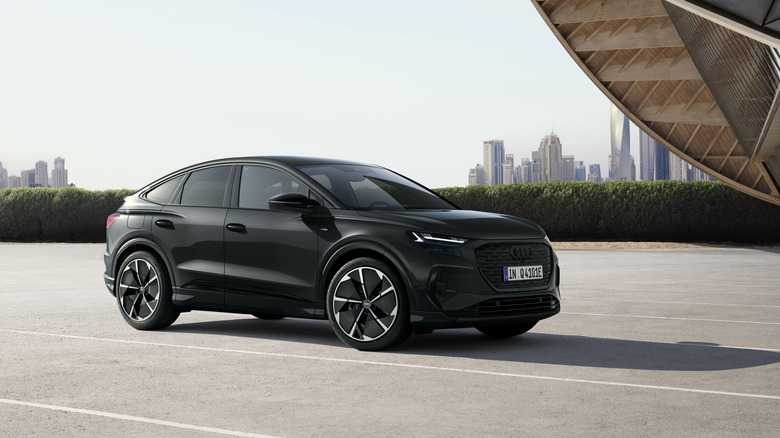
Despite being one of the best-selling EVs of 2025, the Audi Q4 e-tron is far from perfect. The range of this car can go as low as 258 miles, which is the last thing people expect from a vehicle that starts at $50,600. Coupled with a 10-90% charging speed of almost 40 minutes, this makes the Q4 e-tron lag behind other EVs in its price range. The interiors aren't exactly anything to write home about either, with seats that lack the cushioning one would expect from a luxury EV. This is a sentiment shared by owners on Reddit, where it's not hard to find complaints the car's cheap feeling, compared to other EVs.
Exacerbating these problems is Audi's Multi Media Interface (MMI) system, which is meant to enhance the infotainment experience. Instead, users have reported glitches and unhelpful messages that can become distracting during a drive.
As a result, user reviews have been pretty critical about this car, leading to a rather torrid 2.8 stars out of 5 user review aggregate score on Edmunds. Consumer Reports' Predicted Owner Satisfaction rating for this car is also subpar, so make sure that you are confident about your decision before deciding to spend the big bucks on the Q4 e-tron. The car definitely looks great from the outside, the handling feels great, and the suspension's superb quality ensures a smooth ride. Still, in terms of driver satisfaction, you can do way better.
Honda Prologue
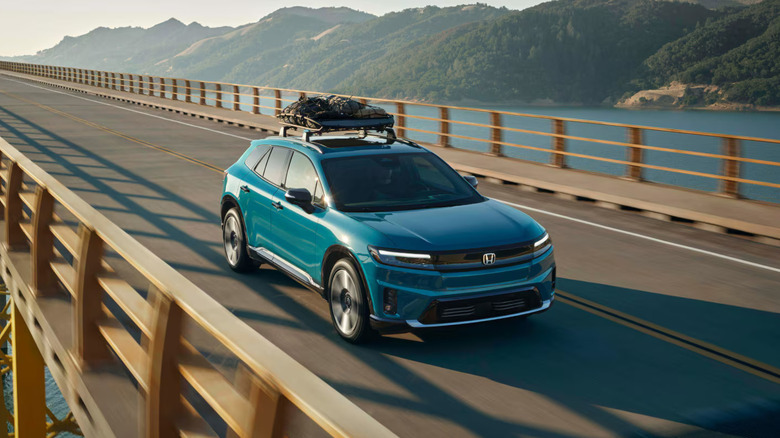
GM-made cars are always a bit of a mixed bag, and the Honda Prologue is no exception. Anyone who wants to enjoy the Honda experience should steer well clear of this car — it's essentially a reskinned Chevy Blazer EV, and one that just feels a bit too similar.
Even in terms of delivering a satisfying drive, the Honda Prologue falls short. Handling is unspectacular, as is the 0 to 60 acceleration time of 5.9 seconds. The rear window has limited visibility and can compound the frustration of driving what should be a smooth EV. As a result, the Honda Prologue becomes a tricky package to recommend. A 3.5-star rating out of 5 on Edmunds from users isn't exactly glowing, while Consumer Reports was particularly scathing with its Predicted Owner Satisfaction score for this vehicle.
That's not to say that the Honda Prologue doesn't have any strengths of its own. A long range of up to 308 miles is impressive for an electric SUV, and passengers will love how roomy the cabin is. Charging times are also impressive, with the Prologue going from 10-90% in 48 minutes. Owners have stated that this $47,400 EV is the perfect family car, which is as good a compliment as it gets. Its performance may not be mind-blowing, but the Prologue will be a serviceable addition to your garage if you need a larger car to drive around with your spouse and children.
Volvo EX90
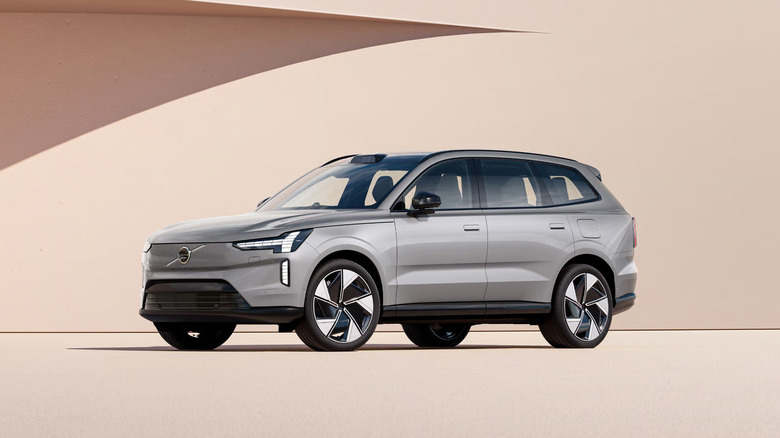
For a three-row luxury electric SUV priced at $79,995, users expected a lot from the American-made Volvo EX90. Unfortunately, it lags behind its competitors in key areas. The 300-mile range and a charging time of 43 minutes to go from 10-90% are painfully average. The touchscreen can also be overwhelming, with a daunting amount of additional controls hidden in the settings. Needing a map to access the full features of your EV isn't exactly satisfying — quite the opposite, in fact.
The Volvo EX90 has a middling Predicted Owner Satisfaction rating on Consumer Reports, and the Edmunds user aggregate score of 1.5 stars seems pretty damning too, though it's based on reviews from only two owners.
That being said, the EX90's performance issues are too numerous to ignore. Problems include the infotainment screen blanking out, doors causing issues with both locking and unlocking, delayed startups, erroneous alerts, digital keys failing to work, and the climate control system conking out. In fact, users were so angry with the EX90's litany of software glitches that a disgruntled consumer went so far as to make a website about it. We would've paid good money to read all the issues of this electric SUV back when this site was active, but this act alone highlights one thing — users have found the Volvo EX90 to be one of the least satisfying EVs they've driven.
Tesla Model X
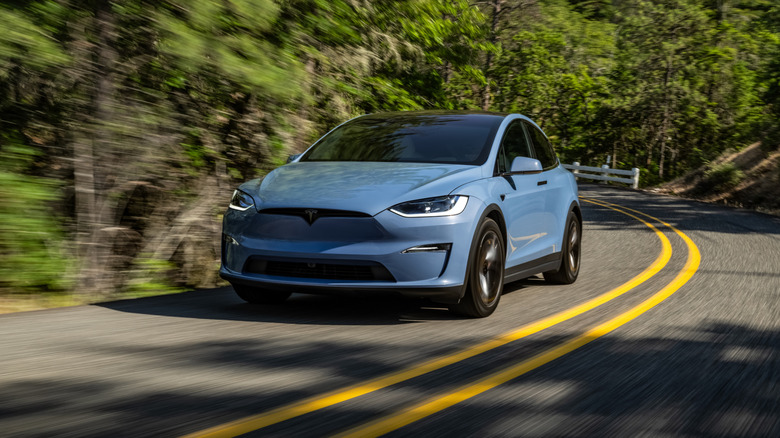
On paper, the Tesla Model X should be a satisfying EV to drive. It boasts an excellent range of up to 329 miles, with the 0-60 acceleration time of just 3.8 seconds being equally impressive. The Tesla Supercharger network makes it a breeze to charge this car during long road trips without a fuss. If you want to drive a three-row luxury EV that feels notably different, then the falcon-wing doors should make your car the talk of the town. So, in spite of all these perks, why is the user review score on Edmunds a disappointing 3.3 stars? The 2026 model doesn't fare all that well on Consumer Reports either, as seen by its unremarkable Predicted Consumer Satisfaction rating.
For starters, Tesla's stubborn insistence on pushing its own tech — great as it may be — means the car lacks support for Apple CarPlay or Android Auto. The windshield's massive size is aesthetically pleasing, but it also lets way too much heat into the cabin. Even the falcon-wing doors, which should be a highlight, have issues of their own. A user reported water leaking into the rear seats whenever the doors are opened in rainy weather. Another parent found out that the child lock doesn't stop toddlers from pressing the button and stopping the doors as they're closing. The 2026 model costs a whopping $99,990, and you may be reluctant to spend so much cash on acquiring this vehicle... especially if a satisfying drive isn't guaranteed.
Audi Q6 e-tron
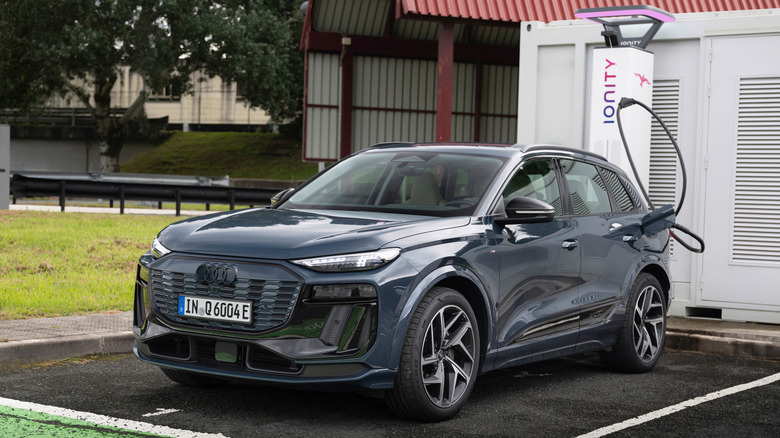
Yet another Audi EV that has sold like hotcakes without wowing customers, the Audi Q6 e-tron is far from the satisfying electric vehicle experience you've had your eyes on. Users have been pretty harsh to this car on Edmunds, as seen in its 3.1-star aggregate score out of 5. The 2026 model has also been the subject of a below-average Predicted Owner Satisfaction score on Consumer Reports. The bulk of its problems stems from its cluttered in-cabin tech, consisting of a 14.5-inch infotainment screen and a 11.9-inch gauge display that can overwhelm drivers, negatively impacting their driving experience. It doesn't help that you'll also have to dig into numerous submenus to access basic car functions, either.
Given that the infamous Audi MMI system has also glitched out for a user, it's easy to see why dealing with this array of screens isn't all that appealing. Another owner reported range issues, which is a shame since the 319-mile range is one of the car's biggest strengths. Ultimately, a quiet cabin, responsive handling, and swift fast-charging speeds of just over half an hour to go from 10-90% aren't enough to place the $63,800 Audi Q6 e-tron as a viable investment for people seeking out a satisfying EV.
Toyota bZ4X
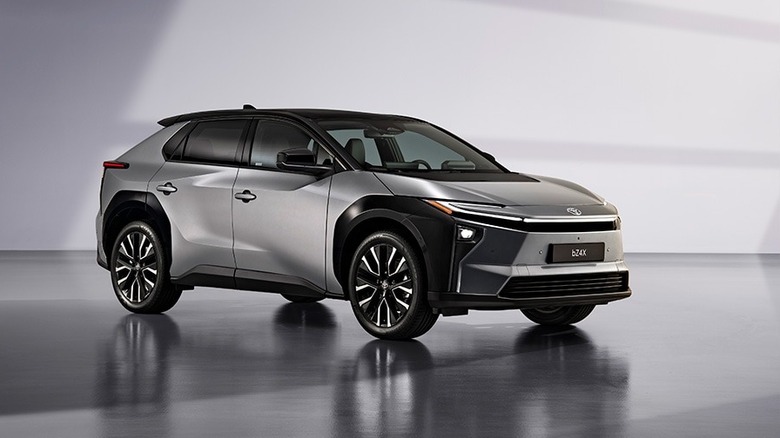
The Toyota bZ is a massive improvement over its previous model, with everything from its performance to its name receiving a much-needed refresh after the bZ4X became one of the least satisfying EVs to drive in the eyes of many. A range of just 222 miles, basic interiors, and suboptimal performance made the 2025 Toyota EV one of the blandest electric vehicles on the market — a sentiment that is echoed in its mediocre 3.1-star user review rating on Edmunds and an undistinguished Predicted Owner Satisfaction rating on Consumer Reports. In fact, Toyota was flooded with so many complaints regarding the bZ4X that an executive addressed these concerns and reassured fans that they are aware of these problems.
Users had a ton of problems with the bZ4X, pointing out the low-quality cameras, the lack of a glove box, and a deluge of alerts for no apparent reason. Even after delivering a smooth ride and letting both drivers and passengers enjoy the comfort of a large cabin, it's downright impressive that the bZ4X still failed to stand out as a satisfying electric SUV. The only positive about this 2025 model is that you can purchase it on a budget, with the price of $37,070 being more than reasonable... as long as you're willing to deal with this EV's many caveats.
Ford E-Transit Cargo Van
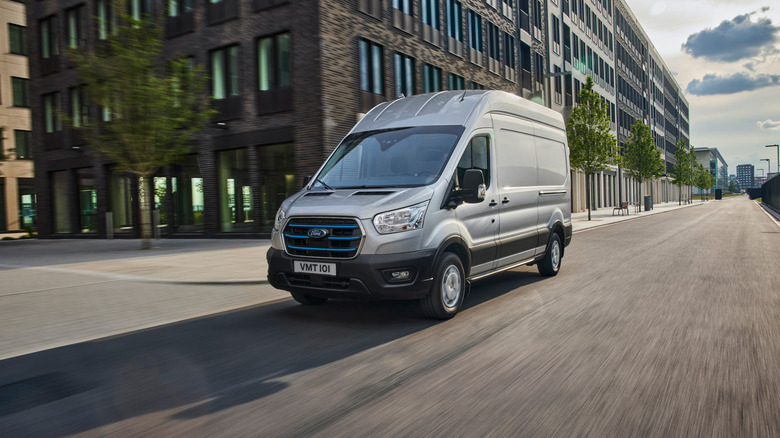
A 2.8 aggregate user score rating on Edmunds is far from glowing, and makes the Ford E-Transit Cargo Van a tough sell in terms of owner satisfaction. The biggest problem with this electric van is undoubtedly its range — 159 miles is nowhere near acceptable, especially for a van that may have to carry heavy cargo for long(ish) distances. To make things worse, it lacks rear seating, and Ford recommends that you don't use this EV for towing, further hampering its utility.
Perhaps the E-Transit would've still been worth a purchase if it had been satisfying to drive, but Ford missed the mark here, as well. The seats are uncomfortable, and the car is loud despite being an EV, which makes it even harder to recommend this vehicle. While the $55,355 price point makes it an affordable electric van, people wanting to get their hands on a satisfying EV to drive should bump up their budget and check out other options. One particular user wasn't a huge fan of the van's infotainment system in the 2022 model, while another owner of the 2023 Ford E-Transit Cargo Van had a bunch of problems to list out. These included poor seat positioning, error-prone navigation systems, unreliable ADAS features, and numerous charging issues.
Polestar 3
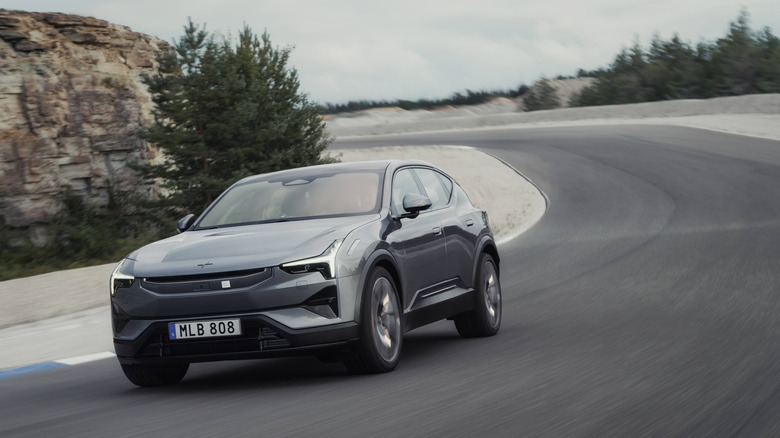
Polestar is one of the newest players in the EV market, and has its fair share of fans. The $68,900 Polestar 3 is its luxury SUV offering and certainly seems like a great purchase. The car's distinct look, generous cabin space, comfortable seating, sporty handling, and great 0-60 acceleration time of 4.4 seconds all make it seem like the satisfying EV you're looking for. However, while the hardware of an electric vehicle is important to ensure the highest level of driver satisfaction, software is equally important in this department. Unfortunately, this is where the Polestar 3 royally dropped the ball, leading to a paltry 2.8-star user aggregate rating on Edmunds.
This company is no stranger to software issues and glitches, but even after its delayed launch, the Polestar 3's software was all over the place, prompting a recall soon after release. The interface has an unhealthy reliance on menus, which can be quite distracting on the road. Users have also complained about the in-cabin tech, talking at length about the lack of an odometer, basic functions being hidden behind a deluge of menus, and no Android Auto. Along with this, Polestar's infamous software issues are plentiful in this car. A user mentioned how their car would display a deluge of errors for no reason and erase any saved settings. The hands-free trunk was also a bit too sensitive for their liking, and Bluetooth calls would exhibit issues of their own.
Mercedes-Benz EQB
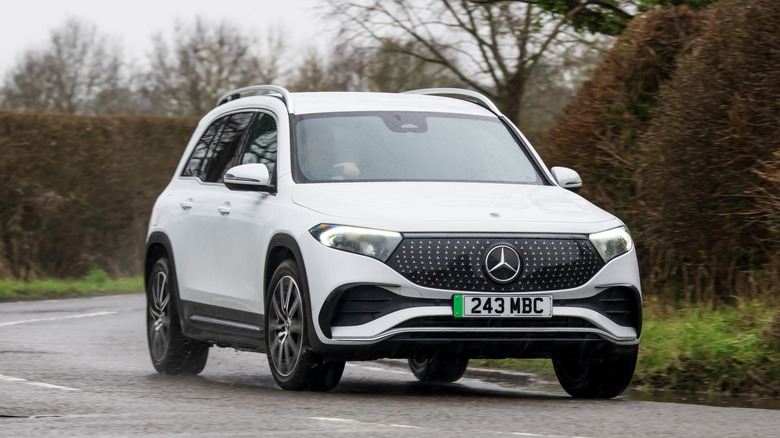
If you're in the market for a luxury electric SUV, steer clear of the Mercedes-Benz EQB. Sure, this seven-seater has some things going for it, such as its ultra-quiet cabin, stylish interiors, a ton of space for the first two rows, and the patented Mercedes in-cabin tech that makes its infotainment system oh-so-intuitive. However, for $54,200 the problems of the EQB are impossible to ignore — the third row feels like little more than an afterthought, a range of just 205 miles is horrible, the stiff suspension makes for an uncomfortable ride, and the brake is a bit too sensitive for some.
All of this combines to make the EQB an unsatisfying EV. A user aggregate star rating of 3.2 out of 5 on Edmunds is not very good, with drivers experiencing many unwanted issues with this vehicle. Over on Reddit, users complain of charging issues and breakdowns only days into owning one. Reliability is a big problem with this EV, with the company recalling the EQB three times to solve the problem of battery fires. Suffice it to say, you won't be particularly pleased after buying a Mercedes-Benz EQB, if its testimonials are anything to go by.
Acura ZDX
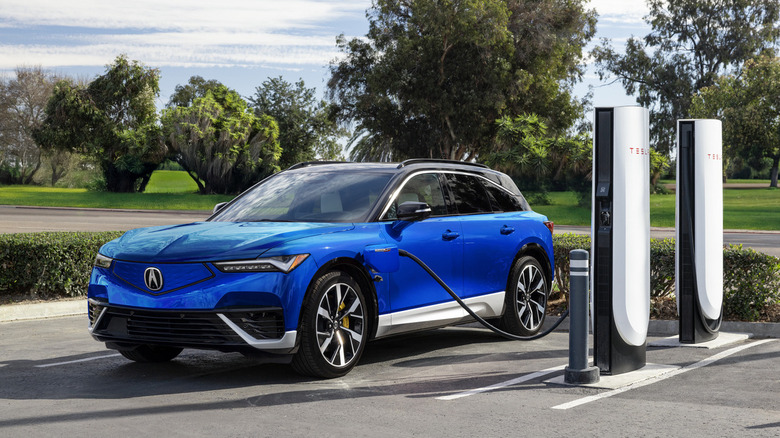
It's telling that the Acura ZDX ceased production after just one electric model was released in 2024. Even with its quiet ride, spacious cabin, and comfortable front seats, the Acura ZDX didn't have a huge impact on consumers. A 3.4-star user aggregate score on Edmunds is proof enough of this EV's impact, or lack thereof. An argument can be made that the car's GM DNA is largely to blame for its lack of a wow factor, with the driving experience being labelled as boring. Even after this $65,850 electric SUV positioned itself as a luxury EV, the car missed the mark with its interiors. Rear window visibility is also poor and makes this package a hard sell, unless you happen to get a good deal.
Ultimately, the Acura ZDX commits the cardinal sin of being an aggressively average car that doesn't excel in any department. One user has talked about how the servicing experience at Acura is a nightmare — a problem that is bound to get worse since the ZDX has been discontinued. Perhaps this is why another prospective buyer was outright told by the dealership to avoid buying this car. It's downright criminal that this luxury EV has such a forgettable and unsatisfying ownership experience.
Methodology

EVs with Edmunds user review scores of 3.5 stars or less have been considered here. Along with this, any Predicted User Satisfaction scores lower than or equal to 50 on Consumer Reports are also taken into account wherever applicable.