

The 8 Best (And 4 Worst) TVs For Gaming In 2026
We may receive a commission on purchases made from links.
Gaming on a massive television with incredible picture quality, high refresh rates, and dedicated gaming modes can make a world of difference. PC gamers may be more used to monitors, but people who prefer console gaming or use a powerful gaming laptop that can be connected to a TV via HDMI will definitely be interested in a good TV well-suited to their digital adventures. Budgetary constraints will always come into play here, but people who are frugal in this department can't complain when their cheap gaming TV lacks the features that can help their gaming experience reach a whole new level of immersion.
That's not to say that you'll have to break the bank when getting a good gaming television. The best gaming TVs on the market are value-for-money offerings with state-of-the-art features that will breathe new life into your video games. Based on reviews from trusted publications — or lack thereof — we've listed out some of the best (and worst) TVs you can game on in 2026.
Best: Samsung S95F OLED
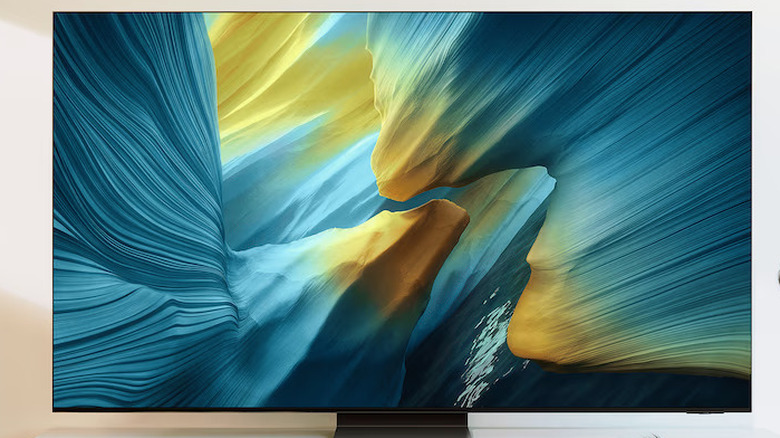
The Samsung S95F OLED is among the best TVs on the market, for gaming or otherwise. Reviewers are full of praise for this television, as evidenced in its perfect 5-star rating on What Hi-Fi?, an 8.9 out of 10 score on CNET, and a solid 9.3 out of 10 rating for gaming purposes on RTINGS. This model comes equipped with an enhanced QD-OLED panel, which, according to Samsung, is 30% more efficientthan the panel used in the previous S95D OLED model. The matte anti-glare coating has also been upgraded, which helps the OLED screen and its impressive contrast ratios display deep, rich black levels regardless of how much light is flooding into the room.
For gaming purposes, minimal input lag and the inclusion of a Gaming Mode mean that playing the latest AAA games will look amazing on this device. The refresh rate is also improved from the S95D, increasing from 144Hz to 165Hz at 4K resolutions. While this may not be appealing to console gamers, whose systems top out at 120Hz, people with top-of-the-line PC rigs or high-end laptops will be more than satisfied by these industry-leading refresh rates. The Samsung S95F OLED is available in 55-, 65-, 77-, and 83-inch sizes, though keep in mind that the largest size has a WOLED panel instead of the QD-OLED present in other models. It also costs a whopping $5,299.99, so you can always go for the $2,499.99 65-inch variant instead.
Best: LG G5 OLED
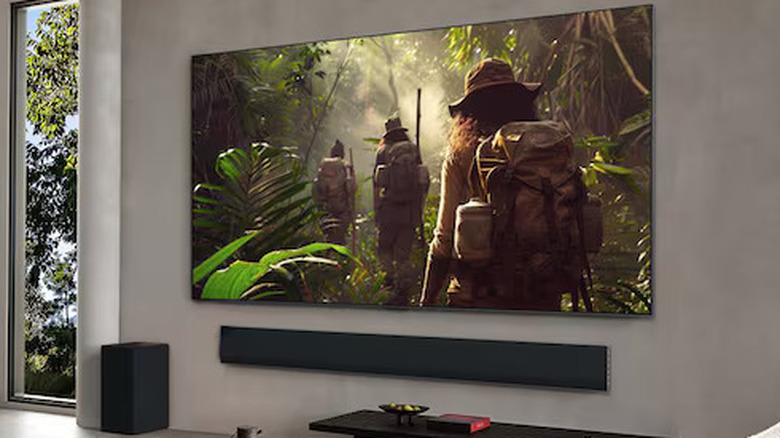
The LG G5 OLED is a high-end gaming TV that features a suite of features to help it compete with other flagship models. Along with the MLA technology that was added to LG's 2023 offerings, a new primary RGB tandem panel goes a long way toward improving the TV's color gamut while also enhancing brightness. The end result is a vibrant, crisp picture quality that will make the latest games look jaw-droppingly gorgeous. A score of 8.8 out of 10 on CNET, another perfect 5-star rating on What Hi-Fi?, and a solid 9.1 out of 10 for Gaming on RTINGS make the LG G5 OLED a very appealing prospect for gamers.
With variable refresh rate (VRR), this TV can reach refresh rates of up to 165Hz at 4K resolution. PC gamers with mind-blowing rigs will find this a great selling point, and the LG G5 doesn't stop there. It has four 48GBps HDMI 2.1 ports, an HDR Gaming Interest Group (HGiG) setting for accurate tone mapping to make HDR gaming look better than ever, a Dolby Vision game mode for even greater immersion, and Auto Low Latency Mode (ALLM) to minimize input lag without sacrificing picture quality. This TV can reach up to 97 inches, but at that size it lacks the primary RGB tandem panel or MLA technology we've discussed, and it's priced at an eye-watering $24,999! Unless you don't mind giving up your life savings for a ridiculously massive TV, you can go for a 77-inch model, which has the best tech while also being priced at a more reasonable $3,499.99.
Best: TCL QM8K
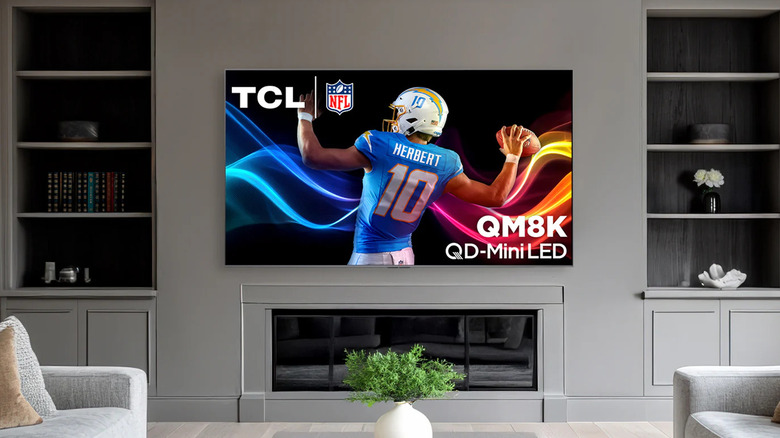
TCL is a brand that delivers high-quality televisions without costing an arm and a leg. Take the price of the 98-inch TCL QM8K, currently on Amazon for $3,997.99. This is significantly lower than other enormous high-end TVs. Meanwhile, a 75-inch QM8K can slot into regular-sized living rooms for $1,999.99. If you're a gamer who doesn't want to cut corners on TV picture quality while also saving as much money as possible, then look no further than the QM8K. The reviews for this television indicate an impressive bargain. It got a 4 out of 5 on PCMag, an 8.6 out of 10 CNET rating, and an 8.4 Gaming score on RTINGS.
A suite of features makes this a desirable unit for gaming. It offers HDR5000 brightness, up to LD3800 precise dimming, a competent QLED screen, a 144Hz native refresh rate at 4K, and ALLM, all of which guarantee that your games will both look and feel great on this TV. If you prefer high FPS over crisper resolutions, this TV goes the extra mile by offering a mind-boggling 288Hz refresh rate at 1080p. Meanwhile, if HDR gaming is more up your alley, you'll love the QM8K's HDR ULTRA, which has support for Dolby Vision IQ, HDR10+, and Hybrid Log-Gamma (HLG).
Best: Hisense U8QG
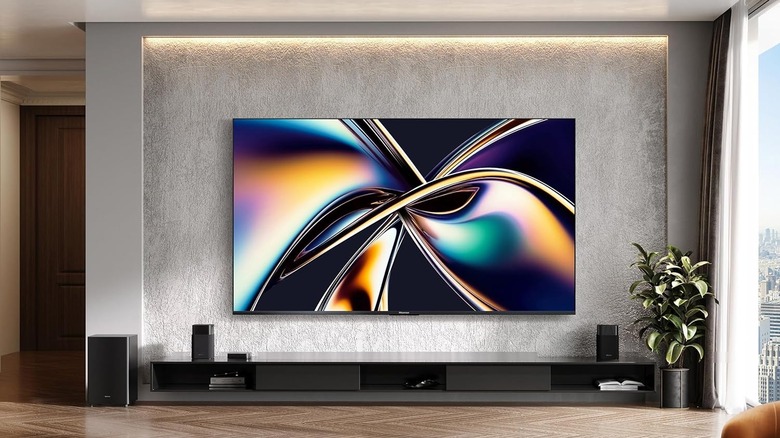
For what is touted as a mid-range model, it's impressive just how competent the Hisense U8QG is. Even its excessive 100-inch model is priced at $2,997.96, making the U8QG one of the most cost-effective gaming TVs on the market. At this price point, you get a TV with up to 5,000 nits peak brightness, courtesy of its MiniLED Pro technology that improves lighting and creates deeper blacks. This QLED TV also has an excellent color gamut that can display over a billion shades, an Anti-Glare Low Reflection Pro panel, and a native 165Hz refresh rate at 4K resolutions.
It's understandable why reviews for the Hisense U8QG have been near the top of the spectrum. CNET gave this TV an 8.5 score out of 10, and PCMag's rating of 4 out of 5 is solid, as is TechRadar's 4.5-star rating. For Gaming, RTINGS gave this TV an 8.3 out of 10 rating. Three HDMI 2.1 ports may seem lacking, but this is offset by an alternate USB-C DisplayPort. With VRR, you can enjoy a 288Hz refresh rate at 1080p, although this doesn't work with a USB-C connection. The U8QG is also very competent at minimizing input lag to 9.9 milliseconds, with a combination of the TV's ALLM mode, AMD FreeSync Premium Pro, and its Low Latency MEMC (Motion Estimation, Motion Compensation) making this TV perfect for competitive games that don't want to sacrifice picture quality for quicker response times.
Best: Sony BRAVIA 8 II
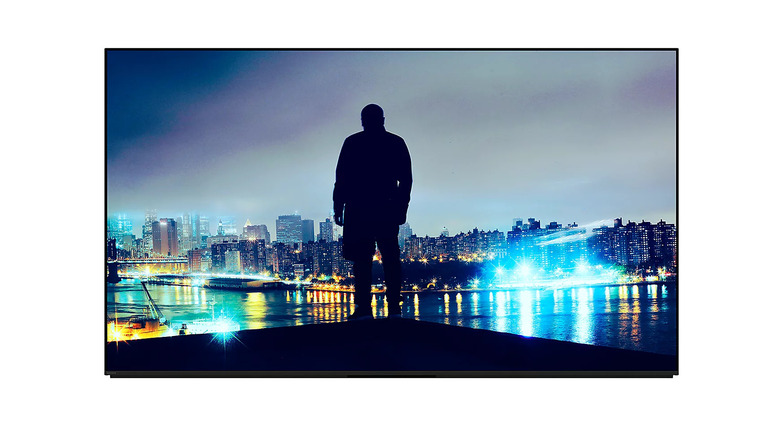
Sony's Bravia series has featured some of the most popular and coveted TVs on the market. The Bravia 8 II is no exception, with its performance drawing rave reviews from numerous publications. It's yet another TV listed here to get a perfect 5-star rating on What Hi-Fi?, while PCMag and WIRED were generous with scores of 4 out of 5 and 9 out of 10, respectively. With over 8 million self-lit pixels on its OLED screen, the Bravia 8 II delivers brightness and picture quality in a class of its own.
RTINGS gave the Bravia 8 II a solid 8.7 rating for its gaming capabilities, and understandably so. This television is loaded with quality features to optimize your gaming experience, including HDMI 2.1 capabilities (albeit only in two ports), 4K at 120Hz, VRR, and ALLM. It also has a Game Menu to let you access all relevant gaming settings, which include Auto HDR Tone Mapping and Auto Genre Picture Mode. If this package interests you, then you can get the 65-inch Bravia 8 II for $2,699.99.
Best: Panasonic Z95B
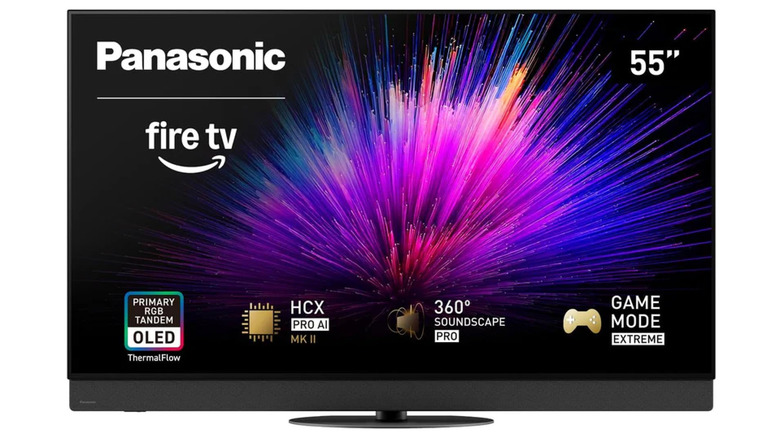
The Panasonic Z95B has some of the highest review ratings among the TVs listed here. Aside from a perfect 5-star rating on What Hi-Fi?, this OLED television also has a 4.5 out of 5 score from PCMag and TechRadar, a 9 out of 10 from WIRED, and a 9.2 Gaming score on RTINGS. A primary RGB tandem panel and ThermalFlow technology ensure an impressive color gamut and improve the TV's brightness. The HCX Pro AI Processor MK II with Auto AI is a competent combination that automatically detects the type of media shown on screen and optimizes picture settings accordingly. The 77-inch is pretty pricey at $4,699.99, but you can always go for the $2,599.99 55-inch model instead.
Gamers will love the sheer number of features that make the Panasonic Z95B perfect for their virtual adventures. Two HDMI 2.1 ports are a bit limiting, but this device makes up for this with its 144Hz refresh rate at 4K, VRR, and support for all major HDR formats. AMD FreeSync Premium and NVIDIA G-SYNC go a long way in minimizing input lag and helping this TV stand out as a supreme gaming accompaniment.
The cherry on top of this tantalizing package is the Z95B's incredible sound output. A 360-degree Soundscape Pro-integrated audio technology, Dolby Atmos, and an Array Speaker system mean that you won't even need a home theater system to enjoy superior audio quality. This TV also comes with RPG and FPS sound modes to make these genres even more immersive, whisking you away on the adventure of a lifetime.
Best: Samsung S90F OLED
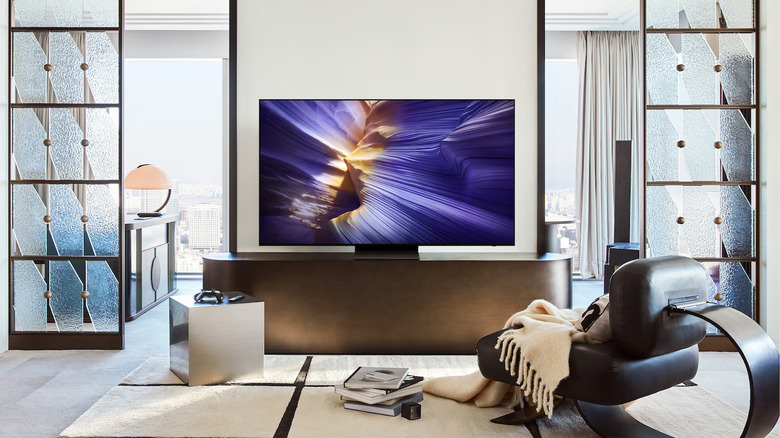
As alluring as the Samsung S95F OLED may be, this high-end TV also costs a pretty penny and may not fit most cost-conscious gamers' budgets. There's nothing wrong with taking things down a notch and opting for a mid-range television, with the Samsung S90F OLED an excellent product for its price point. Of course, this is subjective, especially since the 83-inch S90F is still relatively expensive at $2,999.99. Opt for the 77-inch model instead, and the price drops by a grand, making this package far more pocket-friendly. Considering that the S90F is Samsung's mid-range model, the reviews are excellent. It's the recipient of two coveted 5-star ratings from What Hi-Fi? and TechRadar, with CNET giving it an 8.6 out of 10. RTINGS' Gaming score of 9.1 out of 10 is also a great indication of this TV's performance in this department.
The improved QD-OLED panel, an NQ4 AI Gen3 Processor, HDR10+, and Samsung Vision AI's optimizations all go a long way toward making this TV's picture quality pop. Meanwhile, the Motion Xcelerator 144Hz refresh rate at 4K resolutions and VRR combine to make for an unforgettable gaming experience. Game mode also improves responsiveness, and you can go a step further by enabling AMD FreeSync Premium Pro or NVIDIA G-Sync to make input lag downright negligible. Just keep in mind that the 42-, 48-, and 83-inch models have a WOLED panel, so you might be better off sticking with the other sizes if the QD-OLED upgrade is non-negotiable.
Best: LG B5 OLED
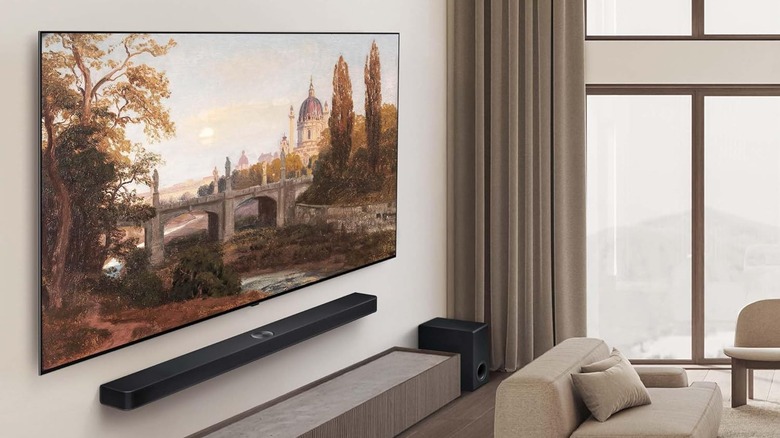
Similar to the Samsung S90F, the LG B5 OLED is a mid-range variant that impresses despite its more affordable price range. The 83-inch model is just about $2,000, while the 55-inch model is even cheaper at $899.99. For this low price, the B5 is packed with a litany of features that make it worth checking out for anyone in the market for a good gaming TV. LG's Alpha 8 AI Processor 4K Gen2 image processor utilizes artificial intelligence to automatically optimize image quality. The OLED screen boasts more than 8.3 million self-lit smart pixels for outstanding black levels, incredible shadow detail, and lifelike colors. While the image output could be brighter, it's nowhere near a dealbreaker for a TV at this price point.
WIRED gave the LG B5 OLED a solid 8 out of 10, while TechRadar was also generous with a 4.5-star rating. RTINGS' Gaming score of 8.5 out of 10 shows just how competent this gaming television is. Though it is a relatively budget-friendly TV, it has four HDMI 2.1 ports you can plug your systems into, which is more than what some high-end devices provide. A combination of NVIDIA G-Sync, AMD FreeSync Premium, ALLM, and VRR helps minimize input lag, making you a beast at competitive gaming. Finally, the LG Game Dashboard and Game Optimizer let you access any gaming-related settings with ease.
Worst: Hisense 98QD5QG
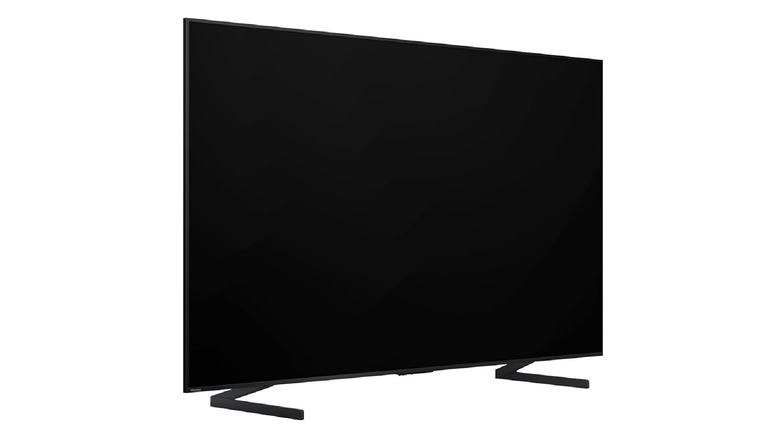
A 98-inch QLED TV sounds like a great investment for your gaming needs, but despite an okay-ish price point of $1,399.95, there are simply too many issues with the Hisense 98QD5QG to recommend it as a worthwhile purchase. A paltry 5.8 out of 10 Gaming score from RTINGS is damning, but Hisense's work on this entry-level TV is so subpar that you'll be shooting yourself in the foot if you ignore these warning signs and decide to buy this TV. Sure, HDMI 2.1 compatibility with VRR and a 144Hz refresh rate at 4K seem great, but all of these perks are overshadowed by the 98QD5QG's poor performance across other metrics.
For starters, the 98QD5QG's pixel response time is unacceptably slow, leading to significant motion blur in fast-moving games. The TV's brightness is poor, and a lack of local dimming leads to weaker blacks. As a result, HDR content is a bit too dim. SDR content also looks pretty lackluster, placing you between a rock and a hard place when trying to optimize image quality on this TV.
Worst: Sony BRAVIA 2 II
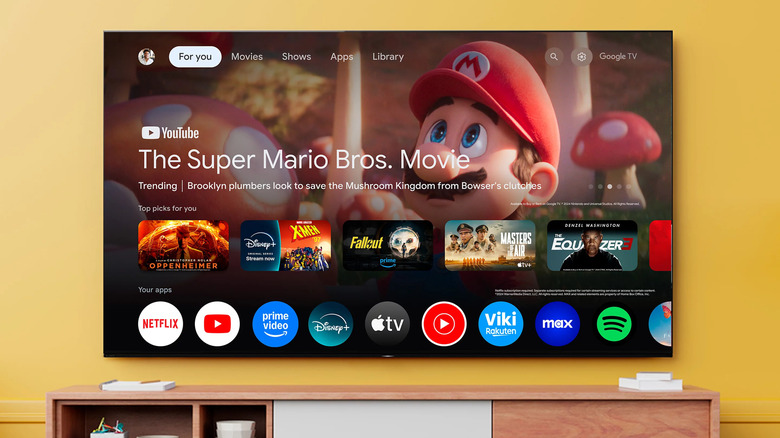
High-end Sony BRAVIA TVs are usually worth the price, but the same isn't always true for lower-end models. The Sony BRAVIA 2 II is no exception here, with this budget-friendly TV cutting way too many corners. Even for an entry-level model, the BRAVIA 2 II is woefully incompetent as a gaming TV. It's only compatible with HDMI 2.0, doesn't have VRR support to minimize screen tearing, and can only reach a 60Hz refresh rate at 4K. No wonder RTINGS was particularly harsh to this TV, with its abysmal 4.7 out of 10 Gaming rating.
The poor contrast results in black levels that are pretty lacking, HDR brightness is too low to make this option feasible, slow pixel response time leads to blurry visuals, and the colors projected by this TV are fairly dull as well. In fact, this TV has only two things going for it — low input lag and a low price point, with the 75-inch model going for just $869.99.
Worst: LG UA77
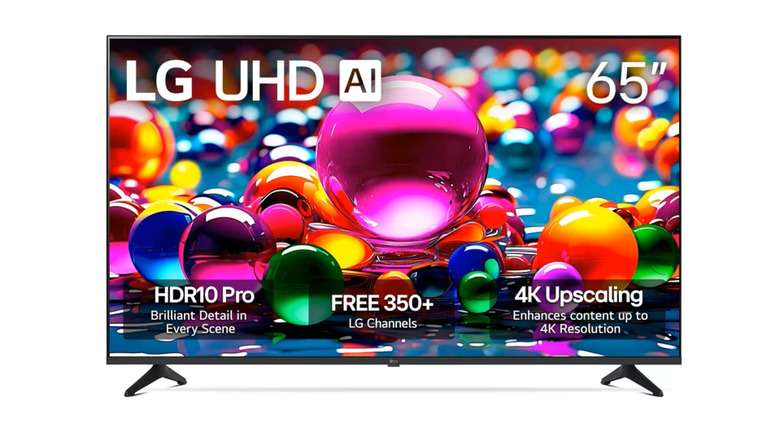
At this point, you'll notice a pattern evolving with most entry-level gaming TVs. The LG UA77 may seem like a decent deal, with its 86-inch model going for just $899.99. However, given the compromises it makes, we highly recommend increasing your budget and getting something more reliable. A 5 out of 10 Gaming score on RTINGS is unacceptably poor, and the LG UA77 doesn't make a good case for exceeding this rating. Low input lag and ALLM are two nods to competency, but performance is poor across almost every other metric.
It lacks support for HDMI 2.1 connections, can't go beyond 60Hz, and has blurry visuals because of its slow pixel response times. The inclusion of VRR may seem fine, but its range is so narrow that you'll still see screen tearing. Do yourself a favor and give this device a wide berth if you don't want to struggle. It might not be one of the worst TVs around, but for gaming, there are far better options.
Worst: TCL S551G
TCL is known for making cheap yet quality TVs that don't cut corners. Even its highest-end televisions are economically priced. So, how do its entry-level models perform? Well, the TCL S551G can be had for just $260.99, which is so low that you can just buy this TV and discard it if the gaming performance is unacceptably poor. Of course, we don't recommend this course of action, especially since RTINGS has already done this job for you. With a Gaming score of just 6.1 out of 10, the S551G is the very definition of mediocrity.
Let's get the positives out of the way first. It sports a competent 120Hz refresh rate for both 1080p and 1440p resolutions, along with Dolby Vision. Support for VRR, an important HDMI feature, is also much-welcome, as is the TV's low input lag. Unfortunately, despite all these perks, the caveats of the TCL S551G are too many to ignore. A lack of local dimming means that contrast — and, consequently, the TV's black levels — suffer quite a bit. HDR brightness is low, and the color display is pretty unsatisfying. Finally, just like most other poor TVs we've mentioned, the pixel response time is so low that you'll have to get used to blurry visuals in your fast-paced games.
Methodology
We consulted reputable reviews from publications like CNET, PCMag, TechRadar, What Hi-Fi?, and WIRED. Additionally, we examined specifications and technological features to determine which gaming televisions are the best (and worst) for you.
Each recommended television on this list requires a minimum gaming or overall score of 8 out of 10 stars, while televisions with Gaming scores of 6.5 or lower have qualified for the "Worst" category.