

9 Popular Electric Cars That Aren't Worth Buying, According To Consumer Reports
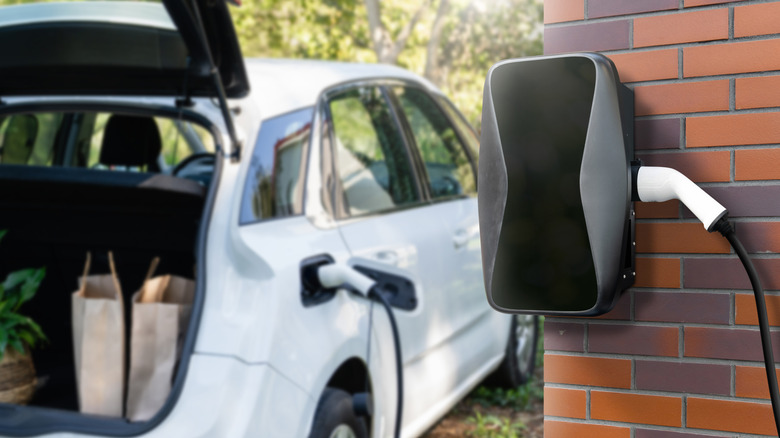
The electric car ecosystem is becoming more and more expansive with each passing day, and it's now feasible to invest in EVs for long-term use. While the initial cost of purchasing an EV may be higher than that of an ICE vehicle, this is offset by the lifetime savings of owning an EV — assuming you're in it for the long haul. Fuel savings, as well as various government incentives for purchasing electric cars, are two major reasons why you're more than likely to be pleased with an EV investment.
Numerous EVs have enjoyed excellent sales numbers and popularity over the past few years. But if you're looking to purchase one, you shouldn't go by popular consensus alone. It may be counterintuitive, but even if a particular EV you're interested in is selling well (or even dominating the market), high sales aren't necessarily an indicator of a vehicle's performance. Many popular EVs suffer from infotainment glitches, poorly designed parts, and various reliability problems that can hamper your experience. If you're eyeing any of the following EVs, keep in mind that Consumer Reports hasn't exactly given their 2026 models glowing reviews on the reliability front.
Honda Prologue
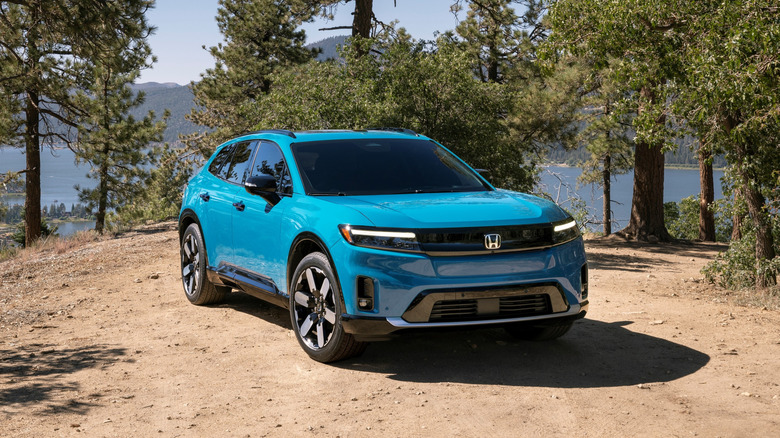
Even though Honda Prologue sales tripled in the U.S. in the first eight months of 2025 compared to the year prior, this EV has several caveats. A 6.3 score out of 10 on Edmunds suggests the 2026 Prologue is far from a perfect EV. The 2026 model has an abysmally low Overall Score, Predicted Reliability score, and Predicted Owner Satisfaction score on Consumer Reports.
One of the worst sins a car can commit is delivering a completely unremarkable drive, and the Prologue is guilty in that regard. For both the 2025 and 2026 models, vehicle acceleration and handling are nothing to write home about, especially compared to similarly priced EVs. GM also designed the Prologue's underlying architecture; accordingly, the Prologue feels more like a GM-made car. Trying to find a real difference between this vehicle and the Chevy Blazer EV is not as easy as one might expect, which is likely to disappoint those rightly expecting a Honda experience with this EV.
The 2026 Prologue does have some things going for it. Its has a roomy cabin, an excellent EPA-estimated range of 308 miles, and a peak DC fast-charging rate of 150kW that allows the car to charge from 10% to 90% in under 50 minutes. However, those perks alone don't quite justify the vehicle's base price point of $48,895. The 2026 model isn't all that different from previous iterations, though — so if you're still set on this vehicle, consider purchasing an older model to save some cash.
Audi Q4 e-tron
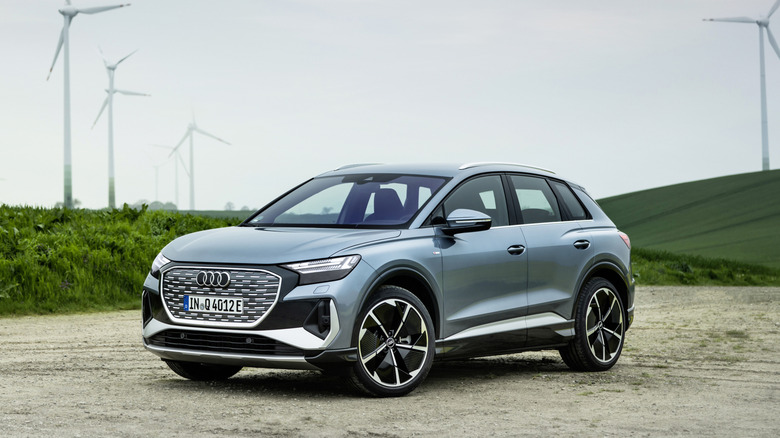
The Audi Q4 e-tron hasn't enjoyed the best reviews from either fans or critics. The 2025 model received a 6.6 out of 10 rating on Edmunds, and the 2026 model has fared even worse with Edmunds users who own the vehicle, receiving an aggregate user score of just 2.8 stars out of 5. Consumer Reports has also assigned the Q4 e-tron a lackluster Overall Score, Predicted Reliability score, and Predicted Owner Satisfaction score. This electric luxury SUV only shines in some areas, notably through its classy interior, smooth drive, easy self-parking feature, and in-cabin tech. All these positives contributed to the Q4 e-tron's excellent EV sales in the first half of 2025, with Audi having shipped almost 45,000 units during that period.
Unfortunately, the 2026 Q4 e-tron lags behind most other competitors at the same price point. Given its base MSRP of $50,600, its EPA-estimated range of 258 miles isn't exactly noteworthy. A peak DC fast-charging rate of 175kW means this car can go from 10% to 90% in 36 minutes, which is slower than other EVs in the same category. If comfort is a priority, then the Q4 e-tron's thin seat cushions may be a dealbreaker for you. Moreover, regarding the 2025 model, Edmunds states that "non-luxury EVs provide more space and range for similar money." Combined, all of these factors make Audi's premium EV an aggressively average car overall, which we doubt is what you're looking for in a luxury vehicle.
Lucid Air
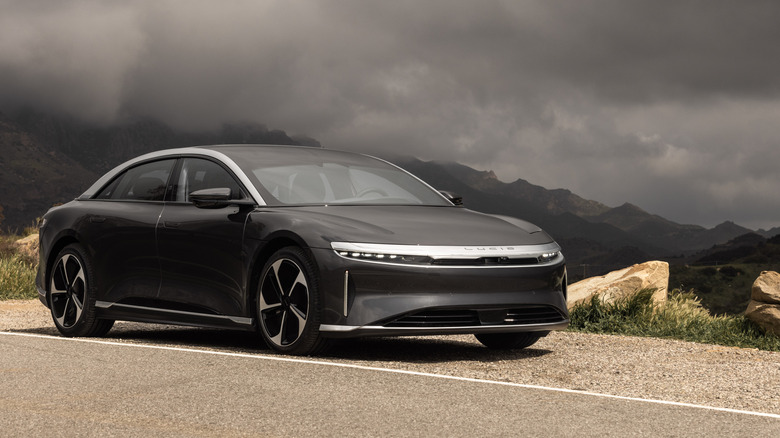
On paper, the Lucid Air should be a no-brainer for anyone seeking a luxurious American-made electric vehicle. The 2025 model received an 8.1 out of 10 rating on Edmunds, while the latest model got a perfect 10 rating on Car and Driver. An EPA-estimated range of 420 miles and a 0-to-60 time of up to 2.1 seconds are both equally impressive. The 2026 model also features newly integrated support for the Tesla Supercharger network, making this car viable for long road trips. All of these positives, along with a cabin that both looks and feels luxurious, helped the Lucid Air enjoy record sales in 2025. It became the most popular luxury EV sedan in the U.S. in the first half of 2025; it sold 5,094 units, surpassing the U.S. sales of the Tesla Model S, Porsche Taycan, BMW i5, and Mercedes EQS. When you consider the numerous challenges the EV market faced last year, that metric is even more impressive.
Why, then, does the Lucid Air have an unremarkable Overall Score and a poor Predicted Reliability rating on Consumer Reports? Despite its impressive engineering, the Lucid Air has exhibited so many issues in previous models that it's slated to be one of the least reliable EVs for 2026. The 2022 model can reportedly lose power at random, while its sensor systems are liable to acting up in rainy weather. Meanwhile, the 2025 Lucid Air exhibits numerous hardware and software glitches that make it hard to justify spending $70,900 on the latest model. Other problems affecting this model include coolant pump failure, faulty software update installations, the front trunk failing to open properly, the audio system going silent for no apparent reason, and several infotainment glitches.
Chevrolet Blazer EV
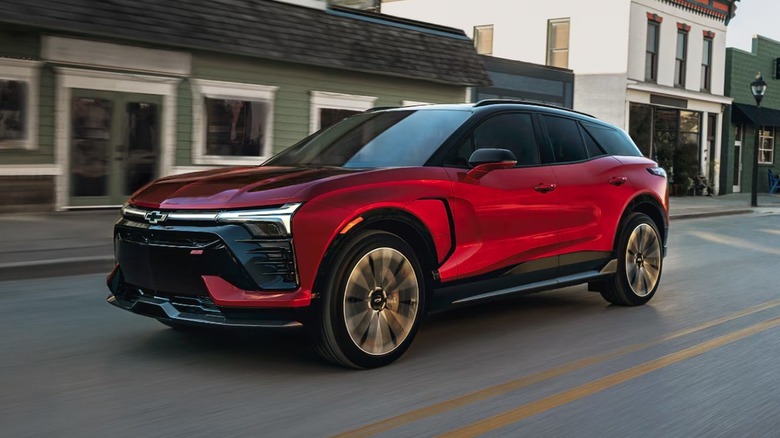
GM-made cars have a poor reputation, and the Chevy Blazer EV is no exception. With 22,637 units sold in 2025 and an excellent conquest rate — 57% of GM's customer base had moved away from its competitors to purchase this crossover SUV — it's no doubt a popular vehicle. But for the Blazer EV, popularity does not translate to reliability. If you're in the market for a reliable electric vehicle, the 2026 Blazer EV has too many issues to make it worthwhile. It has not only a 6.9 out of 10 score on Edmunds but also abysmal ratings for both the Overall Score and Predicted Reliability on Consumer Reports. The driving experience is subpar, in no small part because of an underwhelming 0-to-60 acceleration time of 6.2 seconds. It also suffers from poor emergency brake performance.
The vehicle's $44,700 asking price seems reasonable, but the luxury Cadillac Lyriq, for instance, makes for a far better purchase at a similar price point for its superior handling, infotainment tech, and acceleration. It's unclear why, but the Blazer EV's infotainment system lacks support for both Apple CarPlay and Android Auto. In fact, aside from an excellent EPA-estimated range of 312 miles, there's nothing exceptional about the Chevy Blazer EV. It can handle your daily transportation needs, but it's not going to knock your socks off with its performance or integrated technology.
Hyundai Ioniq 5
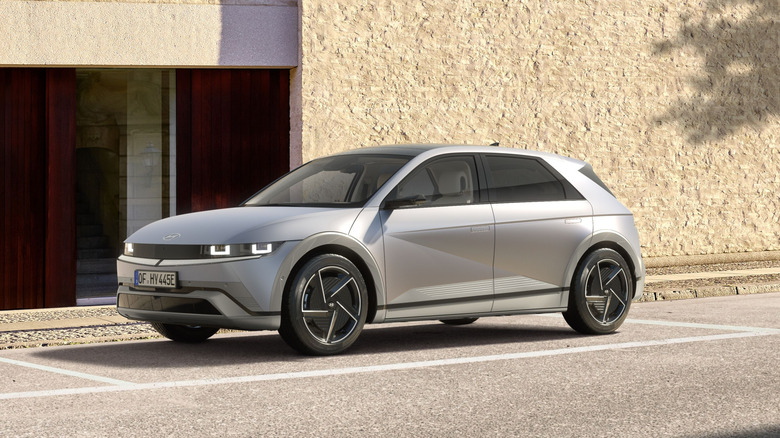
There's a reason why the Ioniq 5 is one of the best-selling EVs in the U.S., having sold 47,039 units in 2025 alone — this $35,000 car has become one of the cheapest electric vehicles you can buy. The 2026 model has a perfect 10 rating on Car and Driver, a solid 8.3 out of 10 on Edmunds, and a decent Overall Score on Consumer Reports. Its 245-mile range, 0-to-60 time of 4.4 seconds, and DC fast-charging time of 30 minutes all point to why the Ioniq 5 enjoys its fair share of popularity. All of this is accompanied by a notably well-designed interior that makes this standout Hyundai EV pleasant to drive, even with its limited cargo space.
All of that sounds great, of course, but the Ioniq 5 has one major problem area: charging. Consumer Reports gave the vehicle an extremely poor Predicted Reliability score in large part because of past battery and charging issues, namely the debilitating Integrated Charging Control Unit (ICCU) issue that has plagued several Ioniq models. The ICCU component designed to charge the car's 12V battery is prone to failing, with numerous users reporting instances of their vehicle getting bricked out of nowhere. It's a widespread issue that positions the Ioniq 5 as an EV you should probably avoid, even if it is near-faultless in every other department.
Audi Q6 e-tron
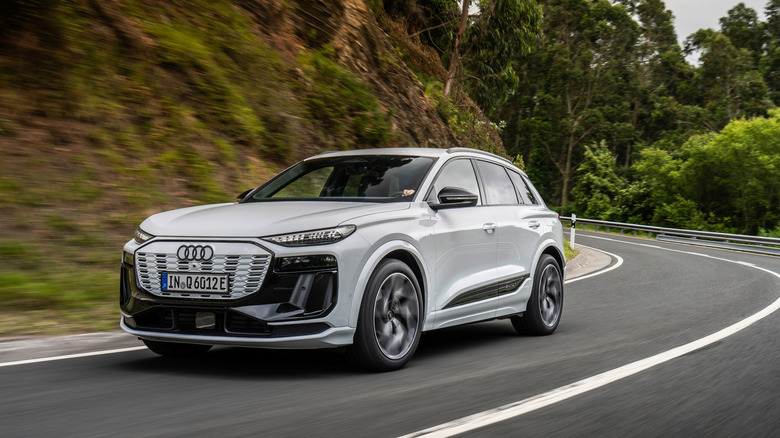
With Audi's brand recognition, the 2025 Q6 e-tron saw a whopping 84,000 sales worldwide in 2025, despite middling reviews. It received a Consumer Rating of 66 on J.D. Power, and the 2027 model received a similar Overall Score on Consumer Reports. On both platforms, the Q6 e-tron's reliability scores are notably low. Even with a great driving range of over 300 miles, a 0-to-60 acceleration speed of 4.4 seconds, and responsive handling, the Q6 e-tron has its issues.
For one, the air conditioning system isn't all that effective and takes a while to cool the cabin. This, coupled with tight legroom for rear passengers, significantly impacts cabin comfort. An overwhelming number of screens on the dashboard can easily distract drivers who aren't used to the vehicle's in-cabin tech. This feature is made worse by awkwardly placed touch-sensitive controls on the steering wheel; they're easy to activate by mistake, which can be irritating while driving. If you want a luxury EV with hassle-free controls, check out something else — especially since the Q6 e-tron is priced at a tear-inducing $63,800.
Hyundai Ioniq 9
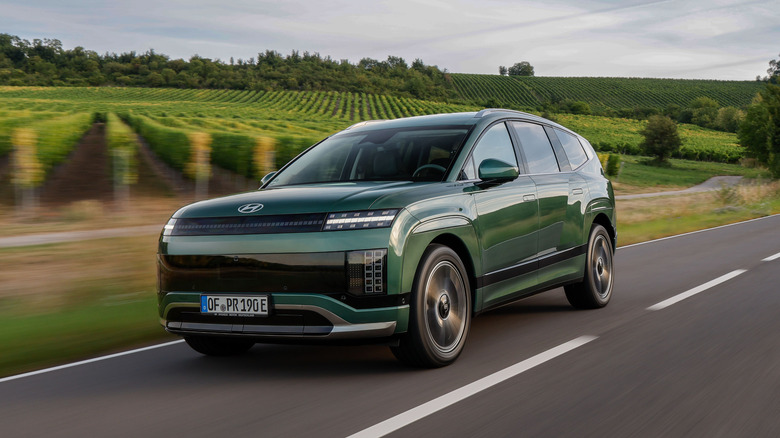
The Ioniq 9 is considered to be one of the safest EVs you can buy right now. After launching in February 2025, it sold more than 14,000 units in its first six months. Its Relaxation Seats with dynamic massage features make for a comfortable ride, and the car's quiet cabin is a welcome bonus. One of the Ioniq 9's standout features is its 335-mile range, which makes it a perfect family car to take out on a road trip. For a starting MSRP of $58,955, however, there are few other three-row electric SUVs that give it a run for its money. An 8.4 out of 10 score on Edmunds and a near-perfect 9.5 out of 10 rating on Car and Driver means you can expect a generally positive experience with the Ioniq 9, but on Consumer Reports, the vehicle's Predicted Reliability score leaves much to be desired.
The Hyundai Ioniq 9 suffers from both unresponsive steering and less-than-stellar brake performance, both of which negatively impact the driving experience. The car's infotainment system can also be annoying to navigate because of how sluggish it is. Its design is also the subject of some criticism, with some suggesting the Ioniq 9 resembles the product of two different vehicle designs getting mashed together to form one unholy, four-wheeled amalgamation of parts.
Tesla Cybertruck
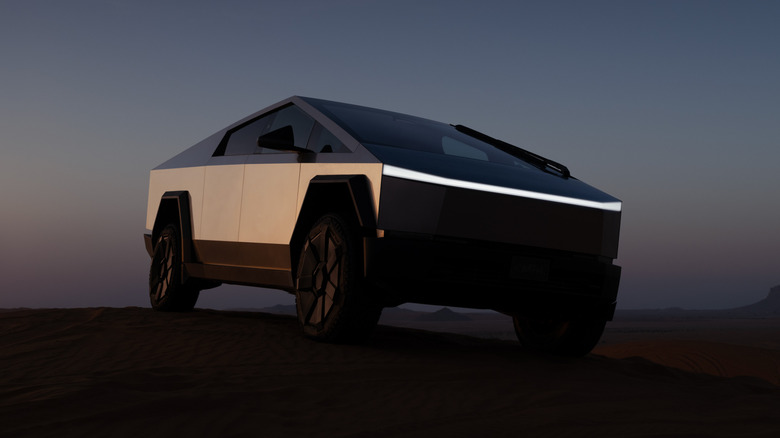
There's no denying that the Tesla Cybertruck is an anomaly in every sense of the word — it's one of the most polarizing cars on the market, and its review scores reflect that. The 2026 model received a solid score of 8.5 out of 10 on Car and Driver and a Consumer Rating of 88 on J.D. Power. However, its 6.9 out of 10 rating on Edmunds and a similarly average Overall Score on Consumer Reports are less impressive, especially when you consider the vehicle's poor Predicted Reliability rating on the latter platform. This poor rating can be attributed to a number of issues (on top of the numerous recalls this product has faced over time): faulty windshield wipers, poorly attached trim, a lack of safety features in the autopilot system, steering issues, door locking errors, and the accelerator pedal malfunctioning, to name a few.
The fact that an estimated 29,000 Cybertruck units sold in 2025 makes it clear that there's a market for this blisteringly quick EV — not many other trucks can go from 0 to 60 mph in just 4 seconds. It can even tow up to 11,000 pounds. As divisive as the car's appearance may be, its ultra-futuristic presence does help it stand out on the road, if that's what you're looking for. However, this unique design does come at the cost of visibility. Unfortunately, the car's build quality issues and mixed consumer opinions make it difficult to justify the Cybertruck's MSRP of $79,990.
Volkswagen ID.4
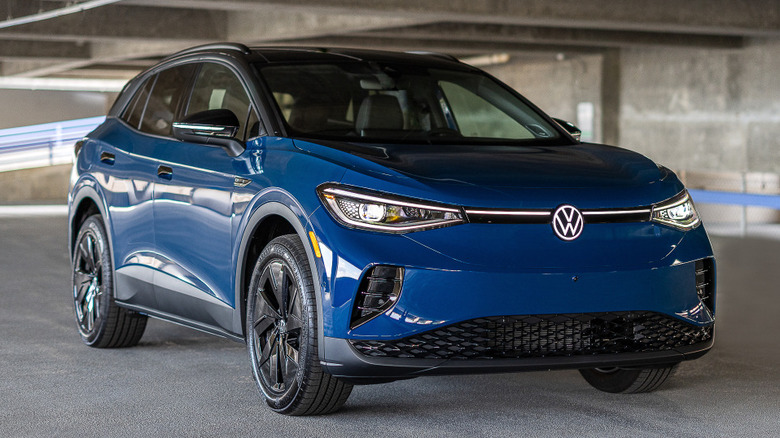
Volkswagen ID.4 sales are generally strong — 22,373 units were sold in 2025, and it seems Volkswagen is poised to carry that sales volume forward into 2026. The ID.4's price point of $45,095 is also relatively affordable for an electric SUV. The car's steering, acceleration, and braking are all tuned to make for a smooth and comfortable drive. Topping off these benefits are a well-designed interior and generous cargo space. Were it not for the unreliable tech holding this electric SUV back, the ID.4 would have been a far more viable EV option.
Consumer Reports gave the 2026 model a mediocre Overall Score and low Predicted Reliability alike, and several other reviewers have been fairly critical of the Volkswagen ID.4. Top Gear gave it a 6 out of 10 score, What Car? rated it an equivalent 3 out of 5 stars, and Carwow scored it at 7 out of 10. Each outlet mentioned similar issues with the infotainment system and steering wheel controls. Ever since its U.S. release in 2021, the ID.4 has had a reputation for having bug-ridden software. It appears this problem still impacts the latest 2026 model, with the vehicle's 12.9-inch infotainment touchscreen featuring poorly designed capacitive sliders for various controls. Voice commands don't always work, either. All in all, the ID.4's in-cabin tech is far from satisfactory and mars an otherwise attractive offering.
Methodology
Sales numbers were taken into account to gauge the popularity level of each of these EVs. Following this, any car that received a less-than-average Overall Score and a poor Predicted Reliability rating on Consumer Reports has been deemed unworthy of purchase.