

Samsung Galaxy S26 Review: Minor Tweaks To A Winning Formula
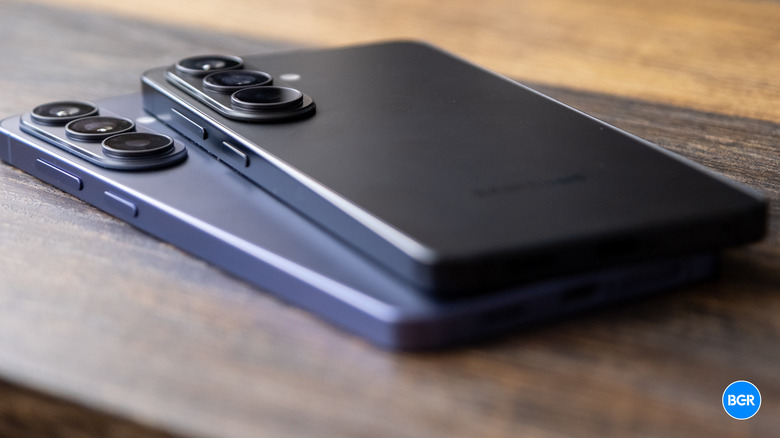
Samsung is iterating again. The Galaxy S26 and Galaxy S26+ aren't a dramatic departure from last year's models. Design changes are very limited, and unlike the Galaxy S26 Ultra, there's no new camera hardware to talk about. If you were waiting for Samsung to reimagine its mainstream flagships, this isn't that moment.
But none of that means that the Galaxy S26 isn't a good phone. On the contrary, as usual, it's an excellent one. Sure, if you've got a Galaxy S25, you can skip these entirely. There's just not enough new stuff to justify the upgrade. But there are genuine improvements under the hood, and the result is a pair of devices that still sit comfortably among the best Android has to offer. If you're coming from something older, or jumping over from another ecosystem, there's plenty to like.
Design
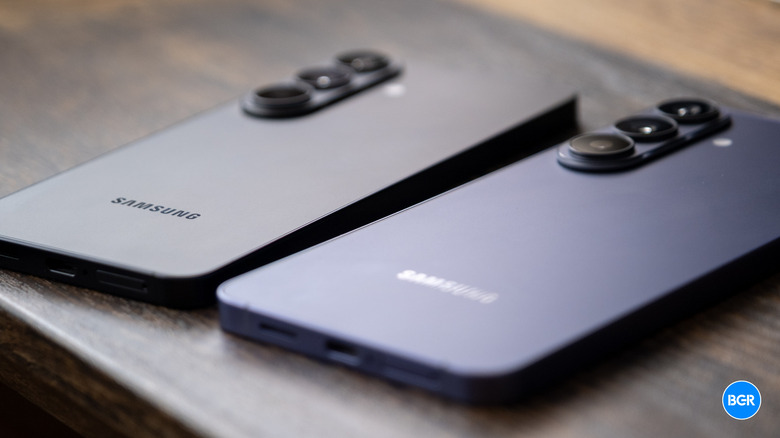
As mentioned, the designs of the Galaxy S26 and S26+ are more or less exactly the same as the S25 series before them. They're not exactly the same — there are some minor differences, but unless you have them side-by-side, you might not be able to tell. They still have the same flat-edged metallic look and, frankly, they still look great. They have a premium build quality and there's nothing really to dislike about their design.
So, what's different? Well, on the back, the camera module has a new look to it, while the footprint is a little larger on the base Galaxy S26 — but the same on the S26+ compared to the S25+. That's really it. The S26 comes in at 149.6 x 71.7 x 7.2 mm and 167g, while the S26+ measures 158.4 x 75.8 x 7.3 mm at 190g. Both are thin, light, and easy to hold.
Build quality is exactly what you'd expect at this tier. The phones are IP68 water-resistant, so they should survive accidental submersion just fine. These things are expected at this price point, and I'd like to see Samsung move to the IP69 resistance that some manufacturers have started claiming.
I've been testing the black S26 and the blue S26+, and both look great. They're not exactly the most exciting colors out there, but if you like an understated look, you'll be happy with either one. As per usual, Samsung has gone with mostly muted colorways. And while I'd love to see some more colorful options sometime soon, it's not like the current options look bad by any means.
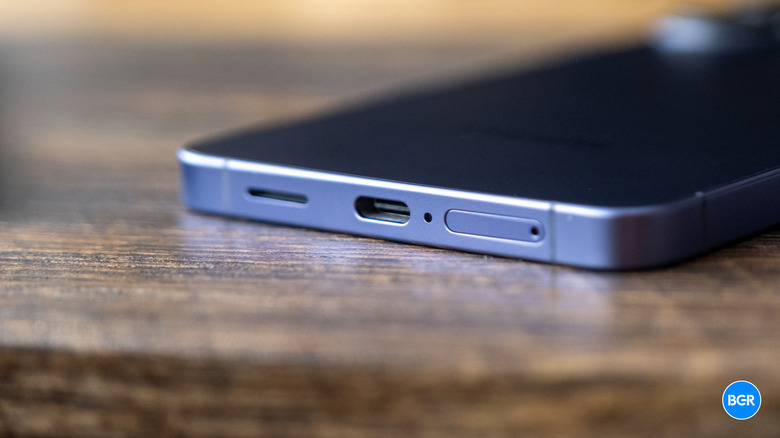
Everything else is as expected. There's a USB-C port on the bottom, along with a power button and volume buttons on the right edge. There are no extra AI buttons or Action Buttons on the Galaxy S26 series. It might be nice to see Samsung move into the customizable button game at some point, but for now, the buttons are the same as they've been in recent years.
All this to say, the design is polished and premium, but also predictable. Samsung clearly has no interest in shaking up the form factor for the S26 and S26+, and whether that's comforting or a bit dull depends entirely on what you're looking for. If you wanted something fresh, you'll need to look elsewhere. But if the S25's design worked for you, you'll feel right at home.
Display
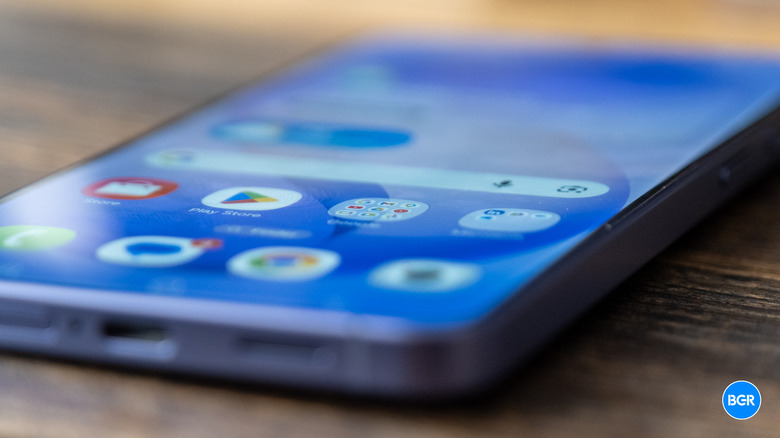
Unfortunately, the display tech on offer by the Galaxy S26 and S26+ are more or less familiar too. That's unfortunate because of the fact that the S26 Ultra has that great new Privacy Display feature that can hide content at wider viewing angles.
Apart from very minor changes, the display experience is more or less the same on the S26 and S26+ compared to the S25 and S25+. The Galaxy S26 has the same resolution as the S25, and because its display is a tiny bit larger, the pixel density is slightly lower — but you won't notice the difference at all. And while the higher resolution screen of devices like the Galaxy S26 Ultra is nice, it certainly doesn't feel as if the base Galaxy S26 has a low-resolution display.
Both devices peak at 2,600 nits of brightness, which isn't bad, but more helpful is the fact that they're good at actually sustaining that brightness over longer periods of time, unlike a device like the iPhone 17, which throttles brightness under sustained load after a few minutes. That may or may not impact actual usage for you, but if you use your phone outdoors often, and want to be able to see it easily even when it's a little warm, you're likely to see the difference.
Like most Samsung phones, the displays lean toward punchy, saturated colors rather than strict accuracy. If true-to-life color reproduction is your thing, the tuning might feel a touch aggressive. But for the vast majority of people, these screens will look great.
Performance
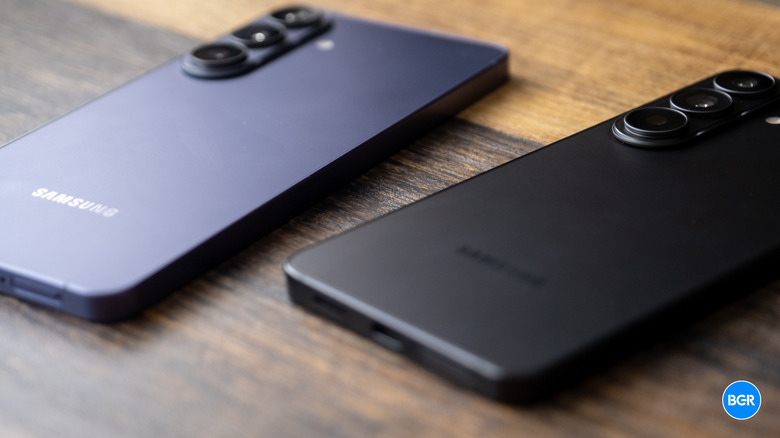
Under the hood, both the S26 and S26+ run the Qualcomm Snapdragon 8 Elite Gen 5 with 12GB of RAM — at least in the U.S. In other regions, you'll get Exynos chipsets, but our units were Snapdragon-equipped. In practice, these phones perform very well. Apps open quickly, multitasking between demanding apps is seamless, and at no point does either phone feel like it's breaking a sweat.
Benchmarks tell a similar story, though the phones don't perform quite as well as the Galaxy S26 Ultra in sustained tests. That's due to thermals — smaller bodies means less space to dissipate heat, plus the Galaxy S26 Ultra has an improved vapor chamber. You won't feel it in most real-world situations, but if marathon gaming sessions are your thing, the Ultra does hold a slight advantage.
Even so, both phones outpace much of the competition and will handle anything 2026 can dish out without complaint.
Battery and charging
The S26 houses a 4,300mAh battery, while the S26+ bumps that to 4,900mAh. Samsung claims both will get around 31 hours of video playback, and I actually tested that and found it to be more or less true. At 200 nits of brightness, the Galaxy S26 reached a little over 30 hours and the S26+ came in just past 31 hours. Outside of video testing, however, the standard Galaxy S26 actually performed better when it came to battery life. That likely comes down to the S26+ needing to power that bigger, higher-resolution display, which means that the larger battery has more work to do in most scenarios.
Day-to-day, both phones deliver decent all-day endurance, but they're not leading the class. The OnePlus 15 and OnePlus 15R last noticeably longer, and Chinese competitors like the Honor Magic8 Pro, which have embraced silicon-carbon battery tech for enormous capacities, are playing an entirely different game. I'd really love to see Samsung adopt that technology in future generations, because it's one area where the competition is genuinely pulling away.
Charging is a mixed bag. The S26 tops out at 25W wired, which feels slow by 2026 standards. The S26+ fares better at 45W, and I reached 67% in 30 minutes. Neither number is going to impress anyone given what some competitors are doing, but the S26+ at least gets you back to a usable charge at a reasonable pace. Wireless charging is slow too — at up to 15W on the Galaxy S26 or 20W on the S26+. It's made even worse by the fact that neither phone has the magnets for Qi2 accessories, even if they technically support Qi2 speeds.
Camera
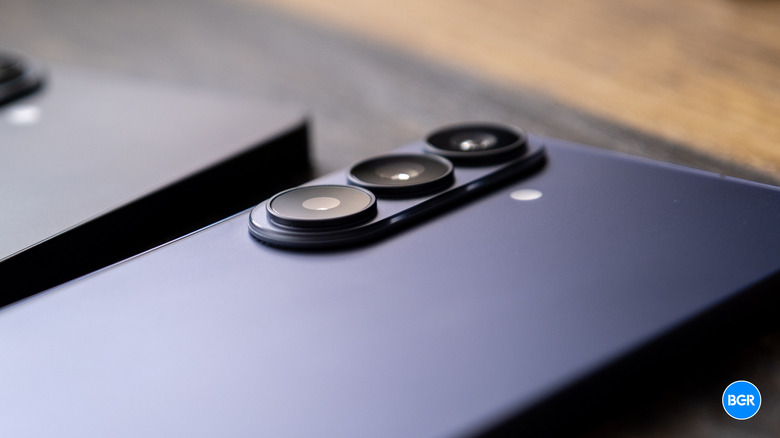
Camera hardware on the S26 and S26+ is identical to last year. Both phones carry a 50MP wide-angle main sensor, a 12MP ultra-wide, and a 10MP telephoto with 3x optical zoom.
Image quality from both phones is excellent. They're not as versatile as the S26 Ultra with its 200MP main sensor and dual telephoto setup, but I actually saw the S26 and S26+ outperform a number of pricier phones in my testing. The images were actually on par with or even slightly better than the Galaxy S25 Ultra in overall quality in many scenarios, though obviously in certain situations — like deeper zoom — the Galaxy S25 Ultra still wins. That's a pretty remarkable result for phones that sit lower in Samsung's lineup and didn't get any physical camera upgrades.
Both models produce vibrant, detailed shots with excellent sharpness. In head-to-head comparisons, they handled dynamic range more naturally than the iPhone 17 or Pixel 10, and consistently delivered more colorful, punchy images. Samsung's processing remains among the best in the industry, even if it leans into saturation more than some of its competitors that go for a more color-accurate approach.
Low-light performance holds up well too. Night shots maintain good color and clarity, and the main sensor pulls in impressive amounts of light even in tough environments. The ultra-wide and telephoto are less capable in the dark, which is expected, but the overall low-light package remains competitive.
Samsung has added some AI-powered camera tools that are, frankly, veering into slightly creepy territory. They make it trivially easy to add things to photos that weren't there or remove things that were. The technology is impressive, but it does raise some questions about photo authenticity. That said, plenty of other manufacturers are headed in the same direction, and the features are entirely optional.
As a total package, the camera system on the S26 and S26+ can't match the versatility of the Galaxy S26 Ultra, and it doesn't quite reach the heights of the much pricier iPhone 17 Pro Max. But taken as a whole, it's among the best camera systems you can get right now.
Software
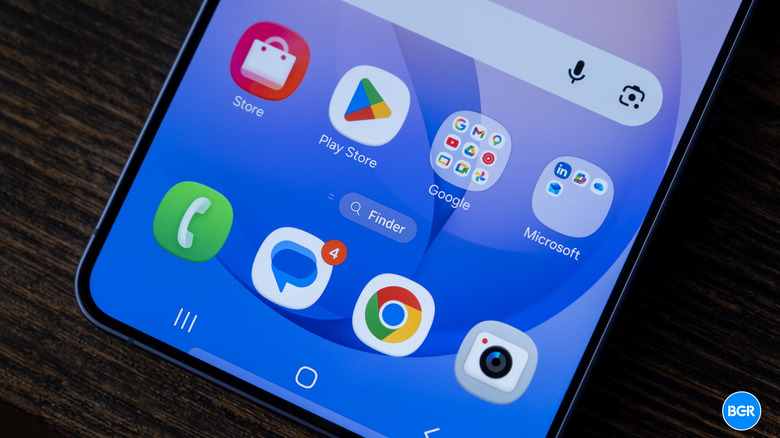
The S26 and S26+ ship with Android 16 running Samsung's One UI 8.5 on top. One UI has never been my favorite Android skin, and that hasn't changed. I find it to offer a little too much visual clutter and Samsung-specific quirks than I'd like. That said, plenty of people love it, and if you're in that camp, you'll find it just as polished and feature-packed as ever. Navigation is intuitive, customization runs deep, and Samsung's software ecosystem is mature at this point.
One thing that does bother me is the bloatware. Right out of the box, there are extra Microsoft apps and other Samsung duplicates of Google apps. You can disable or uninstall most of it, but on a premium flagship phone, I'd prefer the manufacturer to skip these altogether.
On the AI side, both phones get access to new Gemini-powered features, including an agent-style capability that can take actions on your behalf, like booking car rides or ordering food. In my testing, it worked pretty well. Results were accurate, and the execution was smooth. The only catch is that it definitely takes longer than just doing it yourself.
Like other modern Samsung phones, you'll get an impressive seven years of software updates on the Galaxy S26 and Galaxy S26+. It's class-leading, and that's great to see.
Conclusions
The Samsung Galaxy S26 and Galaxy S26+ are excellent phones. There's no way around the fact that they're iterative — Samsung hasn't reinvented the wheel here, and last year's owners have very little reason to upgrade. But judged on their own merits, these are fast, capable, well-constructed smartphones with outstanding cameras, gorgeous displays, and solid battery life. The gains in processing power and image processing aren't groundbreaking, but they add up to a noticeably more refined experience overall.
The competition
The Google Pixel 10 series is probably the closest competitor at this price, and the Galaxy S26 wins in most categories. It's faster, has a more versatile camera, and delivers better battery life. That said, I do prefer the Pixel's software experience — it's cleaner, lighter, and more intuitive, and Google's computational photography still has its own unique strengths. If the software side matters most to you, the Pixel deserves a look.
The OnePlus 15 is another serious contender, and I prefer it to the S26. It has smoother software, a better battery life, and roughly comparable performance. Where it falls behind is the camera — Samsung holds a clear advantage there. And then there's the Galaxy S26 Ultra, which is obviously better in nearly every way. It has a bigger screen, more powerful cameras, faster charging, and more. But it also costs significantly more, so the S26 and S26+ remain the smarter value play for most people.
Should I buy the Samsung Galaxy S26 or S26+?
Yes. If you like Samsung phones, the Galaxy S26 and Galaxy S26+ are both excellent devices.