

10 Obsolete Media Formats That Used To Feel Cutting-Edge
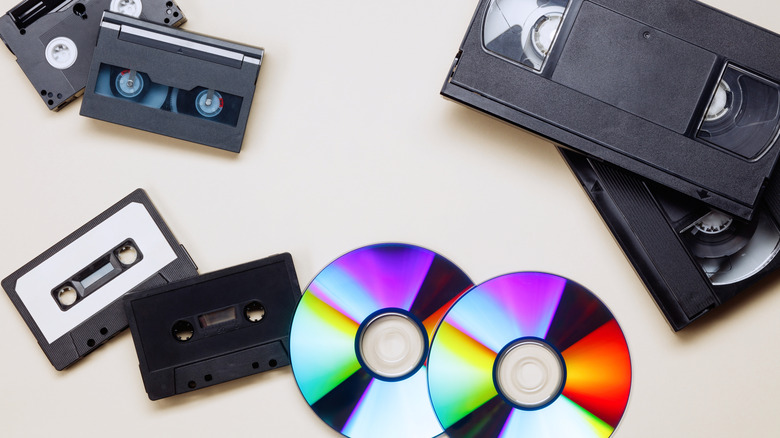
These days, if you want to watch something, all you have to do is download it or stream it using an external device like an Apple TV. There's a near-endless supply of movies and TV shows out there, to say nothing of YouTube content, that anyone can watch at a moment's notice. However, this wasn't always the case. It used to be that if you wanted to watch a movie, you had to go to your local movie theater. If you wanted to watch a TV show, you had to catch it when it aired in real time — and if you missed it, it was gone. If you wanted to play a video game, you had to visit your local arcade.
In the 1970s, home media became more accessible. Technology like VHS allowed for the rise of rental stores, such as Blockbuster, that made movies more accessible than ever before. Today, video game arcades are nearly extinct, with players now using consoles, PCs, and even smartphones to enjoy their favorite hobby.
Home video technology has evolved considerably since the dawn of VHS, but some evolutionary roads turned out to be dead ends. Today, we have 4K Blu-ray, fast-access SSD memory, and cutting-edge streaming for our TV, movies, and video games. But it's been a long road to get to this point. Let's take a look back at 10 obsolete media formats that once seemed cutting-edge.
Cartrivision
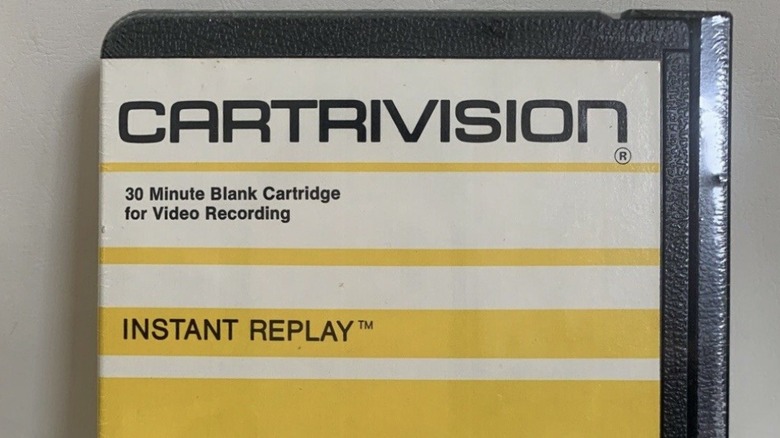
Before DVD, before LaserDisc, and before Betamax (we'll get to those), there was Cartrivision. For a brief moment in the early 1970s, Cartrivision was poised to become the next big thing. Cartrivision wasn't just a home media format. It was a whole home media system. The idea was that you'd buy a TV or cabinet system with Cartrivision built into it. The first model, released in 1972, was sold only at particular Sears locations in the greater Chicago area and retailed for $1,350. Cartrivision supported multiple types of tapes. There were blank tapes that could record up to two hours of TV programming, tapes with pre-recorded sporting events, travelogues, and educational content, and — most notably — tapes that could be rented from a library of roughly 200 Hollywood movies.
There was a catch, however. Cartrivision movies were rental only, and they could not be rewound by the consumer. They were only intended to be viewed once and then returned to the retailer, either in person or by mail. Cartrivision's limited movie library, paired with its high cost of entry, kept consumers away from the product and service alike.
Cartrivision was simply too ahead of its time, too costly, and too esoteric for the typical consumer. It only lasted two years on the market before being discontinued forever. It would be a whole decade before the home video revolutions of VHS and Betamax took place. Had Cartrivision spent more time on the market and had the opportunity to become popular, perhaps things would have turned out differently. Keep in mind, though, that the Cartrivision saga ensued decades before the invention of Netflix, which used the internet and mail-order home video rentals to revolutionize the movie business.
Betamax
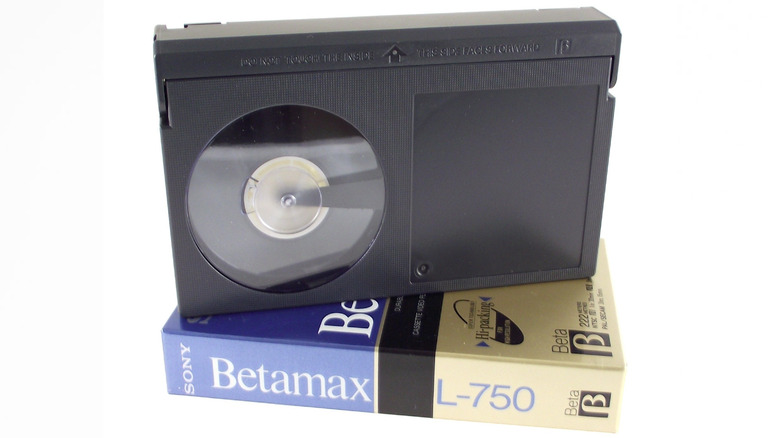
The first major home video wars came in the form of VHS versus Betamax. Those weren't the first-ever home media formats for watching movies, but when VHS and Beta burst onto the scene in the mid-1970s, it soon became clear that only one would survive as the dominant media format. The other one would fall into obscurity.
By most metrics, Betamax was superior to VHS. Beta tapes were smaller than VHS tapes were, and they boasted superior picture and audio quality compared to VHS. However, they could only record one hour of programming, while VHS tapes could record two hours at their highest-quality recording mode. In their lowest-quality recording mode known as SLP (standard long play), VHS tapes could record up to a whopping six hours of footage.
Back in the days of old CRT television sets, video and audio quality weren't top priorities like they are now. Customers flocked to VHS because it was cheaper — and because you could record a whole night of television while you were out for work, on a date, or sleeping early so you could watch shows the following morning while fast-forwarding through pesky commercials. When it became clear that VHS was the average consumer's choice, Betamax dropped out of the race, but it didn't disappear entirely. Betamax persisted in some places, such as Japan, where new tapes were produced and distributed up until 2016.
Audio cassette tapes
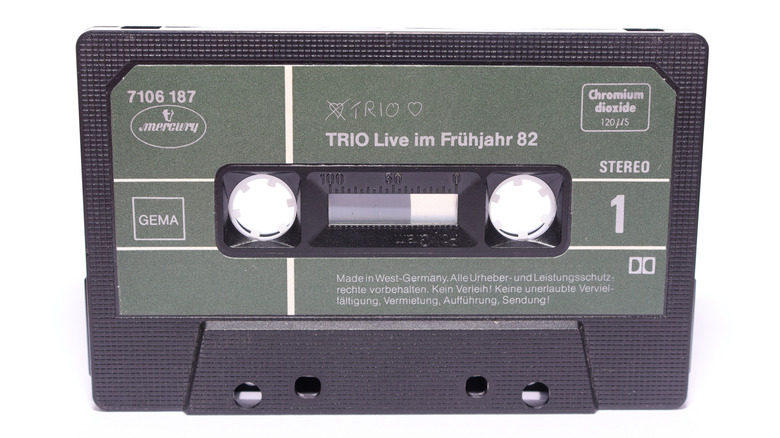
When it came to music, there were no serious alternatives to vinyl records until the advent of cassette tapes in the 1960s. There were pros and cons to the format, but audio cassettes remained popular until the early 1990s, even holding their own against the rise of CD technology. Well, for a little while, at least.
At a glance, it's easy to see the appeal. Cassettes are much smaller than vinyl records are, which makes them portable. They're also not prone to skipping, which made them perfect for car stereo systems, especially after the abject failure of the ill-fated 8-track format. Plus, cassettes were rewritable. As a result, they became popular as cheap alternatives to records and CDs. Their popularity only grew with the launch of the Sony Walkman in 1979, which was followed up by the equally popular Sony Discman, which can now sell for serious cash. These portable devices let users take music with them anywhere. Just as many people still own VHS tape collections of movies and shows recorded from TV, many veteran music fans have tons of cassette tapes with audio copied from vinyl or ripped from the radio.
However, while cassettes were versatile, they also suffered from poor audio quality. This was thanks to compression, limited audio range, and ever-present tape hiss. Because of these shortcomings, audiophiles tended to stay away from cassettes. Still, for those in the bootleg scene, cassettes were a godsend; they were much easier to use than traditional reel-to-reel recording systems. These days, they're mostly remembered for the experience of winding their loose tape with a pencil — but believe it or not, cassettes are actually making a comeback in the modern day.
LaserDisc
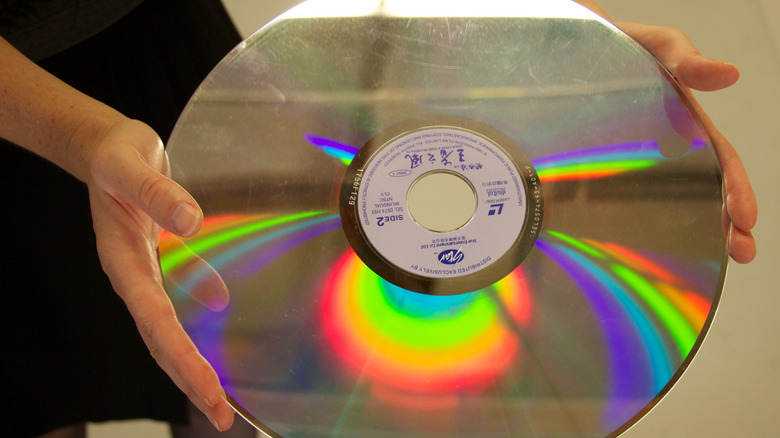
VHS asserted its dominance against Betamax, but that was just the first battle. Next, VHS went up against LaserDisc, a format introduced in the late 1970s. Today, LaserDiscs are largely forgotten. But if you were there when they came out, LaserDiscs left an impression. They were like CDs, but record-sized, and they came in packaging that felt premium — like every movie was a collector's item.
LaserDisc was ahead of its time. It basically invented the concept of including bonus features on a disk, with "Director's Commentary" audio tracks and other goodies making LaserDisc the format of choice for hardcore cinephiles of the 80s and 90s. Although their video quality was superior to VHS, LaserDiscs were more expensive than VHS tapes were. They also had other limitations. LaserDiscs could only hold about 30 minutes of content per side, so a two-hour movie like "Star Wars" (and others in the original trilogy) would ship on at least two disks, requiring viewers to get up and flip or change disks. So, if you ever wanted to get your steps in while watching movies, LaserDisc had you covered there.
Ultimately, LaserDisc was too niche, expensive, and unwieldy to last. VHS was easy to use, versatile, and cheap. At the time, LaserDisc didn't really stand a chance — but in hindsight, it was all at once part vinyl, part CD, and the precursor to DVD. The latter would be a much more successful format by doing everything LaserDisc could do, but better in just about every way. Still, LaserDisc still has its fans, and the format maintains a cult fandom to this day.
Floppy disks
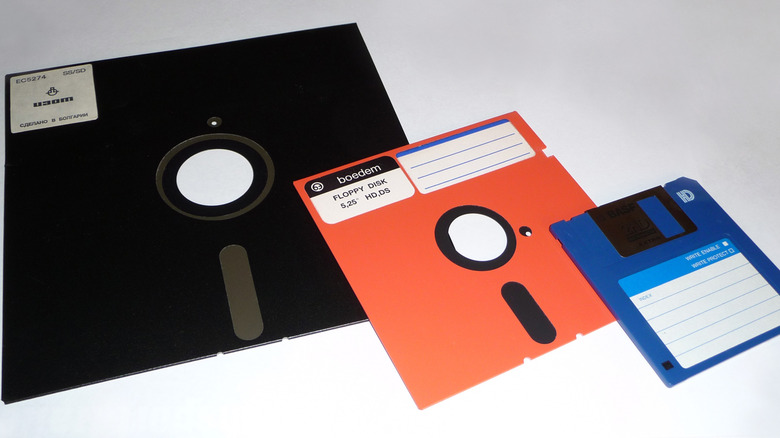
The first floppy disks were created by IBM in 1971 and could hold up to 80 kilobytes of data. These days, all but the smallest .jpg images are bigger than that, but floppies were enough to revolutionize data storage when they emerged. In 1976, floppy disks were updated and shrunk down to a version that was just 5.25 inches small. If you're a veteran of the Commodore 64 era, that's likely the disk you grew up with.
Floppy disks reached their final form, so to speak, in the 1980s, with the creation of a 3.5-inch disk that was no longer "floppy," but instead featured a hard, plastic shell. These disks could be transported easily and were far more resilient than their older, floppier counterparts, though they could only carry so much data. Video game enthusiasts of a certain age may remember installing games on their computers, one diskette at a time. "Beneath a Steel Sky," released in 1994, released across 15 floppy disks. By contrast, its CD version launched on just one disk. And it featured voice acting, to boot!
3.5-inch floppy disks became obsolete in the face of CD storage and, later, USB and cloud storage applications. Time marches on, and everything that seems cutting-edge now will eventually become outdated and replaced. Today, the floppy disk is best known as the universal "save" icon across computers and video games — a fine legacy for an integral chapter of computer technology.
CDs and CD-ROMs
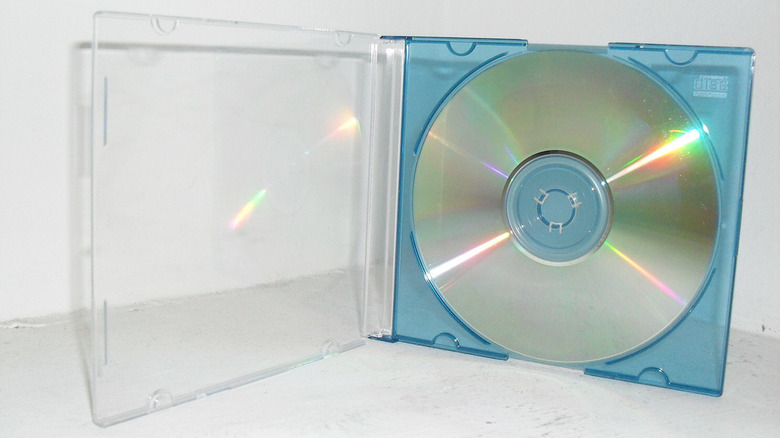
In the late 1980s, compact disks supplanted vinyl records as the default format for music. By the 1990s, the CD-ROM began to take over the video game and software space, as well. While Nintendo stuck with old-school game cartridges, the PlayStation, Sega, and PC platforms all switched over to CD-ROM for storing game data.
CD-ROM was a revolution in gaming. The CD's storage capacity allowed PlayStation to showcase games like "Metal Gear Solid" with extensive voice acting, as well as cutting-edge FMV sequences as found in the likes of "Myst" and "Final Fantasy VII." These games likely would have been impossible to implement on the Nintendo 64, at least not without some major corner-cutting. Indeed, the N64 versions of multi-platform games had their voice acting and FMVs reduced compared to their PlayStation counterparts.
CDs were unfortunately famous for their fragility, a trait that would carry forward to the DVD generation. If you scratched a disk, it could become unplayable. This was fixed during the Blu-ray generation with the invention of TDK's Durabis, a polymer coating that protected disks from scratches. CDs also suffered from the long load times required to fully scan disk data. In today's era of SSDs where memory can be accessed at a moment's notice, CDs are slow and cumbersome in comparison. As for music, vinyl is back en vogue, and lossless streaming and digital downloads have all but supplanted CD technology. Modern laptops and video game systems often don't even ship with disk drives anymore.
GameCube game disks
While the Sony PlayStation, the Sega Saturn, and other consoles of the 1990s embraced CD-ROM technology, the Nintendo 64 opted to stick with tried-and-true game cartridges, a next-gen version of the technology they used for both the NES and the SNES. Sadly, the Nintendo 64 — despite its various innovations and legendary titles like "Super Mario 64" and "The Legend of Zelda: Ocarina of Time" — was a relative failure.
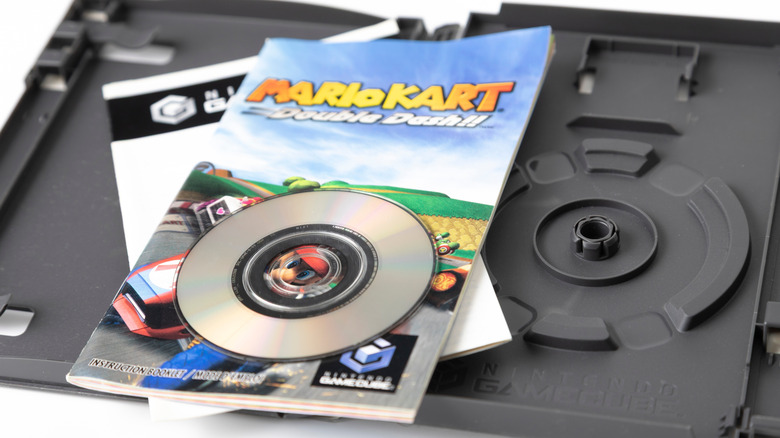
For the 2001 GameCube, Nintendo switched to disk-based media, but with a Nintendo twist. The GameCube Game Disc was immediately recognizable due to its diminutive size. While a DVD was 12 centimeters wide, GGDs were only eight centimeters in diameter. It felt like a next-generation media format. The GameCube launched in an era when smaller, more compact technology was a focal point. The GameCube itself was jokingly referred to as a "lunchbox" due to its size and carrying handle. But that, combined with its smaller disks, helped make the GameCube feel next-gen.
The GameCube Game Disc wasn't perfect, of course. While its smaller size was cute and futuristic looking, it didn't boast the same storage capacity as its competitors did. A dual-layer DVD could hold up to 8.5 GB of data. Conversely, a GameCube disk could only hold 1.46 GB of data. As a result, games on GGDs had heavily compressed FMV files to save on space. Meanwhile, games like "Resident Evil 4" shipped on two GameCube disks, but when ported to the good old PlayStation 2, it launched on a single DVD that contained everything from the GameCube version plus a whole new campaign, "Separate Ways." Nowadays, the GameCube Game Disc is regarded as another Nintendo oddity, remembered for its uniqueness over its utility.
Game Boy Advance Video
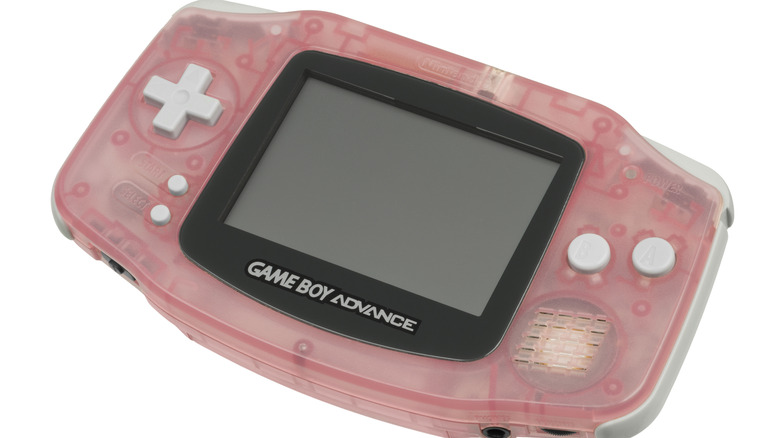
Nintendo's Game Boy Advance, first released in 2001, was often referred to as a Super Nintendo in the palm of your hands. In 2004, perhaps in response to the announcement of the PSP and its high-tech video playback capabilities, Nintendo started releasing Game Boy Advance Video cartridges for the handheld system. On the one hand, it was incredible that you could watch movies on a Game Boy Advance. On the other hand, the video quality you'd find on these cartridges was underwhelming, to say the least.
Each cartridge could hold a movie or a couple of TV episodes. Since the GBA was meant to be kid-friendly, available movies were limited to the DreamWorks Animation movies "Shark Tale," "Shrek," and "Shrek 2." Alas, if you wanted to watch "Syriana" or "Jarhead" on the Game Boy Advance, you were out of luck. There were also cartridges that held "Pokémon" episodes, as well as various collections of Disney Channel, Nickelodeon, and Cartoon Network programs.
Unfortunately, there's only so much data you can fit onto a 32MB cartridge. Accordingly, the video files on these cartridges were heavily compressed, complete with color bleed and compression artifacts galore. The video quality could rightly be compared to watching low-resolution YouTube videos. Using spotty Wi-Fi. On the moon. Still, if you were a kid with a GBA and wanted to watch an episode of "Johnny Bravo" on the school bus, you could do that thanks to Game Boy Advance Video.
Universal Media Discs
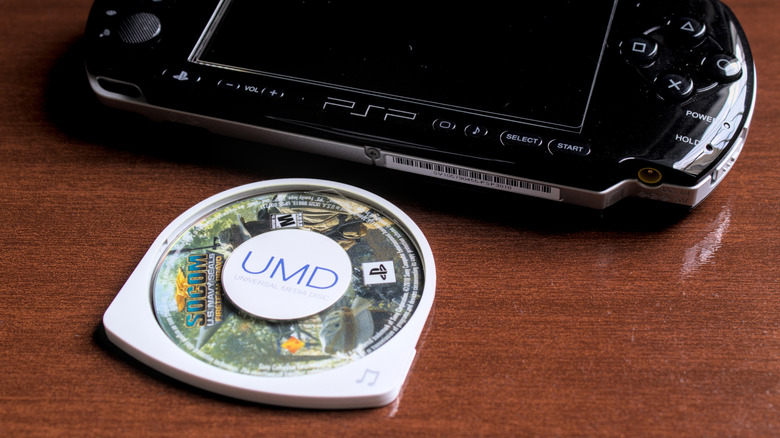
The PlayStation Portable, or the PSP, was Sony's attempt to compete with Nintendo in the handheld market. The PSP utilized Universal Media Discs (UMDS). These disks were tremendously versatile; they were able to play video games, music, and even video content. With that kind of utility, the PSP was both a handheld video game console and a portable media player.
The PSP had its strengths, but it also had its weaknesses. The lack of a second analog nub was one of them, but more importantly, the UMD just wasn't all it was cracked up to be. UMDs were prone to scratching, so they were enclosed within plastic shells. Video games load times were annoyingly long, and you could hear UMDs spinning noisily inside a PSP as they ran. And heaven help you if you were to play during a rough car or subway ride. Spinning media and road bumps don't mix.
Sony made its opinion on the UMD known when it released the PSP Go in 2009, a variation that eschewed UMDs entirely in favor of digital downloads. Sony's next proper handheld, the 2012 PlayStation Vita, took proprietary game cartridges that didn't use spinning disks. UMDs were cutting-edge for their time, but they just weren't right for handheld gaming in the mid-2000s.
HD-DVD
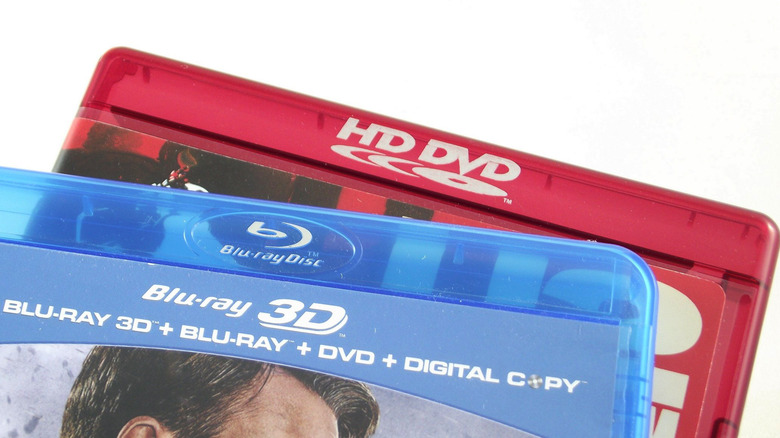
Sometimes, a format fails to catch on for reasons beyond the format itself. The last great physical media war was in 2006 with the near-simultaneous launch of HD-DVD and its competitor, Blu-ray. Ultimately, Blu-ray won that war, but that's not a knock on the HD-DVD format. While the two formats differ slightly, such as HD-DVD's smaller storage capacity compared to Blu-ray, their specs were broadly comparable. It wasn't a situation like VHS versus Betamax, where VHS won out over the higher-quality Betamax format for its affordability and accessibility.
In the end, Blu-ray won because it was backed by Sony, which had a much bigger foothold in the motion picture industry than Toshiba, which created HD-DVD. Sony owned (and still owns) Columbia Pictures, a major movie studio, which meant contemporary hit movies like "Casino Royale," "The Da Vinci Code," and "Spider-Man 3" were locked into Blu-ray from the start. Toshiba just didn't have the same pull within the industry, despite the initial pipeline for HD-DVD being derived from that of existing DVD production methods.
On top of Sony's foothold in the movie business, the real X-factor that clinched Blu-ray's victory over HD-DVD came with gaming. Sony launched the PlayStation 3 video game console in 2006. While many scoffed at its $599 price tag, that price was actually quite cheap for a Blu-ray player alone. While not immediately successful, the PS3 made Blu-ray mainstream and gave it a major edge over HD-DVD. Microsoft released an add-on accessory that would allow the Xbox 360 to play HD-DVD movies, but it still used regular old DVDs for video games. Games like "Grand Theft Auto V" and "Mass Effect 2" shipped on two DVDs for Xbox 360; their PS3 versions, however, launched on just a single Blu-ray.