

Here's How Old Your Favorite Tech Brands Are In 2026
The tech industry houses a number of companies that have flourished to become some of the biggest players in the market. One look at the list of the largest companies in the world by market cap will make this clear as day, with the top five positions occupied by the biggest tech brands you can think of. NVIDIA, Apple, Alphabet, Microsoft, and Amazon have incredibly high market caps that range from $2.6 trillion to $4.6 trillion.
This should make it clear that the tech industry is here to run the show for a long time. It helps that people are very passionate about their favorite technologically driven companies, loving the products they bring to market and how they've made life easier for them in more ways than one. These companies have taken a long time to make their mark in the industry, reaching an impressive age in 2026.
Apple
Ever since Steve Wozniak had aspirations to build a personal computer of his own, both he and Steve Jobs took a massive risk in 1976 and started a company in the latter's garage that would become a tech behemoth with the second-highest company value as of 2026. The first Macintosh computer graced store shelves in 1984, and the release of the iPod in 2001 revolutionized how music players worked, but what truly set Apple on the path of runaway success was the announcement of the legendary iPhone in 2007. Fast-forward to today, and the number of Apple products people can't resist buying is seemingly endless.
The company celebrated its 50th anniversary on April Fools' Day of 2026. Its commitment to becoming the most dominant player in the tech industry is no joke, if rumors are to be believed. More products with the M5 chip, a foldable iPhone, new OS upgrades, and even smart glasses are possibly in the works behind the scenes.
Microsoft
Failures in the console market, Windows 11 being exposed as a broken mess, and relentless "Microslop" accusations have led to Microsoft's start in 2026 being a rather rocky one, but that shouldn't lead anyone to think that this tech giant has lost it. It's still the fourth-largest company in terms of market cap, with a history in the tech industry that's a tale for the ages. Bill Gates and Paul Allen founded Microsoft — an amalgamation of the words "microcomputer" and "software" — in April 1975 and got their first big break when they were contracted by IBM to develop an OS for its PC.
This led to the creation of MS-DOS, which Microsoft developed before the legendary Windows 1.0 that released in 1985. The company hasn't looked back since. Now, the Windows Operating System has become a staple in personal computing and is poised to innovate in AI automation and cloud computing under the watchful gaze of CEO Satya Nadella.
From its humble beginnings as a simple research project, two students at Stanford University set the foundation for what would become one of the most dominant tech companies in the industry, with numerous major brands falling under the Google umbrella. It originated from a simple product called BackRub that aimed to rank websites by their importance. Eventually, BackRub became so powerful that it outgrew the Stanford servers, and Google Inc. was founded in a California garage in 1998.
The legacy of this company has been well-documented ever since, with Google AdWords changing the way digital advertising worked long before it became a major thing in 2000. Gmail was created not long after, in 2004. The company became big enough to acquire YouTube for $1.65 billion in 2006, and eventually became a subsidiary of Alphabet Inc. after restructuring in 2015. Now in its 28th year, Google's $185 billion investment in AI verticals makes it clear that Google aims to either be a market player as this trend continues to expand ... or lose out on a ton of funds.
Samsung
It's fascinating that an industry giant like Samsung started out as a simple grocery trading store in 1938. Founder Lee Byung-Chull expanded on these humble beginnings, opening the largest woolen mill in Korea after the Korean War, before eventually making the most of South Korea's protectionist policies to become the biggest conglomerate in the country by a significant margin. The establishment of its electronics division in 1969 meant that the company was well on its way to becoming one of the world's biggest tech conglomerates.
Eventually, with the release of the first-ever Samsung Galaxy in 2009, the company embarked on the path to becoming a major player in consumer tech and has ridden this wave of technological excellence ever since. As of right now, the 88-year-old company — or 57, if you only count the electronics division — is investing in the AI sector, dedicating over $73 billion to develop AI-powered chips in hopes of leading this revolution.
NVIDIA
The ever-growing demand for powerful GPUs because of the AI boom has led to NVIDIA becoming the most valuable company in 2026, with a market cap of $4.6 trillion. Despite AMD doing its best to give stiff competition to this company, a whopping 92% market share in 2025 makes it clear that it'll take a Herculean effort to unseat NVIDIA from its throne. Sure, the latest reveal of DLSS 5 has been nothing short of an unmitigated disaster, but it's a minor blip for such a dominant company.
What does NVIDIA actually mean? The term was coined by combining the Latin word for envy, "invidia", and the acronym NV (short for next version — as in rapid improvement). Jensen Huang, Curtis Priem, and Chris Malachowsky sparked a technological revolution after founding the company in 1993. From the RIVA GPUs to the current RTX lineup of graphics cards that support groundbreaking ray-tracing technology and DLSS, NVIDIA's offerings continue to help gamers achieve mind-blowing visuals in their favorite AAA games ... even if the pricing of its recent offerings has been the source of much debate.
Amazon
Yet another massive tech giant that originated from its founder's garage, Jeff Bezos started Amazon as an online platform to sell books in 1994. It marked the beginning of an e-commerce revolution that would see Amazon become the fifth-most valuable company with a market cap of $2.7 trillion and help its founder become the fourth-richest man of all time, courtesy of a net worth of $224 billion, according to Forbes. While the company was initially named Cadabra, similarities to the term "cadaver" led to Bezos changing the name to the legendary moniker we all know and love ... for the most part.
It's easy to think that the company's success stems from its widespread e-commerce platform, even with other major brands being owned by Amazon. However, you may be surprised to learn that it's actually Amazon Web Services (AWS) and its cloud computing ventures are its most profitable division. Along with this, Prime Video is making waves as one of the top streaming platforms, alongside giants like Netflix and Disney+. Now, 32 years after its inception, Amazon has big plans for 2026. Amazon Leo, a satellite service meant to compete with Elon Musk's Starlink, will finally launch sometime this year, further hammering in Amazon's dominance.
Dell
Dell's origins are fascinating. Its founder, Michael Dell, started the company in his dorm room at the University of Texas. The business started as a provider of customizable upgrades for PCs in 1984, which gained a ton of steam and convinced the founder to drop out of college and build computers. What followed was a track record of impressive success that helped Dell become one of the biggest tech brands in the business.
The company raised $30 million in its first-ever IPO in 1988, debuted on the Fortune 500 list in 1992, became a private company in 2013 after a $24.9 billion buyout spearheaded by Silver Lake Partners and Michael Dell himself, and is currently riding the AI trend, as seen in the partnership it has facilitated with NVIDIA to launch the Dell AI Factory in 2024. With the Dell XPS making a comeback this year, fans can't help but rejoice as one of their favorite companies continues to deliver what they want, 42 years into its run.
Sony
With a wealth of product offerings that include TVs, soundbars, home theater systems, headphones, cameras, and gaming consoles, it's easy to see why Sony has so many fans. The company has a fascinating history spanning 80 years, starting out with electric cookers and tape recorders that didn't sell all that well. Thankfully, Sony's fortunes changed once they started selling transistor radios, a product so successful that it eventually led to Sony establishing a headquarters in New York City and flying the Japanese flag in America for the first time since World War II.
A string of iconic products followed, starting with Sony's first attempt at a color television in 1968. The legendary Betamax VCR followed once color TV became the norm in 1975. The iconic Sony Walkman made its debut in 1979, followed by the first-ever CD player, courtesy of a partnership with Philips, in 1982. The legendary original PlayStation was released at the end of 1994, and Sony VAIO PCs entered the market in 1997. However, despite its market dominance, Sony has struggled in recent times, with the most notable indication being the sale of its New York City headquarters for over $1 billion. Here's hoping that 2026 and Sony's new product lineup will help this company become the profit machine it once was.
Lenovo
With an initial investment of just $25,000 and the name Legend, Lenovo has grown into one of China's biggest companies, supplying PCs all over the world for 42 years and counting. It was the first company to develop technology that could help computers process the Chinese language, and this happened just two years after its inception in 1984. A partnership with IBM led to the first generation of ThinkPad laptops released in 1992, but it wasn't until 2003 that this company shifted from the Legend moniker to Lenovo. It acquired the IBM PC division in 2005 and, by 2021, had become the largest seller of PCs worldwide.
This was achieved courtesy of Lenovo's diverse lineup of laptops that satisfy numerous needs. The ThinkPad and ThinkBook laptops are geared toward working professionals. The IdeaPad lineup is for entry-level consumer-grade laptops, while the Lenovo Yoga occupies the same market space but for the higher-end segment. In terms of gaming, the Lenovo LOQ is an option for budget-conscious users, while gamers who want the best possible performance may find the Legion lineup right up their alley. Finally, ThinkCenter or the higher-end ThinkStation PCs are for people who'd prefer a desktop setup over a laptop.
Nintendo
It's fascinating to see how a company specializing in trading cards that started 137 years ago in 1889 — making it the oldest company here — eventually became a video game juggernaut that single-handedly saved the industry after the catastrophic video game crash of 1983. The company pivoted to developing toys in 1970, crafting a laser gun accessory that marked its first foray into the realm of video games. However, it wasn't until the release of the Famicon, later repackaged as the Nintendo Entertainment System (NES), in 1983 that the company finally became the Nintendo we all know and love.
From legendary handhelds like the Game Boy, Game Boy Advance, Nintendo DS, Nintendo 3DS, to home consoles like the Super Nintendo Entertainment System (SNES), Nintendo 64, Nintendo GameCube, and the legendary Wii, Nintendo has made a massive impact in the industry. As of right now, the Nintendo Switch — an engineering marvel — has ushered in the age of the hybrid console for the company, with the Switch 2 not doing too much to change a formula that has paid off for Nintendo... especially after the colossal failure of the Wii U.
Tesla
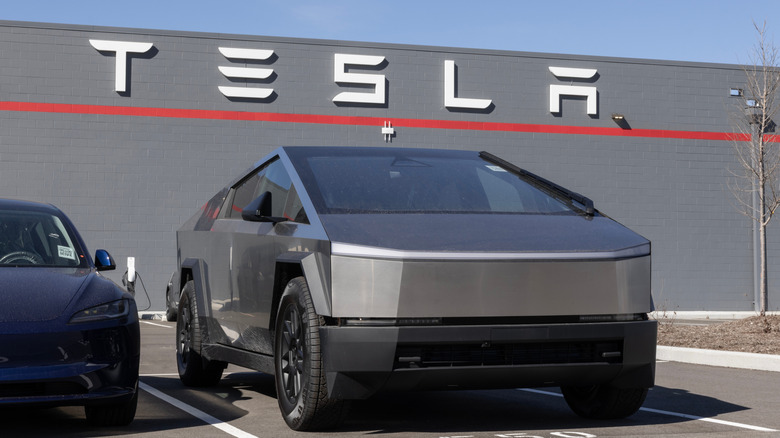
A company now virtually synonymous with Elon Musk, Tesla was founded in 2003 by Martin Eberhard and Marc Tarpenning before receiving a round of funding a year later, with the PayPal co-founder leading the charge with a cash infusion of $30 million that secured him a seat on the board. Four years later, both founders resigned, and Musk took over as the CEO. Under his leadership, the company became a dominant player in the EV space. Its work on the Tesla Roadster was commendable, but it's commercial electric vehicles that have served as the bedrock of its success.
The Tesla Model Y has made history as the world's first best-selling car that happens to be an EV for three consecutive years. The Model 3, Model S, and Model X filled out Tesla's line of EVs at various price points and performance levels. Even the Cybertruck, one of Tesla's more polarizing offerings, is iconic in its own right. Tesla Autopilot, its autonomous driving technology, is a technology the company clearly holds in high regard, as seen in its Tesla Cybercab push that aims to make driverless taxis the norm.
IBM
The sheer number of innovations IBM has perpetrated in the market over the course of 115 years is nothing short of astounding. Founded as the Computing-Tabulating-Recording Company in 1911, its name was changed 13 years later, with Thomas Watson at the helm. Under his 42-year leadership, IBM fostered a competent workforce and became the leading manufacturer of punch-card tabulating systems.
Eventually, IBM developed several products that would become commonplace in modern society. These include the first commercial hard-disk drive, the IBM Model 350 RAMAC in 1956, floppy disks were invented in 1967 and sold to the general public in 1971, a year when IBM also manufactured the modern ATM in the form of the IBM 2984. The Universal Product Code (UPC), more commonly known as the barcode we see every day in supermarkets, was developed by electrical engineer George Laurer at IBM. However, the most important product from this company may be the IBM 5150 Personal Computer, which arguably made personal computers the norm in business.
HP
The Hewlett-Packard Company, more commonly known as HP, was founded in 1939 after William Hewlett and David Packard used a coin toss to decide the company's name. Given that the founders' first customer was Walt Disney Productions, it's clear that HP's tech was something special. However, while they went public in 1957, HP's first foray into the realm of computer technology was in 1968, with the release of the HP 9100A calculator. The revolutionary pocket calculator followed in 1972.
HP built its first-ever PC, the HP-85, in 1980. A string of innovative products came out before the new millennium, including the HP-150 Touchscreen PC in 1983 and the HP LaserJet printer in 1984. The HP DeskJet 500C, a color printer, followed in 1991, and the all-in-one HP OfficeJet machine became an office staple when it came out in 1994. This trend of excellence continued, and 87 years later, HP's varied lineup of laptops, desktops, printers, and other accessories has made it one of the biggest tech names in 2026.
Intel
Robert Noyce and Gordon Moore founded Intel in 1968, starting out with memory chips that were very successful and quickly became the industry standard. In just three years, it became a public company, and a year later, it developed the 8008, a computer processing unit that would mark a major shift in product offerings and turn Intel into the CPU manufacturer we all know and love. The 1991 Intel Inside marketing campaign helped it become a household name, bolstered by the release of the Pentium microprocessor in 1993.
Despite market dominance in the early 2000s, a growing sense of complacency caused a myriad of problems. Competitor AMD's growth in the industry, a lack of focus on smartphone chips, and a refusal to invest in OpenAI in 2017 proved disastrous for Intel. As a result, its market dominance has waned considerably to the point where it is playing second fiddle in the modern tech landscape.
Meta
It's easy to hate on Meta in the modern era, what with Facebook's controversial data-collecting practices and its $100 billion investment in VR and AR among its highest-profile failures. However, this company still owns Facebook, WhatsApp, and Instagram, three of the biggest social platforms in the world. It's a level of market dominance that makes Meta one of the biggest tech companies in the world, with a market cap of $1.7 trillion.
It's hard to believe that Facebook originated as Facemash, a crude tool used to rank university students based on their photos. While this was promptly shut down by Harvard, it gave Mark Zuckerberg the inspiration he needed to form Facebook in 2004 — technically TheFacebook, before the article was dropped next year — with Eduardo Saverin, Dustin Moskovitz, and Chris Hughes. The rest, as they say, is history, with Facebook powered on for 22 years and counting. The company eventually became a subsidiary of Meta following a round of restructuring and acquired Instagram for $1 billion in 2012, followed by the 2014 acquisitions of WhatsApp for $21.8 billion and Oculus VR for $2 billion.