

8 Best Budget And Expensive Gaming Headsets In 2026
We may receive a commission on purchases made from links.
The best gaming headsets in 2026 cover a much wider range of needs than ever before, in both budget and expensive categories. Even when considering the cheapest options, some brands have gone the extra mile in offering gamers more for their money, though the more expensive models go even further with more premium quality-of-life features: less wireless latency, improved microphone quality, extended battery life, helpful software, spatial audio support, added connectivity options, and flexibility between a PC, a PlayStation, and a phone. Just like we saw with the best noise-canceling headphones in 2026, a budget model can still be a smart buy if it gets the basics right, but premium headsets have a lot more to offer than a nicer badge and thicker padding.
With that said, the headsets below are ordered from the cheapest worthwhile option to the biggest splurge, with a focus on what each one actually gives you compared with the rest of the market. Some stand out because they deliver strong core features for not much money. With 2026 being an especially expensive year for tech, that category is more important than ever.
At the other end of that scale, the premium headsets on our list justify a much higher price by adding better microphones, more advanced wireless options, stronger software support, or flagship extras such as active noise cancellation and swappable batteries. We judged each pick on comfort, mic performance, battery life, platform support, sound, features that make a difference in daily use, and how that value compares to the price you pay.
HyperX Cloud Stinger 2
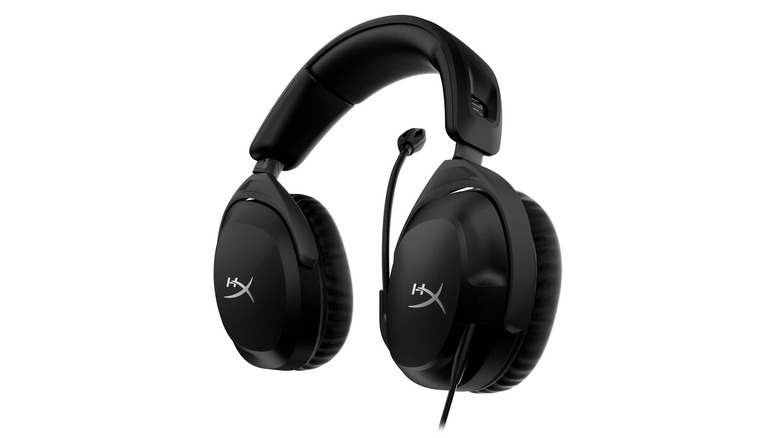
The HyperX Cloud Stinger 2 is a strong place to start looking for the best headset that's friendly to all budgets because it keeps the job simple. While there is no Bluetooth dongle or charging routine to worry about, since it's a wired headset, this wallet-friendly model offers 50-millimeter drivers, memory foam ear cushions, rotating earcups, on-headset volume controls, and a swivel-to-mute microphone. Instead of trying to distract from weak core specs with software gimmicks or aggressive styling, the Cloud Stinger 2 puts comfort, clear voice pickup, and a straightforward setup first. That's all for a list price of just under $50 on Amazon.
That price point makes it a good fit for students, younger gamers, or anyone who mainly wants a reliable headset for party chat and everyday use. Rtings notes its sleek design and solid microphone performance for the price, exactly the kind of features a headset in this bracket needs to get right.
Sure, the limitations are easy enough to spot; it does not have wireless support, the materials aren't of the highest quality, and it doesn't have the sort of tuning options that show up in pricier models. Even so, these headphones deliver what most people in this range actually need: a comfortable, inexpensive headset that works properly and does not feel like a waste of money after a week. HyperX didn't make our list of the best cheap general headphone brands, but offering gamers value for money is exactly what the Cloud Stinger 2 does.
Logitech G435 Lightspeed
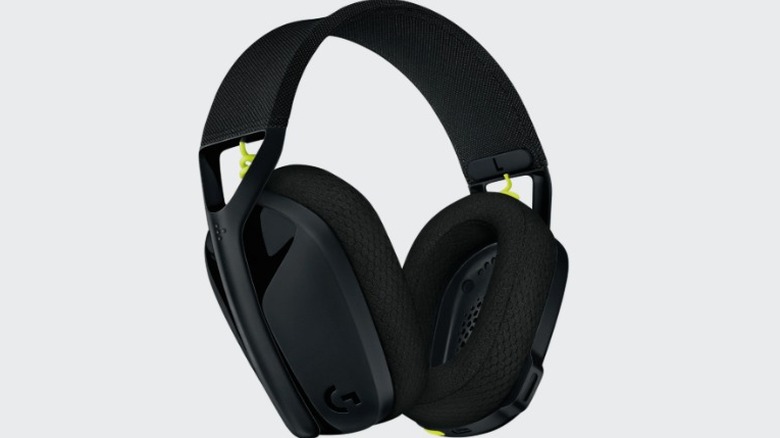
The Logitech G435 Lightspeed is one of the clearest examples of how far budget wireless gaming headsets have come. A few years ago, going cable-free at a lower price usually meant putting up with bulky hardware, spotty performance, or a fit that became irritating during longer sessions. The G435 avoids most of that by supporting both LIGHTSPEED wireless and low-latency Bluetooth and weighing in at a feather-like 5.8 ounces (165 grams).
Priced at $79.99 on Amazon, there are some trade-offs in exchange for being the best among the cheapest wireless headsets around. Rtings confirmed you are not getting EQ audio customization, strong isolation, or a premium-feeling build. These are shortcomings that, for now, help keep Logitech off the list of the most reliable wireless headphone brands. What you are getting, on the other hand, is a relatively affordable wireless headset that keeps latency low over the USB dongle.
The G435's dual connectivity means it can move between gaming and everyday media without much hassle, while the light weight helps it stay comfortable in a way bulkier budget headsets often do not. That is why it works so well for casual gaming and general household use. The G435 is easy to recommend to anyone who wants to leave wires behind without taking a major step up in price, and that makes it one of the more practical budget entries in that particular bracket right now.
SteelSeries Arctis Nova 3X/3P Wireless
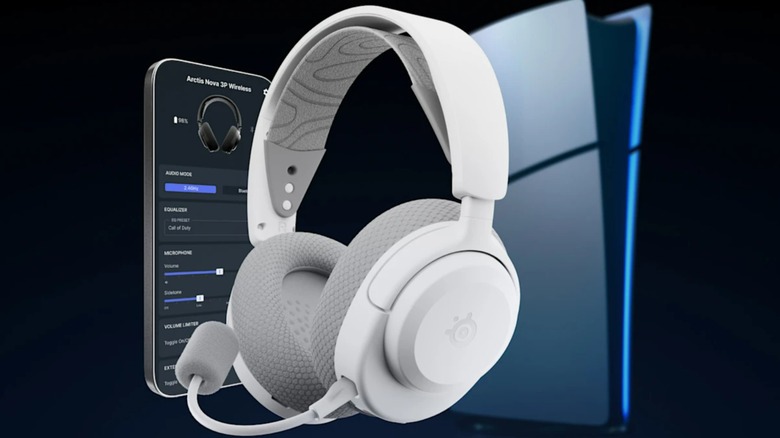
The SteelSeries Arctis Nova 3X and 3P Wireless models are what you buy when you have outgrown entry-level compromises but still want to stay grounded on price before entering luxury territory. For its price of $109.99 (Amazon), you get a lot of goodies, including over 200 game-specific audio presets through the mobile app, neodymium magnetic drivers, fast charging that brings nine hours of use from 15 minutes, and up to 40 hours of battery life on a full charge. SteelSeries also keeps the headset light at around nine ounces (260 grams), which is an important factor once a headset becomes something you wear most evenings instead of only on weekends. Tom's Guide lists this set as the best PC gaming headset of the year, more than worth the money.
The real draw, though, is how those features line up with different platforms. The 3X is the more obvious Xbox-friendly option, while the 3P is positioned for PlayStation users, but the broader compatibility stretches across PC, Switch, Switch 2, Steam Deck, mobile, and more. That makes the Nova 3 line useful for anyone who wants one wireless headset that can do more than one job by letting you switch to different devices on the fly. The presets also help it feel more specialized than cheaper rivals, especially for players who want game-specific tuning without spending ages adjusting sliders by hand. It still stops short of true premium extras like Active Noise Cancellation (ANC) or Bluetooth quick switching, but it packs far more meaningful features than most headsets in its price range.
SteelSeries Arctis Nova 5/Nova 5X
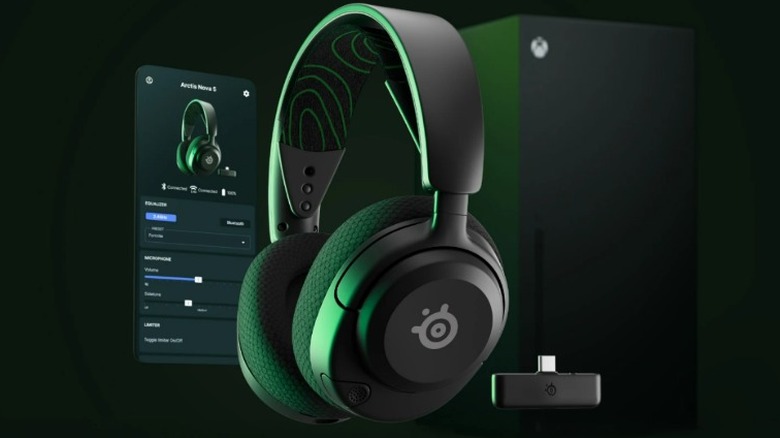
A slight upgrade from the 3X/3P, the SteelSeries Arctis Nova 5 and Nova 5X are the type of gaming headsets that are perfect higher-level options in the budget category, with improved quality-of-life features for only a slightly higher price of $149.99 (Amazon). These include 60-hour battery life, USB-C fast charging, Quick-Switch Wireless that lets you toggle between 2.4 GHz and Bluetooth, over 100 game audio presets in the companion app, neodymium magnetic drivers for enhanced sound quality, and a ClearCast 2.X microphone with a high-bandwidth chipset.
That is a far more complete package than most headsets of its level offer, especially when many competitors still make buyers choose between stronger battery life, good app support, or dual wireless connectivity. That long battery life also means you can go days without charging, even as you're switching between phone and console audio. Its strong preset library is also essential if you want better positional cues without manually building EQ profiles from scratch. While it lacks active noise cancellation, Tom's Guide still found it a solid headset for hopping between multiple gaming platforms.
Razer BlackShark V3
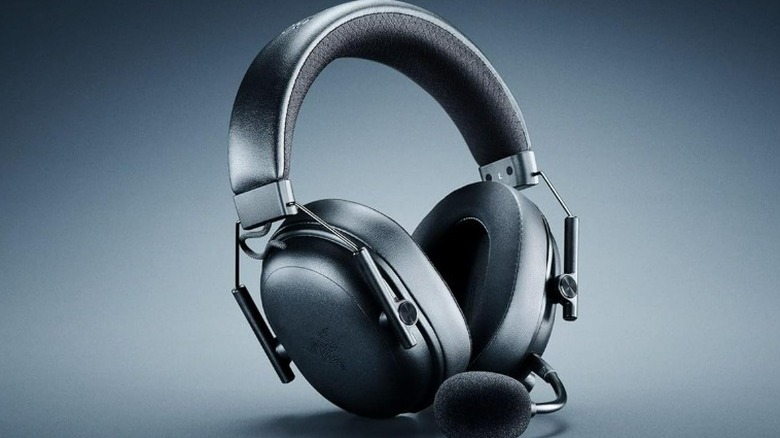
The Razer BlackShark V3 feels like a more serious feature jump, especially for players who care about competitive play. For $149.99 (Amazon), Razer loads this model with several features that are clearly aimed at that audience: wireless latency as low as 10 milliseconds, a detachable HyperClear Super Wideband 9.9-millimeter microphone, TriForce Titanium 50-millimeter Gen-2 drivers, THX Spatial Audio 7.1.4, and up to three connectivity options depending on the version (2.4 GHz, Bluetooth, USB). There are also specially-tuned sound profiles designed to make footsteps and other competitive cues easier to pick out, which gives it a more specialized identity than the broader all-rounders lower down the ranking.
That spec sheet is backed up by the way the headset feels in use. PC Gamer praised the BlackShark V3 for its audio clarity and especially the light 9.5-ounce (270-gram) design, which is important because positional audio is only useful if the headset stays comfortable for long sessions. It still is not a true flagship headset, and it does not carry the luxury extras you get at the top end of the market. Nevertheless, it does have a much stronger technical feature set than many similarly priced rivals ... and it won't keep an eye on you like Razer's own new AI companion.
Sony Inzone H5

The Sony Inzone H5 is one of the more feature-complete headsets for PlayStation-focused buyers who still want proper PC support. Sony's main advantages in this market are 360 Spatial Sound for Gaming, a low-latency 2.4-GHz wireless dongle, up to 28 hours of battery life, a bidirectional boom microphone with AI-powered noise reduction, and a fairly light nine-ounce (260-gram) frame. It also supports a wired connection, which is useful if the battery runs low or you want a simpler link to another device. That combination gives it a lot more versatility than other console-branded accessories, which can lean too heavily on branding and not enough on the actual hardware.
Its mix of features also holds up in reviews. TechRadar described the Inzone H5 as an especially strong pick for PS5 players because of its balance of sound quality, comfort, microphone clarity, and battery life. Spatial audio is the obvious selling point, especially for players who want better directional cues in shooters, but the lighter frame and softer fit are just as important for lengthier sessions. For a list price of $180 (Amazon), the Inzone H5 does not offer extras like ANC, swappable batteries, or more advanced software, but it still brings together a stronger and more practical feature set than many wireless headsets in the same price range.
Audeze Maxwell 2
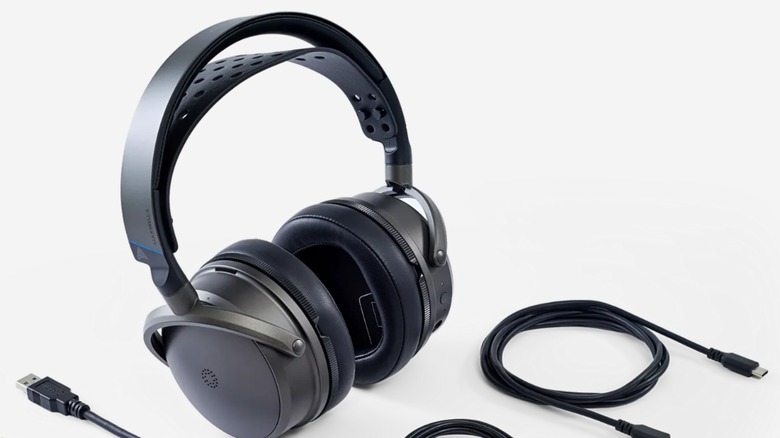
The Audeze Maxwell 2 moves into a very different class of headset because its features are built around outright audio performance, justifying its luxury price tag of $329 (Amazon). The big plus is the pair of 90-millimeter planar magnetic drivers, which are far larger and more specialized than the dynamic drivers used by most gaming headsets. Audeze also adds ultra-low-latency wireless audio up to 24-bit/96 kHz, Bluetooth, wired USB-C and 3.5-millimeter connections, FILTER AI noise removal for voice chat, and over 80 hours of battery life with fast charging that can reportedly provide 24 hours of playback in 20 minutes. On paper alone, that is more than enough to separate it from a lot of gaming-first flagships.
The main trade-off is its hefty three-pound weight — something Rtings has called out, while also saying the Maxwell 2 is the best PS5 headset Rtings has tested, which tells you how much the rest of the package gets right. The combination of planar magnetic drivers, high-resolution wireless support, multiple connection options, and a huge battery is unusual even at this price. Instead of leaning on software tricks or flashy extras, the Maxwell 2 makes its case through sound-first hardware and high endurance. For buyers who want a premium headset with a more audiophile-leaning feature set, it is one of the most fully loaded options in the category.
SteelSeries Arctis Nova Pro Wireless
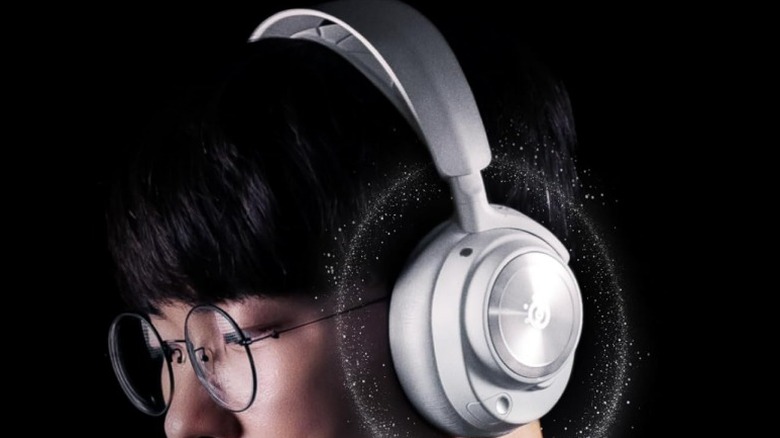
The SteelSeries Arctis Nova Pro Wireless earns the top spot among expensive gaming headsets available in 2026 because no other headset here combines as many high-end features into one package. For $379.99 (Amazon), this SteelSeries unit offers active noise cancellation with Transparency Mode, simultaneous 2.4 GHz and Bluetooth audio, dual USB connections for switching between systems, high-resolution-capable drivers, Sonar software support, and the signature dual-battery system that lets you hot-swap power instead of waiting for the headset to recharge. There is also the transmitter base with its built-in display, which gives easier access to EQ and audio settings than the usual app-only approach.
That combination is what makes the Nova Pro Wireless feel more complete than simply expensive. Our SteelSeries Arctis Nova Pro Wireless review back in 2022 pegged this model as the only game in town for gamers who want full customization of their audio experience, and not much has changed on that front. Rtings called it the best SteelSeries headset it has tested by 2026 standards, pointing to the low-latency transmitter, swappable batteries, good microphone, Bluetooth support, and decent ANC. Wired took a similar view from a day-to-day usability angle, describing it as a "luxury powerhouse" thanks to its swappable batteries, wide compatibility, and strong sound quality. Those two perspectives fit together well. Plenty of premium headsets sound good, but fewer make the daily routine easier in so many small ways.
Methodology

To build this list, we focused on gaming headsets that are officially sold in the U.S. and currently available through major retailers or the manufacturer. For this piece, budget headsets are defined as models under $200, while expensive headsets are models over $300, with the $201 to $299 range treated as mid-range (and thus not included here).
Prices are based on current retail listings, and each model in the article includes a retail link showing the quoted price. Since we did not personally test every headset ourselves, we used RTINGS as the primary testing backbone and cross-checked it against reviews from Tom's Guide, TechRadar, PC Gamer, and Forbes, as well as official manufacturer and retailer pages. Rankings were based on sound quality, mic quality, comfort, battery life, latency, connectivity, platform support, availability, and overall value, and the article is ordered from the cheapest worthwhile option to the most expensive overall.