

10 Language Learning Apps You Should Be Using In 2026
Learning a language is a great way to expand your horizons and connect with more people around the world. In-person classes and tutoring are still an essential part of picking up the skills you need to communicate, but language learning apps have come a long way since the days of Rosetta Stone. They can provide daily vocabulary and grammar practice via games, help you find a live tutor for online lessons, or let you practice any time with AI-powered chatbots.
None of these apps are a silver bullet, but they can help build the habits you need to hit your short and long-term language learning goals. Dedicated learners may even want to install several language learning apps, since each can build different skills. Some are free, and others have a free trial of some sort, but most require a subscription, so you will need to be selective if you're on a budget.
To help you make the right decision, we've tested and researched the most popular language learning apps in 2026. The list includes a variety of options to suit different learning styles and preferences, so consider trying a few before committing to a paid subscription.
Babbel
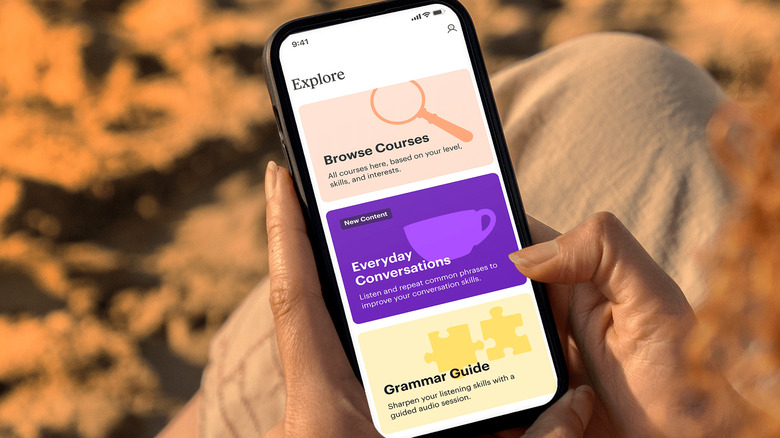
Babbel is one of the most well-rounded language learning apps, with a variety of games and activities to bolster your vocabulary or reinforce grammar. After a short onboarding questionnaire, the app creates activities based on real-world conversations that best suit your level and goals. Lessons are typically just 10-15 minutes long, so they're easy to fit into even the busiest of schedules.
The program includes listening activities recorded by native speakers, which is much more authentic than the robotic voices in other apps. There are 13 languages to choose from for English speakers, but they are mostly European, with the exception of Indonesian, Mexican Spanish, and Brazilian Portuguese. You'll have to look elsewhere for Asian languages like Chinese or Japanese. Most languages feature course content up to B1 (intermediate), or B2 (upper intermediate), although less popular languages top off at A2 (elementary).
In the app, Babbel offers a free 7-day trial for new users if you commit to a full year at $108, so don't forget to cancel before the end of the week if you're not impressed. After that, everything except for the first few minutes of each language is locked behind a rather expensive paywall. The shortest subscription available in the app is three months at $54, with another option for six months at $81. There's also a sneaky one-month plan available exclusively on the website for $17.95.
Duolingo
Duolingo is one of the most popular language learning apps in the world, with more than 50 million daily active users. The most likely reason why is simple: it's free. The app has many games and activities to reinforce your knowledge of 40 languages, including some fictitious ones like Klingon and High Valyrian. You can complete all of them without paying a dime. That alone makes it worth adding to your toolkit.
To help build a habit and keep you coming back, Duolingo is heavily gamified. This can give you a sense of progress, but it could also be a source of stress. Your daily streak — which indicates how many consecutive days you've logged in and completed an activity — is lost if you miss a single day. Duo, the app's infamous owl mascot, will also guilt you into coming back if you miss too many days. However, you can upgrade to Super to remove ads and get a little more leeway in missing days with streak freezes.
Duolingo made the controversial decision to switch to AI generated content in 2025. That has sped up the release of new lessons and content, but also made them feel less natural. That's pushed many active users to search for Duolingo alternatives. Still, it's a great tool for reinforcing vocabulary and building daily study habits when paired with traditional lessons or other tools.
Pimsleur
The scientific Pimsleur method dates back more than 50 years, and was first available to try on reel-to-reel tapes. While we now have language learning apps on our phones, the method still holds up on the new medium. Pimsleur offers 30-minute conversational lessons with native teachers in more than 40 languages, with some shorter activities available in the app for quicker learning.
The Pimsleur Method involves hearing a natural conversation between native speakers, then breaking things down into digestible chunks to build understanding. You will need to repeat words and phrases as you go along, which can help you gain the confidence you need to start speaking sooner. The longer, more in-depth lessons are perfect for a daily commute or a long trip, especially if you can enjoy it away from prying eyes and ears in the privacy of your own car.
Pimsleur is one of the few language learning apps that can build real fluency, but it's also one of the most expensive. It will cost you $21 a month to unlock the full catalog of courses in all languages via the app. Aspiring polyglots can also buy lifetime access to all courses for $480, which can pay off in spades over the years. If you want to get a taste before committing, your local library may have a few audiobooks to download or might even offer entirely free digital access.
Preply
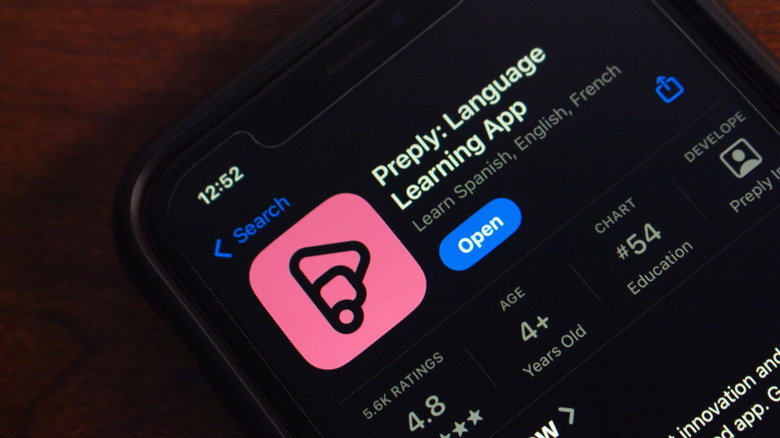
Preply is a platform to find a real, live tutor for one-on-one attention not found in typical language learning apps. With more than 100,000 tutors from 180+ countries, you're sure to find someone who matches your learning style, which is critical in feeling comfortable enough to speak a foreign language. You'll also get lessons tailored to your specific needs and interests, whether they be professional or casual.
There are countless languages to choose from, including non-verbal languages like American Sign Language. Since tutors are located around the world, you can also pick someone with an accent you want to practice. After finding a tutor you're interested in, you'll schedule a paid trial lesson to make sure it's a good fit. If everything works out, you can then pay a monthly subscription to that tutor, organizing the ideal number of lessons per week. Pricing is set by each tutor, but it's generally much cheaper and more flexible than in-person classes.
That being said, Preply isn't a perfect replacement for traditional language classes. The cultural exchange is invaluable if you're looking to travel or live abroad, but you shouldn't expect the type of structured grammar lessons you'd get from traditional courses with every Preply tutor. It's best treated as real conversation practice.
Anki
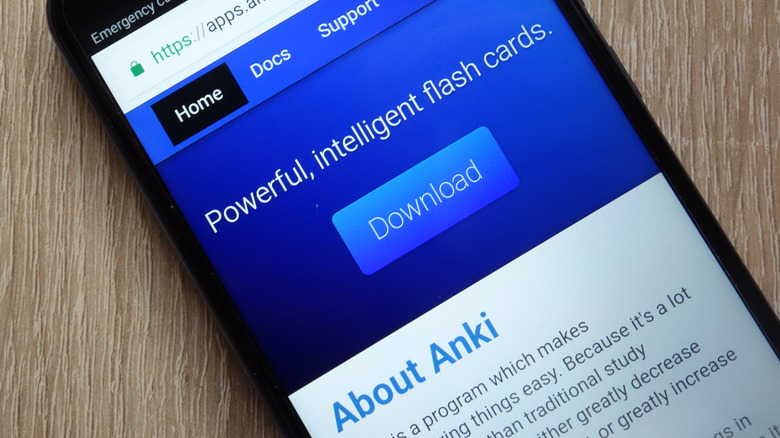
Anki stands out among a sea of flashcard programs because it's an open-source app. In other words, the inner workings of the app are readily available for developers or vibe coding fans to tweak to their specific needs. That makes it an attractive option for technical users, but it's worth pointing out that you don't need to know any coding to start drilling vocabulary and grammar.
The app lets you create and customize your own decks of flashcards, which does entail more setup than most language learning apps. However, it also means you can choose words that are the most relevant to you, whether they come from your professional niche or a traditional textbook. You can also download shared decks from other users. These include lists from common language textbooks and other popular language learning systems like Pimsleur.
The platform is built on the web, so your progress and stats sync between devices. That's important, because it uses a spaced repetition algorithm to optimize long-term retention. Every bit of practice is recorded to help you meet your goals and really internalize whatever you're studying. Anki is free to download from the Google Play Store, but iPhone users will have to pay a one-time fee of $24.99 to download the app from the App Store.
Speak
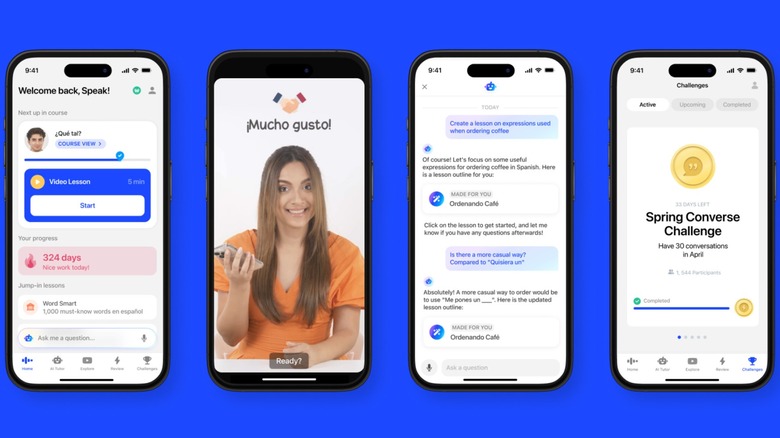
Speak is an interactive platform designed from the ground up to get you speaking a foreign language as soon as possible. That means it's not just a series of random words and sentences to translate. Lessons are based around real-life situations like introducing yourself, chatting with friends, or ordering food, with prompts for you to respond or repeat phrases out loud.
Early lessons feature a bilingual teacher to explain basic grammar and vocabulary, so don't feel like you need to have any prior knowledge before starting. There's also some flashcard-style written language practice baked in, so you can develop those skills as well. The language used in each lesson is more conversational than most language learning apps, and there is a separate Speak for Business program for professionals and companies.
There are five languages supported for English speakers at the time of writing, with two more on the way. Once you finish all of the instructor-led courses, you can keep learning by participating in free-form AI conversations. The app also uses AI to check your pronunciation, although the results aren't always perfect. A subscription costs $18 a month, or $84 a year, with a seven-day free trial for new users.
Drops
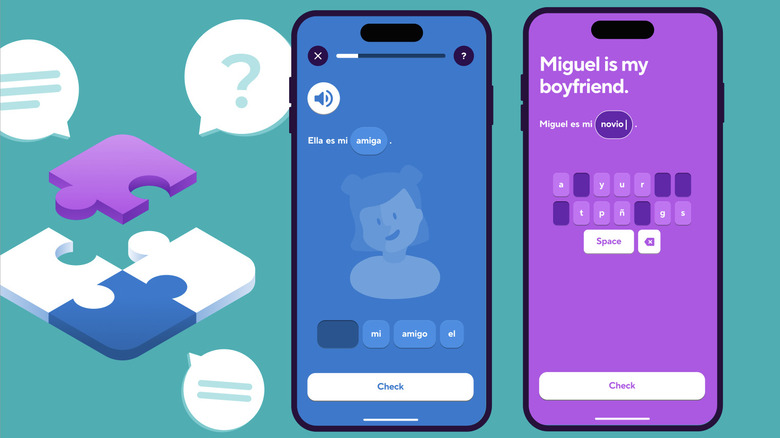
Drops is a simple, but beautiful language learning app designed for daily vocabulary practice. Each lesson is broken down into topics and can be completed in as little as five minutes a day. The activities are designed to be both fun and accessible, so it feels more like playing a game than studying. There's even a competitive component, where you can earn learning points and climb global leaderboards.
With 57 language options, Drops also boasts one of the broadest libraries for language learners. For years it focused on vocabulary practice, but in early 2026 the app also added grammar games. However, these aren't traditional courses designed to teach you how to communicate from scratch, so you'll need to supplement it with more in-depth classes to really master a language.
You can download and use Drops for free with ads, but there are severe limitations to the free plan. You can only play for five minutes every 10 hours, and have to work your way through topics one by one to unlock them. Drops Premium removes those roadblocks and adds a few extra features for $13 a month or $70 a year. If you're on the fence, there's also a seven-day free trial for new users on the yearly plan.
Mondly
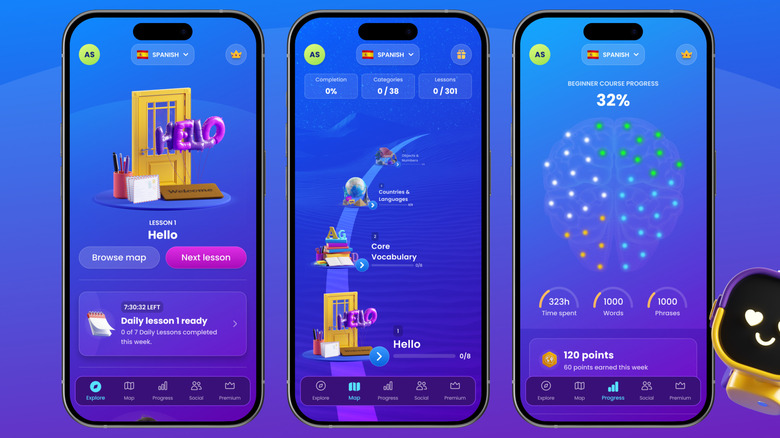
Mondly is a language learning app similar to Duolingo, with gamified interactive lessons and videos to help you learn 41 different languages. The app has a simple, approachable UI, and there's a structured learning plan working behind the scenes targeting key, high-value words to build understanding as quickly and efficiently as possible. This isn't too surprising given that the app is owned by one of the largest learning and education companies in the world, Pearson.
The app has a wide variety of lesson topics, from simple greetings to visiting the doctor. In addition to games, it has audio tracks recorded by native speakers, as well as AI chatbots for more free-form language practice. That mix gives you the best of both worlds, so you can get customized feedback while still learning accurate pronunciation. There's even a separate VR app for a different kind of language immersion.
Mondly is free to download, but only the daily lessons and weekly or monthly challenges are available without charge. To gain access to all lessons and AI-powered conversation practice, you'll need to upgrade to Mondly Premium. This costs roughly $13 a month, $62 a year, or $120 for lifetime access, depending on where you sign up and what the most recent offers are.
Busuu
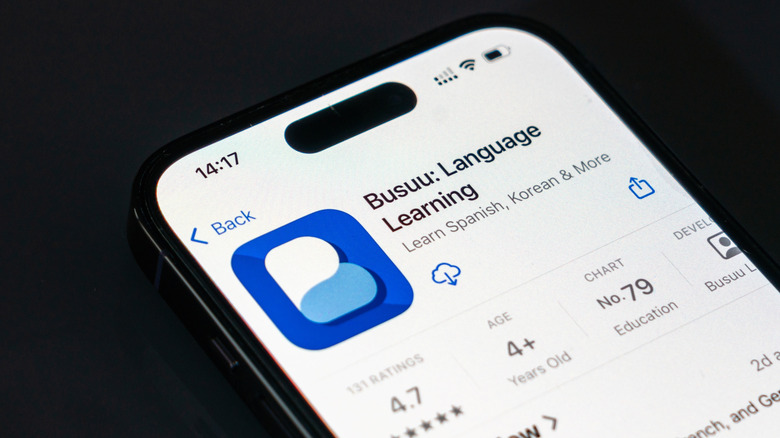
Busuu moves away from games-based language learning to focus on video and audio. It presents you with videos featuring native speakers, simulating real conversations in 14 different languages. The use of real situations, such as introducing yourself or describing your hometown, gives you extra context, which can help give you the confidence to start speaking faster. There's a vocabulary and grammar review tool, too, but it's not available on the free plan.
If community is important to you, Busuu is a great choice. You can upload your responses to prompts and activities to receive feedback and corrections from a global community of learners. You can also help other learners by correcting their work. If you're feeling shy, there's also an AI-based chatbot and pronunciation checker, but it's locked to more expensive subscription plans.
All lessons are free with ads, but you'll have to pay for Premium to remove ads, unlock additional practice features, and skip lessons. This will run you $12.50 a month or $73 a year for the Premium upgrade, or $15 and $88 for Premium Plus with extra AI features and exclusive courses. We found that the app aggressively pushes paid subscriptions on free users, which can be annoying when you're trying to learn.
FluentU
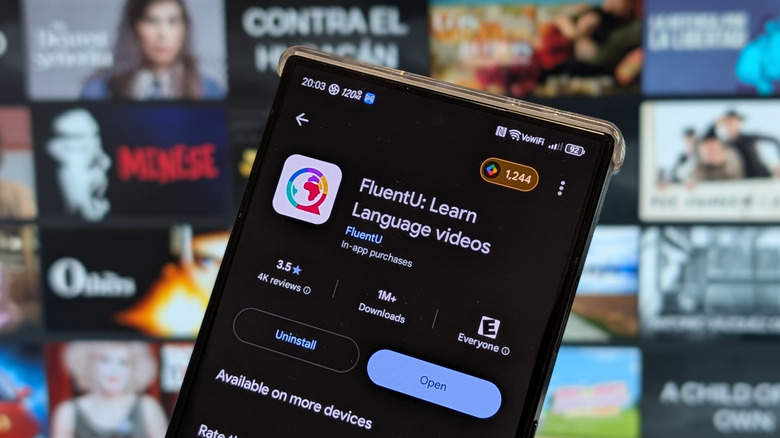
FluentU is one of the most unique language learning apps in 2026. Instead of guided lessons or vocabulary games, it turns popular TV shows, movies, and YouTube videos into interactive language lessons. Essentially, you find a video you want to watch — with subtitles in both languages — on the FluentU platform, and you can tap a word to see its definition and some sample sentences. You can then include these words in your own custom vocabulary list and start studying them using quizzes and games.
This approach allows you to learn through entertainment, and the added context can help you remember tricky words and phrases. It works with YouTube videos and Netflix — provided you have a subscription — in 10 languages. It's perfect for learners who want to study through their favorite creators, K-dramas, or Spanish-language Netflix shows. If those are too difficult, there's also a built-in catalog with thousands of learner-friendly videos handpicked for beginners, as well as some basic exercises to reinforce what you've learned.
Even so, without a structured approach this app alone won't allow you to master a language. There are no speaking or conversational elements, and it's almost exclusively reading, listening, and learning. Therefore, the ideal approach is to combine it with a more traditional learning experience. It's also fairly expensive, running $30 a month or $240 a year, plus the ever rising cost of a Netflix subscription. Also, be aware that although it claims to have a free trial, many users have reported getting charged immediately after signing up.
How we chose the language apps on this list
This list is based on the author's personal experience with language learning apps, as well as user reviews and comments from the Google Play Store, App Store, and other sources. All apps listed here are highly rated by users, although the Android version of FluentU has had technical issues with its free trial in the past. Apps have been selected based on the quality of their features, both free and paid, as well as their teaching methodologies and overall user experience.
We have listed a variety of apps to suit different learning styles and preferences readers may have. That means some apps focus on video and audio, while others are almost exclusively game-based vocabulary reinforcement. No matter how you learn best, there should be an app or two on this list for you.