

Every Sony PlayStation Controller, Ranked By Impact
We may receive a commission on purchases made from links.
Sony changed the landscape of the gaming industry once they came out with the original PlayStation in December 1994. All of a sudden, Nintendo found itself facing stiff competition in the market once again, after comfortably beating Sega in the previous console war. By outselling the Nintendo 64 and shipping more than a 100 million console units, Sony announced that it was here to stay for the long haul. It became an industry leader in terms of delivering cutting-edge graphics that people could enjoy in AAA blockbusters, with mature stories and action-packed gameplay loops.
As important as the home console itself was to solidify Sony's dominance in the industry, all of these hardware achievements would've been for naught if the game feel itself wasn't up to the mark. Thankfully, along with some of the most bizarre PlayStation gadgets ever made, the amazing designers and engineers behind the scenes at Sony crafted some of the most iconic gaming controllers of all time. They helped terms like DualShock and analog sticks become synonymous with the PlayStation brand. Every generation has seen Sony whip out amazing first-party controllers that are in a class of their own, although some of them have had a more lasting impact than others.
12. DualShock PS One Edition
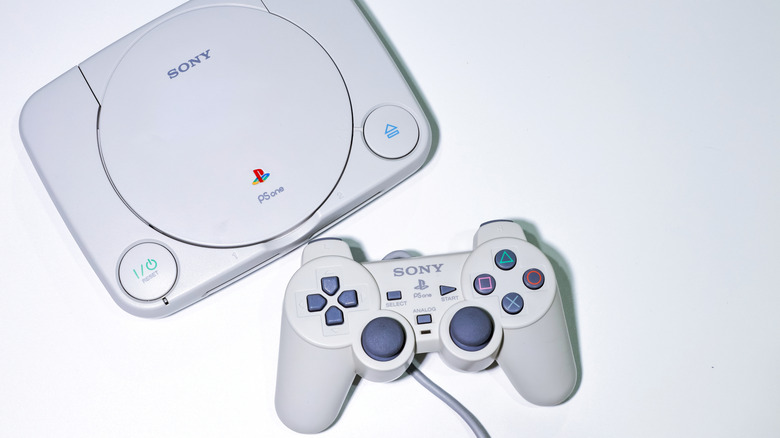
Upgraded consoles don't have as much of an impact as the base variant when they launch, so it's only natural that any special controller that releases with said console will share the same fate — especially if it's pretty much the same controller with a fresh coat of paint. Such was the case with DualShock PS one Edition, which made cosmetic changes to fit the theme of the PS One, but did little else. After all, this console had to maintain compatibility with games and controllers from the original PlayStation, so there was little wiggle room to change anything substantial.
This SCPH-110 controller model dropped the gray hues present in previous DualShock controllers in favor of pure white to match the color palette of the PS One. The term "PlayStation" under the console's logo was switched to "PS One." The sticks and buttons also took on a purple-ish shade to match the new console's aesthetics. All in all, the DualShock PS One Edition was definitely a pretty controller, although it was far from a groundbreaking addition to Sony's library of controllers.
11. DualShock 3
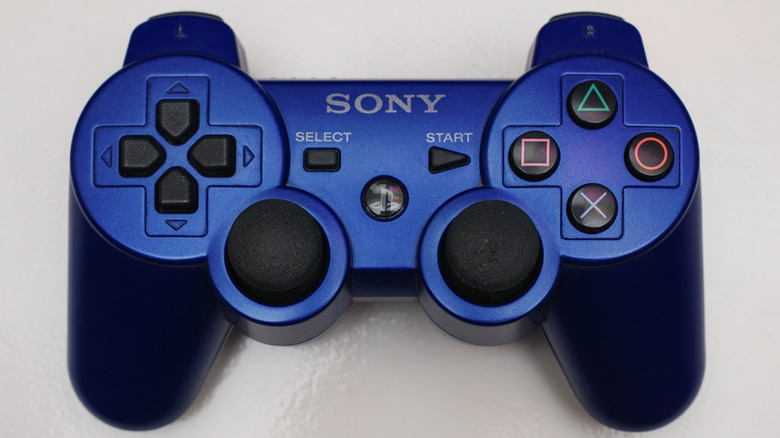
The PlayStation 3 faced so many challenges that it's still hard to believe that Sony managed to mount a comeback and outsell the Xbox 360, despite being comfortably behind the curve for the longest time during the console war. The inclusion of a groundbreaking Blu-ray player that makes your old PlayStation 3 relevant to this day, along with a cell processor, made for expensive upgrades that forced Sony to sell this console at a premium. What made things worse was that a lawsuit from Immersion meant that the patented DualShock technology that made games super immersive was nowhere to be found.
That being said, in the long run, the SIXAXIS controller had far more of an impact on Sony's future than the DualShock 3, which finally came out once the lawsuit was done and dusted. It's pretty much a SIXAXIS controller with rumble support. Unlike the translucent body of its legally compliant predecessor, the DualShock 3 has a solid body that doesn't let any light pass through. The addition of vibration feedback means that the controller is also slightly heavier, although it's not a huge deal given the perks that come with what should've been the controller that the PS3 launched with in the first place.
10. PlayStation Move

Despite the success of the Wii making it clear that players love motion-controlled games, Sony's attempt to capitalize on this hype wasn't successful. The PS Move worked in tandem with the PlayStation Eye, with the latter reading the input of the light orb at the end of this motion controller to detect player movement. The combination of a linear accelerometer, magnetometer, and angular rate sensor meant that the PS Move was very accurate at gauging the momentum of the player's movements and understanding the orientation of their hand.
Despite this controller's precise input, the company itself failed to support this hardware, with games that supported the PS Move being subpar at best. This could've marked the end of this controller, only for VR gaming to pick up steam and make the PS Move relevant again, becoming a mandatory accessory to pair with the PSVR headset to play some of the most immersive games you can get your hands on... even if they can be criminally short.
Yet, despite this second wind, the PS Move's impact is nowhere near that of other motion-controlled devices. Multiplayer games were simply more fun on the Wii, and an argument can be made that Kinect's amazing controller-free motion technology meant that Sony was coming third in a two-horse race. With the VR industry itself floundering because of a lack of third-party support, short gaming experiences, and the expensive barrier to entry, it doesn't seem like the PS Move will enter the mainstream.
9. DualShock 4, 2nd Generation
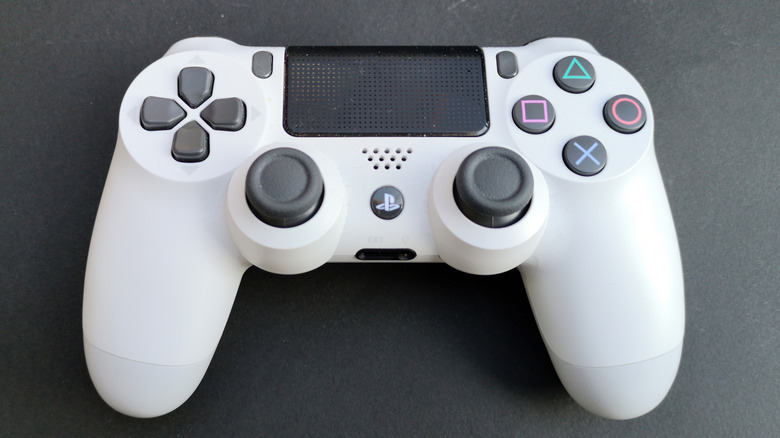
While the second generation DualShock 4 won't recreate the impact of the former in any way, it still served up improvements that made it an unsung hero. The PS4's announcement was miles better than its predecessor's and left Xbox scrambling to do damage control after a disastrous E3 showing, but it would've been easy for Sony to rest on its laurels and ignore growing problems.
As ergonomic and well-designed as the first iteration of the DualShock 4 was, it had one major issue that affected its longevity. The rubber of the analog sticks was poor quality and prone to wearing down. It became such a widespread issue that Sony addressed it in a statement before launching the second version of the DualShock 4. As one would expect, the analog sticks were improved and didn't face this problem of wearing down anymore.
The improvements didn't stop there. Stick sensitivity was improved considerably, as were the trigger buttons and the controller's battery life. The iconic light bar added in the original controller was extended to surround the touchpad for a cleaner look — a design choice seen in DualSense. People who want to eliminate any input lag with a wired connection were glad to know that the 2nd Generation DualShock 4 finally supported a proper USB connection, while the previous V1 controller just charged the battery while maintaining wireless connectivity if the device was plugged into the PS4. Despite improvements, the cherry on top was that this controller was lighter than before.
8. DualSense Edge
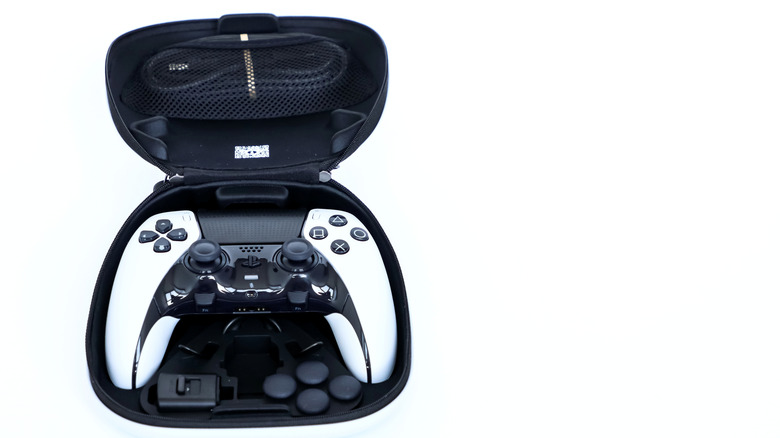
Is $199 for a controller excessive? Absolutely, but the DualSense Edge is a controller so ambitious and feature-rich that it'll help you make the most of your PlayStation 5. It's easily the most customizable PlayStation controller of all time, featuring two rear paddles that can be mapped to whatever action you want, along with removable and height-adjustable thumbstick caps.
The two function buttons help you switch between controller profiles on the fly, which is useful. If you're playing a game and the regular controller input feels off, you can customize a different controller profile with varying dead zones, vibration intensity, stick sensitivity, and remapped button layouts. Enable it by pressing a function button with one of the face keys you've mapped a profile to; you can also press it with the Options button to set up a controller profile quickly. Meanwhile, the function button can be used with the Up and Down buttons on the D-Pad to adjust the volume of your headphones, while the Left and Right buttons govern audio balance.
The accessories are numerous and help justify its price. With the DualSense Edge, you'll get a controller housing case, a connector housing to help the USB cable stay in place, three interchangeable stick caps, and two separate back buttons. This premium DualSense caters to the hardcore market, with gamers impressed with this revolutionary controller. But because of that, it didn't have as widespread of an impact as others on this list.
7. DualShock 2
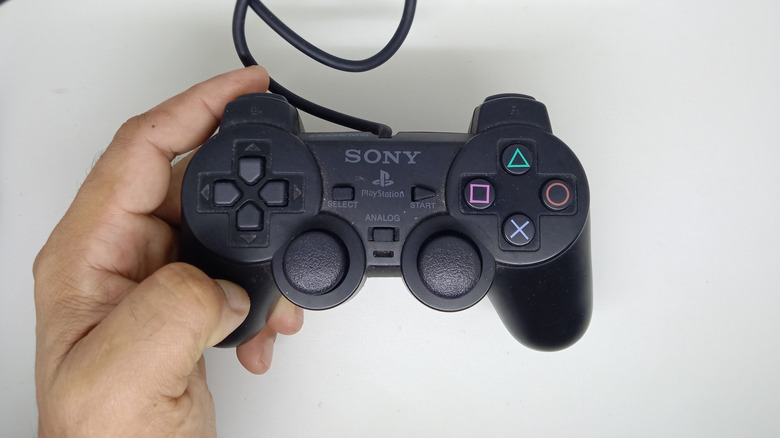
The PlayStation 2 is currently the best-selling console in the world, with Sony reinforcing its focus on adult gaming experiences and including hardware that helped this console achieve a level of visual fidelity that was truly mind-blowing, back in the day. It helped that Sony had already experimented enough with the controllers for the original PlayStation, which is why the DualShock 2 had a pretty reliable template to follow. While the changes it brought to the table were pretty muted, PS2 veterans still have fond memories of this functional controller.
The sticks were firmer, and every button except for L3, R3, Start, and Select was pressure-sensitive and could be read as analog values. This was the first time a console manufacturer had experimented with such a feature, with the DualShock 2 being able to read 256 levels of pressure. Eventually, this would become a standard for future PlayStation controllers, albeit only for the trigger buttons. The rest of the changes are largely cosmetic. The black DualShock 2 became the new standard, moving away from the grays of the DualShock. A blue DualShock 2 logo could also be seen on top of the device.
6. DualShock 4, 1st Generation
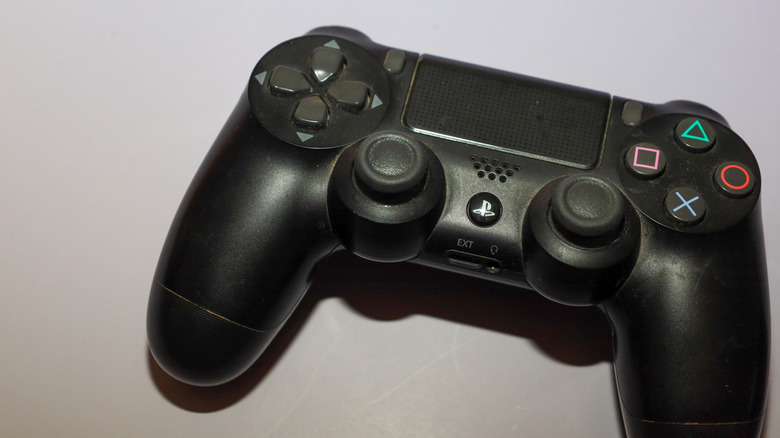
While the DualShock 2 and 3 are certainly competent controllers in their own right, one can argue the changes they brought to the table were minimal. The same can't be said for the DualShock 4, which was a major step forward.
The first innovation stared everyone in the face: the clickable touchpad. On paper, this was a great way to enhance gameplay variety by letting games make the most of this additional input. However, only first-party Sony games made the effort to incorporate this touch bar into their games. "The Last of Us Part 2" lets you strum a guitar using the touchpad, while "Killzone Shadow Fall" lets you configure the behavior of your OWL drone with directional swipes. Even then, it feels like a gimmick at best, and an obligatory last-minute addition at worst.
Thankfully, the other design changes were better. The concave analog sticks and redesigned trigger buttons meant that this controller felt far more ergonomic than previous versions of the DualShock. The underside of the controller was textured for improved grip, and the Start and Select buttons were replaced with Options and Share. It's the first PlayStation controller to feature a separate speaker and headphone jack, the former being used for immersive sounds and voice chat in specific games, and the latter a convenient way to plug in your gaming headsets, budget, or otherwise. The light bar, while somewhat inconvenient, was a new addition to the design language of Sony's controllers that's been improved upon ever since.
5. SIXAXIS Controller
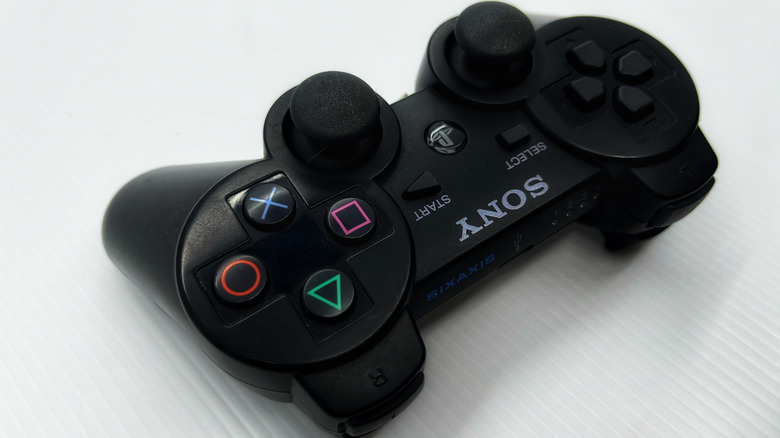
The original PlayStation 3 controller was supposed to have rumble feedback from the get-go, but a 2002 lawsuit from Immersion Corporation meant that Sony had to avoid any legal ramifications before making more hardware with this technology. As a result, the SIXAXIS controller dropped the "DualShock" moniker for the first time since this technology was added to PlayStation controllers. While this might make it seem like the SIXAXIS was nothing more than a stopgap until the DualShock 3 would make its way into the market, this controller's impact is two-fold and pretty monumental.
Firstly, as the name suggests, the SIXAXIS technology powering this controller meant that it supported motion controls, which would become commonplace in future PlayStation controllers. Secondly, this was the first-ever wireless controller made by Sony. Sure, you can call it a happy accident, what with wireless technology becoming more and more accepted around this time, but that takes nothing away from the groundbreaking technology powering the SIXAXIS controller that set the foundation for other PS controllers to build on.
4. DualShock
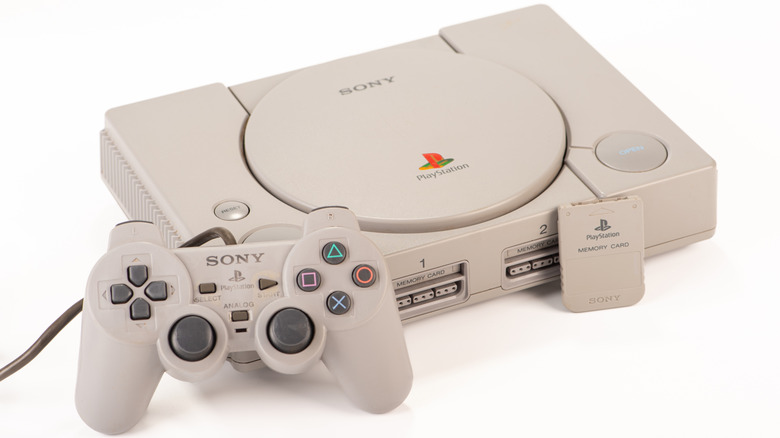
Even after adding dual analog sticks to the original PlayStation's controller, Sony wasn't done innovating just yet. The next and final version of this device included one of the most iconic pieces of tech that is present in every other PlayStation controller ever since, barring a brief blip that we've already discussed.
The moniker DualShock comes from the dual motors added to this PS1 controller, with one being larger and stronger than the other to allow for varying degrees of vibration. Along with this, the controller was also ergonomically optimized in subtle ways. The analog sticks were textured for better grip, the L2 and R2 buttons were larger, and the controller's grips were also extended.
While the Nintendo Rumble Pak was the first time a video game company had incorporated vibration feedback in a controller, Sony's in-built dual motors were far more elegant at getting the job done and established a brand that would persist for four console generations... before another next-gen controller came into the picture.
3. DualSense
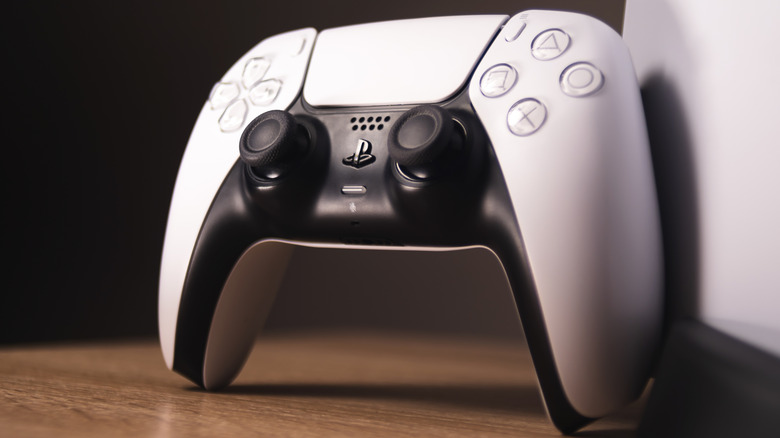
No other controller has truly felt as next-gen as the DualSense. The basic rumble motors were on the verge of being outdated, so Sony decided to replace them with dual actuators that provided localized haptic feedback, turning this controller into the perfect accessory to heighten a player's immersion. It lets users feel the pitter-patter of raindrops and the weight of spoken dialogue.
Of course, Sony didn't stop there. The adaptive triggers that come with this controller provide feedback whenever you press L2 or R2, simulating the recoil of gunfire with pulsing triggers or adding some tension to certain actions by letting players feel the weight of their button press. These two new pieces of tech did a lot of heavy lifting for the DualSense and made it the best gaming controller of the modern era.
As an added bonus, the gaudy DualShock 4 light bar was minimized so that it only envelops the DualSense's touchpad, providing the intended visual feedback without being too in-your-face about it. The textured body of the controller features an array of crosses, circles, triangles, and squares, providing the grip you need while looking very cool in the process. Regardless of whether you connect your DualSense to your PlayStation 5 or any other device, you'll be pleased by its performance.
2. Original PlayStation Controller
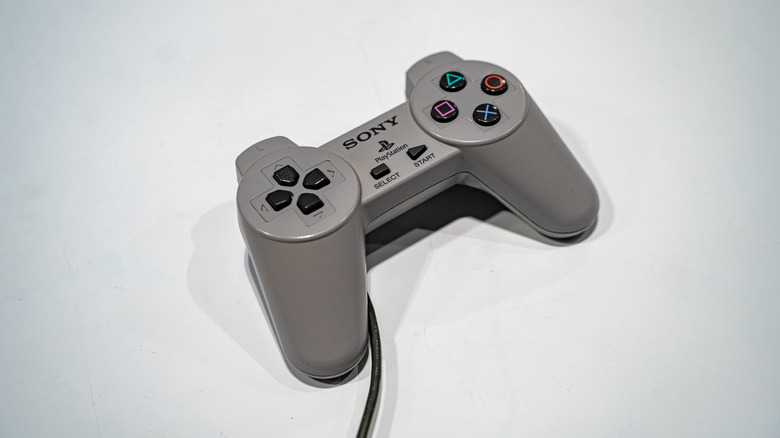
At a glance, the first-ever PlayStation controller made by Sony can seem a bit too dated for its own good. The dual analog sticks that have become commonplace in modern gaming are a notable absence, and it wasn't until three years later that this much-needed component was added to the controller. However, to say that this PS1 controller doesn't have nearly the same impact as the other two that came after is a massive exaggeration.
This SCPH-1010 model used the SNES' design as a starting point and added the four shoulder buttons we all know and love. In fact, the button layout of this controller was so apt from the get-go that it hasn't changed at all for multiple generations. If there's anything that personifies the "if it ain't broke, don't fix it" motto, it's this controller's amazing design.
Speaking of which, the addition of multiple buttons meant that the player's other fingers would be occupied and wouldn't hold the controller steady. To make up for this, the iconic grip handles were incorporated into this device's design. They did a great job of keeping the controller stable in a player's hands and have become a mainstay in modern controllers ever since.
1. Dual Analog Controller
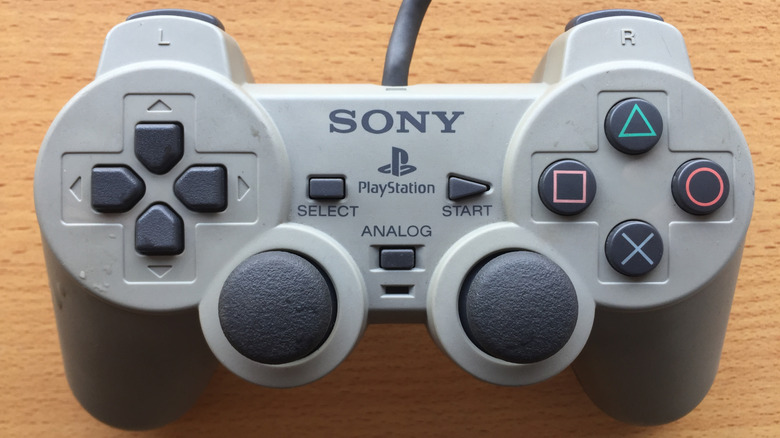
As groundbreaking as all of Sony's controllers are, none of them has a Guinness World Record for an industry-leading innovation... and what an innovation it is! The D-Pad of the original PlayStation controller got the job done, but Sony wanted to figure out a more elegant solution that would help players achieve greater control while playing 3D games, which were quickly becoming the norm. The end result was the Dual Analog controller, which — as the name suggests — added two analog sticks and would change the gaming landscape.
Every other gaming company was put on notice after this controller broke new ground in the gaming industry. The widespread adoption of this tech took some time, so much so that critics were still lambasting this then-experimental control scheme years after it came to be. Of course, reading these statements is hilarious in hindsight.
If a game supported analog input, players could press the Analog button to enable a red LED and enjoy omnidirectional movement. Pressing this button again would cause a green LED to pop up instead, indicating that this controller is emulating the input of the PlayStation Analog Joystick. It was a nice touch that let players enjoy games that supported this joystick without having to shell out more cash for another accessory. Unfortunately, the DualShock removed this support and stuck to regular analog input.
Methodology
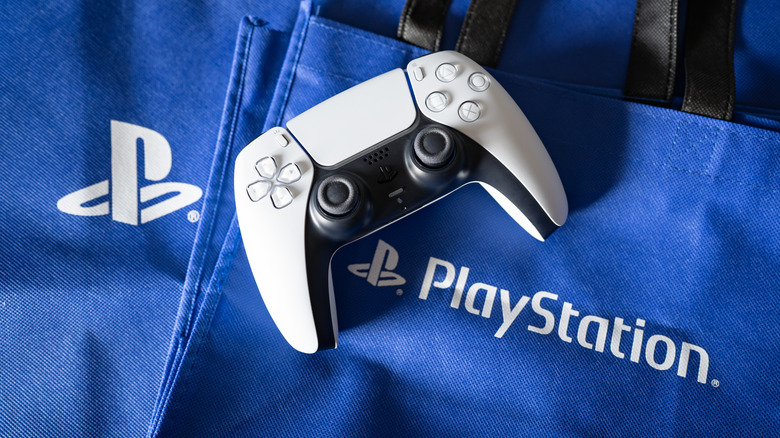
All of Sony's PlayStation controllers have been ranked after carefully gauging their industry impact, groundbreaking features, iconic designs, notable improvements, and user reception — both contemporary and retrospective.