

Can RFID Wallets Go Through Airport Security?
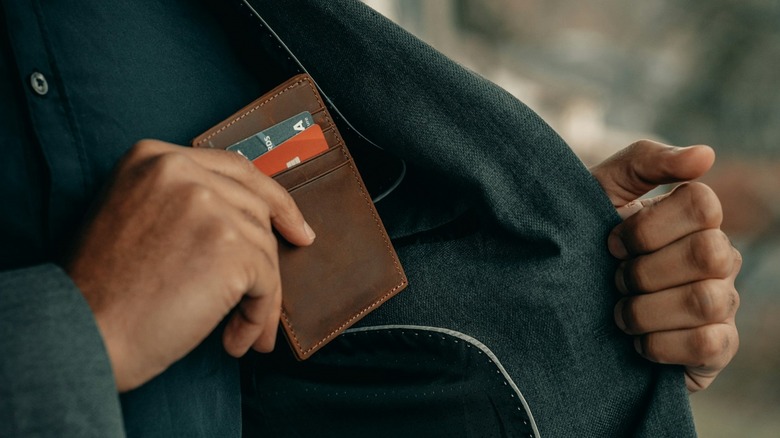
There are quite a few items, gadgets, and knickknacks that cannot pass through airport security or TSA checkpoints. The obvious reason is that they pose some kind of threat to the airlines, either the planes themselves or other passengers. For example, several electronics that TSA bans from carry-on bags include stun guns and tasers, power tools, and beauty products like hair straighteners or curling irons if they're powered by gas cartridges or butane. Additionally, you may need to take out chargers and power packs for TSA, moving them from your checked luggage to your carry-on, provided they meet the capacity requirements. So, what about RFID wallets? Designed with special radio frequency blocking liners, they prevent the wallet or small bag from being scanned by nefarious parties. In other words, they protect your chip enabled cards, payment methods, identification cards, and passports.
Wouldn't that be a problem for airport security that needs to see everything inside a bag or storage gear? Yes and no. It's not really a problem; TSA does, in fact, allow RFID wallets and handbags to go through security. You will have to empty your pockets, and that means putting RFID-shielded bags or wallets in a bin. That's where you could be potentially held up. It's not about the bag or wallet itself but what's inside. If you're storing banned or disallowed items you will most likely be caught. The simple solution is not to put anything you shouldn't have in there.
While there's no guarantee, most times it's safe to bring your RFID wallet with you while you travel by air. If you can go through airport security with a Flipper Zero in your carry-on, which you can, then an RFID wallet or handbag is not going to be an issue.
Does an RFID wallet interfere with security measures?
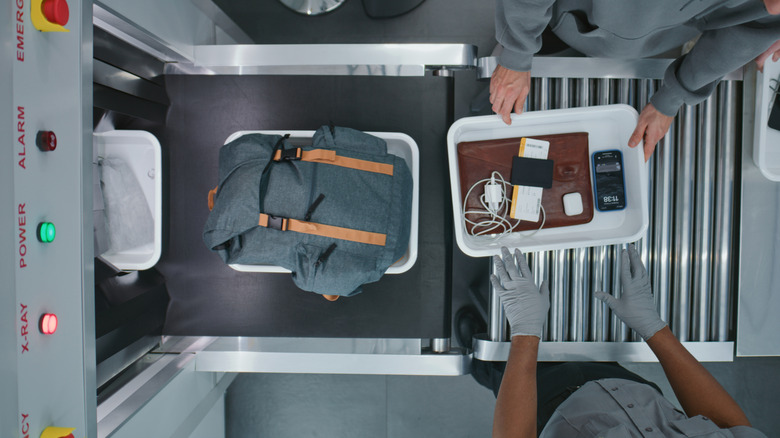
Logically, it makes sense to think that a special RFID lined bag, wallet, or pouch would cause issues with TSA scanners. The technology is designed to block electromagnetic signals, and it's security's job is to peer inside everything that comes through a screening checkpoint. But according to Mark Roberti, founder and editor of RFID Journal, it's not a problem at all.
Roberti says the X-ray and scanning machines will "see the antenna as a piece of metal." Security might have some questions or may want to take a closer look. However, the components "should not have any impact on the performance of the security equipment." X-ray machines use a different part of the electromagnetic spectrum than RFID, with the latter relying on radio waves. It could be problematic for full-body scanners, which do use those frequencies, but you're not supposed to have anything in your pockets anyway.
Coins inside a wallet or pouch can appear dense on a scanner. Depending on how they're arranged they may look ambiguous to security personnel. TSA still recommends placing change in a carry-on so you don't leave it behind. Carrying large sums of cash may also be a red flag, and while TSA cannot confiscate it based on the amounts alone, they can alert law enforcement if they think it was obtained illicitly. The limit is $10,000 when flying internationally or coming back into the country, requires you to report your funds to Customs. In addition, you should remain informed about the red flag electronics for the TSA. These rules do aren't set in stone; several TSA electronics rules changed in 2025 and in previous years, including shoe removals. You can leave those on now, as long as they don't trigger metal detectors.