

7 Underrated OLED TVs That Can Compete With LG
We may receive a commission on purchases made from links.
Not so long ago, TVs were just big grey boxes with muted colors and sharpness so low you could count the pixels with your naked eye. Thankfully, TV technology has changed a lot. In fact, now, when it comes to making your room feel like a theater, OLED is what comes to mind. These TVs can turn off individual pixels to achieve stunning blacks, and even color vibrancy is orders of magnitude better than that of a traditional LCD panel. LG has been a pioneer in OLED TVs for a long time. Its models, such as the C5, B5, and G5, are among the highest-rated TVs by experts.
But what if you don't want an LG? Maybe you've had a shoddy experience with their service, which is a real concern, or a past TV from the brand turned out to be defective. Either way, there are plenty of great OLED TVs from other brands like Samsung, Panasonic, and Sony. Sadly, choosing between them isn't easy, as some focus on color accuracy, while others lean more towards the home theater experience, with surround speakers and gaming features. We've combed through almost every best TV list on the internet and found seven underrated OLED TVs that compete and sometimes even beat the ones from LG.
Hisense A85N
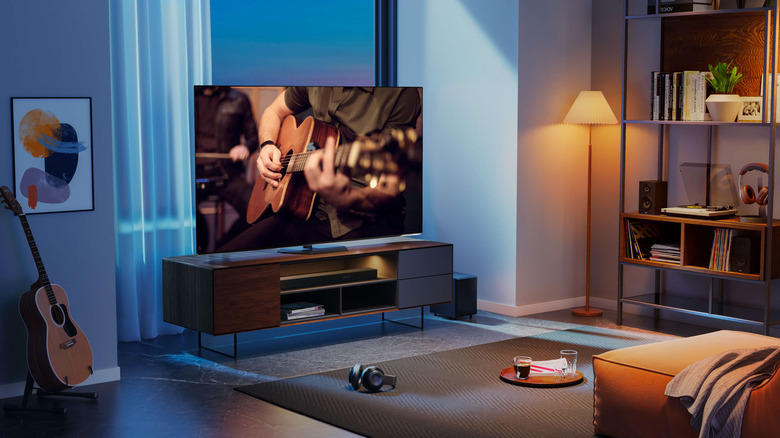
It's no secret that OLED TVs are still an expensive business. For a decently sized panel, you'd be spending at least a thousand dollars, and that's not affordable. That's exactly the problem the Hisense A85N aims to solve. Sure, you cannot buy it in the States, though a U.S. launch is on the way, but in the UK, it's often available for £749 (55-inch version), and that's a sweet deal. For the money, you get a 55-inch OLED panel that's identical to the expensive LG C4.
Out of the box, the A85N's settings aren't dialed in, with motion smoothing set to the maximum. But with a bit of tweaking, the Telegraph's review described the A85N's picture quality as really good, noting that it doesn't crush details in shadows and that colors look extremely vibrant. Still, it's important to set expectations that the A85N won't leave you in awe of its colors like an LG, as Hisense doesn't use quantum dots to improve brightness. You also won't get the high-end AI upscaling features. That being said, the 1,000 nits of peak brightness and the fact that it supports both HDR10+ and Dolby Vision IQ, unlike Samsung and Sony, more than make up for it.
Like all Hisense TVs, the A85N runs on the VIDAA OS. We wouldn't describe it as the most feature-packed, yet it's still excellent, because it's simple. It removes the confusing menus and buried settings like on the Fire TV, and supports all streaming apps. There's some good news for gamers, too. The 120Hz refresh rate is plenty for most consoles, and the A85N supports both FreeSync Premium and Nvidia G-Sync. You might want to get some external speakers for gaming, though, as reviews say the 10W speakers on the back just don't have enough punch for anything except dialogue.
Philips OLED760
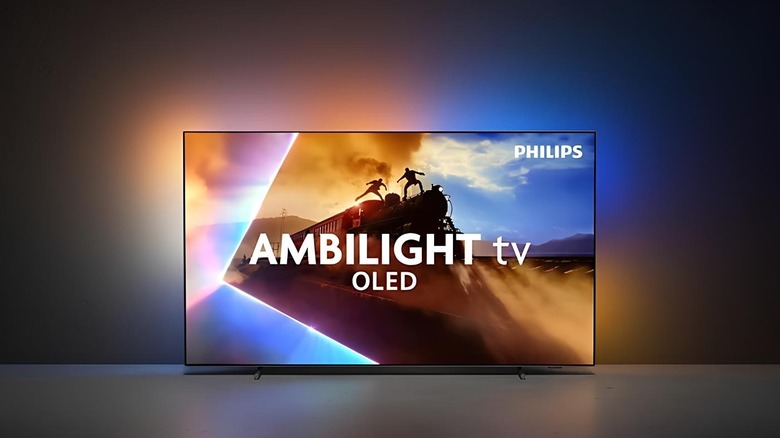
Let's get this out of the way first: the Philips OLED760 is another great mid-range OLED TV that you cannot buy in the US. It costs £999 on Amazon for the 55-inch version and shares the same W-OLED panel with the LG B5. The result? According to WhatHiFi's review, the colors are represented beautifully with a touch of vibrancy, especially the greens and reds, thanks to the over 99% coverage of the DCI-P3 color space. Textures on faces and clothes are also well preserved without oversharpening. If you love physical media like DVDs, the OLED760 can help you upscale SDR content to HDR with better brightness and color.
Beyond the regulars, the TV's party trick is Ambilight technology. You might have seen those viral TikToks where people stick RGB strips behind their TVs, casting lighting on walls to match the content. Well, the OLED760 has that feature built in. It matches the colors of the scene on your TV, making movies feel more immersive, and you don't have to fiddle with extra cables. Where things take a bit of a downturn, though, is in brightness: it's around 700 nits, despite supporting both HDR10+ and Dolby Vision. That's lower than the Hisense A85N and somewhat compromises the HDR experience. Reviews also mention a problem with motion. When motion smoothing is turned off, there's some choppiness in the movies. You also don't want motion smoothing turned on, as any level of it introduces blur that doesn't look good.
Those complaints aside, the OLED760 can be a great gaming TV. The HDMI 2.1 port means 4K 120Hz compatibility, which, when combined with FreeSync and G-Sync and 12ms response time, translates to a clean gaming experience. You also get auto low-input-latency mode and Dolby Vision gaming.
Samsung S90F
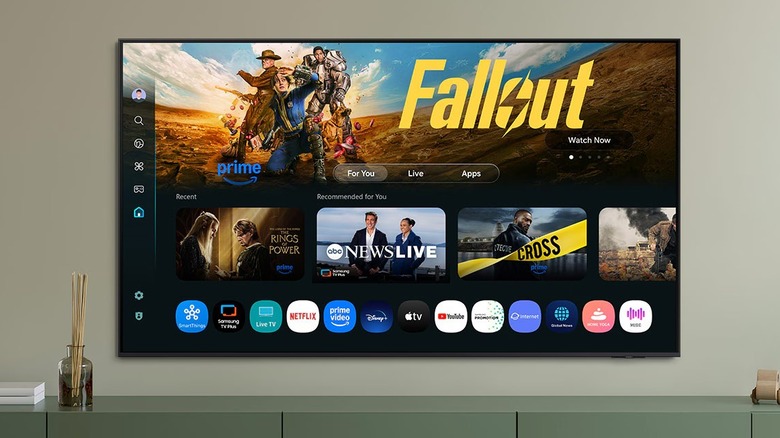
As good as the Hisense A85N and the Philips OLED760 are, the fact that they can't be purchased in the US makes them harder to recommend. Owing to this limitation, the crown for the best mid-range TV goes to the Samsung S90F, and it's not just our words but those of RTings alike. This praise mainly stems from the picture quality, which goes toe-to-toe with the much more expensive S95F.
The QD-OLED technology lends itself beautifully for a level of contrast that's comfortably ahead of both the TVs we've mentioned so far. The details remain crisp even in the shadows at night, and the NQ4 AI Gen3 chip processes colors so they retain their natural likeness while still feeling vibrant. Critics among us will point out the Delta E of 3.48, which is higher than the desired number of less than three. But the truth is, those imperfections are difficult to notice. The processor, on the flip side, does a very good job of upscaling older movies, improving lighting, sharpness, and color. The S90F can reach a maximum of 1,500 nits (10% window) in HDR content, which is plenty to make you squint. Sadly, you still don't get Dolby Vision support, as Samsung prefers its own HDR10+ format instead.
If gaming's a priority, then the S90F should absolutely be on your radar, thanks to the four HDMI 2.1 ports, all of which support 4K 120Hz. Essentials like G-Sync and FreeSync are present, alongside VRR support. Reviews mention a sub-10ms input lag. Not everything is perfect, though, as the glossy panel attracts a lot of reflections, so brighter rooms will be an issue, and you also don't get Samsung's Slim One Connect Box. Still, at an often discounted rate of $1,265 (65-inch version) on Amazon, the S90F becomes incredibly easy to recommend.
Panasonic Z85A
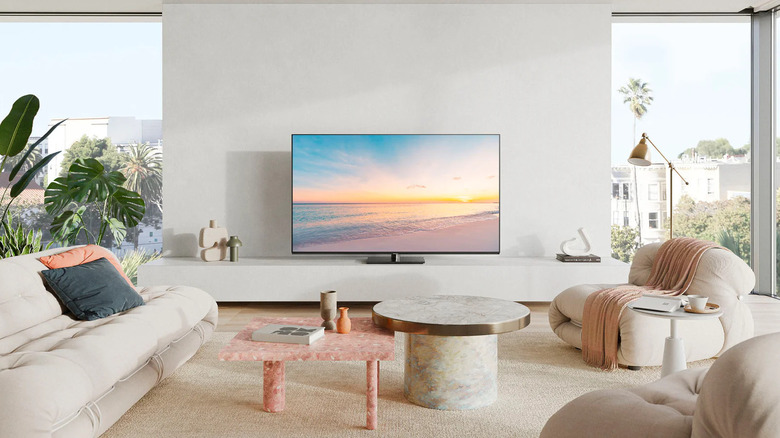
We talk a lot about mid-range OLED TVs, but the truth is, even spending a thousand dollars is a big investment. The Panasonic Z85A is one such television that first launched in 2024 for $1,599. Back then, it earned a recommendation from experts for being super competent. Fast forward to 2026, and the Z85A is available on Amazon for just $799, making it one of the best budget OLED TV deals today.
So, what do you get for the money? A 55-inch W-OLED panel that reproduces stunning colors, with details remaining sharp in both bright and dark scenes, albeit with some black crushing in shadows. Reviews say the contrast looks fantastic for movies, and even the textures on faces and clothes are handled very well. The different modes help change the look to suit your preferences. Still, if you're looking for accuracy, Filmmaker Mode is the best option, as here the Z85A covers over 98% of the UHDA-P3 color space. Since there's no quantum dot action, HDR brightness is limited to below 800 nits (10% window), but for the price, we think it's plenty, as you do get Dolby Vision support.
For sports fans, the Z85A keeps motion smooth, with no weird jitters or jumps. You can also enable the Intelligent Frame Creation feature to get the most out of your 120Hz panel. One big change in the Z85A is that it uses Amazon's Fire TV platform. Say what you want about the ads, but Fire TV keeps up with most tasks and flies through the UI. There are some nice-to-have features, too, like Ambient Experience that lets you display personal photos when the TV is idle. Gaming performance is comparable to that of the other OLED TVs on this list, thanks to VRR support and a couple of HDMI 2.1 ports. The 12ms input lag is solid.
Panasonic Z95B
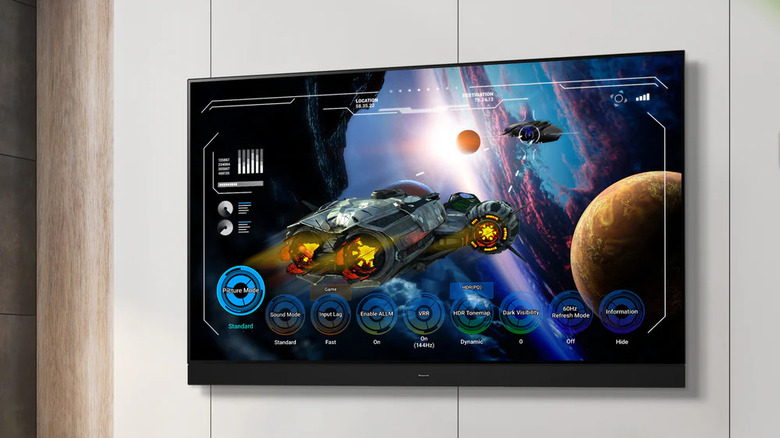
After Panasonic's brief abandonment of the US market, which was very surprising, the Japanese TV maker returned with the Z95A OLED TV. It was another winner that caught the attention of premium buyers. The Z95B builds on the same formula and takes things a step further in brightness, with a peak of over 2,000 nits (10% window). But there's a catch. Panasonic says accuracy is of the utmost importance to them, which is why peak brightness in TV modes like Filmmaker, True Cinema, and Cinema is limited to just 1,000 nits unless the source is specifically mastered. This decision seems bizarre, since it's almost impossible to distinguish between movies mastered for different brightness levels. Nevertheless, you can manually crank up the brightness so movies don't look dim.
Once done, the Z95B's image quality is absolutely fantastic. With a Delta E of just 1.36 and 99.9% coverage of the UHDA-P3 space, colors are represented beautifully and look real. Beyond that, there are ample details in the shadows, and textures remain solid overall. You also don't have to worry about motion smoothing, as it's turned off by default. Gaming poses no challenge, as the TV supports 4K 144Hz via the dual HDMI 2.1 ports. Not to mention the 12ms response time.
Not often are speakers any good on a TV. Well, the Z95B's Dolby Atmos-enabled 5.1.2-channel setup might change your mind. You can't expect them to deliver the rumble of a dedicated subwoofer. For that, you need to look at the best soundbars. That said, the audio when listening to dialogues and music is clear, with separation between the instruments and a sense of direction. The reason why the Z95B misses out on the top spot, though, is the UI. Amazon's Fire TV runs the show here, and at $2,140 on Amazon (55-inch), the Prime Video ads become hard to ignore and somewhat annoying.
Sony Bravia 8 II
The first generation of the Sony Bravia 8 was a middling TV. It demanded flagship pricing, but used a not-so-flagship W-OLED panel that severely restricted the brightness numbers. Well, Sony seems to have listened to criticism as the Bravia 8 II ($2,298 on Amazon) ditches W-OLED for QD-OLED. That switch alone pushes peak brightness to around 1,500 nits. As expected, the colors are vibrant, and the highlights contrast really nicely with the deep blacks. Speaking of blacks, Sony's processing preserves shadow detail really well and takes excellent care of upscaling older DVDs. Details are noticeably sharper, and textures on different items don't feel artificial. There's also an anti-reflection coating that helps reduce reflections, and Dolby Vision support. Sadly, HDR10+ support is still missing.
While we do agree that the 1,500-nit brightness isn't chart-topping, the Bravia 8 II wins a lot of points for sound. Sony's Acoustic Surface Audio+ technology turns your screen into a speaker with actuators behind it. Our review found the speakers to be perfectly capable even during action-heavy scenes. The output is full, and it supports Dolby Atmos, DTS:X, and IMAX Enhanced formats. The room correction feature also does a decent job of calibrating the sound according to your space.
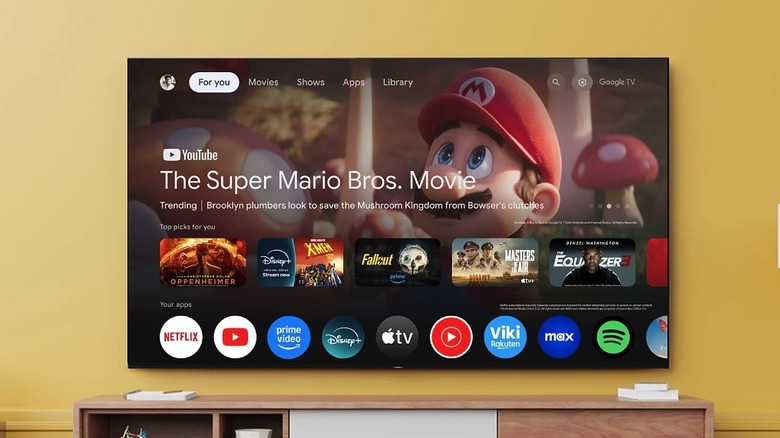
Unlike the Z95B, the Bravia 8 II runs on Google TV OS. Sure, the large banner at the top is mostly ads, but beyond that, most people will feel right at home with Google TV's interface. Since Sony makes the PS5, the Bravia 8 II houses several exclusive gaming features in addition to 4K 120Hz support. These include Auto HDR Tone Mapping and Auto Genre Picture Mode. The latter turns on Game Mode automatically.
Samsung S95F
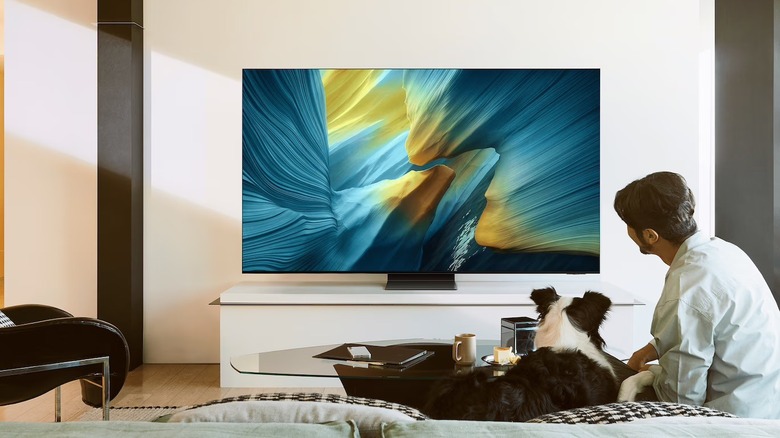
Calling the Samsung S95F an LG alternative almost undersells it because it's the best OLED TV on the market right now. However, depending on the size you buy, things may differ. For example, the 55-inch version ($1,897 on Amazon) uses a QD-OLED panel, while the larger models switch to W-OLED panels. No matter which you choose, the brightness levels are absurdly high.
At its peak, TechRadar measured that the S95F could reach a blinding 2,388 nits in the 10% window and around 460 nits on the full screen. It does so not just in one picture mode but maintains over 2,000 nits across all settings. The results speak for themselves, with highlights that feel bright and contrast beautifully with blacks. Colors are the S95F's bread and butter. Reds and oranges hit you in the face in the best way possible, and 100% coverage of the DCI-P3 space means everything else is perfectly represented. Features like Real Depth Enhancer also do an excellent job of bringing out facial details.
What seals the deal for the S95F as the best TV is its anti-reflection coating. We have all stared at our reflection on the TV when watching during the day. It's incredibly frustrating, but you don't need to worry about it here. The matte coating eliminates almost all reflections without crushing the blacks. Tizen OS handles everything, and there are a fair few useful AI features, such as 4K Upscaling Pro, AI Sound, and Active Voice Amplifier Pro. If gaming is important, the S95F is also the best out there thanks to the 9.5ms response time and 4K 165Hz support. Regulars like FreeSync and G-Sync are there, and Samsung's Game Hub even lets you stream games. Not to forget the Slim One Connect Box, which is a lifesaver for anyone obsessed with cable management.
Methodology
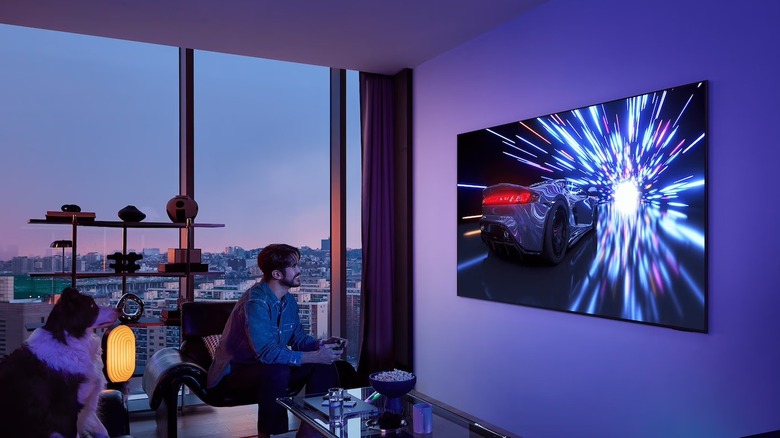
After years of innovation, OLED TVs have reached a point where even the budget ones are really good. That also makes ranking really difficult. Still, we started by looking at the best TV lists from reputable media outlets like TechRadar, RTings, and PCMag to find high-ranking LG alternatives. We then cross-referenced those TVs against independent reviews and our own experience testing many of these sets. Some TVs focus entirely on brightness for HDR movies, while others prioritize color accuracy, but for this list, picture quality mattered the most. Generally, OLED TVs are not cheap, but we tried to include previous-year models available for sale, so not every recommendation costs a fortune.