

10 Essential Gadgets For Gaming On The Go
We may receive a commission on purchases made from links.
For the first decade or two of video gaming, you were confined to the arcades or your own living room if you wanted to get your gaming fix, but in the 1980s, simple hand-held games like the Nintendo Game & Watch made long car trips or your dad taking over the TV to watch sports more bearable. The '90s would be the age of the Game Boy and the Game Gear, but the games were always at least a generation behind what you could play on your console or PC.
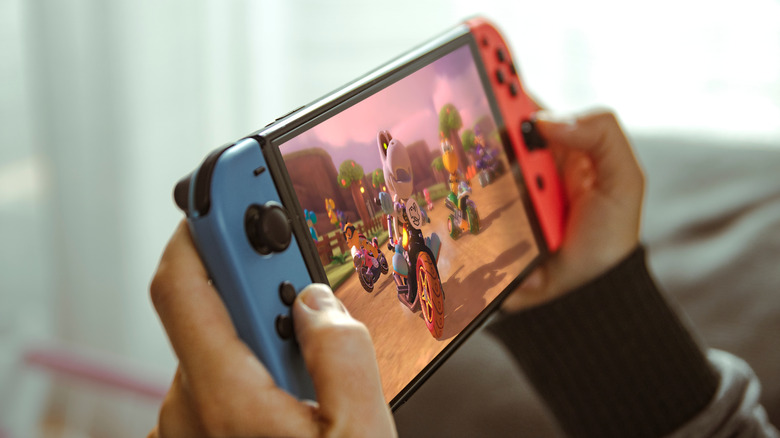
Then handhelds started to catch up, with devices like the Sony PSP and Nintendo 3DS, culminating in the wonderful world of portable gaming we enjoy today. You can have a gaming laptop more powerful than a PlayStation 5, a Nintendo Switch, the Steam Deck (or a Steam Deck Alternative), or even just your smartphone. These devices run games that would have been considered AAA console titles just a short while ago — anywhere, and any time.
But, as any seasoned road warrior knows, gaming on the go has its rough edges. Whether it's battery life or simply discomfort, it's never quite as nice as playing at home with your less portable gear. Or is it? With the right accessories, you can turn any place into gaming nirvana, something that these essential portable gaming accessories make abundantly clear.
One-handed gaming keyboards for gaming laptops
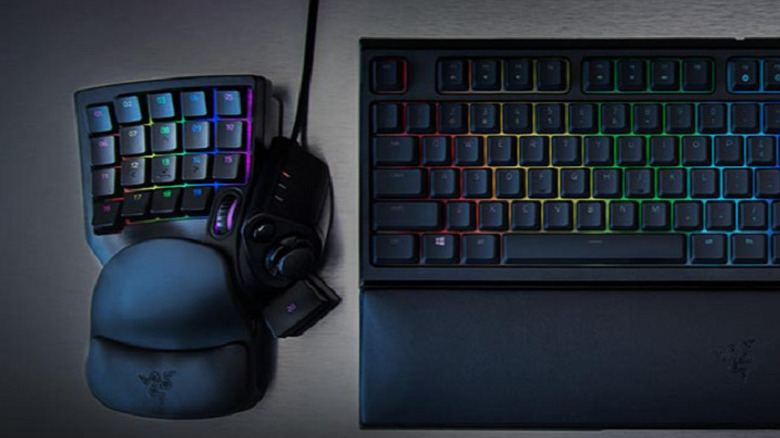
Many reviews of devices like the Razer Tartarus V2, pictured above, look at it as an oddity, only really useful for MMOs (Massively Multiplayer Online games). However, that's a narrow view from the perspective of someone who has their PC gaming life anchored to a desk. We've already listed a one-handed keyboard as one of the best keyboards to pair with your Steam Deck, but they're also an excellent accessory for a gaming laptop.
You see, gaming laptops have a bit of a design issue. Since the screen is rigidly connected to the keyboard, you have to choose between looking at the screen dead-on or having the keyboard at a comfortable angle. Also, since you need to have room for your arm between the laptop and your body, you have to place the laptop further away from yourself.
A one-handed keyboard handily (ha!) solves both of these issues. Since it's a separate keyboard, but not a full-size keyboard, you can slide it next to the side of your laptop. Place it in any position that's comfortable for your wrist, and put the laptop's screen in your personal sweet spot without issue. The only time you'll need to access your laptop's keyboard will be for commands like opening your journal or inventory in games, but all the action controls for minute-to-minute gameplay are on the one-handed keyboard. This has been my go-to gaming laptop solution for years, and it's surprising more laptop gamers haven't caught on.
A travel gaming mouse
While you might consider a one-handed keyboard essential for your gaming laptop only once you've tried it, no one doubts that a gaming mouse is essential for a gaming laptop. While some games play great with just a trackpad, with Baldur's Gate III being a great example, in most cases, you'll want a mouse for PC gaming. That's especially true if you're a fan of first-person shooter games.
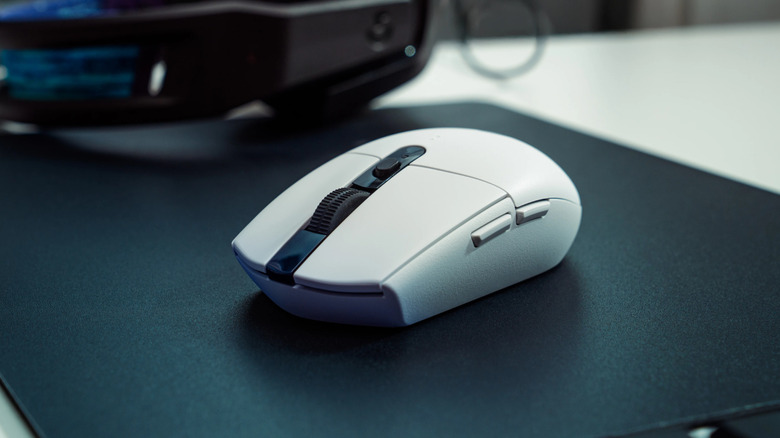
Now, you might still be one of those people who think that a gaming mouse has to be wired, but there are plenty of wireless gaming mice that perform exactly as well as their wired counterparts, thanks to proprietary 2.4 GHz transmission systems. For example, my travel gaming mouse of choice is the Logitech G305 Lightspeed. The "Lightspeed" bit refers to its transmission system, which effectively gives you an experience no different from a wired solution. Since the receiver will be plugged into your laptop only a foot or so away from the mouse at worst, there's no concern about losing signal.
If you know what "polling rate" means, then you understand how crucial the metric is for a gaming mouse, and the G305 can go all the way to 1000 Hz. It's one of the most affordable ways to own a mouse with Logitech's well-regarded HERO sensor. This mouse is always in my gaming laptop bag, thanks to its performance, low price, and small size.
A fast-charging power bank
Gaming is a power-hungry activity. While the original Game Boy could last up to 30 hours on a pair of AA batteries, a Nintendo Switch 2 can go from full to empty in as little as two hours if you're playing heavy hitters like Cyberpunk 2077 and maybe up to 6.5 hours if you're enjoying some light indie gaming. Anyone who's dipped even a toe into the world of hand-held PC gaming knows that the battery situation is even more dire there. Also, if you finally decide to use your powerful smartphone to play decent games, you're always running the risk of depleting the battery and losing access to calls, messages, or the ability to pay for things. It turns out that smartphones are pretty essential to daily life!
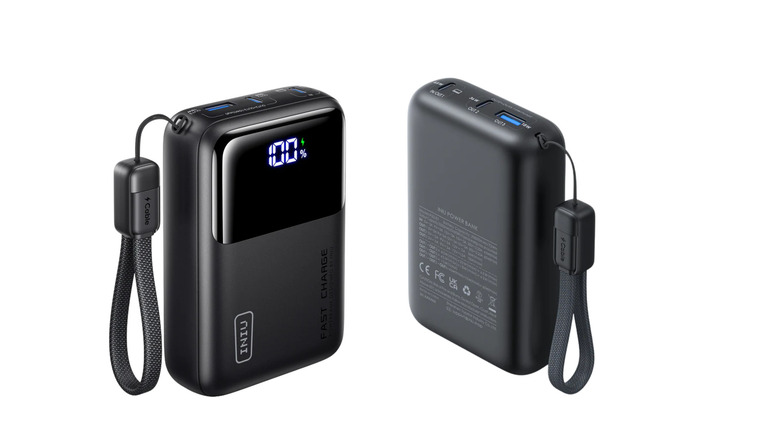
This battery anxiety is exactly why a good power bank is essential for any gamer on the go. The INIU P62-E1 is the perfect example. It's the smallest 20,000 mAh battery bank on the market as of mid-2026, and the only negative thing reviewers have to say is that it "only" puts out 65 watts at most.
But that actually makes it a great match for the most power-hungry hand-held gaming PCs, and anything below on the power consumption scale. Consider that this tiny power bank holds almost four times the battery capacity of a Nintendo Switch 2, and you're set for mammoth gaming sessions away from your wall charger. We've also found the best portable chargers if you want to consider some alternatives.
Smartphone controller clips
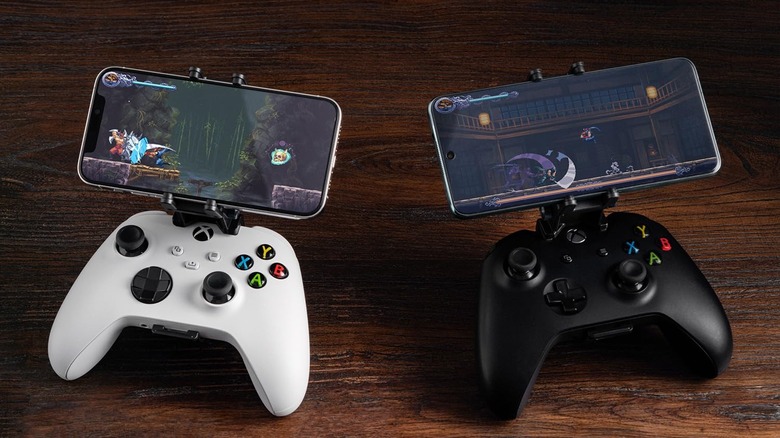
Smartphones are powerful devices capable of playing just about any type of game you can think of, from simple gem-swapping games to full-on AAA blockbusters, such as the mobile version of Resident Evil Village or Assassin's Creed Mirage. It doesn't stop there, either. Game emulation has become quite mature on mobile, and even PC games can be emulated on Android. Also, don't think it's just the expensive flagships that can game like a console. There are plenty of midrange Android smartphones more powerful than a Nintendo Switch.
All of which means absolutely nothing in the face of the fact that touch controls are absolutely terrible! If you've actually tried playing that Resident Evil or Assassin's Creed game using the on-screen touch controls, you'll know it's an exercise in frustration. If only there were a way to fuse the controls of a home console with your on-the-go phone setup, right? There are two ways to do this, and the more expensive solution will be covered below, but if you already have a controller, you can just use it with your phone using nothing more than a $15 piece of plastic.
The example above is the 8Bitdo Mobile Gaming Clip for Xbox Controllers and, given 8BitDo's credentials and the positive buyer feedback, it's preferable to all the no-name options. Just be sure to choose a controller clip for the specific controller you have. One designed for Xbox won't fit a PlayStation controller, for example.
Backbone-style phone controllers
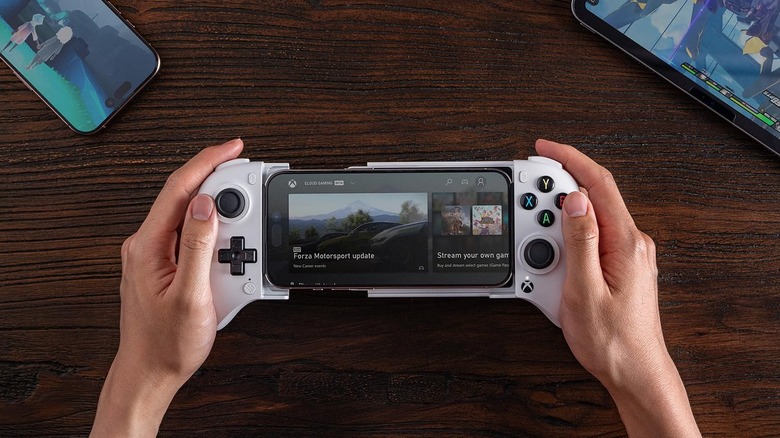
While using a controller clip is an easy and economical way to get physical controls for your phone (assuming you already have a controller), it's not the optimal solution. If you want the comfort and utility of a home console controller, but one that's more integrated and portable, you'll want something in the style of a Backbone controller. These types of controllers sandwich your phone within the frame of the gadget, turning the combo into a Switch-like handheld. The controller and phone usually communicate over Bluetooth.
Backbone pioneered this type of adaptable controller that can fit various phones inside it, but since then, there have been many variations of the idea by other companies, some of whom do it better, cheaper, or both. Backbone is still the premium option, but for our money, the 8Bitdo Ultimate Mobile Gaming Controller (which reviewers have mostly good things to say about) is a more broadly-appealing option. It's particularly well-priced ($49.99 on Amazon), given that the controller comes with Hall Effect sticks and triggers. This means they are much less prone to the drift issue from which common stick-and-trigger designs in mainstream controllers suffer.
That said, choosing a controller is as personal as you can get in the world of gaming. Within the Backbone-clone world, there are quite a few options, and you also need to consider the type of phone you have and its dimensions when picking yours. Also, while Bluetooth is convenient, it usually generates more lag than a direct USB connection. So a phone and controller that can talk over a wired connection is preferable to the wireless option, especially if you like playing games that need fast reactions.
Low-latency earbuds
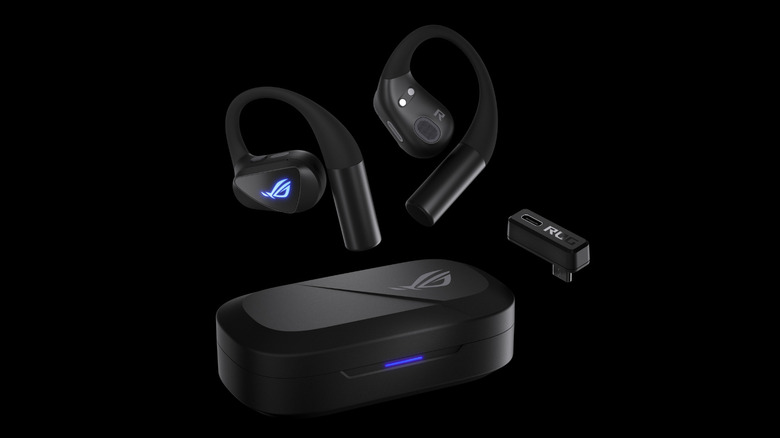
Let's put it out there from the get-go: wired headphones are the superior option for gaming. Video games are a low-latency form of media, and few things are as immersion-breaking as, for example, pulling the trigger on an in-game gun and hearing the shot go off half a second after seeing it on the screen.
But there's no denying that wireless headphones are convenient, and you probably don't want to carry around multiple pairs. The problem is that, while Bluetooth headphones can have acceptable latency for gaming, they vary immensely on an individual basis. For example, when using my AirPods Max to game on an iPad, the latency isn't noticeable, but when I switch to my Android phone, it's annoyingly there.
The answer is to use wireless headphones or buds that have low Bluetooth latency (which you'll have to look up before purchase) or to get ones that don't use Bluetooth at all. For example, the above ASUS ROG Cetra gaming buds support both Bluetooth and a proprietary 2.4 GHz signal via an included USB-C dongle. Plug that dongle into any device that supports USB headphones, and the latency should be indistinguishable from a wired set to the human brain. Of course, the price ($199.99 on Amazon) might make you think a cheap set of wired buds is worth carting around, but if you must have a wireless solution for gaming, then low-latency audio really is essential.
Hand-held PC or console carrying cases
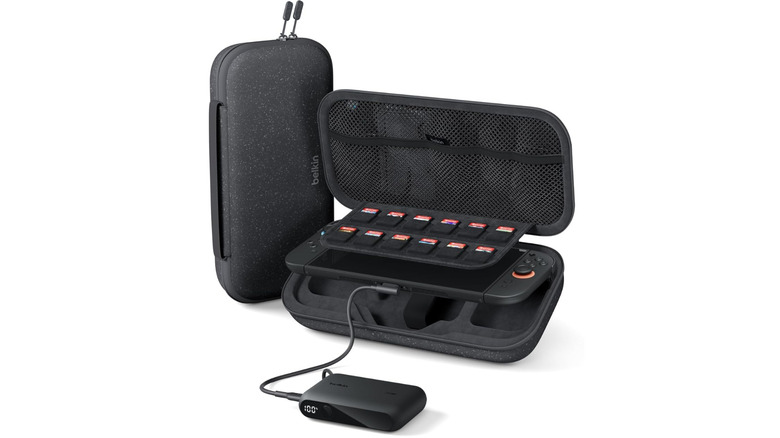
There was a time when hand-held gaming systems were tough. A Game Boy survived a literal bomb explosion, for crying out loud! This trend lasted a while. Consoles like the 3DS and PSP didn't have to be babied too much, but with Sony's Vita and its glass touch screen, people were less gung-ho about throwing their handheld in a bag before stepping outside.
There's certainly no way any sane person would take a modern, expensive, and relatively fragile device like a Nintendo Switch or Steam Deck and treat it like we used to treat the Game Boy family. That's why a carrying case for your gaming device really is essential unless you never actually leave your house with your console.
Belkin's Nintendo Switch 2 case (above) is a great example of what you should be looking for, especially if you need a solution for proper long-haul traveling. However, there are also simpler, more compact options, like the official Nintendo Switch carrying case. The Belkin does have the benefit of including a power bank and offers plenty of space for accessories. There are many variations on this theme between the two extremes, so no doubt you'll find a case that's perfect for your needs.
Comfort grips for your handheld
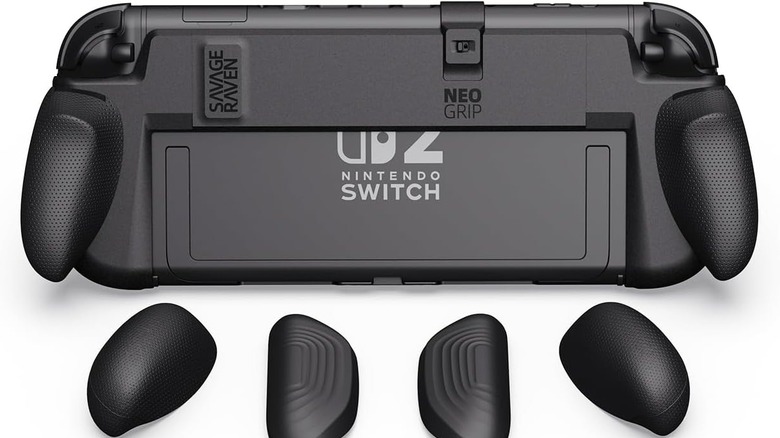
The designers of hand-held gaming systems have a tough job. They need to strike a balance between a slim and portable device and one that's comfortable to hold. Given that a handheld like the Nintendo Switch or Switch 2 has the same 100-plus-hour epic-length games as a traditional home console, players might be holding these devices for a long time. In the case of the Switch, Nintendo erred on the side of portability, which means quite a few people find it uncomfortable for long play sessions. You'll find no end of forum posts complaining about hand cramps.
This is why comfort grips, like the above Savage Raven by Skull & Co. NeoGrip, are popular. In the case of the NeoGrip in particular, the main party trick is those modular grip shapes, which is why reviewers rate the device highly.
Even handhelds that have more traditional controller proportions, like the Steam Deck, can still benefit from additional grips. For example, the same company makes a GripCase for Steam Deck. This doesn't really change the shape of the grips, but gives them a texture that's more comfortable to hold and less likely to slip out of your hands.
A mini game controller
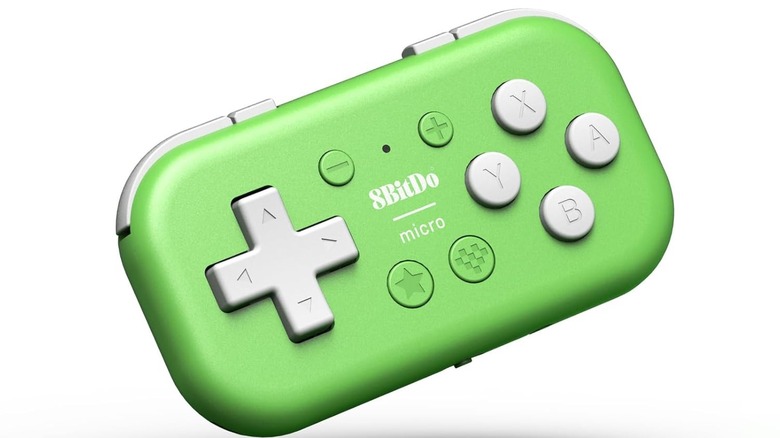
We've established that, unless a game was built for touch, a physical controller really is essential. We've covered two options, namely a full controller with a clip and a Backbone-style integrated controller. The thing is, neither of these options is very portable. You can't slip these into a pocket next to your phone. They have to go in a messenger bag or some other receptacle that you carry with you.
A mini controller like the 8Bitdo Micro might just be the answer. Sure, it lacks analog sticks, but there's a vast array of games you can play with just a directional pad (D-pad), especially if you like retro games. If you must have your analogs, then the less-pocketable, but still compact 8BitDo SN30 Pro could be a good alternative. The latter option has the added benefit of being compatible with Apple devices, and while it might not fit in every pocket, it does take up less space than a standard controller without sacrificing much in the way of comfort.
Mini emulation handhelds
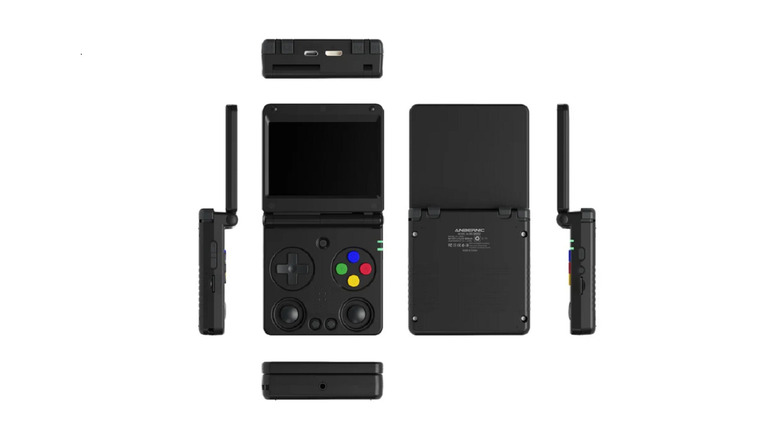
You may have picked up a certain level of nostalgia so far for the era of simple hand-held gaming systems like the Game Boy, DS, and PSP. Subtle as it may be, that's a feeling with more support behind it than you might think. Luckily, companies like Anbernic and Retroid have carved out a niche with their emulation handhelds styled to evoke the good old days of simple and chunky devices.
The Anbernic RG34XXSP you see above mimics the Nintendo Game Boy Advance SP, but that's only one of many form factors to choose from just within the Anbernic catalog. The Retroid Pocket 5 is more PSP-like for those who like that form factor and enjoy games with a 16:9 aspect ratio. If, however, you enjoy NES, SNES, and original PlayStation games, the emulation handhelds with a 4:3 aspect ratio screen are a great fit.
Under the hood, these handhelds have similar mobile phone hardware and run some flavor of Linux, Android, or both. Why are they essential? If you want access to video games on the go without worrying about handhelds you can't fit in a pocket, losing an expensive device, short battery life, or terrible touch controls, an emulation handheld solves all those problems in one fell swoop. The original Game Boy experience is never coming back in a mainstream console, but you can still get mighty close thanks to these little machines.
How we picked our essential gadgets

What is "essential" to a gamer on the go anyway? The problem we face here is that gamers are all different. For some, there's no discomfort in playing on a Switch for hours, so a comfort grip isn't essential at all. For others, they can't even use the console without adapting its shape to their hands.
That's true for pretty much every gadget on this list, but we came up with some workable criteria. The first and most important one is that the gadget in question has to significantly transform the gaming experience. Can you game for longer? Can you game better? Can you game in new ways that weren't possible before? That's the bar.
Next, the gadget has to actually work as advertised. No snake-oil or placebo products here! Finally, user reviews and/or expert reviews of specific products suggested above must have at least four stars or its equivalent. Of course, since these are classes of product rather than specific models, you can look for options that fit your needs and budget as closely as possible.