

China's New Lithium-Metal Battery Claims Double The Energy Density On A 3-Minute Charge
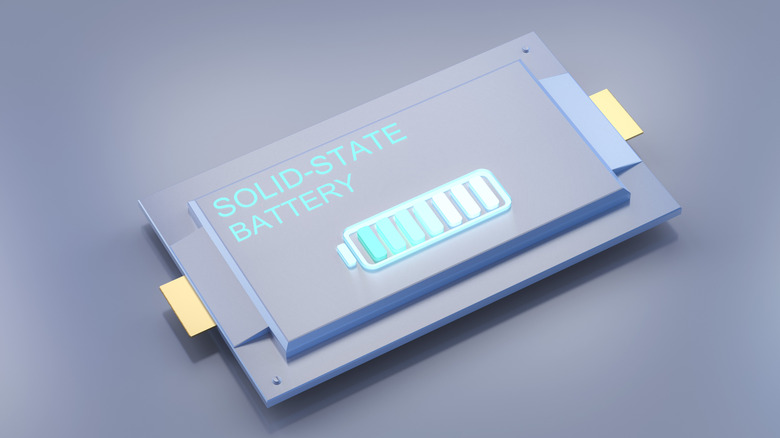
Researchers are continually attempting to advance the technology behind solid-state batteries, and China seems to be leading the charge. Following a breakthrough that packs more energy into the same size battery, researchers from the Chinese Academy of Sciences may have developed a powerful new solid-state battery that provides impressive energy density, can be charged ultra-fast, and overcomes common concerns with this battery type. As its name suggests, solid-state batteries leverage solid electrolytes, or materials, to conduct ions between electrodes, versus the liquid or gel polymer materials used in conventional batteries, potentially offering improved performance and safety.
The team reports a solid-state lithium-metal battery with a density of 451.5 watt-hours per kilogram, which is more than double what commercial lithium iron phosphate EV battery cells can achieve. Moreover, it maintained "stable cycling" for 700 cycles with an 81.9 percent capacity retention. In other words, it's powerful enough to hold a significant charge, can be replenished ultra-fast in three-minute sessions, and maintains its power capacity over many cycles. According to the researchers, they achieved this with a "compatibilizing-solvent plasticization" strategy that introduces a solvent to improve compatibility between the polymer and stable plasticizers.
The researchers basically stabilized and strengthened the electrolytes
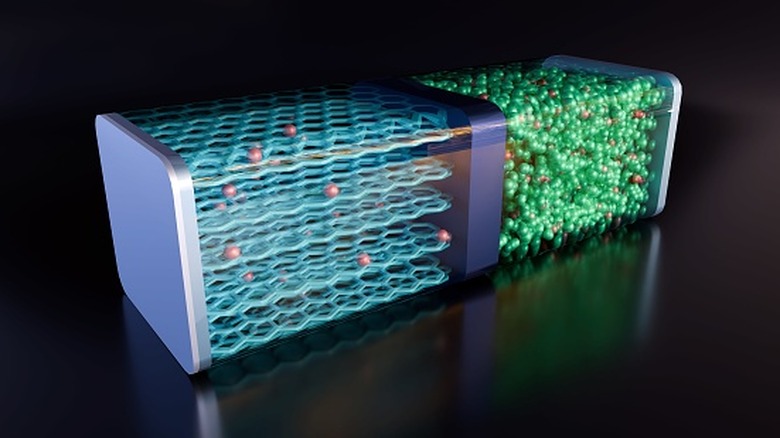
The study suggests that "conventional plasticizers" used in PVDF electrolytes — a type of polymer used in advanced batteries — has poor electrochemical instability. Using the "compatibilizing-solvent plasticization" strategy the researchers essentially create a film — a lithium-fluoride-rich interfacial layer — that keeps the plasticizers locked into the polymer network. They use a temporary volatile solvent, acetone, to boost compatibility, which evaporates during the film's formation. This discovery could lead to more practical designs of lithium-metal batteries that exhibit the high energy density, for more power storage, and fast-charging support demonstrated in the study. That would have huge implications for EV technologies, vastly improving their overall range.
Although research has advanced in recent years — solid-state battery power banks are already here — they still pose quite a few challenges. Dense solid-state batteries are plagued by high-current metallic cracks called dendrites, which cause short circuiting or worse. So while there's still advancements to be made with solid-state batteries, it's easy to see that battery technology research is moving at a good pace. China's new all-iron battery might beat lithium options at a fraction of the cost, while nuclear batteries could change everything we know about portable power, if they come to pass.