

9 Over Hyped Tech Gadgets That Failed On Arrival
We may receive a commission on purchases made from links.
In psychology, there's a concept known as anticipatory joy. It's the observation that anticipating a good thing before you get it makes you happier overall than if you just got your hands on it immediately. So it's no wonder that hyping up something — like a tech gadget — before its release does a great job of getting those endorphins flowing and making people feel more positive towards whatever you're trying to sell them.
The thing is, though, that anticipation needs to match reality. Overhyping is a dangerous game, and marketing departments can easily run too far ahead of what the engineers and designers have actually made. There have been plenty of examples in history, but the world of high-tech products and Silicon Valley optimism has almost elevated the overblown hype cycle to an art form.
Sometimes, a good product can survive being overhyped, but for others, their fate was sealed even before products hit the shelves. These gizmos over-promised and under-delivered themselves into an early grave.
Humane AI Pin
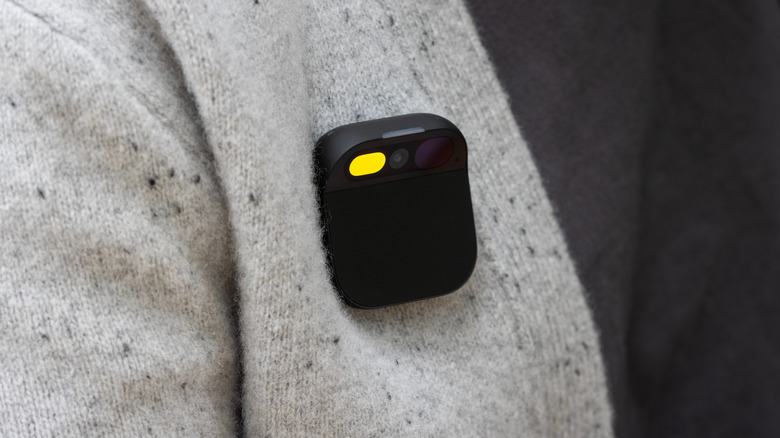
For some reason, the advent of modern AI chatbots like ChatGPT and Google Gemini inspired the idea of dedicated, wearable AI hardware. These aren't some sort of local AI solution. This is an always-connected set of eyes and ears for the AI so that it can see everything you're doing at any moment and, presumably, be ready to answer your questions or perform tasks.
On paper, this sort of makes sense, at least if you set aside the fact that anyone who'd be interested in this already owns a smartphone. Still, the creators of the Humane AI Pin reckoned that not only would you want a little AI buddy pinned to your shirt, but that you'd leave your dumb old smartphone at home. The marketing leading up to the 2024 release of the Humane AI Pin was slick and had a world-changing feel, but in the end, they still needed to deliver on the promise.
It's in that delivery where the Humane AI Pin fell flat on its face. Reviewers absolutely ripped it to shreds as soon as they got their hands on it. The battery life was terrible, it overheated, and it was slow and extremely frustrating to use. Soon, people were returning their $699 (!) pins faster than Humane was selling new ones. We could only think of one good use for the Humane AI Pin, and even that wasn't worth the asking price. So, sadly, this was one of the gadgets that died in 2025.
Juicero
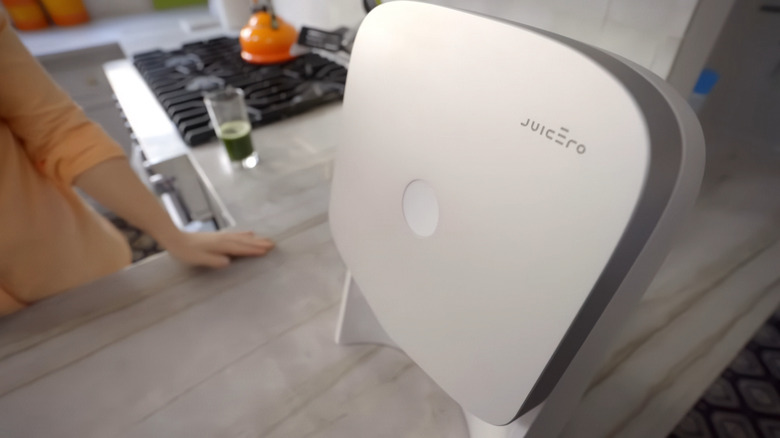
It's sometimes hard to figure out if you're looking at the launch of a real product or some sort of satirical "Saturday Night Live" commercial that's meant to lampoon how self-important Silicon Valley can be sometimes. As it turns out, the Juicero was absolutely a real product, and people were legitimately hyped for it. Investors were, too, it seems, since investors sunk at least $120 million of venture capital into the company.
Just to be clear, this was a machine that pressed bags of precut fruit and vegetables, which cost between $5 and $8 each, into juice. The machine itself was listed at $699 when it debuted in 2016, with the price later slashed to $399 in a desperate bid to sell them. The only problem is that, as journalists and reviewers quickly realized, you could simply squeeze the juice bags with your bare hands without the machine, with no apparent difference in the resulting juice!
The mockery was relentless, with many wondering why it took so much money to develop a machine that just presses on a precut bag of produce. The company shut down late in 2017. It boggles the mind that so much money could have resulted in such a useless machine. The claim was that the Juicero put four tons of pressure on the bag, and that smart internet-connected technology would ensure you couldn't squeeze an expired bag. But all you needed was a pair of hands and eyes to read the expiration date on the bag itself.
Microsoft Kin
The name Microsoft is a portmanteau of "microcomputer" and "software," and, indeed, the technology giant made its fortune in software, not in hardware. Yet, it seems the house Bill Gates built can't stop taking swings and making huge misses in the world of computer hardware. It's the only company to have more than one entry on this list, and you could easily write a long thesis containing only ideas that flopped from the folks in Redmond.
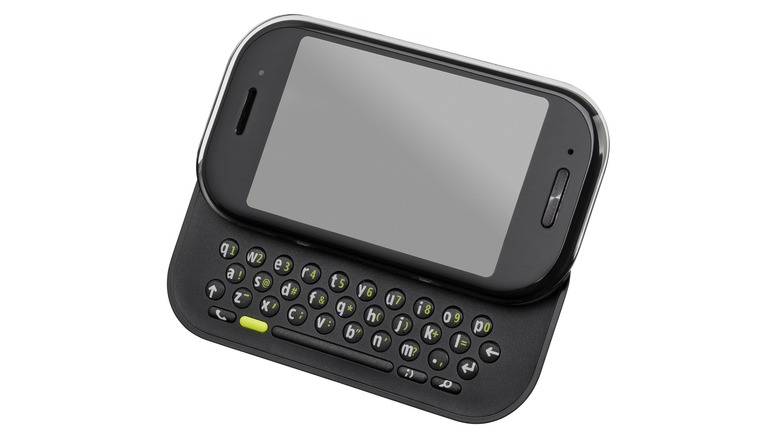
While it would be easy to once again dredge up the abject failure that was the Zune, the Microsoft Kin phones don't get enough attention. These phones were aimed at heavy social media users, which at the time (2010) basically meant teenagers. But these were not actually smartphones. There were no apps or games, and an expensive data plan was mandatory. There's a sizable list of reasons the Kin phones failed, but perhaps the biggest issue was the try-hard marketing campaign which seemed to be aimed at hipsters and other cool-kid demographics.
Unfortunately, these were exactly the sort of people that you don't want to directly address in your marketing. They can smell insincere corporate pandering a mile away, and there were rumors that only 500 Kins had actually been sold. Microsoft pulled the plug on the Kin less than four months after launch, making it one of the shortest-lived tech products in history. It's sad, because leading up to the release, it felt like it might have been something special, but it turned out to be a phone for no one.
Google Glass
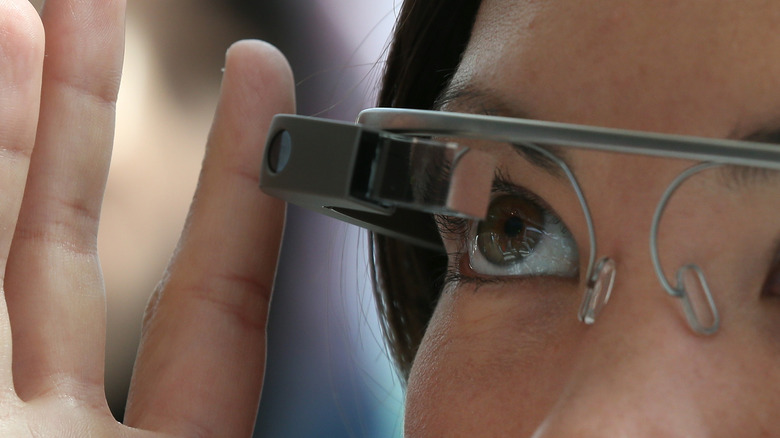
You know it's a bad sign when the public invents a brand new insult for people who buy and use your product. So it's not likely the bigwigs at Google were exactly stoked when the term "glasshole" was coined to describe people wearing the Google Glass.
The Glass was released in 2013 to developers, and in 2014 to the general public. This was one of the first augmented-reality wearable devices, and given the state of technology back then, it's remarkably compact. The device is mounted on a pair of glasses, with just the frame if you don't need prescription lenses. It has a touchpad on the side, a front-facing camera, and a neat display system that's beamed into your eye using a beam splitter. This would let you see basic things like text messages and Google Maps directions.
Today, wearable smart glasses are actually doing OK as a product category, and public attitudes have changed somewhat, but Google Glass raised immediate concerns at the time. Privacy was the main one, because people felt that Google Glass users could be recording them at any time, and people would of course wear them in private spaces like public bathrooms or locker rooms at the gym. Today, there are various ways to know if someone is recording you with smart glasses, but this was early days. Barely anyone bought a Google Glass, but surprisingly, new Google smart glasses are coming, so maybe this time will be different.
OUYA
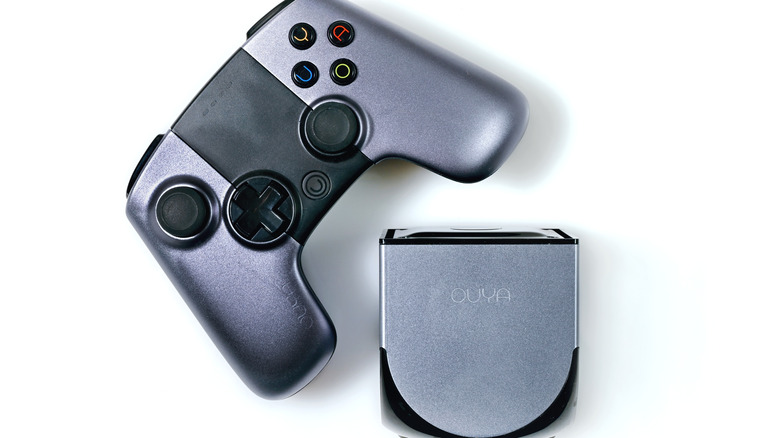
It feels like no one really talks about crowdfunding sites anymore. A decade ago, we hailed Kickstarter as a revolutionary platform, but now it just feels rather mundane. The revolution is over, and crowdfunding is an accepted part of modern life. Back in the day, though, some truly interesting ideas sprang from Kickstarter, including the OUYA in 2013. This was an Android-based microconsole which sold for $99 and promised to be an open platform for game development, where indie game developers in particular could thrive.
Unfortunately, the OUYA was dead in the water within two years. Even for under a hundred bucks, the actual hardware was rather lackluster, and the selection of games, even more so. The hype for the OUYA was evidenced by its record-breaking Kickstarter, which was topped off with additional venture capital funding, but any sort of gaming device in this vein needs compelling exclusive games to really sell the system. That was something the OUYA never had.
For the most part, the available games were just the same ones you could already play on an Android phone, except you could use a controller. Ultimately, the OUYA was a failure as a software platform more so than for any hardware shortcomings. Many people liked their little OUYA as an emulation machine, allowing them to play retro games on modern HD TVs with very little effort. Given that Android gaming handhelds are a strong niche today, that core value proposition is still sound, but trying to break into the console market was a tough call then and even tougher today.
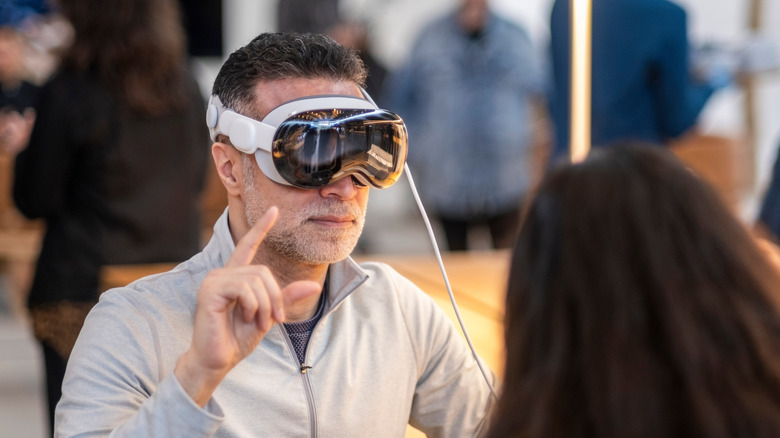
Apple Vision Pro
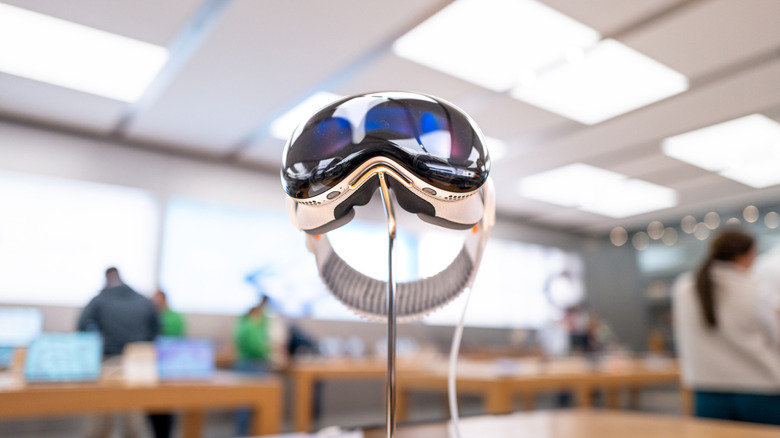
Maybe it's premature to say that the Apple Vision Pro has failed. Officially, it's still a live product, and you could order one right now if you have thousands of dollars to burn on a mixed reality headset. However, strong rumors abound that there will be no Vision Pro 2, nor a Vision Air. Instead, Apple is likely to focus on developing its own take on smart glasses in the vein of products from Meta and the aforementioned new generation of Google Smart Glasses.
But we do think the Apple Vision Pro has failed, and there are numerous reasons why. The most obvious one is the price. While $3,499 might be a price many people are willing to pay for a MacBook, that's a computer with a clear use case and a proven track record. While the technology in the Vision Pro might justify the price on paper, what value it actually provides is questionable. Without compelling killer apps, it feels like just an expensive pair of ski goggles.
App developers did not rush to update their existing offerings to take special advantage of the Vision Pro, and certainly the software library has nowhere near the diversity of the Meta Quest, which is the closest point of comparison. It's the chicken-and-egg dilemma. No one is spending that much money on hardware that has no software, and no software developers want to spend time and money developing apps for a platform with no install base.
Microsoft Xbox One
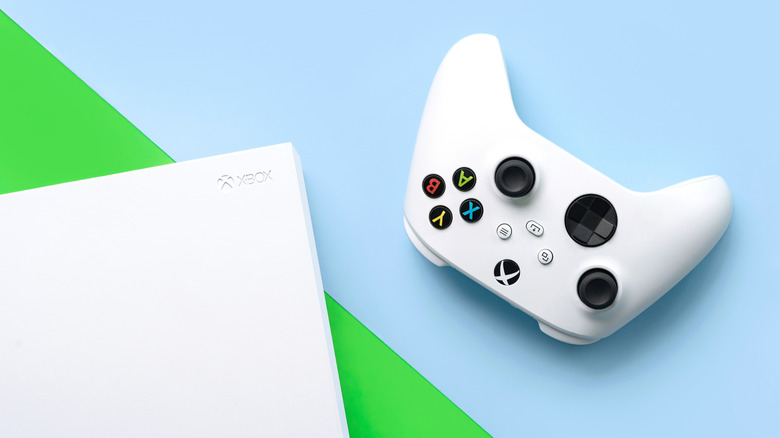
The 2013 day that Microsoft showcased the new Xbox One to the world has gone down in infamy as the day we saw a company torpedo its own brand so badly that it lost a market it had just started to dominate. The Xbox 360, despite a legendarily expensive hardware recall issue, had been beating the PlayStation 3 for most of the generation. At the very least, it was on equal footing with Sony's latest console, had excellent exclusive franchises, and strong fan support and community-building.
Then, as details of the Xbox One were revealed, those pillars that had taken years to build were shattered in a matter of days. Xbox fans had been rabidly awaiting details of their next-gen console, but all the presenters could talk about was how easily you could watch football games on your Xbox. Then Microsoft announced that your console would always have to be online, and that you couldn't resell games or buy used games, since your copy would be locked to your console.
Even worse, the Xbox One would be bundled with a non-optional new version of the Kinect motion control system, which inflated the price over and above what Sony would be charging for the PlayStation 4. Despite reversals, Sony's marketing had a field day. The PS4 outsold the Xbox One two to one, and after this deathblow, the Xbox Series of consoles that followed lost even more ground to their main competitor.
Nintendo Virtual Boy
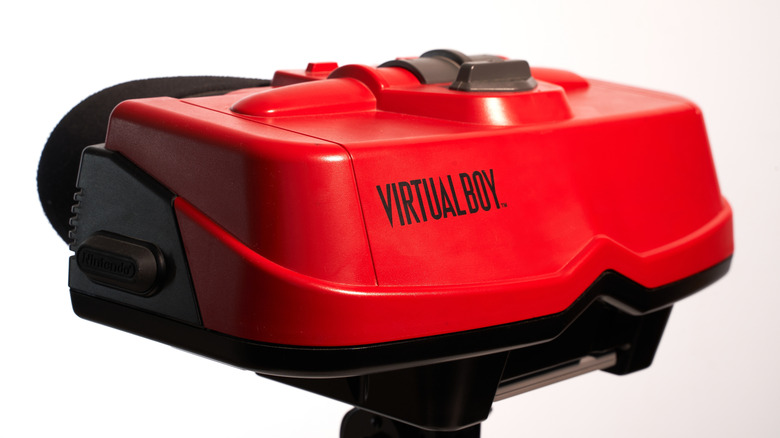
Apple is far from the first company to have a device you stick on your face crash and burn almost as soon as it hit store shelves. The Nintendo Virtual Boy game console, released way back in 1995, might have looked like a VR headset and had a name that suggested that's what it was, but it was actually just a pair of 3D glasses that stood on a table and sort of peered through it like a periscope while you operated the controller.
Inside the glasses, you'd see your games in 3D, and by all accounts some of the games were very good indeed. Across all regions, there were 22 Virtual Boy games, with 14 being available in the U.S. There were several canceled titles too, but given how poorly the Virtual Boy sold, it wasn't worth completing them. Perhaps the biggest problem with the Virtual Boy was that the games were all red monochrome, making it feel like you had permanent Terminator vision. People found it uncomfortable to use, and now it's an infamous and rare failure on Nintendo's record.
Nintendo never gave up on the 3D dream, however. Its 3DS series of handheld consoles was a success despite a rough start. While Nintendo has been circumspect about the Virtual Boy for years, the company now actually sells a Virtual Boy adapter for the Switch, allowing you to experience the headache of playing its library of games firsthand. At $99, it might seem a little steep, but it sure beats paying almost $700 for the original console.
GoPro Karma
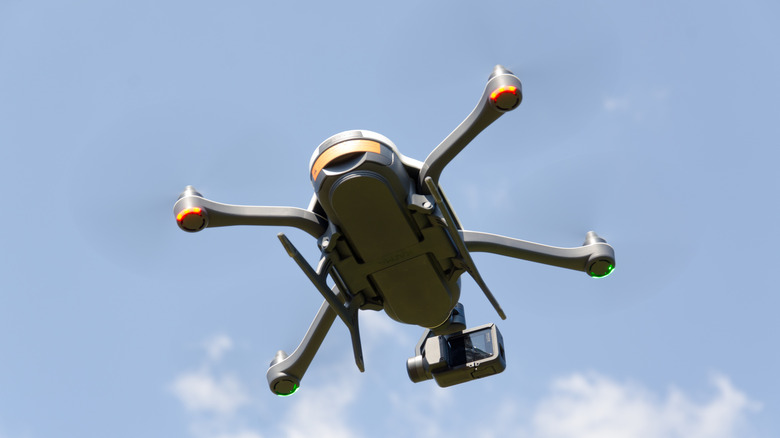
The GoPro Karma is a product everyone expected to be a big success. After all, some of the earliest camera drones literally strapped GoPro cameras onto their bodies, and GoPro was the world leader in action camera technology. So why not skip the middleman and make a drone designed around GoPro's cameras from the ground up?
People were genuinely excited for GoPro's first foray into the drone market, but that excitement was quickly dampened when it became clear that there was something very wrong with the GoPro Karma. Karma drones were literally falling from the sky not long after their release in October 2016. They'd fly away, never to be seen again, and this was not an issue that could be fixed with a software update. Ultimately, GoPro recalled the Karma, and this failure was so final that GoPro quit the drone business, never to try again. It turns out that, although the likes of global drone giant DJI made creating drones look easy, it's anything but.
Ironically, DJI would go on to enter the action camera business and be really rather good at it. In our DJI Osmo Action 5 Pro review, we couldn't stop gushing about the camera, and DJI cameras often make the cut for lists of the top action cameras. While GoPro still puts out decent products, it's no longer the innovator it once was, and stories of buggy camera software and overheating, unreliable cameras abound. Those stories might be overblown in reality, but there's no doubt that GoPro's reputation since the Karma fiasco hasn't been what it used to be.