

5 Things To Know Before Buying A Whoop Band
Smart bands like the Google Fitbit Air are a good alternative to smartwatches for consumers who want better health and fitness tracking than what a smartphone can offer. Whoop wearables are even better examples than Google's newly launched device, as Whoop released several Whoop generations before the Fitbit Air hit stores. Whoop may be a popular device with specific consumers, and it's a prominent one too, with various well-known athletes having been spotted wearing Whoop bands in public. But buying a Whoop band shouldn't be treated as casually as buying the latest Apple Watch or Pixel Watch model. Consumers should take into consideration various pros and cons related to the Whoop band before deciding whether to purchase one of the available models and which one to get.
Whoop bands come without screens; they need subscriptions to offer the expected health features and may have a few limitations compared to traditional smartwatches that would make them less useful in specific situations. They may also have a few advantages over an Apple Watch or Pixel Watch when it comes to assessing the health and fitness of users, with optional medical testing also available.
That said, consumers should consider that policies can change without notice, something that Whoop did in 2025 when it altered its upgrade protocols, upsetting existing consumers. Still, Whoop bands are trusted by various athletes who have invested in or endorsed the technology company. That may be reassuring for buyers who are looking to purchase Whoop devices for several years and are wondering whether Whoop would still be around in the future.
Whoop bands don't have displays

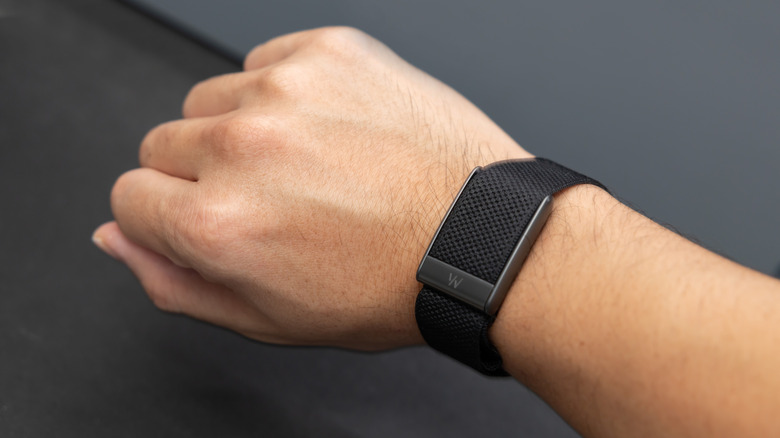
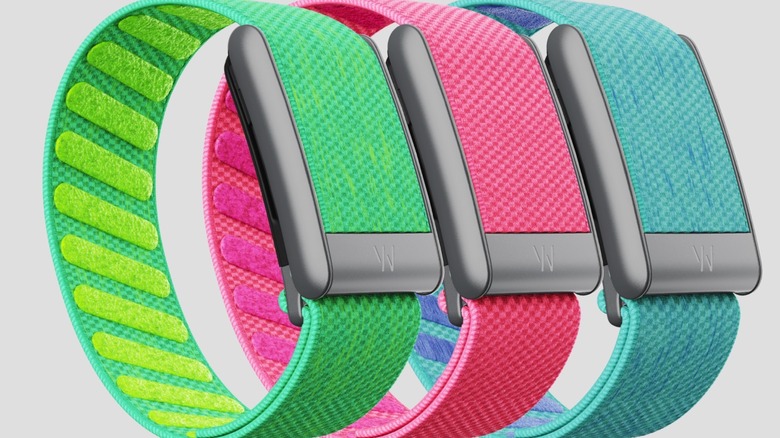
You may confuse a Whoop band for a bracelet when seeing one briefly on someone's wrist, as the device doesn't look like a regular smartwatch or a smart band with a display. Like the Fitbit Air, Whoop bands do not have a screen, regardless of the model you choose. As of this writing, Whoop offers two bands, depending on the membership users choose, including the Whoop 5.0 and Whoop MG. Buyers have access to various band choices, including different colors and materials, to customize the look of their Whoop band. Regardless of the choice, the Whoop band will continue to look like a bracelet, but one that has health sensors pressed against the wearer's skin.
The lack of a display may be a dealbreaker for some people, especially smartwatch users who may be used to glancing at a display for quick information, including the time, health stats, and app notifications. Others may find the display-free design an advantage of Whoop devices. A screenless health tracker would still collect the health data the users want, without getting in the way. The gadget would track fitness sessions and sleep without showing any information in real-time on the wearable. All the data will be visible inside the smartphone app that users need to install on their Android or iOS devices.
The Whoop band's minimalist design can also invite a different type of experience. A buyer may wear a traditional watch on one wrist, and the Whoop wearable on the other. This would let them rotate a collection of watches while keeping the Whoop band on the other wrist at all times, as seen in the image above.
Subscriptions are mandatory and expensive
Unlike other wearable devices that offer base functionality without requiring a monthly subscription, the Whoop bands need an active subscription after the month-long free trial expires. Without paying the yearly subscription, the Whoop band stops working. It won't collect new data and offer insights. Also, resale value is limited if owners decide they don't want to use the wearable anymore, since a secondhand user would still need a membership. By comparison, you can sell an Apple Watch to a different iPhone user or a Pixel Watch to a different Android user, for example.
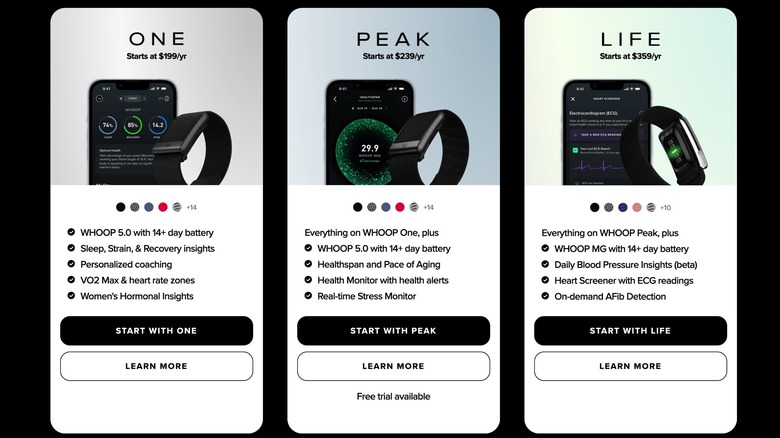
Whoop subscriptions are also expensive, especially when accounting for the fact that each year of use adds extra costs. Whoop has three memberships available, including Whoop One (starting at $199 per year), Whoop Peak (starting at $239 per year), and Whoop Life (starting at $359 per year). The first two subscriptions include the Whoop 5.0 wearable, while the most expensive membership comes with the Whoop MG model. Both devices offer similar battery life, rated at over 14 days, but the Whoop MG has a more advanced sensor that supports ECG readings. The Whoop MG also supports on-demand atrial fibrillation (AFib) detection and daily blood pressure insights, though the latter is a beta feature.
According to the company, the Whoop One membership offers insights into sleep, exercise strain, and recovery. The subscription also includes information about VO2 max and heart rate zones for training sessions, and access to personalized coaching. Hormonal insights are available for women wearing the Whoop band. The Peak subscription adds a few other key features: reports about Healthspan and aging, and support for monitoring health parameters and stress. The most expensive tier includes everything in the more affordable options in addition to the heart-related features mentioned above.
Whoop can support health insights unavailable on other wearables
The membership summaries above hint at the kind of health capabilities the Whoop bands offer. The band will monitor various parameters for the user, including sleep, stress, activity, and exercise strain. Additionally, the app lets users add over 300 behaviors, like caffeine consumption, to help them understand how these additional actions impact sleep, recovery, and training. Other smartwatch models and wearables can offer similar health tracking features, though many of them do not require a subscription.
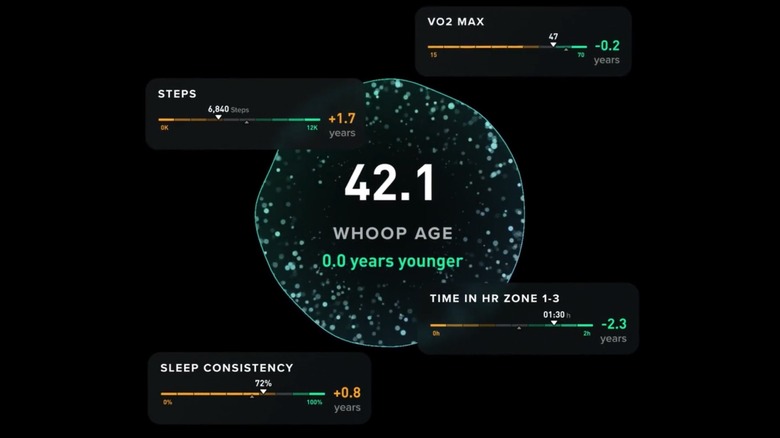
But Whoop has a few unique features that buyers may like. For example, the Healthspan feature, available to Peak and Life users, analyzes data from nine metrics to calculate the user's Whoop Age, which it uses to determine whether their body age is younger or older than their actual age. The company says the feature is based on longevity research. For women, Whoop supports more than cycle and pregnancy tracking, offering users the ability to log symptoms and providing insights into how hormonal shifts may impact various aspects of their lives, including sleep and training.
Whoop also offers insights into daily blood pressure, a feature that remains uncommon among wearables. The company says it's using proprietary technology to provide the information. The wearable will collect "thousands of biometric data points overnight" to estimate blood pressure instead of providing direct measurements. Finally, Whoop lets users combine clinical blood tests with the data the smart band collects for advanced guidance, which involves personalized assessments from medical professionals. However, the tests can require an additional yearly subscription, ranging from $199 to $899, depending on the number of tests.
No GPS support and limited standalone use

You can go out for a long run wearing just an Apple Watch, and the device will log your health parameters and use GPS to track your route. You don't need the iPhone. It'll also play music to connected earbuds. If it's a cellular model, it will support phone calls, text messages, and other notifications without the phone. Also, the Apple Watch provides information about the running metrics in real time, including heart rate, pace, heart-rate zones, distance, intervals, and others. That's the kind of standalone smartwatch use some consumers may value. The same goes for some Android watches. They can still work without needing a smartphone. The wearable and the handset will connect when they're in range of each other to exchange data. All the information the Apple Watch recorded during the run will be transferred to the iPhone, and users will see the data in the Health and Fitness apps.
That sort of standalone use isn't exactly possible with the Whoop band. The lack of a display makes it impossible to control the wearable. Unlike a smartwatch, the app doesn't support third-party applications. It doesn't relay notifications or play music. The only purpose of the Whoop band is to collect health parameters and provide smart insights. But for that, an iPhone or Android device must be present, with the Whoop app installed. While you can use a Whoop without the iPhone present, the data will not be available in real time, as the tracker offers the ability to review the workout strain from that long run after the session is over. Importantly, the smart band doesn't include a GPS chip, and users will need a smartphone to track routes when running, walking, and cycling.
Hardware upgrade terms may change without notice
A Whoop wearable is not normally functional without a subscription, at least not officially, but users may want to upgrade to a newer smart band with better sensors once the company releases one. Whoop did exactly that in early May 2025 when it released the Whoop 5.0 and Whoop MG bands. But the upgrade process was not as seamless as expected, considering earlier promises from the company. Before these new models were released, language in a now-deleted company blog said that Whoop members who had a subscription for at least six months would get the next-generation hardware for free. However, Whoop didn't initially honor that promise.
The company saw backlash from consumers who found that upgrading to one of the 2025 models would require extending the membership or paying a fee. Whoop eventually clarified the matter, saying that users with more than a year remaining on their plan would get the Whoop 5.0 upgrade for free and that it would issue refunds to those who paid a fee. The company also said that the previous blog post that mentioned the six-month requirement was incorrect and should not have been published. Despite the clarifications, the incident raised concerns about whether Whoop could change hardware-upgrade rules without notice.
Comparatively, smartwatch models like the Apple Watch or Pixel Watch receive hardware upgrades every year. As with the newest Whoop bands, the newest models may come with better health features and improved battery life. However, buyers pay only once for the hardware, and the health features compatible with their models are available for free.