

9 Emergency Gadgets Every Homeowner Should Have On Hand
We may receive a commission on purchases made from links.
When anyone mentions emergency preparedness, people think you're talking about the end-of-the-world doomsday scenarios from a bunker, but the truth is far more boring. It's the random power outage that hits you on a Tuesday afternoon you need to worry about, especially if you have sensitive medical equipment that needs to stay running. It's the freak snowstorm that came out of nowhere and means you won't be able to go shopping for another week because of three feet of white powder covering the roads. Or it's the woefully inadequate investment in new water infrastructure that means the local reservoir is running dry and the taps are off during the latest heatwave.
These aren't the end of the world, but they're becoming increasingly likely. With the right preparations, they needn't cause a panic, and your family should be able to weather them with minimum of disruption. Now, there are hacks that can allow you to turn your phone into a survival tool, but, ideally, every homeowner should be prepared to protect against the loss of power, water, and communications. This list of emergency gadgets will do just that, and the products I've selected are mostly ones that I have hands-on experience with and, for extra measure, have favorable reviews from experts and users. They're all genuinely useful products that will ensure you survive the most common emergencies — not gimmicks for your next cosplay convention.
1. Powerful Flashlight
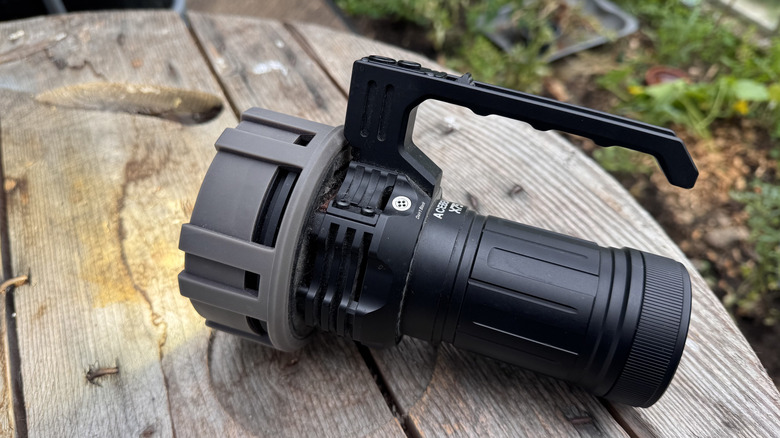
If your idea of a flashlight is a footlong tube that needs four D-size batteries, you might be a little out of date. Modern flashlights use powerful and efficient LEDs, and these usually run on smaller, lighter, and more affordable AA batteries. However, if you want the ultimate emergency flashlight, we'd recommend the AceBeam X75, which has a turbo output of 80,000 lumens. That's not only enough to light up just about any space, but in a more serious emergency, it can also be used to blind and disorient any intruders. This device can operate in low power modes for up to 8 hours, and the USB-C charging port can reverse charge your devices in a pinch. The only downside is the price: At $430, the AceBeam X75 would blow our entire emergency preparedness budget!
A more sensible option might be a headlamp, and again, AceBeam comes up tops here with the superb H35 dual-mode white and red output. The lamp angle can be adjusted, as well as the white brightness from 10 to 2600 lumens, while the red output is fixed at 200 lumens. It's comfortable to wear thanks to the over-the-head strap and band, and easy to recharge over USB-C, or swapping out the lithium-ion battery.
2. Emergency Battery
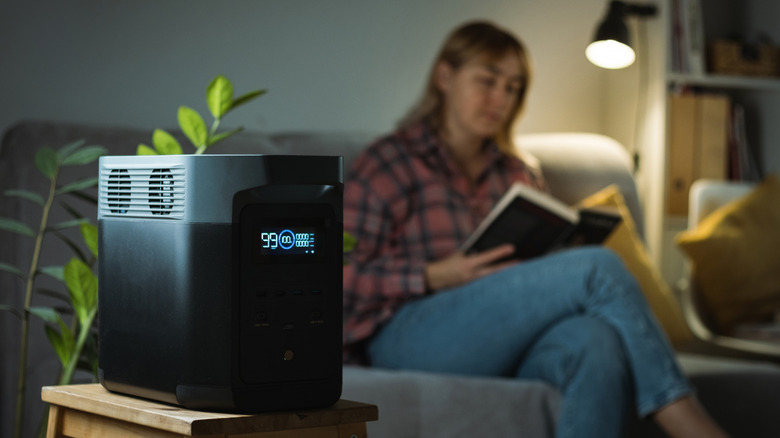
If your budget doesn't stretch to a whole-house generator, you should at least ensure you can keep the essentials like the refrigerator and some lights powered during an extended outage. For this, the Ecoflow Delta Pro is our pick for a portable power station, and the basic model offers 3.6kWh of capacity priced at $1,699. This is more than enough juice to power your fridge to keep food from going bad or running a CPAP machine overnight so you can at least get a good night's sleep.
Devices like smart phones, laptops, and tablets don't draw a lot of power, so you can get away with something much smaller and more portable, like the Anker Solix C1000. With 1kWh of capacity and up to 1800W continuous output, it can power larger appliances for a short while, but the added features are what we really like. It includes a large built-in lantern and two removable dual-purpose lantern flashlights, making it great for kids who need a night light and a few USB ports.
3. Portable Solar Panels
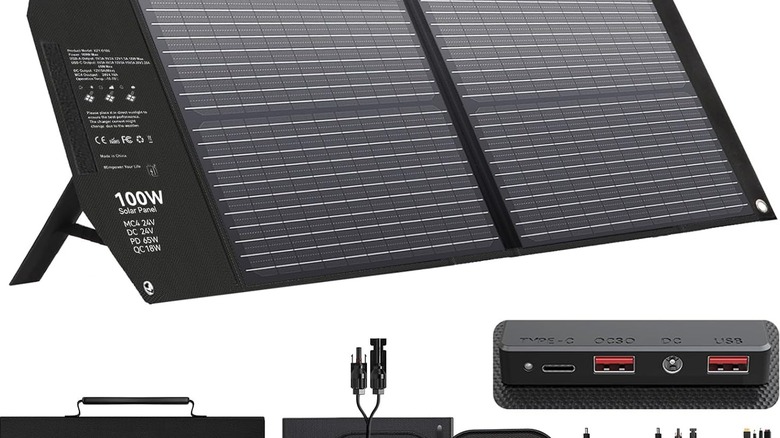
You may already some panels on your roof, but it's worth investing in a couple of portable panels that you can set up at ground level or hang from a balcony to keep your portable battery charged. Rooftop solar is brilliant at reducing your energy bills, but unless it's paired with a whole home battery, you're still dependent on the grid. That means if the power goes down, your panels can't generate anything. The Mesuvida 100W panel with USB charging ($93.99, Amazon) is one of our favorite portable panels for the sheer convenience of being able to charge USB devices directly without a solar generator in the middle. And there are plenty of gadgets you can run directly from a solar panel.
If you're hoping to charge a budget solar battery, things can get tricky because you need to match the input specifications of the solar generator: voltage range, maximum current, and maximum overall charge power. You must output enough voltage to actually start the charge, but if you overload your solar generator on any of those numbers, you'll burn the charging circuit. So, if you're not confident with your electrical specification, the best option is to buy a solar generator and matching panel bundle direct from the manufacturer.
4. LED Lanterns
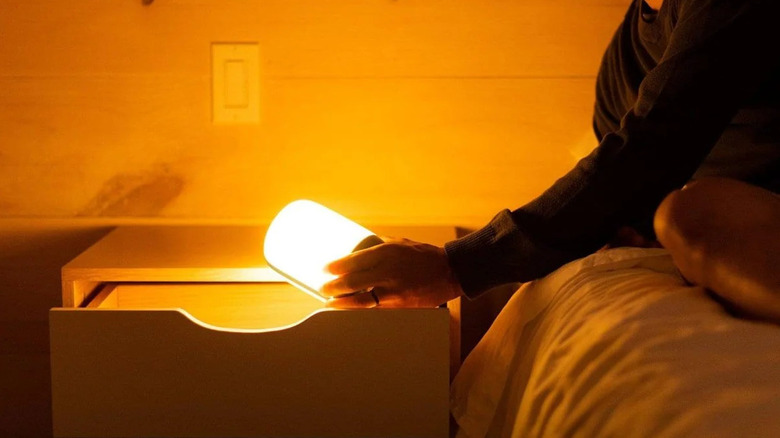
Light is our most primitive survival tool, so don't underestimate the importance of a simple light during an emergency, especially if you have children. The BioLite AlpenGlow 500 ($79.95) offers an impressively bright maximum 500 lumens, and it offers several lighting modes including pure white, warm white, or a selection of colorful scenes. Sure, the party modes are a gimmick, but even after years in storage, ours still have a full battery, ready for use when the lights go out.
The AlpenGlow 500 have a handy hook on the base so they can be hung up, or just left freestanding on a table or next to the bed. The brightness and operating modes are adjustable through a single button, with a mode memory so you don't accidentally blind yourself. Smaller 250 lumen models are also available. Beyond making great survival products, BioLite is a registered B Corp with a humanitarian mission to deliver renewable lighting and energy equipment to communities around the world — every purchase contributes to that goal.
5. Offline Communications
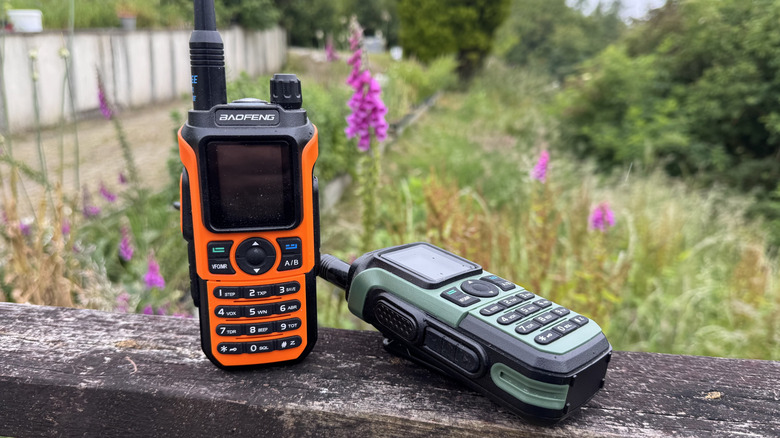
While Ham radio is the gold standard for long range amateur communications, it's also a hobby unto itself, requiring expensive kit and tests that you actually need to study for. It's probably overkill for keeping in touch with your neighbors or local community during an emergency. Instead, the Baofeng GM-15 Pro is a cheap and easier alternative to medium range walkie talkies. These devices are locked to GRMS broadcast ranges, so you still need a license to transmit, which costs $35 for ten years and covers your immediate family, too. The range depends on the type of antenna used, but out of the box these achieve a mile or further with clear line of sight. And at less than $30 each, they're cheap enough to hand out to friends and family just in case.
Another alternative are offline messaging apps, though it's always worth testing first as capabilities depend entirely upon user adoption in your local are. These systems, like bitchat, rely on Bluetooth to broadcast messages to nearby users, while anything else is re-broadcast until it reaches its destination. If you have no peers in your neighborhood, they're useless. If you're happy with a bit of DIY hardware tinkering, Meshtastic is a low-power long-range free and open-source communications app that covers a much longer distance than Bluetooth.
6. Camping Stove
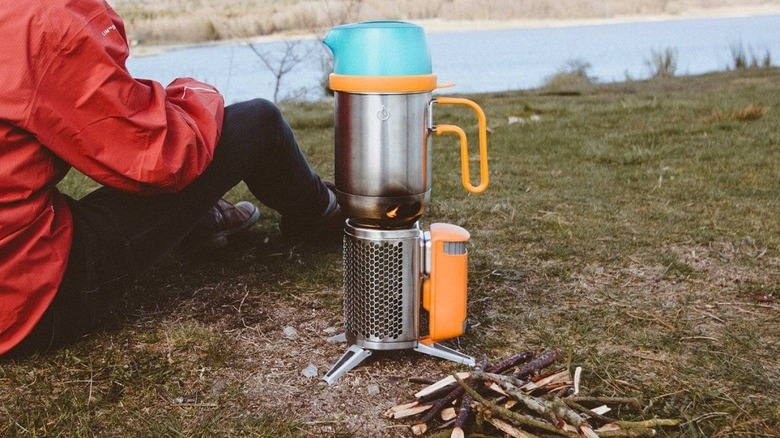
Solar power is great, but redundancy is key. If you're relying on portable solar panels to generate enough energy to heat, cook, and power your devices, you're entirely dependent on the weather. Sometimes, a bit of good old fire is the best solution. Even in damp conditions, the BioLite Camp Stove 2 is a perfect gadget for cooking food and boiling water.
As a bonus, it also features a thermoelectric generator to capture waste heat and charge a built-in battery. In turn, it can then trickle charge your phone or other small electric devices from a USB port. The downside is that the fan-assistant burn chamber is small so you'll need to refuel often, but it will eat through any small biomass in a compact and efficient way. The BioLite Camp Stove 2 costs $299.95 for the complete kit include a grill and kettle. It's also worth a reminder that you should never use a camping stove indoors because of the potential for carbon monoxide poisoning.
7. Jump Starter
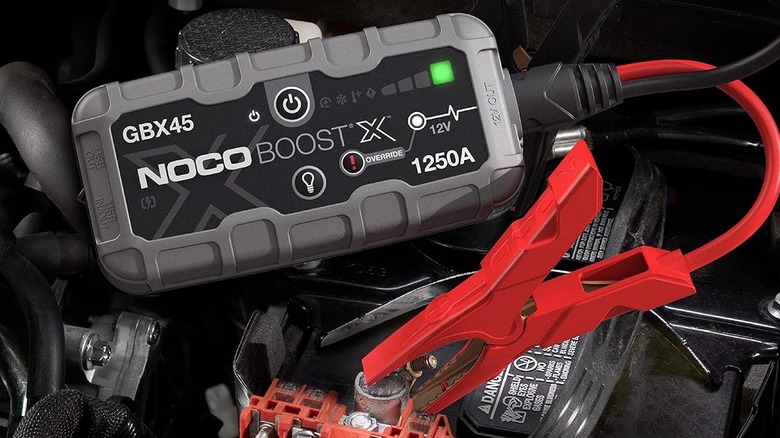
If you live in a colder climate, it's a good idea to have an emergency tool that can jump start your vehicle after it's been sitting for a couple of days. Cold temperatures can limit your car battery's ability to start the engine, and if you don't have another car or jumper cables at your disposal, then a rechargeable jump box is the perfect tool to have on hand for single vehicle jump starts. Priced at $124.95, the lithium-powered Noco Boost X GBX45 is the perfect device to do just that.
This device is small enough to keep in your trunk, yet it's powerful enough to provide up to six jump starts on a single charge. As Car Magazine notes, it's "no bigger than a house brick, and could easily live in a glove compartment". Noco says that this device is suitable for most gasoline-powered cars and smaller diesel engines, and for larger vehicles, Noco offers a whole range of battery-powered starters.
8. Water Filter
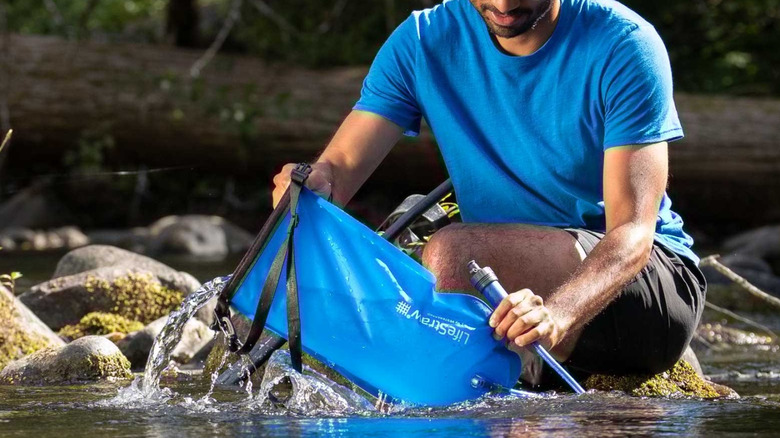
When it comes to survival, the rule of threes states that you can go three weeks without food, three days without water, and three minutes without air. Assuming you can still breathe during your emergency, you'll need some sort of water security. The CDC recommends you keep three days' worth of water for emergencies, at one gallon per person per day. While bottled water is cheap, even for a modest family, that's a hefty amount of storage space to give up.
As an alternative, if you have a water source nearby or a way to capture your own water, the LifeStraw Mission is a gravity fed system able to provide clean drinking water for all the family. Simply fill the bag from a water source, hang it up from a hook or tree, and use as needed. The LifeStraw Gravity is available from $113.43 in a 3.1-gallon capacity, rated for a lifetime of just under 5,000 gallons, with a flow rate of around 3 gallons per hour. The LifeStraw Gravity takes up a lot less room than a case of water bottles, and it is one of the few filters that can also remove plastic microparticles and viruses. Aside from its steep price tag, the only downsides seem to be experts noting the somewhat confusing hose system and slow flow, but these seem rather minor if you are truly dealing with water emergency.
9. Hand Crank Radio
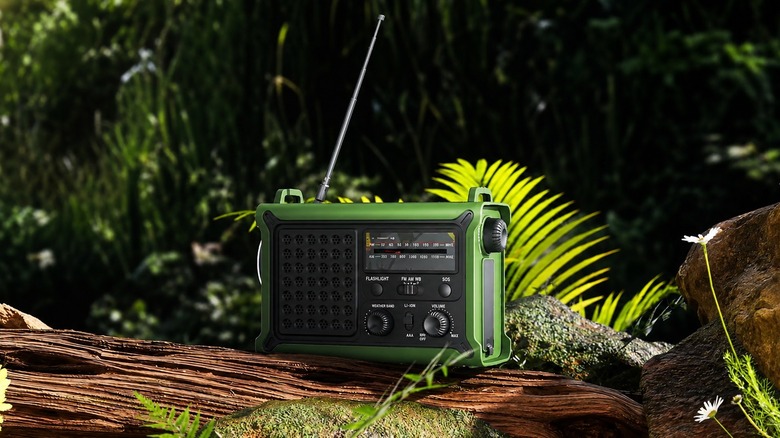
When all else fails and the internet is down, you'll likely find news and weather updates on a good old-fashioned radio — even better if it can receive the NOAA frequencies for round-the-clock information. The Mesqool Hand-crank NOAA radio, available on Amazon for $53.99, isn't just a radio, though. It has a flashlight on the side and a reading lantern on top, and its 12,000mAh battery keeps everything running. If you only buy one gadget for your emergency preparations, it should be this.
You can charge up again through USB-C, solar, and even a hand-crank on the side. You can keep your other USB gadgets charged from it, too, though you may find out the actual power output of a human arm is woefully inadequate. FM, AM, and NOAA broadcast bands are covered on the radio side of things. Still, if you know there's bad weather on the way, don't forget to enable these useful emergency features on your iPhone first.
Methodogy
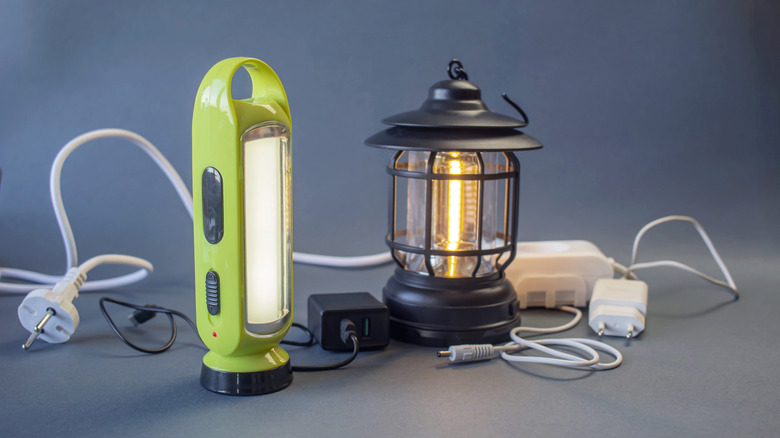
In selecting these products, we've tried to cover a broad base of common emergency needs: water, power, light, and information. You might also consider loading up an offline survival guide that can fit in your pocket. All products listed above have been backed by expert reviews and favorable user reports, and as a keen "prepper" myself, the products I've selected are nearly all those I've got hands-on experience with; some have already proven their worth in real world emergencies. Others I've thankfully had no need for yet, but testing has demonstrated they'll be useful when the time comes.