

Fitness Bands Vs. Smartwatches - Which Is Best For You?

If you're looking for a convenient way to track your fitness and health, wearables are a great way to do so. With them, you can document your daily activity to help you reach your goals and form better habits. While they're often lumped together, fitness bands and smartwatches have some key differences and fulfill different purposes. Fitness trackers from brands like Fitbit, Amazfit, and WHOOP are centered around logging workouts and measuring key health metrics like heart rate and blood oxygen level.
By design, smartwatches have far more utility than even the most advanced fitness bands. They're meant to act as an extension of your smartphone, providing a convenient way to check notifications and access things like Google Gemini smartwatch features. That said, there is a lot of overlap between the two. Most smartwatches have comprehensive exercise and health features, while many fitness trackers have communication features. Neither is inherently better, which means the choice between one or the other comes down to what you want out of your device.
Fitness bands excel at one thing
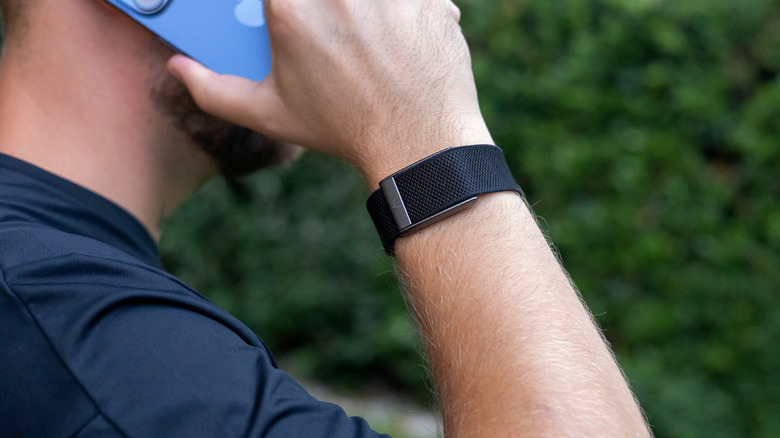
Fitness bands are ideal if all you want is a convenient way to track your workouts and health. If you want to minimize distractions, models like WHOOP, Google Fitbit Air, and Amazfit Helio Strap don't even have screens. For those on a tight budget, fitness trackers are generally cheaper than smartwatches, with options like the Google Fitbit Air and alternatives you can check out for under $100. Even well-reviewed ones like the Amazfit Band 7, Samsung Galaxy Fit3, and Xiaomi Smart Band 10 will only set you back around $50. There are budget smartwatches out there, but you'll probably be happier with a $100 fitness tracker than a $100 smartwatch.
There are some things to keep in mind when shopping for a fitness tracker. If you're considering buying a Fitbit, you should be aware that a lot has changed since Google's acquisition of the company in 2021, and not for the better. Fitbit users can't stand the latest update, replacing the Fitbit app with the AI-centric Google Health. Even before that, many felt the brand was declining, including a Reddit user who said they switched to Garmin after a decade with Fitbit.
Additionally, some fitness tracker brands lock features behind a subscription fee. In cases like Fitbit and Garmin, you might not need a paid plan if you only care about the basics, and it can be worth the price for extra details. However, some are completely useless without a subscription like WHOOP, which starts at $199/yr. That first year's fee does include the device itself, but keep in mind that, if you cancel, your fitness tracker will become an expensive bracelet.
Smartwatches are versatile, but distracting
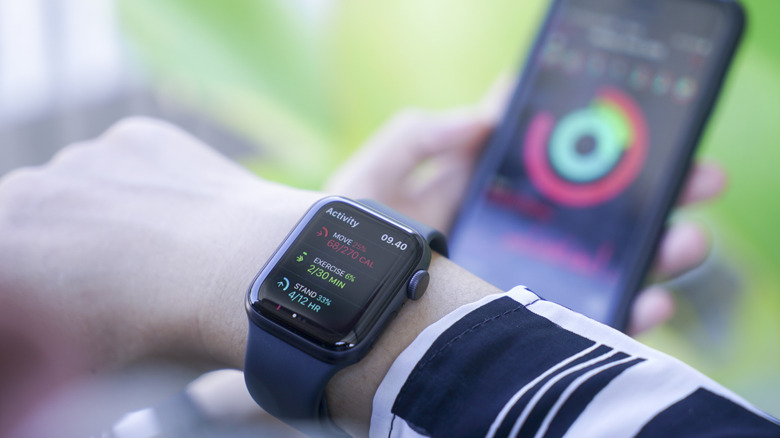
Smartwatches have far more functionality than fitness bands, being able to do most things your smartphone can, albeit on a much smaller screen. Options like the Pixel Watch and Apple Watch are no-brainers if you're already in that ecosystem, as they're designed to connect seamlessly to your other devices. Of course, while smartwatches can be great for productivity, they can also be incredibly distracting and aren't ideal for those who want to focus and disconnect during their workouts.
At the same time, many smartwatches come with safety features you may not have realized existed. The Apple Watch's heart rate monitor alerts and fall detection have been literal lifesavers during health emergencies and accidents, and its Backtrack navigation feature is great for hikers. That alone might make a more expensive smartwatch worth the cost over a fitness band, particularly for seniors and those who frequently exercise outdoors.
Additionally, because smartwatches do more than track workouts and biometrics, they're less beholden to subscriptions. You might find the deeper insights and workout libraries you get from services like Google Health Premium or Apple Fitness+ useful, but your device won't lose a huge chunk of its functionality if you don't want to add another monthly or annual charge.