

The Fitbit Air's First Major Update Fixes Its Most Annoying Issue - But There's A Catch
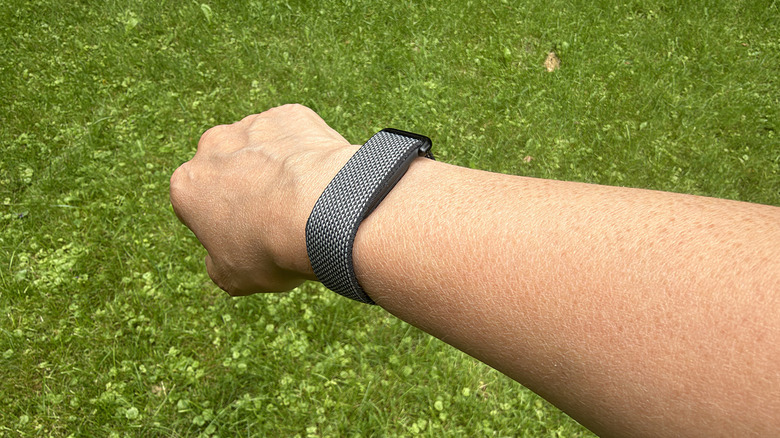
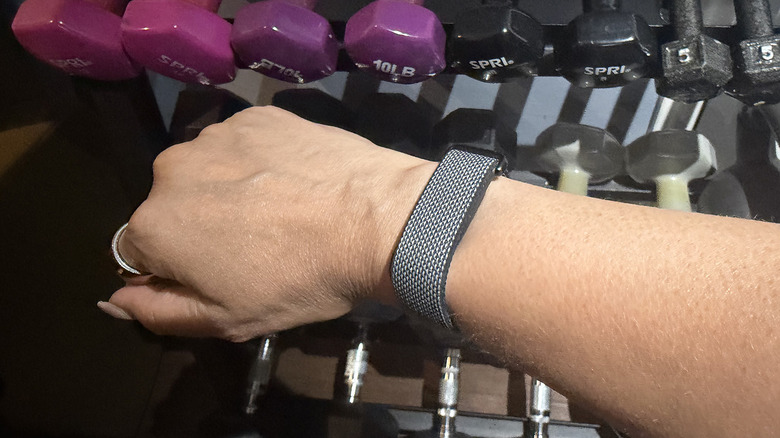
The Fitbit Air only just launched at the end of May, but its screenless design and the upgrade to the Google Health app are enticing shoppers who understand what it's all about. Screenless fitness trackers eliminate distractions on your wrist, passively tracking activities, vitals, sleep, and workouts in the background while you go about your day. While you can initiate a workout from the Google Health app, the tracker can also automatically detect when you're exercising or doing a common activity like walking, running, or rowing, and log the data accordingly through a feature called automatic workout detection.
However, some users have found that it inaccurately labels many workouts. That can be frustrating for those who don't want to rely on their phones every time they're about to exercise and want to accurately log what they have done. Thankfully, the first major update for the tracker promises to fix this, with one caveat. The update will not work if you're still using the old Fitbit app. While the required transition to the Google Health app must be made by July 15, 2026, if you want to get the best experience now with all the latest bug fixes, you need to update your app now.
How to update Fitbit Air
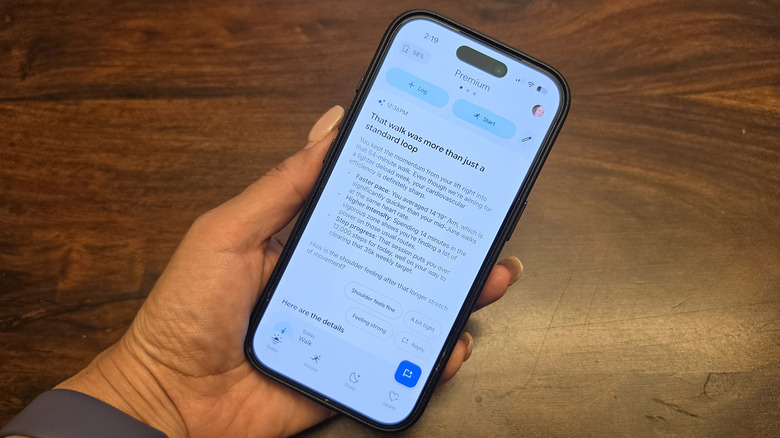
When you log into the Google Health app, you should receive a notification once the update is available, noting that it offers bug fixes and "general improvements." You may not see it right away, as it's rolling out slowly. I'm based in Canada, for example, and don't see it in my Google Health Premium app just yet. Once it appears, click on the banner and let the update run, ensuring your tracker is close by your phone, and the tracker (and your phone) has sufficient battery life.
If you are still hanging onto the old Fitbit app for dear life, however, now is the time to switch. You won't be able to get these firmware upgrades without it. Even though support doesn't lapse until July 15, 2026, you're better off switching to Google Health now to ensure no interruption to service and tracking, and to benefit from these bug fixes.
This also means that if you're one of the people who has opted to sideload other versions of the Fitbit app to your device, this strategy won't work anymore. At least not if you want to benefit from the updates. That said, Google Health offers a cleaner, more colorful interface. You also get advanced tracking and tons of AI-powered features and coaching guidance when you sign up for Google Health Premium. Without Premium, it's a pretty simple view with minimal information, similar to the Fitbit app experience without Fitbit Premium.
Auto-tracking should improve
The Android and iOS firmware update includes many improvements and bug fixes. It adds split runs to runner summaries, improves map load times, and addresses incomplete data being exported from exercises when you use multiple devices or other apps alongside Google Health. There are improvements to how the app responds if the device loses connection during a live exercise, and ones relating to nutrition and calorie tracking, missing Sleep Scores, Ask Coach upgrades for Google Health Premium subscribers, and more.
The most talked about fix, however, corrects inaccuracies with automatic exercise tracking. I find that auto-tracking is always accurate for walking, but others have noticed that it might track a run as a general workout instead of recognizing the specific activity. That's an issue for a device like the Fitbit Air where the screen-free experience is one of its main advantages over a smartwatch if you don't want distractions. Since you can't log a workout from the device itself (there's no screen!), you want reliable auto-tracking.
Otherwise, you need to open the app every time you're ready to go for a run or hop on the treadmill, select an activity, and manually start and stop it. Google says it's working to add more exercises to the list for automatic detection. The feature already purports to get smarter and more personalized over time, learning the exercises you commonly do to better recognize them. Hopefully, this update makes automatic activity tracking both more personalized and more accurate.