

OnePlus Vs. Samsung: Which Smartphone Manufacturer Is Best For You?
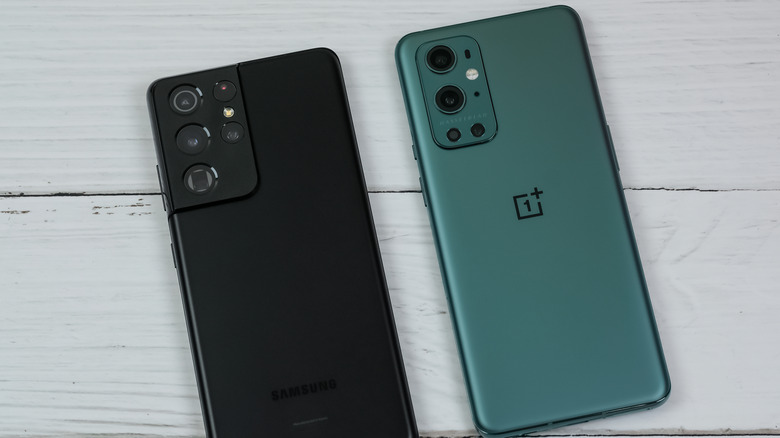
Samsung and OnePlus are among the top smartphone manufacturers globally. While Samsung tends to take the cake by popularity, OnePlus doesn't usually fall too far behind. That's mainly because OnePlus has plenty of unique features to love despite its comparatively smaller market size.
For example, over the last few years, the OnePlus R series has historically competed against flagships, offering great battery life and processing power, all without being too steep a price. Today, the OnePlus 15R, while a decent phone in its own right, has still received a more mixed reception than the previous OnePlus 13R; you'll often encounter headlines like "where did it all go wrong?" or simply reviewers expressing disappointment or a lack of confidence in the phone despite its high potential. While these phones are excellent to own, it still has notable flaws.
Whereas Samsung has usually been consistent, partly because it has a large family of phones, from expensive foldables to budget to respectable mid-range devices, along with its top-of-the-line Galaxy S series. Samsung has earned a reputation for selling a phone for literally anybody at various price points. But that's not the only reason why people resonate with the Korean manufacturer — they offer strong software support and security that consumers love. So when it comes to OnePlus versus Samsung, you can't go wrong with either, but Samsung still stands firmer at the top, globally.
Mobile photography is vastly different
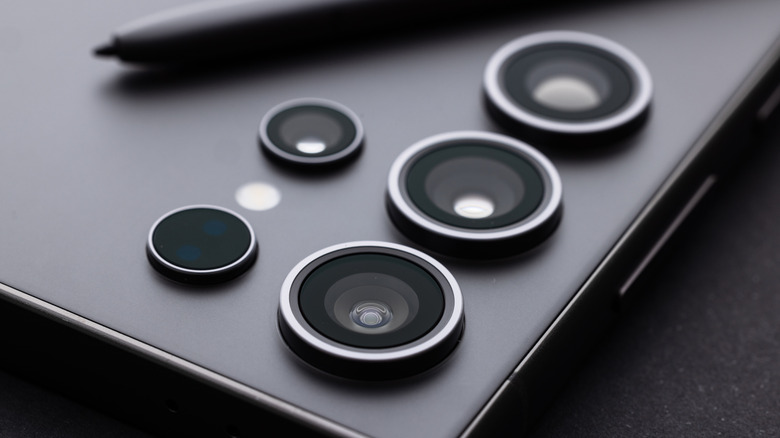
One cool perk of OnePlus is its strong potential in computational photography, thanks to its five-year Hasselblad partnership, focusing on natural color calibration. But that partnership has since ended (note that Oppo is still partnered with Hasselblad); now OnePlus relies on its proprietary in-house imaging engine, the DetailMax Engine, which has a different focus from the Hasselblad partnership.
DetailMax is present in OnePlus 15 models, so it's still relatively new compared to the long-term partnership with Hasselblad — it focuses more on realism and technical clarity rather than stylization and color tuning/feeling. Even with OnePlus making headway on the computational side, though, these cameras lag behind Samsung's overall hardware — and Samsung, while not always the best in this area, has at least been one of the most consistent in mobile photography across the industry.
Of course, Samsung's camera experience will largely depend on the phone you buy — don't expect an A-series phone to make a strong impression with your photos. However, if you're comparing it to Samsung's Ultra line, you're generally going to get a really good experience, simply because it has the hardware to back it up (decent sensors and lenses) and great software to correct them. Plus, in terms of zoom capabilities alone, Samsung's telephoto lens is one of the best.
OxygenOS and One UI are completely new experiences
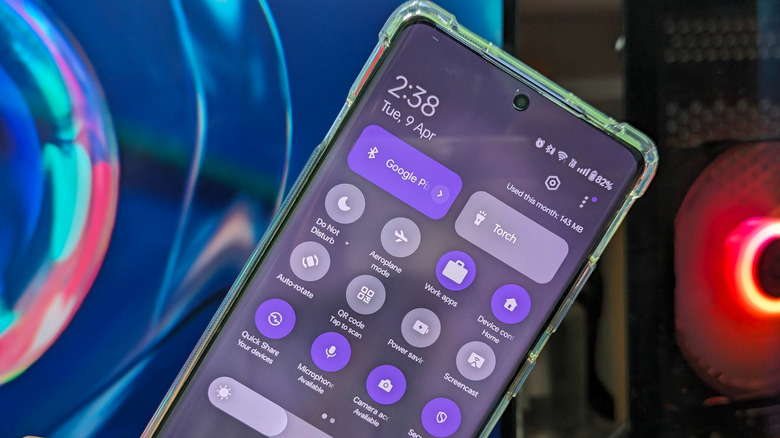
If you want a cleaner, more minimalist experience, neither OxygenOS nor One UI is the best pick — even if, once upon a time, OxygenOS had a reputation for being minimalist-friendly, with its skin much closer to Android stock — until the company later merged with Oppo (OnePlus, Oppo, Vivo, IQOO, Realme operate under BBK Electronics), where its design philosophy shifted. ColorOS and OxygenOS are still two distinct Android skins, but they do share a foundation, sharing the same underlying base code.
According to an industry insider at Smartprix, this will eventually change , with all three brands (OnePlus, Oppo, Realme) under the same umbrella officially running ColorOS. And if you look at the last of OnePlus' legacy, OxygenOS looks eerily similar to iOS, so one might be worried that the brand's identity has already diminished. That isn't to say that there isn't still a lot of love for OxygenOS, though. The Android custom skin features quick launch that opens specific apps on the lock screen, Open Canvas for multitasking, and upgraded theming with Flux themes 2.0 in OxygenOS 16. In general, it also contains less bloat than One UI and offers fantastic responsiveness between menus.
On the other hand, Samsung's One UI does have advantages, especially for power users. For one, the customization options for One UI Home are great. Plus, if you want a little extra control over sound mixing and gestures, you can find a Good Lock module that tweaks them. Samsung DeX also does a good job of switching your phone's layout when it plugs into a monitor, letting it function like a desktop as well.
Samsung remains the top choice for U.S. consumers
As tech prices keep rising and wages aren't necessarily keeping pace, you have to consider which product will give you the biggest bang for your buck. Only one of the two companies remains reliable in the long run, and that's Samsung. OnePlus is already leaving the U.S. market behind, leaving some disadvantages to buying a OnePlus smartphone as a long-term investment. You can't get in-person support for repairs, and the software longevity remains questionable compared to Samsung's seven years for Galaxy S devices and some Galaxy A series devices, which get at least six years of both security and software updates.
And considering rising costs of electronics, it might even be worth holding on to these devices for a few extra years rather than pushing for those annual upgrades. As of this writing, the latest OnePlus phone, the OnePlus 15, only guarantees four years of major Android updates and six years of security — which isn't terrible. Still, if you were to move back to last-gen, those four years now amount to a little over two years of mileage; that's likely not nearly enough time to make a decision for your next purchase.