

5 Disadvantages Of Buying Smart Glasses In 2026

The era of smart glasses is here — sort of. Meta's glasses have been very successful over the past few years despite privacy concerns, and several players have been releasing their own versions. However, unlike smartphones, smartwatches, or even headphones, smart glasses are not obvious technology advancements that everyone should jump to buy. Most people don't even need glasses in the first place, and others just feel uneasy when there's someone with recording glasses in front of them. Additionally, not every company realizes what the true capabilities for smart glasses are. Most of the time, it feels like they're trying to bring a solution to a non-existent problem.
During IFA 2025, there were a large number of companies introducing white-label smart glasses. They all had comparable functionality, 12MP cameras, and similar battery life. Some players have become more interesting than most of the market — like Rokid, L'Attitude, and even XGIMI with its new MemoMind brand – thanks to bold designs, unique features, and more R&D investment. But there are still major disadvantages to buying smart glasses in 2026. It's not that these companies aren't doing a great job with their offerings; the products themselves just haven't figured out what they're supposed to be. Smartwatches, for example, took a while to go from luxury items to everyday fitness devices. On the other hand, smart glasses currently feel like they're currently in an identity crisis.
Not useful for everybody

Marketing exists for a reason: to convince people to buy new products. However, how can you be convinced to use smart glasses when you don't need prescriptions? Sure, you can add sunglasses options, but when you just have an inner display on a regular lens, what's really the point? Besides that, what makes smart glasses interesting is when they're fashionable, which was a big appeal of the XGIMI's MemoMind One. As another example, one reason why Meta's Ray-Ban glasses are popular is because you can forget that they're smart glasses. It's easy to see them as just cool Ray-Ban models with extra flair.
Still, that doesn't mean much if you think you'd get uncomfortable with them sitting on your nose for hours. And that's not to mention how they all feature a battery which stays by your ears and needs to be regularly charged. Besides that, even if you're required to wear glasses all day and you decide to make them smart, you can still have problems if you require complex vision correction. Your lenses might have to be bigger, the brand might not support your astigmatism or other conditions, and you might also be limited to certain frames and styles. Take it from me; I was super myopic with eyes of different degrees. It's definitely not a beautiful experience, and making my glasses smart wouldn't have helped me at all.
Poor performance
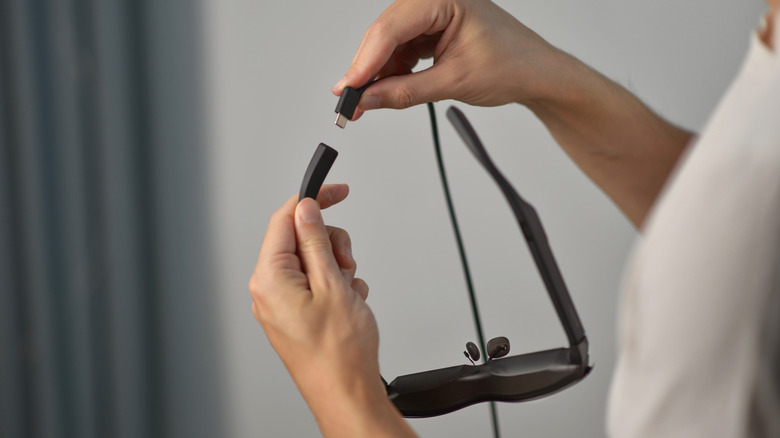
To make smart glasses usable, they can't be too heavy. Usually, they weigh around 35 to 50 grams. With limited space for powerful processors, batteries, cameras, and sometimes inner-displays, companies need to make decisions. For the MemoMind, XGIMI decided to go with smart glasses without a camera. With that, you avoid privacy concerns, but you also save battery by not having a demanding task happening all the time. If you want to have a camera, audio, AI, smart display, and automatic data transfer, then you'll be trading battery life, which could make the experience unsatisfactory.
On top of that, most of these smart glasses rely on a smartphone to connect them to a cloud for AI features, to answer web questions, and to push data from your device. Their built-in processors aren't powerful enough to do those tasks by themselves or work at comparable speeds to your phone. Smart glasses are basically like having a smartwatch with slower performance and fewer features available. Thus, early adopters need to have patience for most of the tasks they might want their glasses to perform.
Lack of features (and purpose)
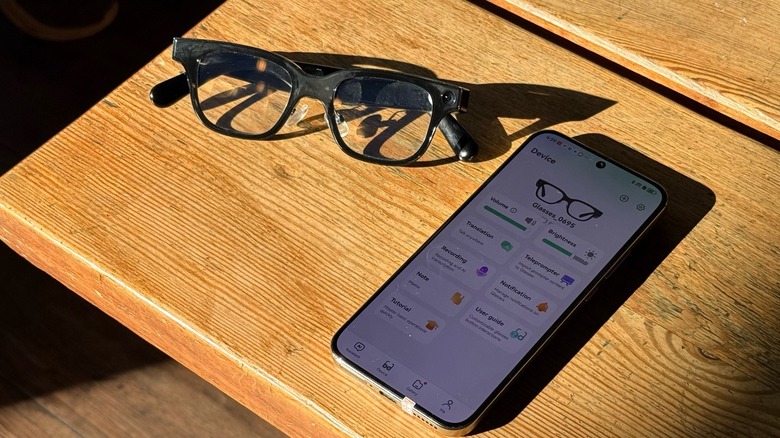
There are still a few things smart glasses can currently do on their own. They can perform live translations, work as teleprompters (if they have an inner display), take photos and record videos (if they have a camera), play audio (if they have speakers), share notifications, and use AI. For anything more demanding than all that, they'll heavily rely on your phone. While the experience with smart glasses AI is greatly improving, the truth is that we still don't know where it's going, how most companies process the data we give to it, and even for how long it will stay "free."
Besides that, in a real-world scenario, you don't keep live translating everything every time, you don't use a teleprompter to talk to your friends, and you're probably listening to music with your AirPods. If you need to reply to a message or take a phone call, you need to use your phone. To have an in-depth look at information, you need a (bigger) display, and if you're working out, you need something else to track your health data. In 2026, smart glasses just don't have a lot of use on their own. It's better to have a good phone around than to keep people carrying yet another accessory that they need to turn on and connect to their device.
Privacy concerns
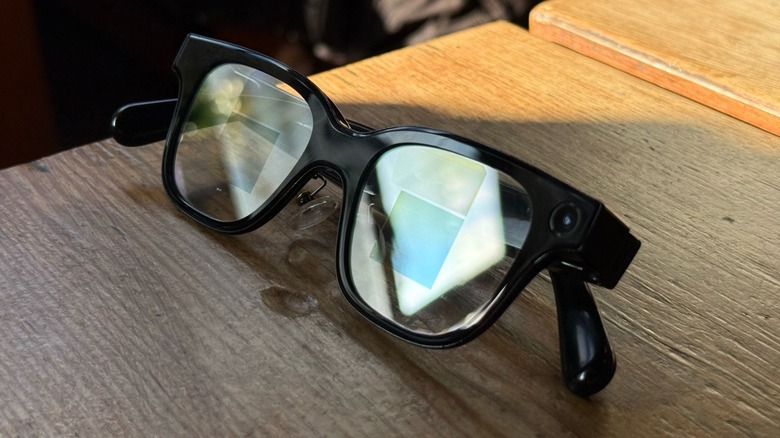
People have become a lot more chill about other people with cameras around them. You might see people taking pictures of your food or recording long-form videos. Still, these images and recordings are taken on phones, which have been around for decades now. Smart glasses are still new, and there are situations where it can be very different, especially because most of their models have image and audio recording capabilities.
With a phone, everybody knows what the gesture is when someone is recording you. With glasses, though, it's not as straightforward. Smart glasses cameras aren't exactly easily noticeable, and you might not necessarily realize that someone is recording your audio with their glasses. Then, if the privacy concern is not big enough regarding how you interact with people around you, there's the question of where your data actually goes.
Can you tell if all those companies — from the brand-new ones to the more well-known players — are storing all your information securely, without selling it to third-party companies? Or that your images aren't being analyzed by real people on the other side of the world (or, sometimes, in your own neighborhood)? This AI boom has been all about collecting data first and asking for permission later. Smart glasses follow the same rule, and having more of that isn't exactly a good thing.
Major players haven't joined yet
Last but not least, another disadvantage of buying smart glasses in 2026 is that not all major players have joined this market — and we're talking specifically about Apple. The company was responsible for shifting the phone industry, the earbuds industry, the tablet industry, and the smartwatch industry. The company also had the chance to disrupt mixed-reality headsets in the same way, though it seems like the Apple Vision Pro didn't go very far in the end.
Rumors suggest that Apple is planning to join the smart glasses race in 2027. Besides Apple, Samsung and Google have recently previewed their new Intelligent Eyewear, which has been created in partnership with Gentle Monster and Warby Parker, but it's still unavailable. OpenAI is also expected to create a few hardware products in the coming years, and judging from the designers and engineers it hired, smart glasses could be one of its new devices.
Regardless, these major players are still experimenting with these new technologies; many of them aren't even officially confirmed. For now, we have a market filled with one very successful product made by Meta and several other brands that are just trying to copy its style. Once bigger companies join the race, more options will be available, and they might bring a better direction for a category that's still trying to understand where it should actually go — or if it should even exist at all.