

5 Disadvantages Of Buying An AMD GPU Instead Of Nvidia
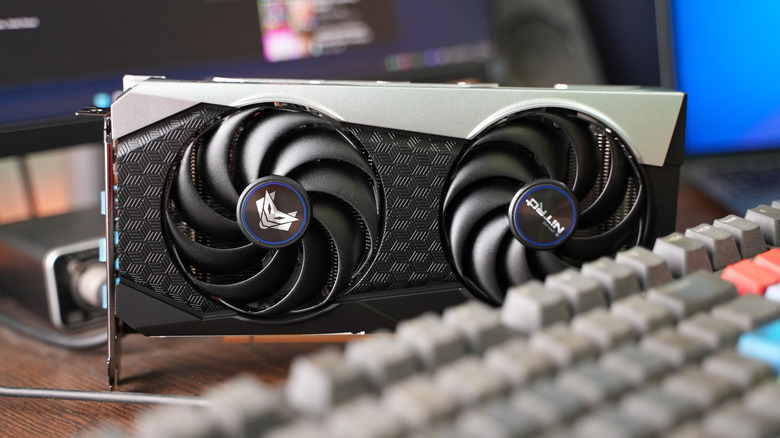
Even though AMD has improved its graphics cards in recent years and reduced the gap with Nvidia, its models still have some disadvantages. Competition between the two manufacturers has become tighter, with Radeon GPUs no longer serving only as cheaper alternatives and now competing in several price ranges. AMD has heavily invested in improving the architecture of its graphics cards, as well as energy efficiency and features like upscaling and ray tracing. These changes have helped narrow the gap that existed with Nvidia.
So it's not uncommon to see value-focused builds recommending an AMD model as one of the cheaper GPUs that compete with Nvidia, proof of how much the company has improved in recent years. Still, even though the dispute between the two has become more balanced, that does not mean they match each other in every way. Nvidia remains ahead in specific areas, especially in the use of technologies that improve game performance. For that reason, we separated the main disadvantages of choosing an AMD graphics card instead of an Nvidia one.
AMD lacks a high-end GPU to rival the Nvidia RTX 5090
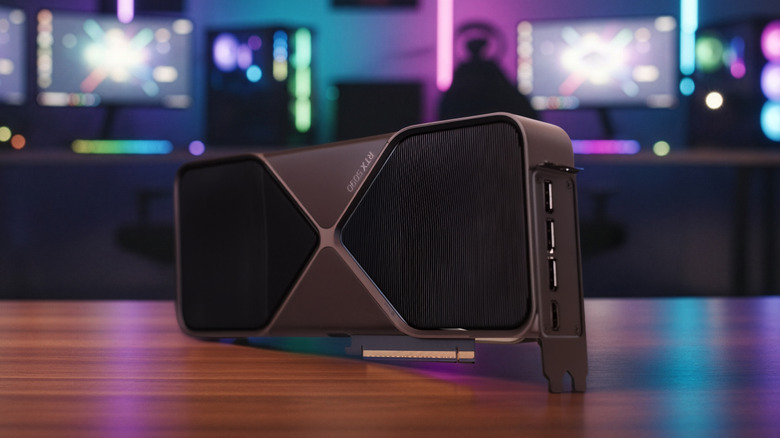
One of AMD's biggest disadvantages is that it currently doesn't offer an option that competes with Nvidia for the strongest graphics card on the market. This means that if you choose a model from the brand, you may get lower performance in more demanding games, especially if you want to play in 4K. This is part of a strategy change, since AMD itself explained (via Tom's Hardware) that its priority is reaching a larger number of consumers instead of chasing the most powerful GPU title.
So, while the RX 9070 XT tops out the RDNA 4 architecture with 16GB of RAM, it only comes with a $599 price tag. Meanwhile, the GeForce 50 line goes up to the RTX 5090, and sells for $1,999 – a price that has landed it among the Nvidia graphics cards users say to avoid. Some rumors suggest that AMD considered a possible RX 9080 XT for this gap, but discarded the idea internally. For most games, AMD cards can work well in 1440p and 4K in some titles, even with ray tracing or other features enabled. However, for more demanding games, having an RX card also means accepting a lower performance ceiling.
Radeon ray tracing performance still falls behind Nvidia
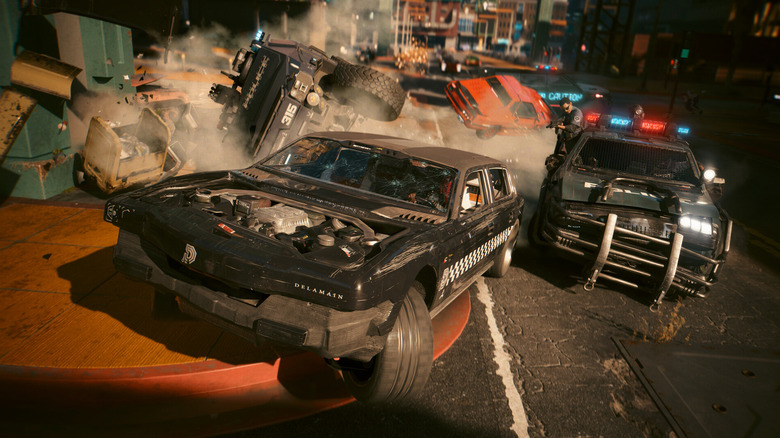
Since it launched RDNA 4, AMD has managed to reduce the gap in Ray Tracing quality and performance compared to Nvidia, but not completely. Some tests show that, when using an RX 9070 XT in heavier scenarios, the advantage of an RTX can exceed 30%, even with intermediate Nvidia cards. Several games usually offer better optimization for GeForce RTX hardware, such as "Black Myth: Wukong". In 4K with ray tracing and upscaling enabled, the RTX 5070 beat the RX 9070 XT by 38%, while the RTX 5070 Ti opened a 78% advantage over the Radeon in that same scenario.
The same applies to "Doom: The Dark Ages," where the RTX 5070 Ti ran at 31 frames with path tracing, which isn't great, but it was still 63% better performance than AMD's version. In other words, although AMD has improved a lot in this scenario, buying an RX line graphics card can be a disadvantage for anyone who prioritizes graphics. Several games today rely on Nvidia technologies to offer better lighting in scenarios, so more demanding users will notice a clear difference between Nvidia's best GPU features and RDNA 4.
Missing out on DLSS

The biggest dispute between the GeForce and RX lines today involves the features they offer, with Nvidia taking the advantage in upscaling. The company has consolidated an ecosystem with more than 1,000 games compatible with some DLSS technology, including image reconstruction, lighting, and frame generation features. These often arrive first or exclusively on RTX cards, which could be a significant disadvantage for anyone who with an AMD graphics card.
"007 First Light," for example, arrived on PCs without updated support for some technologies, such as FSR or XeSS, relying heavily on Nvidia's DLSS package. IO Interactive included support for DLSS 4.5 Ray Tracing in the game, deepening this gap, since the feature works on any RTX card since the 20 series. Even though AMD offers alternatives for users on its GPUs, such as FSR Frame Generation and Ray Regeneration, this availability usually varies a lot according to the graphics card and the studio's effort to add them to games. So, even when raw performance is better, an AMD RX can be less versatile than Nvidia's GeForce.
Unstable driver updates remain a headache for AMD users
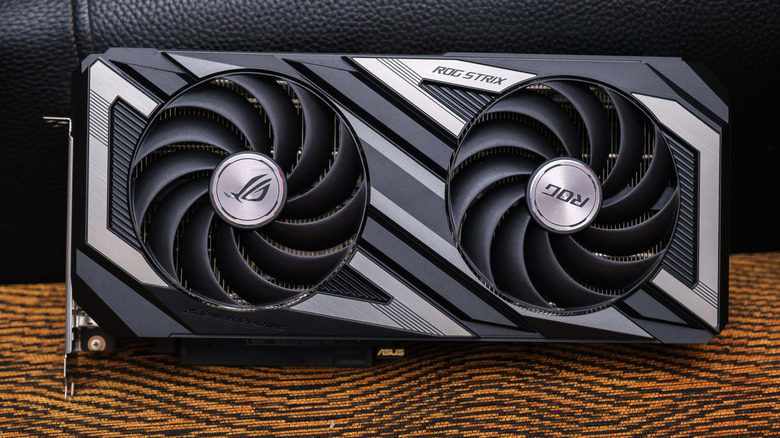
Anyone who has followed the GPU market for long should remember well that the chance of a problem happening when AMD released a new driver was high. Although this has improved a lot in recent years, some occasional instability updates still happen. This is not exclusive to the red team, since Nvidia also goes through problems like this, but those affecting Radeon cards tend to happen more often.
One example happened in June 2026, when the Adrenalin 26.6.2 driver would bug out if used on Windows 10, leaving the graphics card with a yellow warning in Device Manager and requiring users to roll back to an older version until AMD found a solution. The problem is that, for some users, the next version, 26.6.3, also came with some update issues. Enabling FSR 4 while playing "Helldivers 2" on a Radeon RX 7000 or 9000 card could crash the game. So, if you value keeping all your drivers updated, having an AMD card can be a disadvantage, since many users recommend waiting a few days before installing the new driver.
The AMD value advantage often disappears at retail stores
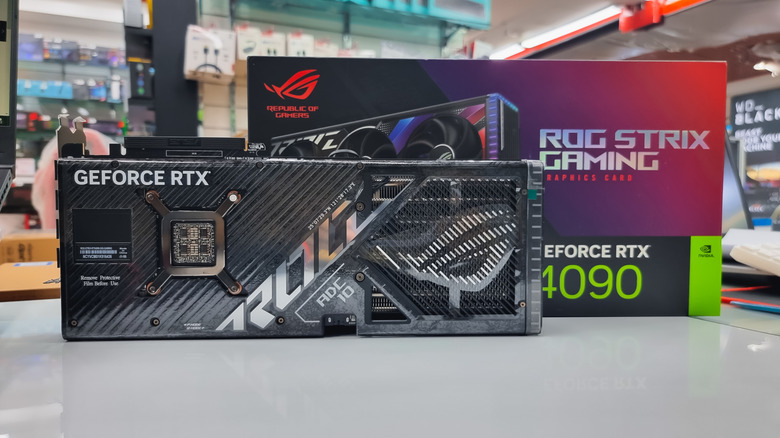
One of AMD's biggest draws is price because you can pay less than half of what you would for an RTX line flagship and get acceptable performance. While these GPUs are more powerful than a PS5 Pro, the suggested prices almost never match what stores charge. The 9070 XT, for example, appeared for sale at higher prices even with a $599 price tag.
This becomes a problem because a Radeon's selling point is supposed to be that it costs significantly less than an RTX. If that gap shrinks, you end up paying a similar amount and still need to accept losing some performance when using ray tracing. Although price inflation is not exclusive to Radeons, since Nvidia can also go through it, it can affect AMD's value perception more easily. So, before buying a GPU, it is important to research prices instead of assuming that AMD automatically offers the same value for money.