

5 Dystopian '70s Sci-Fi Movies That Don't Get Enough Love From Modern Fans

Great sci-fi movies come in all shapes and colors — whether that's space operas like "Star Wars" or time travel flicks like "Back to the Future." However, if you're looking for films that get under your skin with their nightmarish depictions of the future, dystopian flicks are hard to beat. The '70s were a golden era for bringing dystopian nightmares to the screen — and some of the films deserve more recognition in modern times.
While dystopian movies often feature concepts that seem otherworldly, many deal with themes that hit close to home. From totalitarian governments to technology gone awry, they warn us of dangers that don't seem so far-fetched in the real world. This was especially true in the American dystopian fare of the '70s, which reflected the anxieties of a society burdened by wars and political corruption scandals.
The films of this list channel the concerns of their era, yet some of them remain topical in the present day, as their anxieties feel one step closer to becoming a reality. So, without further ado, here are five great movies that will make you feel cynical about the future.
THX 1138 (1971)
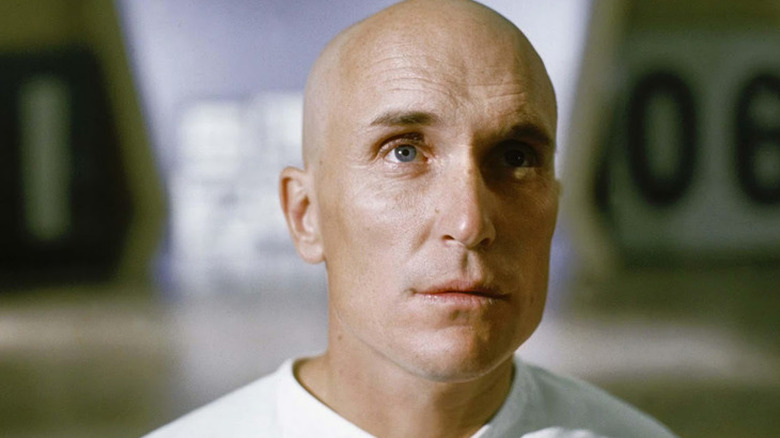
Before George Lucas took us to a galaxy far, far away with "Star Wars," he directed and co-wrote this underappreciated sci-fi flick from 1971. However, "THX 1138" is unlike Lucas' beloved space opera franchise, as the film forgoes popcorn thrills in favor of an Orwellian story with an art house flavor.
"THX 1138" takes place in a future where everyone is bald and a totalitarian government controls the population with sedatives that suppress emotions. Physical intimacy and procreation are also forbidden, so when THX (Robert Duvall) gets jiggy with LUH 3417 (Maggie McOmie), he finds himself in trouble with an android police force he helped build.
Lucas' first feature-length is light on exposition, giving the film a cold and detached quality that complements its story of a society being controlled like slaves. Lucas continued to explore similar anti-authoritarian themes in "Star Wars," albeit in a more rousing and inspiring manner. The galaxy far, far away is arguably Lucas' greatest cinematic achievement, but "THX 1138" is still a '70s sci-fi film that deserves to be seen at least once.
Logan's Run (1976)
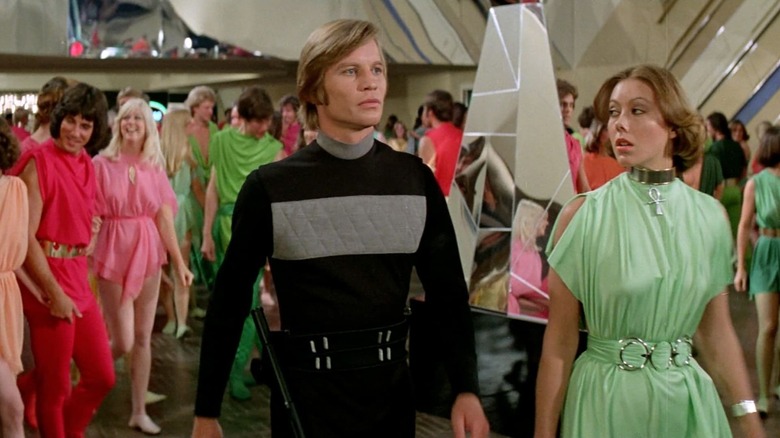
Most of us hate the thought of growing old, but it's good to have the option. Director Michael Anderson's "Logan's Run" imagines a computer-ruled society where everyone is executed when they turn 30, so they can't grow old, even if they want to. What's more, anyone who tries to escape from the totalitarian regime is hunted down by assassins known as Sandmen, so death is inevitable either way.
Sci-fi often depicts dystopian societies as strict places where fun is outlawed, but "Logan's Run" takes a different approach. This universe embraces hedonism, with citizens spending their days getting buzzed and hooking up as they (somewhat unknowingly) await their inevitable dooms. If AI-controlled totalitarian states must exist, they could be a lot worse than this one.
"Logan's Run" explores a variety of themes that make the film feel relevant today, including society's obsession with youth culture and the threat AI poses to humanity. Elsewhere, characters use remote control technology to find lovers — like Tinder, but much bougier. That might sound fun, but if "Logan's Run" teaches us anything, it's that we should settle for the dating apps we currently have — unless we want the robots taking over.
Rollerball (1975)
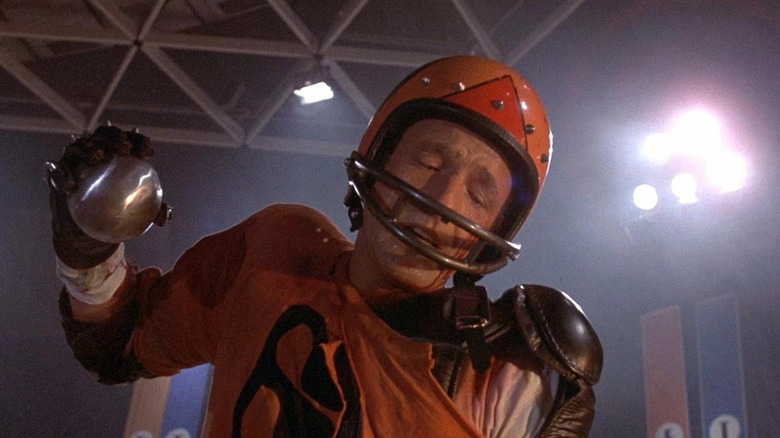
The popularity of boxing and MMA reveals that millions of people are entertained by violent combat sports, but could that be a slippery slope for humanity as a species? Such ideas can be gleaned from Norman Jewison's "Rollerball," a James Caan-starring movie about a sport where death is the norm.
The sport in question is a bizarre amalgamation of rollerskating, hockey, basketball, and motocross. The players also wear spiked leather gloves to kill their opponents with. Meanwhile, cannons launch balls hell-bent on destroying any unfortunate soul that gets caught in the line of fire. There's a lot to keep up with here, but the game entertains the masses nonetheless.
"Rollerball" is concerned with horrors like corporate overreach and violence as a form of entertainment, making it a perfect companion piece to "The Running Man" and "Death Race 2000." However, those movies bring a sense of fun to their dystopian nightmares, while "Rollerball" is more rooted in paranoia and nihilism. If you want to see a more action-packed take on the concept, though, check out the 2002 "Rollerball" remake starring Chris Klein, LL Cool J, and the nu-metal band Slipknot.
Punishment Park (1971)

Many dystopian flicks explore the concept of totalitarian police states, but few are as fueled by rage as "Punishment Park." Directed by Peter Watkins as a reaction to the Vietnam War, this false-documentary aims to be a realistic examination of what America might look like if the government took away everyone's civil liberties.
Unlike the other dystopian films on this list, "Punishment Park" doesn't take place in the distant future. The story reimagines America in the '70s as a fascist state where political dissidents and protestors are sent to the titular desert for opposing the government's actions. Their punishment? Being forced to embark on a journey through a perilous desert while being hunted by police officers.
"Punishment Park" is as politically polarizing as movies get. Watkins, never one to shy away from controversial subject matter, makes his stances clear, so it might not be for all viewers. Still, it's difficult not to admire a film that's this bold and uncompromising, even if you don't agree with its sentiments.
The Omega Man (1971)
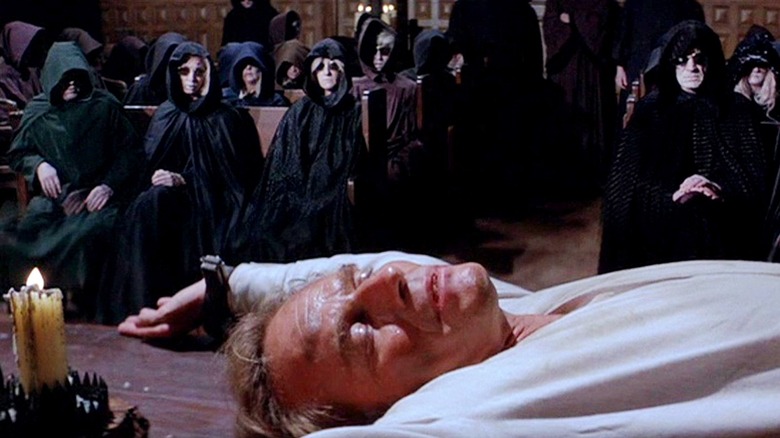
Will Smith and Charlton Heston starred in two different adaptations of the same post-apocalyptic novel. That novel is none other than Richard Matheson's "I Am Legend," which tells the story of the survivor of a plague that has devastated the planet and turned some people into vampires. Smith's film reimagines the creatures as zombies, while the Heston-led effort sees his character go up against nocturnal mutant cultists known as the Family.
The mutants are homicidal maniacs in "The Omega Man," yet they're also intelligent beings that can converse and mobilize. Heston's character is a scientist who developed a cure for the plague, and the mutants want him dead because they're ideologically opposed to everyone being saved. The story can be interpreted as an exploration of the conflict between science and those who deny it, which is an evergreen concern in the real world.
Despite its gloomy themes, "The Omega Man" is a fun dystopian nightmare that sees Heston's character drive around in muscle cars. What's more, there is enough dark humor throughout to provide some levity to the horror. This is arguably the best of all of the adaptations of Matheson's story, but they're each worthwhile in their own way.