

Do TP-Link Cameras Work With Google Home?
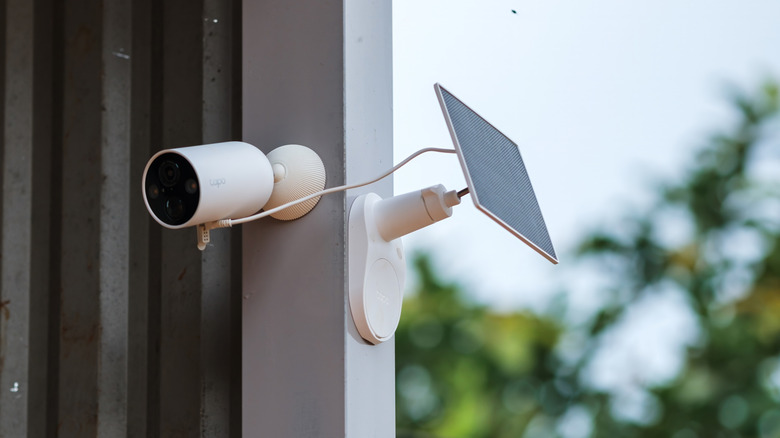
For any smart home setup, from smart video doorbells to security cameras, true versatility comes with open support for various ecosystems. Compatibility with voice assistants and services like IFTTT, Alexa, Apple's HomeKit, and Google Home also empowers automations, allowing you to achieve a host of actions. So, before shopping for a new device, it behooves you to know what works and what doesn't. Most of TP-Link's Tapo and Kasa cameras offer local storage support, with cloud as an option, subscription-free app usage, and some excellent resolution and quality features — like 2K to 4K video — but do they work with Google Home?
Yes, they do, and they also support basic voice commands once connected. You can tell Google to stream live feeds to compatible players, such as Chromecast. The easiest way to do it is to make sure your Kasa devices are synced in TP-Link's Tapo app, then connect to third-party services from there. Why? So that you have one unified app to control all your smart home devices, including cameras. But in the Tapo app, tap your profile icon in the top left, go to Third-Party Services > Google Assistant, and follow the instructions to link your accounts, if you haven't already.
Before you can use voice commands or Google Assistant to access your cameras, the accounts must be linked. I personally use Alexa to control my smart home devices over Google Assistant. However, I've tried both, including with a Tapo camera (Tapo C425), and you don't need any premium subscriptions. You may need to upgrade the firmware of your devices before connecting. TP-Link Tapo cams are some of the best security options that don't require a subscription.
What can you do with TP-Link cameras and a third-party service?
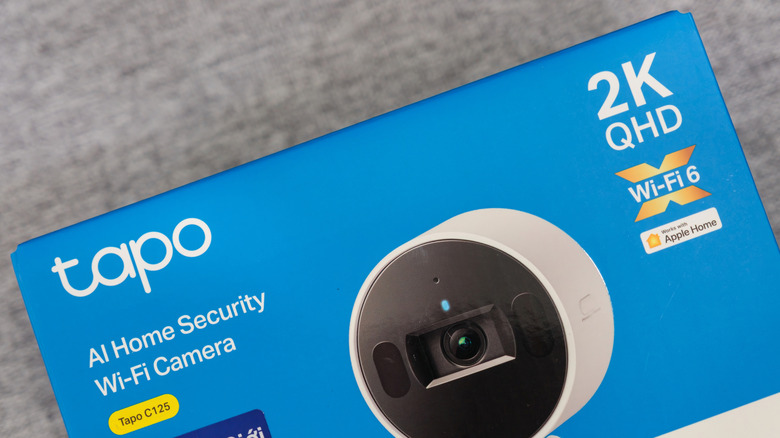
For voice commands, specifically, the only thing you can really do is display the live feed on a compatible media player. Those include Chromecast-enabled devices connected to your Google account and Google Nest displays. When you say the appropriate command, paired with the name you've given the camera, it will show the feed onscreen.
TP-Link has disabled the camera on and off voice commands for Kasa and Tapo cameras for security purposes. It makes sense; you don't want some stranger issuing commands to turn off your security devices, as that would allow them unfettered access to your home and property without surveillance.
As for what else you can do, from within the Tapo app you can set "smart actions," which are basically programmed automations. For example, you can turn off all Tapo devices when you leave home, or back on when you arrive, alternatively setting it to turn on your camera when you're away. You can then use IFTTT to activate these smart automations with voice commands through Google Assistant. However, if you're using IFTTT, the free tier only allows up to two applets at a time, albeit unlimited uses of them, and if you want more, you'll need a premium subscription. Smart design principles like this are part of the reason why Tapo cheap home security cameras punch above their price bracket. Local storage, no force-fed cloud services, no subscriptions, wide compatibility, and much more round out the list of features.
What about data security?
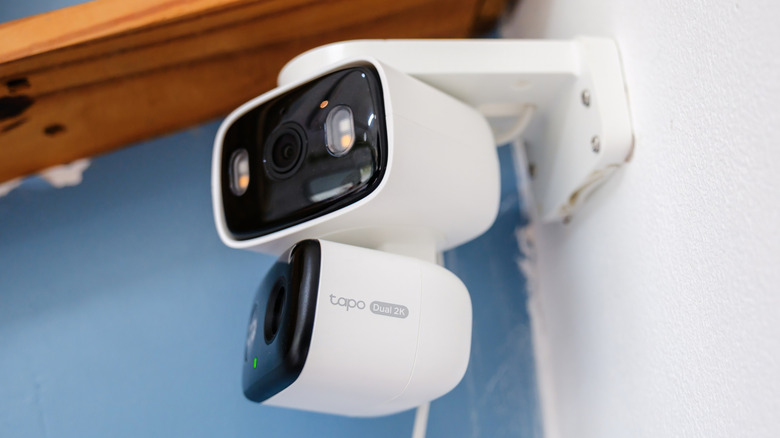
Given the parent company's ties to China and foreign router bans, including TP-Link models, it's warranted to question the data security of its largely digital security devices, like Tapo cameras. Even without cloud services active, there's the question of where all that live data is going. Can someone remotely watch your feeds around your home? While there are never any guarantees when it comes to cybersecurity and data as a whole, TP-Link routers are still safe to use even after the FCC ban. The Tapo and Kasa security cameras are a bit murkier considering their very nature.
With local storage in use, and the camera away from sensitive areas, with a secure administrative password, you should be mostly fine. However, it does depend on the cameras in question. Mozilla reports Tapo's more advanced C225, which is AI-enabled, does some funky things with data processing. Moreover, TP-Link's encryption protocol purportedly uses the same SSL key every time, even for other camera models, which could be an easy in for hackers and nefarious actors if they already have access to your local network. But unlike other brands' devices, which are inherently tied to the cloud, Tapo cameras with local processing appear to keep it as close to on-device as possible. Cloud services are only used when you enable them.
It does help to know a little about the brand, as well. TP-Link is owned by TP-Link Systems Inc based in Irvine, California. The company split back in 2024 with its Chinese counterpart and is now a separate entity, with the California headquarters acting as its international hub, as well.