

Not Android, Not iOS: The Only Phone Made In The US Uses This Unique OS
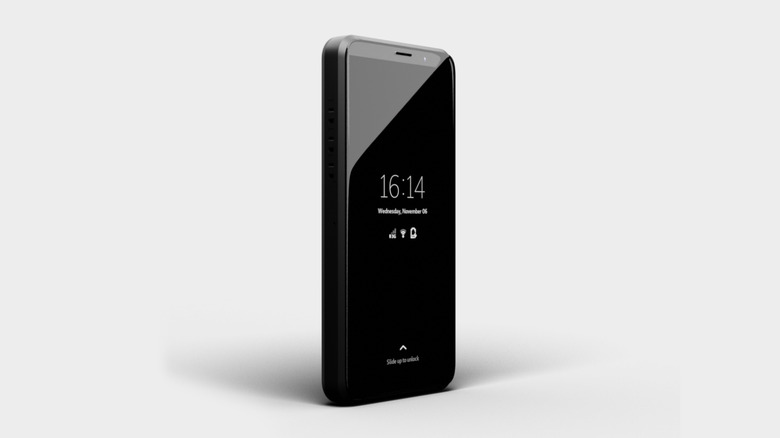
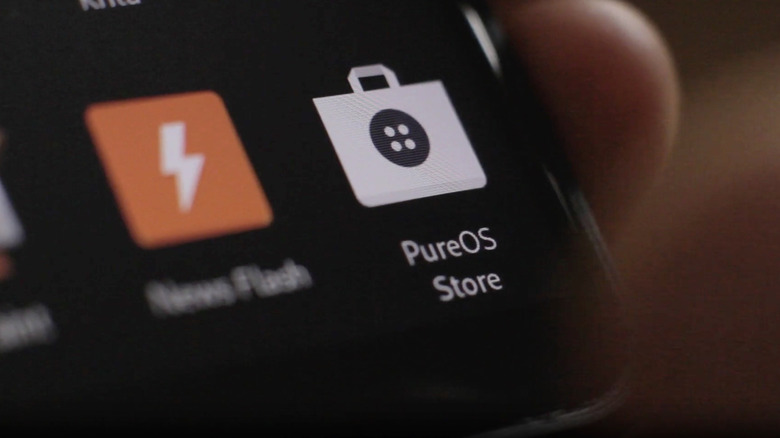
Chances are that the smartphone in your pocket is running either Apple's iOS operating system or Google's Android. In the U.S. and globally, the vast majority of smartphones are powered by one of these two operating systems. In the U.S., consistently huge iPhone sales give Apple's iOS the edge in terms of reach, while Android remains the more popular operating system worldwide. The unmatched position of iOS and Android has been driven for the most part by strong developer support, huge user communities, and billions of dollars of backing. But what of the handsets that ignored the mainstream smartphone model through niche operating systems or different approaches to hardware? One example is PureOS, an open-source, Linux-based operating system developed by Purism that emphasizes privacy and security over the app-focused ecosystems offered by Apple and Google.
San Francisco-based Purism offers two phones, the Librem 5 and the Liberty Phone. Notably, the latter appears to be the only commercially available smartphone whose fabrication and final assembly are performed in the U.S. While other phones carry American branding, few can make the same manufacturing claim. Having the fabrication and final assembly taking place in the U.S. sets it apart from devices such as the Trump T1, which promotes an American identity but appears to be based on a modified HTC U24 Pro design manufactured through an Asian supply chain. Unlike the Android-powered T1, the Liberty Phone is not simply a rebranded overseas device, as it combines U.S.-based production with a distinct privacy-focused operating system that places it outside the primary Android and iOS ecosystems.
Modest specs, steep price, but an intriguing alternative
To be clear, Purism's "Made in USA" claim doesn't mean that every part of the Liberty Phone is American-made. According to its website, Purism's facility in California handles the fabrication of the handset's main electronic assemblies, including the mainboard and Type-C board, as well as the phone's final manufacturing stage. While some of the Liberty Phone's individual components are made in the U.S., a number of them are still sourced from overseas. Like most electronic gadgets these days, the Liberty Phone still relies on a global supply chain, but its main electronics fabrication and final assembly take place on the company's home soil.
With its 5.7-inch IPS TFT display, 4GB of RAM, and 128GB of storage, the Liberty Phone clearly isn't trying to compete with the top-end smartphone models from the likes of Apple and Samsung. Instead, with its hardware kill switches and focus on open-source software, Purism positions the device as a privacy-focused alternative for users who value transparency and greater control over their tech.
The Liberty Phone, which launched in 2023, costs $1,999, though it's currently on offer for $1,749. That's still a hefty asking price compared with, say, the iPhone 17 Pro Max, which starts at $1,199. But the high price reflects the phone's distinct positioning, aiming at folks who are willing to accept fewer apps and lower-spec hardware in exchange for greater independence from the dominant mobile platforms. For most, those trade-offs are likely to outweigh the benefits. But for those who gravitate toward gadgets that protect your privacy, and who are unwilling to use Apple or Google, a device like the Liberty Phone could prove tempting, especially as it offers a different vision of what a smartphone can be.
Other phones doing it differently
The Liberty Phone isn't the only handset seeking to challenge the status quo when it comes to how smartphones are designed and used. The $899 Light Phone III, for example, offers a simple experience by removing many of the extras that define mainstream phones. One of the most popular phones for minimalists, the Light Phone III features a 3.92-inch monochrome AMOLED touchscreen, camera, a fingerprint sensor, USB-C, 5G, NFC, and the lightweight LightOS operating system. It also includes tools for calls, messages, alarms, calendars, navigation, music, and photography, but avoids an app store to reduce distractions.
Another phone offering a more streamlined experience is the Mudita Kompakt. Emerging from a successful Kickstarter campaign, the minimalist Mudita Kompakt presents the idea that a phone should be a tool rather than a source of constant distraction, replacing the app-heavy smartphone experience with a simpler, more intentional interface. The Mudita Kompakt costs $399 and features a 4.3-inch E Ink display, MediaTek MT6761 processor, 32GB of storage, an 8MP rear camera, a 3,300 mAh battery, NFC, and wireless charging, and runs on MuditaOS. The result is a device that sits somewhere between a feature phone and a smartphone, offering enough functionality for everyday tasks while reducing time-wasting distractions.
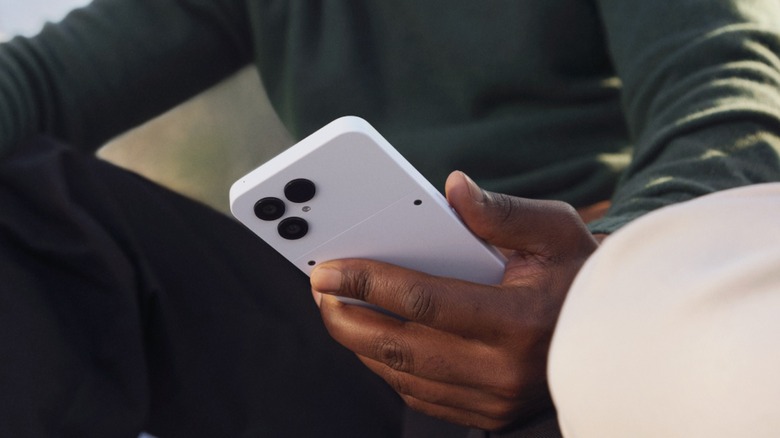
While many smartphones are designed in a way that encourages owners to replace them every few years, the Fairphone 6 takes a different approach, with repairability, a swappable battery, and software support promised until 2033, culminating in a build that's designed to last longer than the average handset. Starting at around $630, the Fairphone 6 is a mid-range Android device with a 6.31-inch 120Hz OLED display, Snapdragon 7s Gen 3 processor, 8GB of RAM, 256GB of storage, and dual rear cameras. Notably, it earned a perfect 10/10 repairability score from iFixit thanks to its modular design and easy-to-replace components.