

4 Android Phones Best Suited For Frequent Travelers

We may receive a commission on purchases made from links.
Adventure comes in many forms. That's why it's important for frequent travelers to have the right tech to support their unique lifestyles. If you're a nature lover with a penchant for outdoor escapades, check out our list of the best travel phones for hiking and going off the grid. But if your flavor of travel involves international trips or global tourism, you need a phone that will work anywhere in the world.
We took a close look at many leading Android phone models to determine which ones are most usable during global travel. Our list only includes phones that have robust support for global network bands, meaning that they can connect to the various different radio frequencies used by cell towers in other countries. We also only picked phones that are eSIM compatible, which enables the phone to digitally access mobile networks while visiting another country. This saves you from having to buy a prepaid SIM card and manually swap cards during your travels.
As an important note, you should always make sure that you're buying a phone that isn't locked to a single carrier if you plan to use it in another country. You can tell if you're buying an unlocked Android phone by checking Settings > Network > Mobile Network > Network Operators. If more than one network appears, it means your phone isn't locked to a single option. You should also check which 4G and 5G bands your destination country uses and make sure your phone is compatible.
Samsung Galaxy S26 Ultra
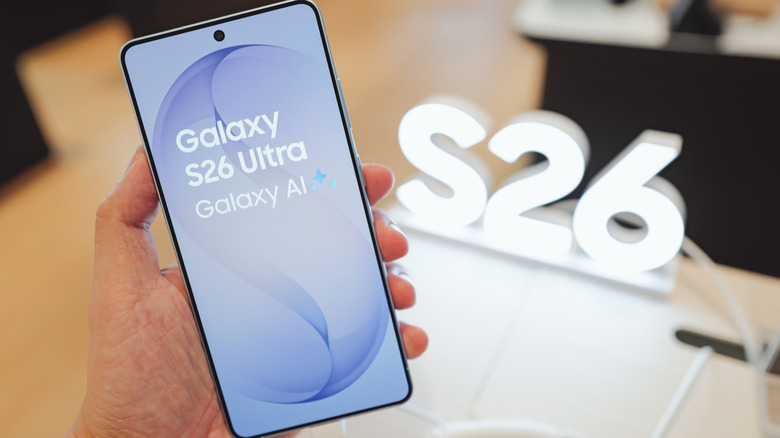
The Samsung Galaxy S26 Ultra is the premium 2026 flagship model of the Galaxy lineup. It has all of the bells and whistles you could hope for while traveling, including a 200-megapixel quad rear camera system. The battery is a 5,000-milliampere-hour (mAh) unit that can last for around 16 hours of constant use, certainly good enough for a full day of activities. More importantly, an unlocked USA version of the Galaxy S26 Ultra is compatible with 25 global 4G network bands and 20 global 5G bands. And with both nano-SIM and dual eSIM support, you can have up to two lines active at once — one of which is fully digital and easy to swap while abroad.
We reviewed the Samsung Galaxy S26 Ultra and found it to be one of the best Android phones money can buy, but it's also not a huge upgrade over the S25, per se. That's true for its overseas travel capabilities, too. The S25 Ultra has the same international band compatibility as the S26 Ultra. So, if you're still rocking last year's model, you should be good to go.
Google Pixel 10 Pro XL
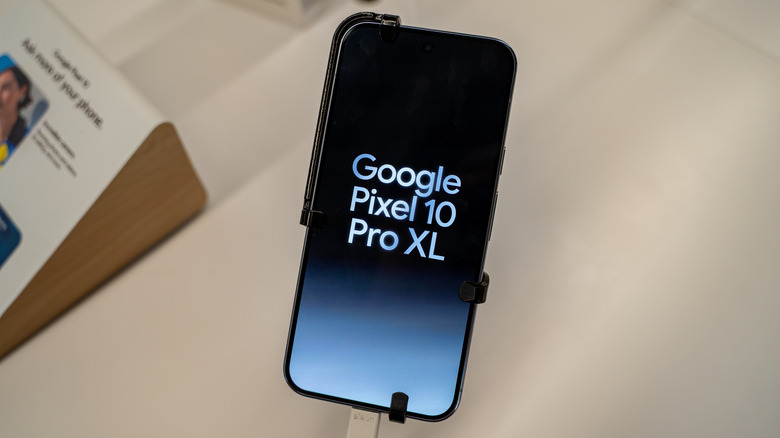
The Google Pixel 10 Pro XL is a high-end smartphone that competes on the same level as Samsung's latest Galaxy flagship. During our review of the Google Pixel 10 Pro XL, we were impressed with its peak screen brightness of 3,300 nits, which is great for outdoor viewing. It also maintains the Pixel family's reputation for impeccable photography. The Pixel 10 Pro XL has a 50-megapixel main camera, but when you factor in focal length and the quality of the phone's dedicated photography software, the Pixel is on par or even superior to the latest Galaxy's high megapixel system. The Pixel falls short when it comes to battery life, though. Even with a 5,200 mAh battery, the Pixel 10 Pro XL can only last for about 12.5 hours of active use on a full charge.
As for international compatibility, the U.S. model with product number GUL82 has a nano-SIM plus dual eSIM setup, and it can use 25 different 4G bands and 25 different 5G bands. The international model with product number G45RY actually has more overall compatibility, for a total of 31 different 4G bands and 22 different 5G bands. If the international version has better compatibility for your travel destination, it's totally fine to use; just make sure you get an unlocked version that's supported by your phone carrier back home, too.
Nothing Phone (3)
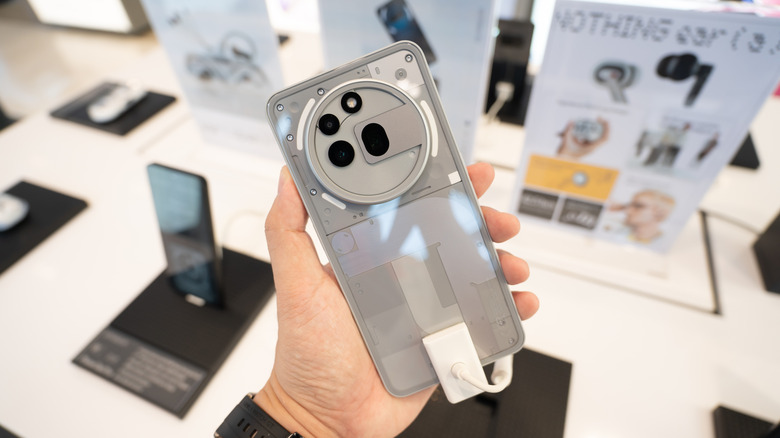
The Nothing Phone (3) is the current Nothing flagship, and it was the brand's first phone to come to the United States. If you've never heard of this company, you might wonder who owns the Nothing phone brand. It was created by the original founder of OnePlus with the goal of building an Android with a minimalistic operating system, and that's a huge reason why it's easy to recommend to travelers. It also has a pretty respectable camera setup — in our Nothing Phone (3) review, we enjoyed the versatility that comes with this kind of triple camera array. However, with an average battery life that lasts for about 13 hours of active use, you might have to be careful if your daily adventures start to go long.
The Nothing Phone (3) supports up to two SIM profiles at once: two nano-SIM profiles, or one nano-SIM and one eSIM. It's compatible with 25 global 4G network bands and 19 global 5G network bands. Notably, though, it lacks mmWave 5G support, which is the high-speed frequency that can transmit data at a speed of up to 10 Gbps. The mmWave frequency is available in 10 major U.S. cities, as well as cities in 17 countries overall. That's a lot of places where a Nothing Phone might be getting only a fraction of the speed that other phones are hitting.
Motorola Edge 70 Pro
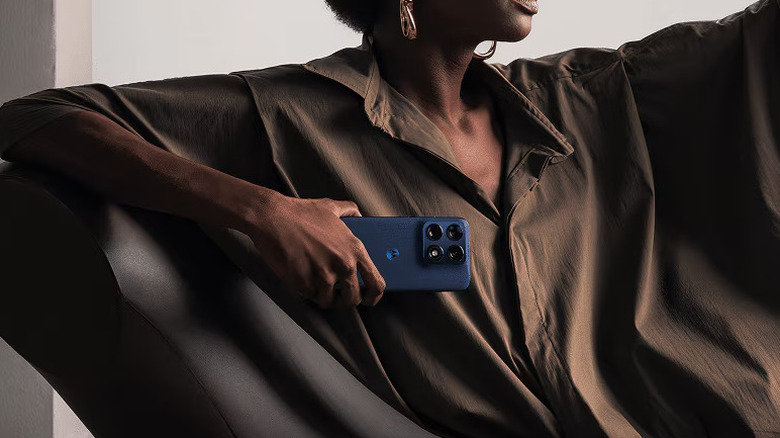
The Motorola Edge 70 Pro is a noteworthy value pick compared to the higher-end flagships on this list, especially if you're just looking for a second phone for your next trip. Moreover, the Edge 70 Pro has a reputation for being tough and durable in spite of its slim design. It's rated for IP68/IP69 dust and water resistance, which means that it can be submerged up to one meter underwater for 30 minutes or more and can even handle high-pressure water jets. The Edge 70 Pro even has MIL-STD-810H military-grade durability against harsh environmental conditions, so it's definitely a strong pick if you're planning any outdoor adventures while you're on the road.
However, there are some disadvantages of buying Motorola phones. For one thing, they have a reputation for being equipped with mediocre cameras, which may put a damper on any sightseeing activities. On the other hand, if you're looking for a phone with a long-lasting battery, the 6,500 mAh unit packed into the Edge 70 Pro may impress you with its ability to last through up to 19 hours of active use. This phone supports a nano-SIM plus eSIM setup to facilitate overseas network access. The European model (which is the version purchasable on Amazon by U.S. residents) is compatible with 25 global 4G bands and 17 global 5G bands, but it does not have access to high-speed mmWave 5G.
How we selected these travel-friendly Android phones

In order to find four Android phones that are best suited for frequent travelers, we selected up-to-date models from trusted manufacturers that met the following criteria: Each phone needed eSIM functionality and compatibility with a wide range of global mobile network bands to facilitate international travel. The most-used LTE network bands around the world are Bands 3, 7, 20, and 28, so compatibility with those four was the most important criterion. In total, though, each phone on the list supports at least 25 different 4G network bands and 17 different 5G network bands. Each phone also holds a 4-star (out of five) user rating or higher on Amazon, with no prominent recurring defects noted in customer reviews.
To reiterate, it is important to make sure that you buy an unlocked global or international variant of any phone on this list if you plan to use it in another country. Regional models, such as U.S. carrier-locked ones, may have fewer frequency band compatibilities and no option for swapping SIM or eSIM profiles.