

9 Of The Most Expensive Science Experiments Of All Time
Without science, humanity never would have left caves. Computer technology, medical breakthroughs, weapons of war, and knowledge of outer space all came into being thanks to the wonders of science. The human imagination is limitless, and science is how we turn our most whimsical sci-fi fantasies into reality.
Progress comes with a cost, though, and the advancement of humanity isn't cheap. Developing new technologies, visiting the bottom of the deepest oceans, and sending probes to the far reaches of space costs millions, even billions of dollars, sometimes with multiple countries pooling their resources for the betterment of mankind. The quest for knowledge doesn't always yield the answers we seek, and it can sometimes seem like the money was wasted in the end. Still, even a negative result is knowledge that can be used to do better next time.
Science experiments are expensive and risky, but they're necessary. Let's take a look at 10 of the most expensive science experiments that were dizzyingly expensive, but still worthwhile endeavors.
The International Space Station: $150 billion
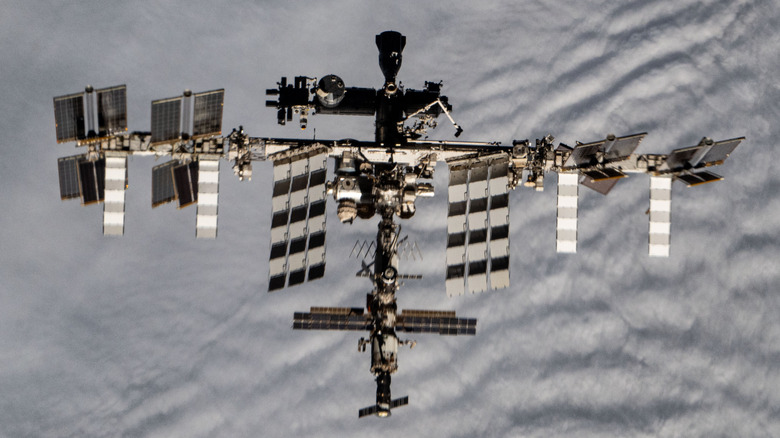
The idea of a global scientific effort was a pipe dream for many decades thanks to the Cold War. While the U.S. and the Soviet Union had discussed a joint space exploration endeavor in 1962, this collaboration didn't become a reality until the International Space Station was announced in 1993, and it also included other partner countries such as Japan, Canada, Spain, England, and more. The total cost (absorbed by all participating countries) to build and maintain the ISS is estimated to be around $150 billion, including $3 billion in annual expenditures.
The ISS quickly became a symbol of international cooperation, and it is equally important as a diplomatic tool as it is a science station. The ISS has been up in space since 1998, when its first module was put into orbit. The space station is getting old, and it has a potentially dangerous leak that, if it gets any worse, could force an evacuation of all personnel. As such, the project is expected to end in 2030, when the station will be deorbited, which will add another $1 billion to the ISS' total costs.
NASA's Apollo Program: $25.4 billion
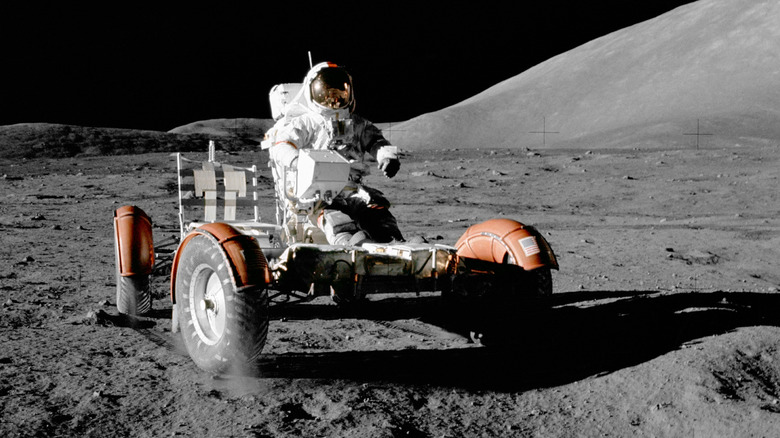
The ISS may have ended the "Space Race," but the '50s and '60s were the height of this Cold War chapter. As the U.S. and the Soviet Union battled for space supremacy, the U.S.S.R took an early lead in the race when it launched its first satellite, Sputnik, in 1957 and then in 1961, it launched the Vostok 1 rocket ship, which made cosmonaut Yuri Gagarin the first man in space. Both events were brutal defeats for the United States. In response, President John F. Kennedy, made his famous 1961 speech that stated his goal: "before this decade is out, of landing a man on the moon and returning him safely to the earth."
While Kennedy was tragically assassinated in 1963, his promise was kept when the Apollo 11 successfully landed on the moon on July 20, 1969, which was chronicled in an Emmy-winning 1990s HBO miniseries. Operational from 1960 until 1972, NASA's Apollo program cost $25.4 billion dollars ($203 billion, adjusted for inflation), and though technology developed during the era influenced the tech we still use today. The Apollo program put the U.S. definitively ahead for the remainder of the Space Race, and it was later succeeded by NASA's Space Shuttle program in 1981.
CERN's Large Hadron Collider: $4.75 billion
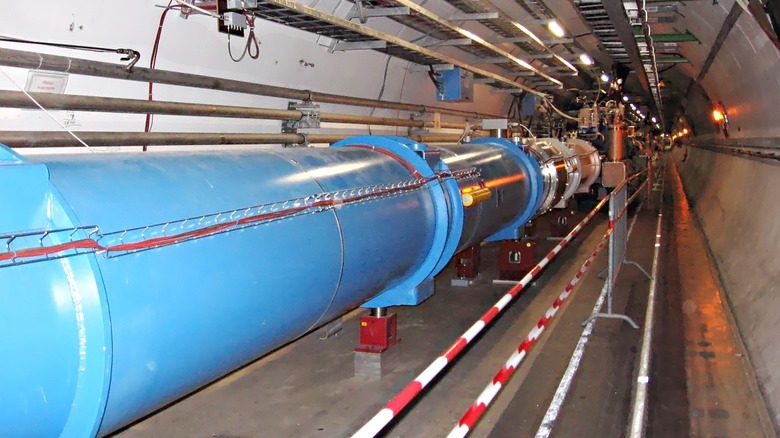
The ever-expanding nature of the universe is understood by scientists to be a result of the big bang theory. In an effort to understand particle physics and the nature of the universe, the Large Hadron Collider was developed between 1998 and 2008 by the European Organization for Nuclear Research (CERN) at a cost of around $4.75 billion.
To date, it's the world's largest particle accelerator, spanning a 17-mile tunnel located more than 500 feet underground near Geneva, Switzerland. The particle experiments conducted by the Large Hadron Collider were intended to help understand string theory and other dimensions, as well as the potential nature of dark matter. The Large Hadron Collider discovered the Higgs Boson particle, sometimes called "the God particle," in 2015, which was considered a huge breakthrough in the field. As of this writing, the collider is being shut down and eventually upgraded into what will be called the High-Luminosity Large Hadron Collider, expected to begin operations between 2028 and 2030.
The Large Hadron Collider is currently scheduled to continue operating until 2041, but plans are already in place to develop an even larger particle accelerator to study the Higgs Boson particle in even greater detail. Construction on this proposed collider is expected to begin by 2038, and it would be nearly four times as large as the Large Hadron Collider and cost an estimated $23 billion.
NIH's Human Genome Project: $3 billion

Just as everyone has a unique fingerprint, so too does every person have their own genetic footprint. Hidden within blood is DNA, which contains a person's genetic information. These genes are understood to be responsible for what makes a person who they are. The understanding, then, was that if all of these genes could be identified and understood, then we could learn a massive amount of information about a person just from a sample of their DNA.
Between 1990 and 2003, scientists from the United States' National Institutes of Health and other international partners worked tirelessly to identify, map, and sequence the euchromatic regions of the nuclear genome, which comprises over 90% of the complete human genome. This endeavor was called the Human Genome Project and cost between $2.7 and $3 billion. As for the remaining 10% of the human genome, that was completed by 2022.
In addition to the obvious scientific benefits of mapping the human genome, the project also funded an adjacent program, dedicated to "ELSI," or Ethical, Legal, and Social Implications. After all, when you get into genetics, that tends to lead to problem areas like eugenics and discrimination that could arise thanks to increased genetic knowledge, and ELSI was created to keep the science from being misused.
NASA's Curiosity Rover: $2.5 billion
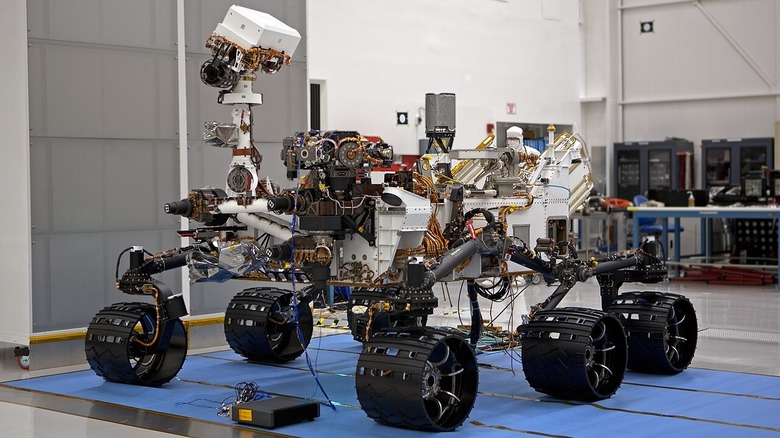
When humanity first looked at the stars, they dreamed of traveling to see what might be found out there. However, we have yet to travel beyond the Moon, and we haven't even been there since December 1972. Back then, hopes were high that we might have colonies on the Moon before setting our sights on Mars and other planets.
Although no humans have yet to step foot on the red planet, but NASA has not ignored Mars, as evidenced by the Mars Science Laboratory mission, which sent the Curiosity rover machine to our planetary neighbor. Think of it as a really fancy RC car, but solar-powered and customized to NASA's specifications. The program cost $2.5 billion and Curiosity first touched down on Mars in 2012.
As its name suggests, Curiosity exists to explore the surface of Mars and take photos and video to send back to Earth in anticipation of future missions including a long-awaited visit from human astronauts. Curiosity has survived the test of time. Originally planned to have a two-year lifespan, Curiosity is still operational to this day, capturing images that answer questions and raise new ones about the mysterious Mars. After 14 years of driving, NASA's Curiosity rover isn't as spry as it used to be, but it's still collecting valuable data that enhances our understanding of the red planet.
NASA's Skylab: $2.3 billion
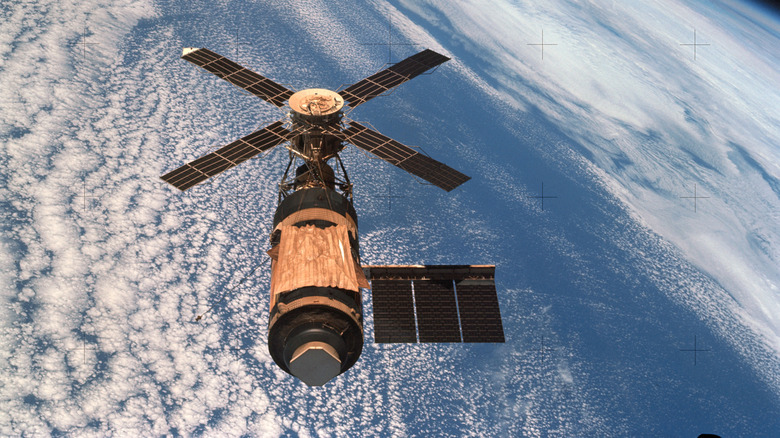
While the Space Race effectively ended with the Apollo missions, mankind was not done with outer space. Far from it. Launched in 1973, Skylab wasn't the first-ever space station (that honor goes to the Soviet Salyut 1), but it was the United States' first attempt at such an endeavor. The station cost over $2.3 billion dollars to build and was intended to conduct experiments involving long-term exposure to the unique conditions and properties of space. Among other experiments, Skylab studied solar radiation emissions, including X-rays. Thanks in part to his role developing technology for Skylab, astrophysicist Riccardo Giacconi, the father of X-ray astronomy, was awarded the Nobel Prize in Physics in 2002.
All good things must come to an end, though, and Skylab had an infamously undignified ending. Skylab was suffering from orbital decay and would eventually fall down to Earth, and the space shuttle intended to keep Skylab afloat was delayed for multiple years, so the mighty space station was doomed. Skylab broke into pieces due to the Earth's atmosphere, and most of it landed in the Indian Ocean, though some debris peppered parts of Western Australia. The Shire of Esperance jokingly issued NASA a $400 fine for littering, a humorous ending to the saga of Skylab.
The Manhattan Project: $2.2 billion
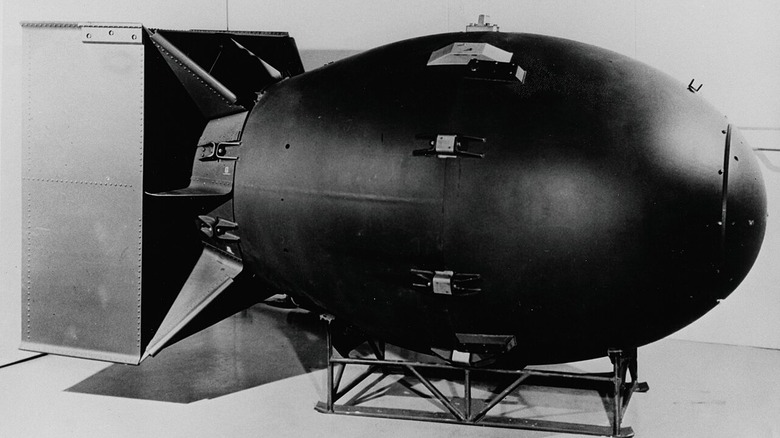
It's a sad fact that nothing accelerates scientific progress like wartime. When confronted with the threat of annihilation or the prospect of annihilating others, science comes up with new ways for people to kill each other. During World War II, while soldiers were fighting on the frontlines with tanks and machineguns, the Allied and Axis powers were in a secret race to develop the atomic bomb. The A-bomb was so powerful, there were genuine fears that even testing it could ignite the Earth's atmosphere and effectively end all life on the planet.
The American atomic bomb program was called The Manhattan Project and was led by Major General Leslie Groves and Robert J. Oppenheimer, though as many as 130,000 people worked on the project at any one time, at a cumulative cost of $2.2 billion dollars, or over $40 billion dollars in 2026 money. The end result of this undertaking was the creation of two bombs, called "Fat Man" and "Little Boy," which, in August of 1945, were dropped on the Japanese cities of Nagasaki and Hiroshima, respectively. Since then, nuclear weapons have only grown more powerful and plentiful, though none have been used in war since 1945.
Ocean Networks Canada's NEPTUNE: $79 million USD
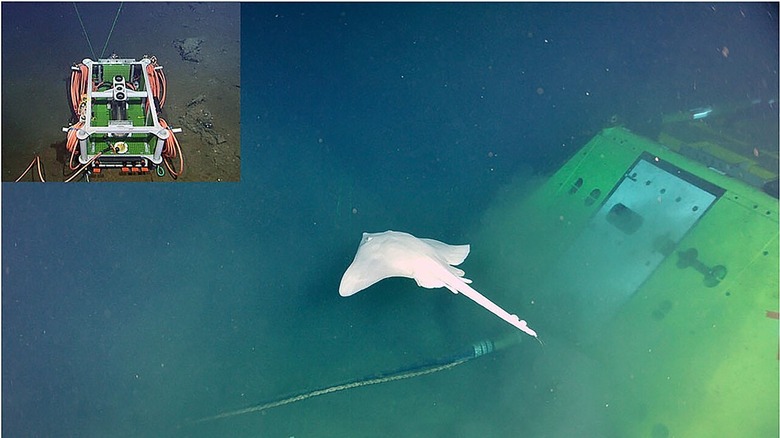
For all the hype outer space gets, there's a whole universe of mystery to be discovered in the depths of the ocean, and Ocean Networks Canada is looking to understand more about the seafloor with its North-East Pacific Time-Series Underwater Networked Experiment (NEPTUNE) ocean observatory. NEPTUNE is just one part of the Ocean Networks Canada project, and its construction — beginning in 2007 — cost $111 million Canadian dollars (or $79 million USD) with annual maintenance costs of $17 million CAD (USD).
This ocean observatory consists of 500 miles of high-speed optical internet cable, allowing anyone to view livestreams along the Canadian coastline and learn about the underwater world hidden just beneath the waves. Thanks to NEPTUNE, the barrier to entry for ocean science is lower than it's ever been. NEPTUNE holds the Guinness World Record for the world's largest undersea observatory. The centerpiece of the project is a remote-operated deep-sea crawler, like the Mars rover, but for the ocean. The rover is named Wally, after the main character from Pixar's "Wall-E." A second crawler was built, but rather than being called Eve, like the other main character in the film, it's called Wally 2.
National Science Foundation's Very Large Array: $78.5 million
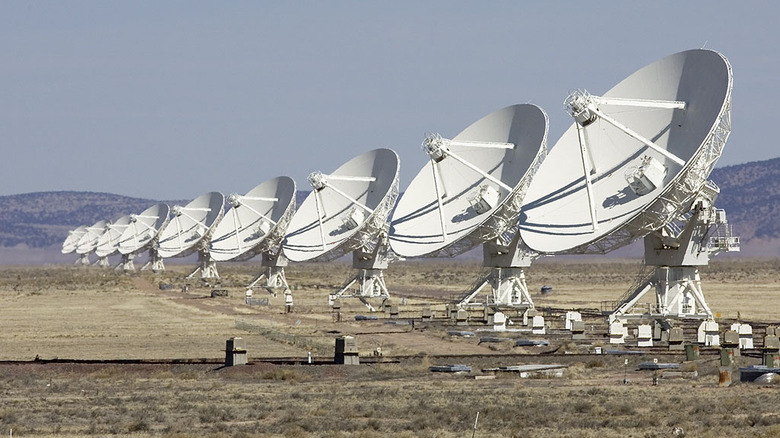
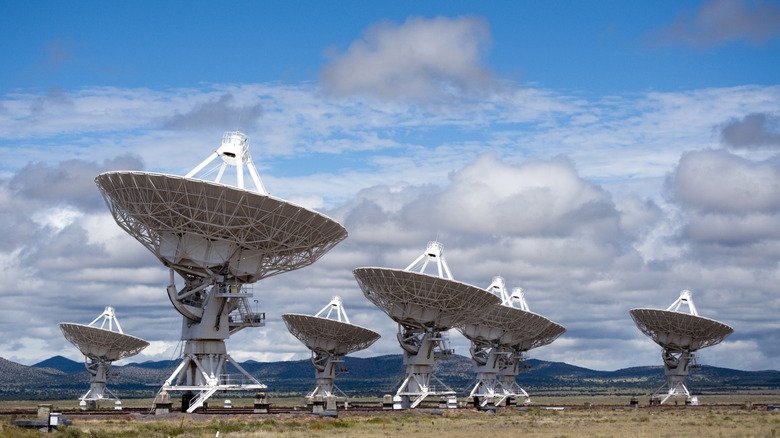
For all the imagination and open-mindedness required to understand high-level science, "Very Large Array" is a terribly bland name for a science project. The array consists of an arrangement of 28 radio telescopes that look like giant satellite dishes, and it is part of the National Radio Astronomy Observatory operated by the National Science Foundation. The VLA acts as a single, giant telescope that gathers high-resolution images of deep space phenomena like black holes and neutron stars.
The Very Large Array was approved by Congress in 1972, and construction was completed in 1980. The total cost amounted to $78.5 million in 1972 money, which is equivalent to around $627 million in 2026 dollars. If the VLA looks familiar, you might be remembering its appearance in the 1997 film, "Contact," based on the science fiction novel by famed scientist Carl Sagan.
As of this writing, the Very Large Array is in the process of being upgraded. The numerous antennae will be swapped out for modern replacements that will allow the array to investigate outer space with greater detail than ever before and learn about how solar bodies evolve and how solar systems like our own come into being. This will be called the "Next Generation Very Large Array," and it's expected to cost around $2 billion to construct.