

7 Common Gadgets You Probably Didn't Realize Are Restricted In Some States

Gadgets are supposed to make our lives easier. The word itself evokes images of convenient, portable devices that solve common problems, from unitaskers like Bluetooth speakers to catch-alls like phones and laptops. Most gadgets do just that, becoming part of our everyday lives as we carry them wherever we go.
However, some gadgets are subject to certain restrictions you may not have known about when you bought them. Even if they're federally legal, many common devices in your home, car, or pocket may only be allowed in certain contexts, or be prohibited outright in certain states. The same gadget you use every day without a second thought may suddenly be illegal if you carry it over state lines.
So, to keep you out of trouble, here's a list of eight federally legal devices you may already own that are subject to certain state-level laws or restrictions. Being mindful of the laws listed can help ensure your devices aren't confiscated and you don't get slapped with hefty fines.
Laser pointers
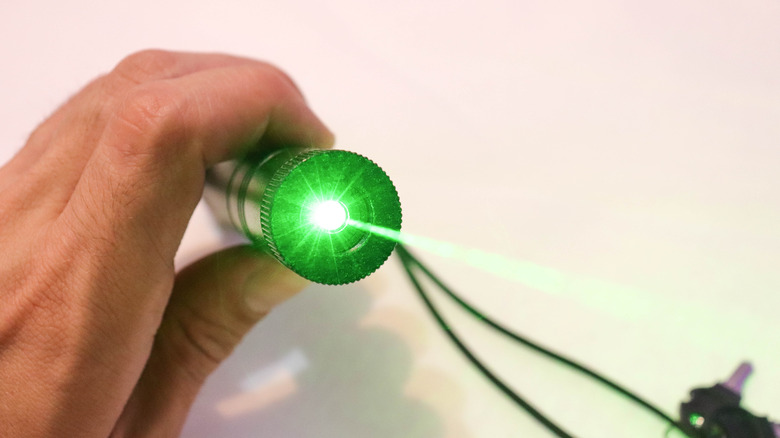
The legality of laser pointers differs greatly from state to state. While low-powered lasers are legally owned in every state, pointing lasers at airplanes or in their flight path is considered a federal crime, punishable by up to five years in prison and a $250,000 fine.
Things get a lot more complicated on the state level: in Arkansas and Hawaii, for example, it's illegal for a minor (a person under 18) to possess a handheld laser pointer without supervision. In California and Connecticut, laser pointers can't even be sold to people under 17 or 18, respectively, unless they're accompanied by an adult. Laser pointers are also prohibited at public demonstrations. If you're bringing a class 3B or 4 laser into the state of Illinois, you'll have to register it with the state at least ten days in advance. (Most legal, consumer-grade laser pointers are of lower grades, though.)
Legality may also vary at the county, city, and town levels in some areas, so if you plan on bringing a laser pointer outside of your home state, make sure you look up any local laws around their use.
Consumer drones
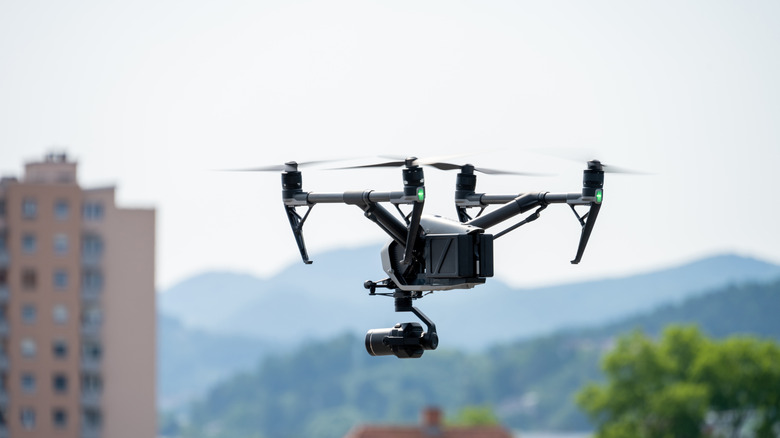
Like laser pointers, consumer drones are legal to use throughout the 50 states. However, in order to operate a consumer drone, you'll have to pass the Federal Aviation Administration's (FAA) TRUST test. It's easy enough: the test is free to take, and, if you get any questions wrong, you can simply correct them until you get a perfect score.
But even if you follow all the FAA's regulations, you may be in violation of local laws around operating drones. For example, in the state of New York, you're not allowed to launch, land, or operate a drone in a state park or historic site unless you request and receive a permit prior to operation. You also need a special permit if you plan on operating your drone anywhere within New York City limits.
Delaware has a similar law, with even more restrictions: you can't fly a drone over a state park, critical infrastructure like power plants and oil refineries, or events with more than 5,000 people in attendance. There goes your cool drone video of that DJ set in Delaware. Some states, like Kentucky, have laws that make it illegal to fly your drone in certain designated areas around airports.
Thankfully, if you're ever unsure of whether you're allowed to launch a drone, the FAA's B4UFLY service will tell you everything you need to know. It's integrated into several mobile and desktop apps so you can pull up local flying restrictions at a glance.
Dashcams
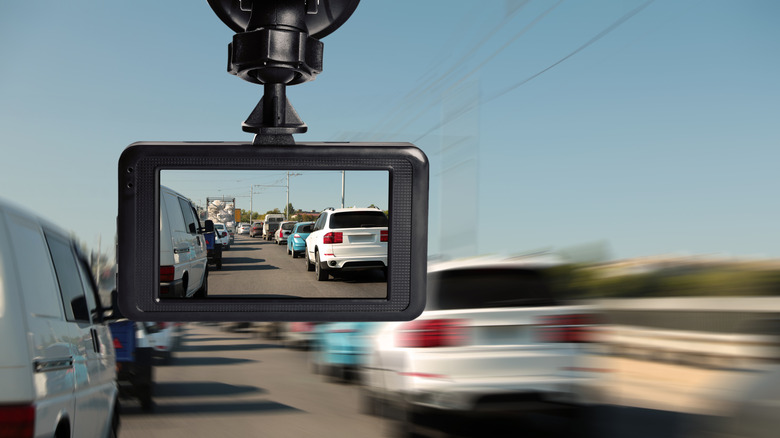
Dashboard cameras, more commonly known as dashcams, are generally used to protect drivers by determining fault in case of collisions or preventing theft by capturing images of would-be joyriders. But different areas have different regulations around them that you'll want to be mindful of on interstate drives.
Most states have some kind of law regulating where your dashcam can be mounted. A pretty universal rule is that a dashcam can't obstruct a driver's view. Some states, like Alabama, Arizona, and Delaware, require you to mount cameras only on your dashboard. Others, like Arkansas and Minnesota, require dashcams to be mounted behind the rearview mirror. Still other states, like California, Hawaii, and Illinois, do allow dashcams to be mounted on the windshield, but with restrictions on size and placement.
In some states, the use of a dashcam falls under restrictions that require consent for audio and video recording. These are called all-party consent states, in which all parties — everyone who enters your car — must consent to being recorded. In general, a sticker posted somewhere visible that discloses the recording constitutes consent. Otherwise, you may be able to turn off audio recording on your dashcam.
Radar detectors/laser jammers
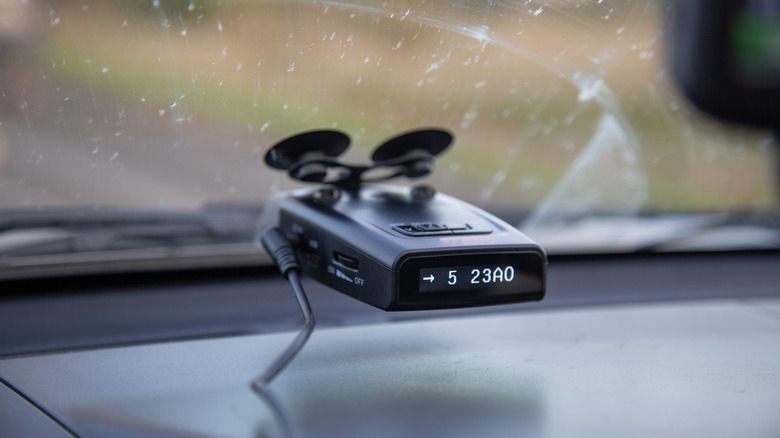
Also in the world of car gadgets are radar detectors and laser jammers. Although these two types of devices are entirely different on the inside, they functionally serve the same purpose: helping drivers avoid speeding tickets. Radar detectors do so by recognizing the electromagnetic signals emitted by speed cameras and police equipment, giving the driver a visual and auditory alert when their speed is about to be measured. Laser jammers disrupt the signals emitted by infrared speed guns, returning a false reading.
Since they can help speeding drivers avoid tickets, it's no surprise to hear that radar detectors and laser jammers are outright illegal in some parts of the country. In both Virginia and Washington, D.C., the use of radar detectors is fully prohibited. Police in Virginia have even been authorized to seize radar detectors that aren't actively in use, so if you plan on driving through the area, you may just want to leave yours at home.
Laser jammers, meanwhile, are illegal in 11 states: California, Colorado, Illinois, Iowa, Minnesota, Oklahoma, South Carolina, Tennessee, Texas, Utah, and Virginia yet again. Although D.C. law doesn't explicitly ban the use of laser jammers, it does prohibit "any device designed to detect or counteract police radar," which could be interpreted to include laser jammers, so I'd exercise caution when using a laser jammer in the capital, too.
GPS vehicle trackers

Most states have some restrictions on GPS vehicle trackers, usually related to privacy or preventing stalking. GPS vehicle trackers can be used legitimately, though: usually by delivery or logistics companies looking to improve route efficiency or provide real-time tracking.
When it comes to employer-provided vehicles, GPS tracking laws vary somewhat from state to state. These laws generally fall into three categories: requiring driver notice, requiring driver consent, or being fully legal. In California, Connecticut, New Jersey, and New York, you'll need to get consent to install GPS tracking in company vehicles — this is likely to come in the form of a signed contract or may be written into the terms of employment. Meanwhile, in Colorado, Hawaii, Massachusetts, New Hampshire, North Dakota, Oregon, Pennsylvania, Utah, and Wisconsin, employers are only required to give notice; the driver doesn't have to agree.
Laws around personal vehicles are much more restrictive. For delivery drivers using their own cars, most states require explicit consent before GPS trackers are installed. In North Dakota, Iowa, and Michigan, though, you'll just have to give notice.
Security/doorbell cameras
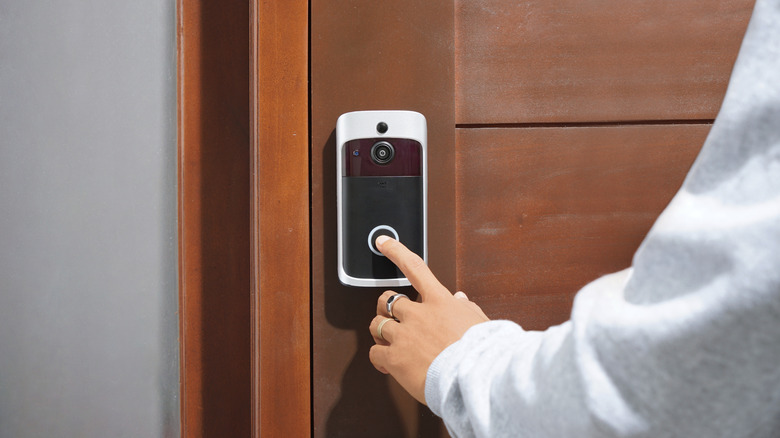
Finally, don't forget to check local laws before you install a Ring or similar doorbell/security camera system. These devices, generally used to monitor home security and collect evidence in the event of a theft or break-in, are subject to state and local laws around privacy and consent. In general, all 50 states make it totally legal to record video in public. Exceptions may be made for areas that come with what the law calls a "reasonable expectation of privacy" — places like bathrooms, changing rooms, and hotel rooms.
But things get more complicated when it comes to recording audio. Similar to dashcams, security cameras that record audio may be subject to one- or all-party consent laws. The difference is that with a dashcam in your own vehicle, you're generally one of the parties in the conversation being recorded and thus have given consent.
With a security camera recording audio in a public place, you may not be part of the conversation, making it illegal to record without consent in most states. There are a few exceptions: no consent is necessary in South Dakota, Tennessee, or Utah for in-public conversations where there is no reasonable expectation of privacy.
Just ten states — California, Florida, Illinois, Maryland, Massachusetts, Montana, New Hampshire, Oregon, Pennsylvania, and Washington — require that all parties involved in an in-person conversation must consent to audio being recorded. Thankfully, many consumer security cameras that record audio come with an option to disable the microphone if you need to.