

5 Specs You Need To Check Before Buying A Liquid Cooling System For Your PC
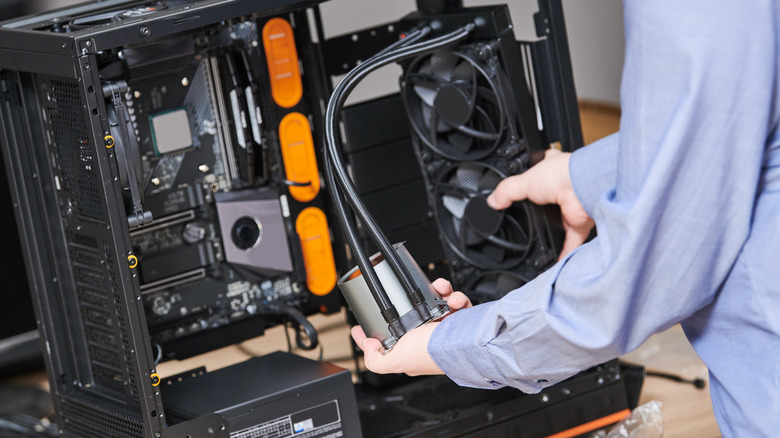
Buying a liquid cooling system is the best option for many gaming PC owners looking to cool their PCs properly, but there are many specs to check before buying one. That is because there is a lot of small information that can seem irrelevant at first, but makes all the difference in performance after you buy it. Some of these specs are not even recommended for use in every PC build.
That is because each PC configuration has different needs for cooling, internal space, and even compatibility with your processor. A 360mm radiator, for example, can be the ideal choice for anyone with a larger case who wants to overclock their parts, but it is not recommended for smaller cases or for anyone who wants a more silent build. Understanding these differences helps you avoid investing in a liquid cooler that may be incompatible with your needs.
In addition, before evaluating the technical specifications, it is also worth remembering that not every gaming PC needs liquid cooling to work well. In simpler builds, a good air cooler is already more than enough, since the difference between an air-cooled and a liquid-cooled PC is not always worth it. With that in mind, we narrowed down the five specs that really matter for this PC upgrade.
Radiator size directly impacts your liquid cooling capacity
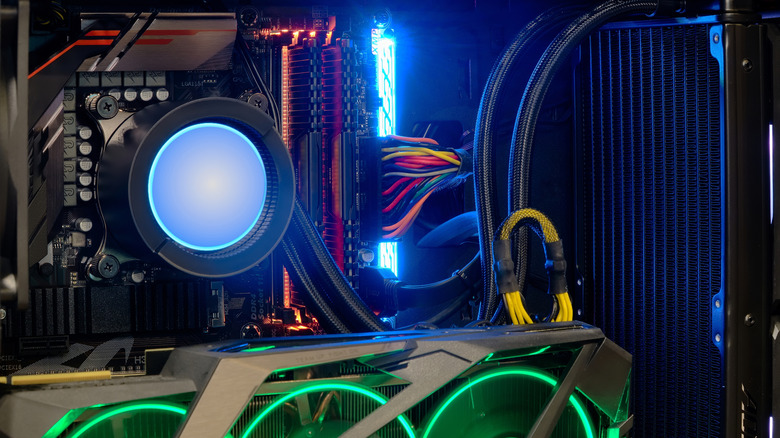
One of the most important aspects for anyone buying a liquid cooling system for a PC is paying attention to the radiator size. That is because it strongly influences the dissipation capacity and keeps your desktop cool, since 360mm models have more surface area, which allows them to move more air through the fins and cool the liquid more efficiently before it returns to the processor. On the other hand, larger radiators also take up more space inside the case, so if yours is small, you need to consider smaller options or buy a larger case.
Smaller radiators, such as 240 or 280mm models, are still useful for several builds, since good models can comfortably handle workloads around 150-180W, which covers the power draw of many gaming CPUs today. The 360mm models work better for high-consumption chips, such as a Ryzen 9 or Intel's i9, as well as for anyone who wants to overclock. Fortunately, among the best liquid coolers sold on Amazon, you can find models in different sizes for your setup.
CPU socket layouts determine your AIO cooler compatibility
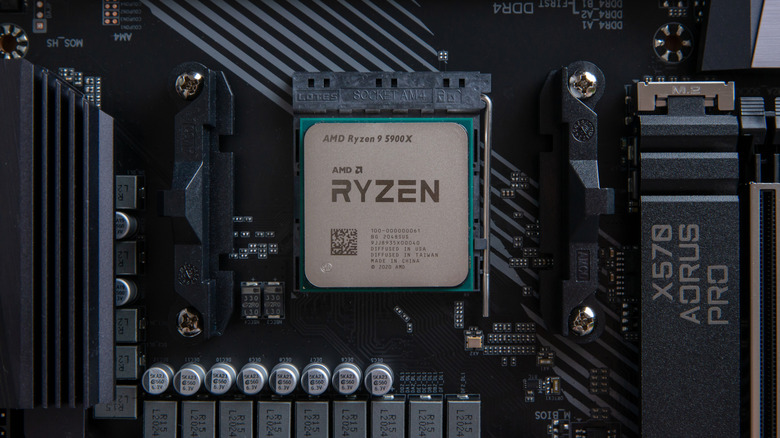
Depending on the platform you use for your processor, AMD or Intel, their processor sockets have different layouts. So, it is important to check whether the mounting kit for the liquid cooler you plan to buy is compatible with your PC. The most common sockets today are Intel's LGA 1700 and LGA 1851, as well as AMD's AM4 and AM5, each with its own hole pattern on the motherboard.
This detail often goes unnoticed during a platform change, since one of the main beginner tips for anyone building a PC is that parts made for AMD are not compatible with Intel and vice versa. The good news is that most AIOs today already come with universal brackets for both processors in the box, making users' lives easier.
However, not every liquid cooling manufacturer follows this rule, so it is worth checking the technical sheet before closing the purchase, especially with older coolers or entry-level models. While AMD usually has more standardized layouts, such as only AM4 and AM5, Intel usually has more varied sockets, so an LGA 1700 is not compatible with the newer LGA 1851.
Fan RPM speed affects the noise levels of your gaming PC
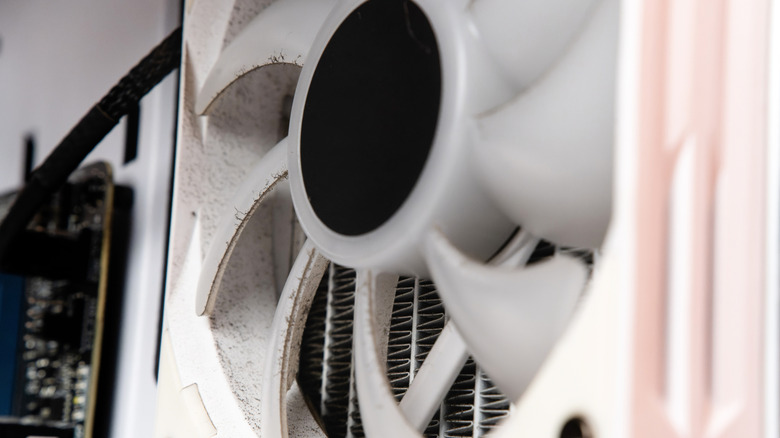
RPM measures the speed of the radiator fans, and this number indicates how much air each fan can push to cool the liquid circulating through the system. Fans that spin around 2.000 RPM move a lot of air and deliver great heat dissipation under heavy load, especially in thicker radiators. But this speed also increases system noise, which can exceed 35 dB at maximum load and bother anyone seeking a quieter environment.
For anyone who records videos or does not want too much noise at home, it is worth prioritizing fans with a quieter curve, even if that means losing a few degrees of thermal headroom under maximum load. Those who seek maximum performance or overclocking usually accept more noise, since headphones often muffle sound during gaming sessions. Control software helps adjust this curve based on your usage routine, and understanding how a liquid-cooled PC works makes it easier to find the right balance between RPM and silence for your specific build.
Tube length and material change your AIO cooler durability
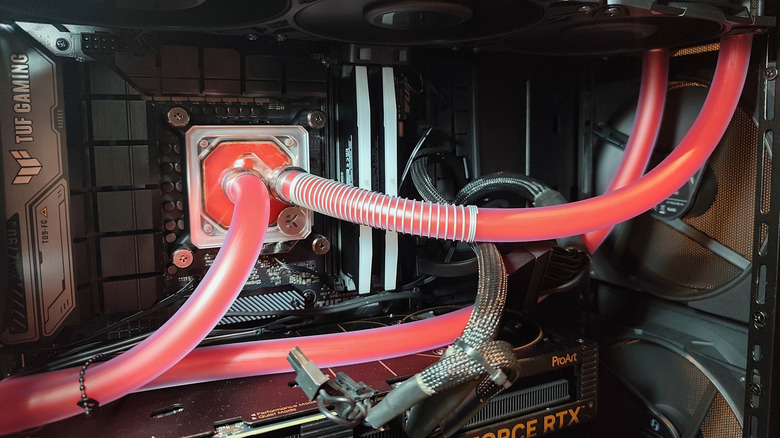
Another spec that users often overlook is tube length, but it determines how far you can install the radiator from the processor socket. This way, most AIOs come with tubes between 300mm and 450mm, depending on the brand you prefer. Shorter tubes can limit where you can position the radiator in larger cases, especially if you want to mount it elsewhere rather than in the front.
The tube material is another important aspect, as it usually affects how long the liquid stays in the loop before evaporating. AIOs usually use FEP coating, which resists permeation much more than the rubber tubing used in older or lower-cost models. The mesh also matters, since although it does not change the permeation rate, it still protects against bends and gives everything a cleaner look.
So, as with other liquid cooler specs, the important thing is always to compare your case with the model you want to buy. In this case, a tube that is too short can force a less ideal position and affect long-term durability, since if the tube stays bent, it can wear out much faster than one installed with enough slack.
Processor TDP dictates the liquid cooling system you need
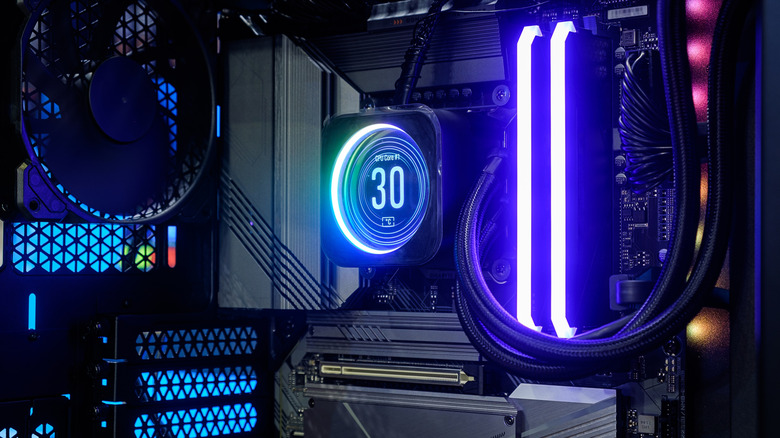
Switching to a liquid cooling system is one upgrade users can afford without paying a fortune, but the chosen model also needs to handle your processor's TDP. Every liquid cooler comes with a nominal thermal capacity, usually listed in watts, which indicates how much heat it can dissipate before temperatures exceed safe limits. AMD lists a default TDP of 170W for the Ryzen 9 7950X, while Intel's Core i9-14900K starts at 125W base power.
CPU manufacturers list a base TDP, but modern chips often draw far more power once boost clocks kick in. The Core i9-14900K's Processor Base Power of 125W climbs to a Maximum Turbo Power of 253W under sustained multi-core loads. So, checking your CPU's actual power draw before choosing a cooler is one of the most important things you can do when looking at specs.
Because the gap between base and boost power can be significant, it is worth sizing the cooler for the processor's peak turbo power rather than its base rating alone. This extra headroom keeps fan speeds lower and noise levels down, even during long gaming or rendering sessions. At around 200W and above, a 360mm radiator can provide better performance-to-noise efficiency than a comparable 240mm model.