

5 Reasons Chinese EVs Should Come To The U.S. (And 4 Reasons They Shouldn't)
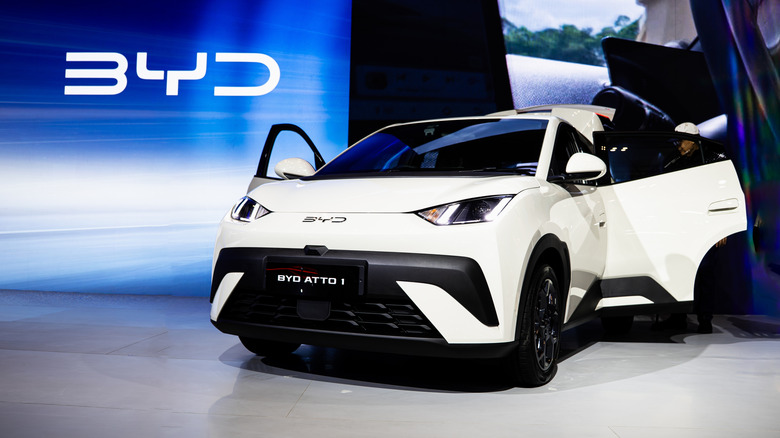
China is having an EV boom so large that it's moving the needle on oil reserves, displacing 1.35 million barrels in the first half of 2026. Companies like BYD make EVs that are cheap and well-specified, and they are being imported worldwide, except for the U.S., where massive tariffs and technology blacklists keep them out.
The EV boom in the U.S. is well and truly over. Sales are plummeting; projections look weak. The $7,500 federal tax credit is dead. Mass-market sellers like the Ford F-150 Lightning have been discontinued. Even the cheapest EVs you can buy new sit around $30,000. Yet, they don't compare favorably to ICE vehicles in the same range in comfort, specifications, and features.
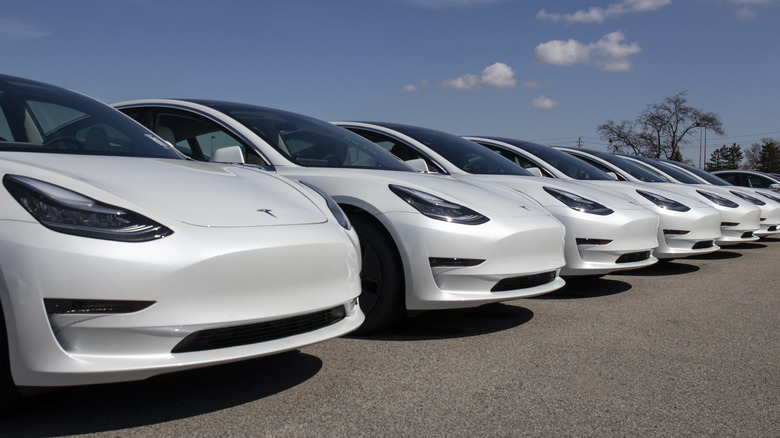
It also doesn't help that one of the most common problems with EVs is rapid depreciation. Once you buy it, you're stuck with it since the resale value is likely to be too low. You might even have seen those viral TikTok videos of Tesla owners crying into the camera after realizing they spent a fortune on an asset that's now worth nothing. Though in the case of Tesla, that's at least partly due to Elon Musk's politics making them unpopular. So, could Chinese EVs come to the rescue? In some ways, the answer is "yes," but there are still plenty of pitfalls that could spoil any positive consequences of opening the floodgates to electric cars from the East.
Lower prices

Given that the federal tax credit had a clear effect on EV sales, it's reasonable to assume that significantly cheaper EVs from China would lead more American citizens to opt for an EV over an ICE vehicle. Of all the concerns around EVs, the high upfront cost is a major demotivator. Oddly enough, a significantly lower starting price also helps with concerns about depreciation.
Having a lower total absolute value means you're taking a smaller financial risk, even if the car's resale value drops to near zero after a few years. The sheer utility of a cheap EV balances potential depreciation. Which is to say that you're getting your money's worth just from using the vehicle over time.
China's EV makers have developed a much broader range of EVs that cater to lower budgets while still offering a decent overall vehicle. Take the BYD Dolphin Surf (known as the "Seagull" in China), which starts at around $11,500 in China but sells for about twice that price in Europe and Africa. It also helps that these vehicles, despite being "budget" models, tend to offer good levels of equipment, including air conditioning and in-car screens with flashy software. As battery costs fall and battery technology improves, more budget will be left for other aspects of these cars over time, and China is already demonstrating this, given its access to the cheapest EV battery supplies.
A more competitive market
As any high school economics student will tell you, one of the main tools a government has to protect its domestic industries is heavy tariffs. If another country can make something faster, cheaper, and better than you can, then instead of competing directly, you can just slap a heavy artificial price on the foreign company's product, making it sensible for your own citizens to buy local.
But what if, even after tax incentives and massive investment by your own car industry, your domestic EV market is failing anyway? Allowing Chinese EVs to compete on equal footing with U.S. companies might actually be one way to revive the U.S. domestic EV market. In a June 2026 McKinsey report, the author noted that China is leading the way in EV platform development and scaling up manufacturing. The Chinese have figured out how to make EVs as cheaply as possible by standardizing and rapidly scaling production.
That same report notes that a key to profitability is development speed. U.S. EV makers have little incentive to develop new EVs quickly, but the Chinese are pushing into every niche they can think of. China is currently setting the standard for EV development and production. Chinese EV companies are making a profit, while U.S. EV makers are cutting losses after repeated failures. Letting Chinese EVs compete directly with these companies without protection could force them to adopt the same winning strategies.
Faster innovation
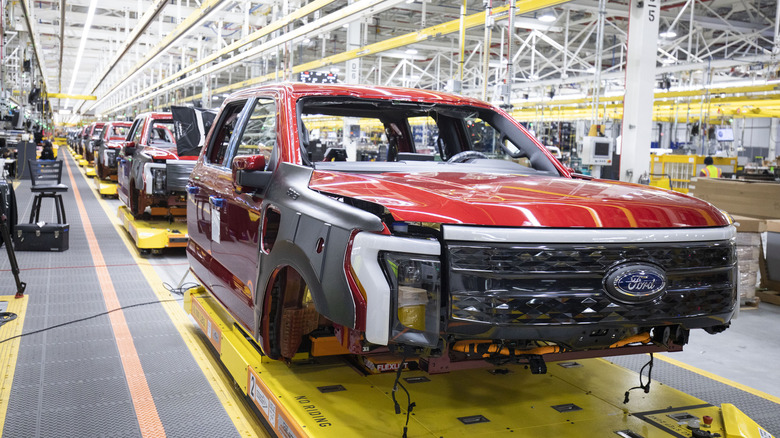
While the introduction of Chinese EVs to the U.S. market without government shackles would light a fire under all EV makers, it's the legacy automakers in particular that need a reshuffle. Unlike EV startups such as Tesla, Rivian, or Lucid, companies like Ford and General Motors are not used to rapid innovation. These are companies that take years to complete a clean-sheet car design, and this does not include the start of production or getting cars into customers' hands. Companies like Ford have already realized their rate of EV development and production simply isn't fast enough. This is why there have been initiatives like Ford's Universal EV Production, which aims to increase its EV manufacturing speed by 40%.
That a company like Ford can feel Chinese EVs breathing down its neck, despite the warm blanket of U.S. tariffs, foreshadows what could happen if that protection is stripped away. These companies that have become comfortable with the same old development cycles and pace of innovation will have to completely rethink how they design new cars and get them on the road.
This wouldn't necessarily mean a reduction in quality or safety either. After all, any Chinese EVs legally imported and sold in the U.S. would have to meet the same quality and safety standards as those of domestically produced vehicles. Profit margins would be even thinner for U.S. companies, but the actual drivers win regardless of who prevails.
Better variety
U.S. EV brands have a dire lack of variety in the vehicles they offer. For a long time, your only real options for an EV in the U.S. were a pickup truck, a big SUV, or a sports car. It seems that U.S. EV makers wanted to create a small number of models that could cater to as many people as possible. This sounds like a safe bet, but it ignores how EV drivetrains enable vehicles that aren't trying to be direct replacements for ICE vehicles.
Not everyone needs a massive range of activities; all they ever do is commute to work or go to town and back home now and then. Likewise, not everyone needs tons of loading space or the ability to power their whole home. The BYD Dolphin we mentioned earlier is a great example of an EV designed for a specific niche of customers that has largely been ignored. Again, Ford seems to be smelling a change in the air, because not only has it canceled its big bruiser of an electric truck, it's also pivoting to smaller EVs.
Some may see this as a risky bet in a country where "rolling coal" is a popular pastime, but we can also look at it as Ford watching the Chinese EV market, how the variety of EV cars are being exported to Europe and other international markets, and gearing up to go head-to-head with Chinese EVs should they come stateside.
Battery technology leadership
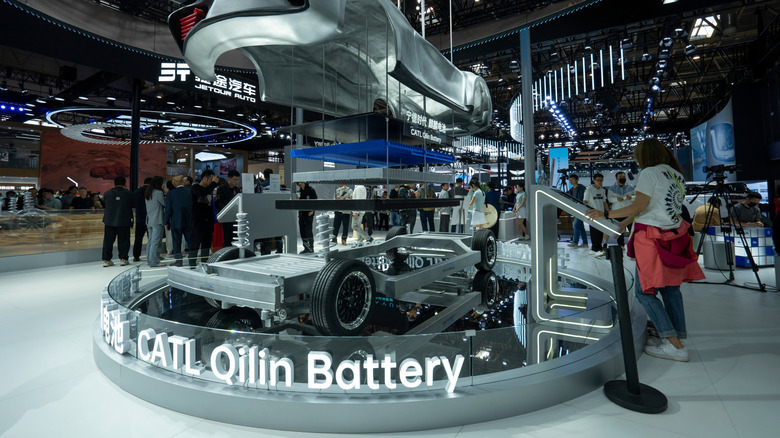
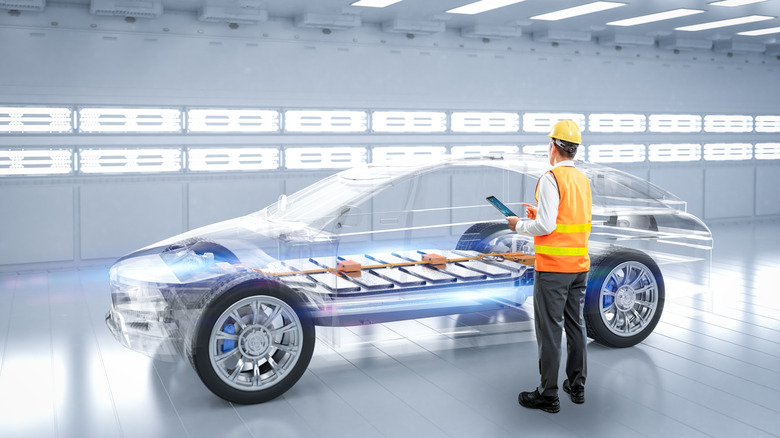
In an EV, the batteries are the most important component. They are the biggest cost factor and determine crucial performance metrics such as total range and cold-weather performance. So you might be surprised to learn that most of the batteries in American EVs are, in fact, from China. For example, the Chevy Bolt EV uses batteries imported from Chinese giant CATL. While GM is working on its own in-house new battery chemistries, it's clear that when it comes to battery technology, China is well ahead.
Since Chinese EVs aren't being sold in the U.S. market, and Chinese EV batteries don't fall afoul of import restrictions that apply to whole cars, this is a cozy arrangement for U.S. carmakers. While there is some incentive to develop and manufacture new battery technologies domestically, it's not a top priority.
Now imagine if Chinese EVs containing those same batteries arrived on U.S. shores at much lower prices. This would force U.S. EV makers to speed up and invest in their own battery R&D programs. There would be a strong need to differentiate U.S. EVs from Chinese ones, especially since the Chinese EV makers won't be paying as much for Chinese EV batteries. Even worse, companies like CATL could reduce supply to companies like GM if Chinese EVs enter the U.S. market.
National security
There has been growing distrust of technology manufactured in China and other countries that could access sensitive online resources or otherwise provide backdoors into U.S. infrastructure. This is why the U.S. has banned routers made in foreign countries, and it's also part of the rationale to keep Chinese EVs out of America.
In the end, a modern EV is a computer on wheels, and an internet-connected one at that. Imagine if your car recorded all your conversations and sent that information to the Chinese government. What if the Chinese government one day takes control of a car and sends it off a cliff? This sounds like paranoia, but it's the mere possibility of this happening that at least partly motivates keeping Chinese EVs and other high-tech Chinese products out of the country, unless the entire supply chain can be carefully verified.
It doesn't even have to be this cloak-and-dagger to be a concern. All EVs can collect mundane information about how, when, and where you use them. So if there were millions of EVs out in the U.S. driving around, that metadata could be combined and analyzed to turn it into valuable insights the Chinese government can use to its own advantage at the expense of the USA. This is possibly the biggest sticking point that will keep EVs made in China out of the USA, unless there are verifiable assurances.
Threats to the domestic industry
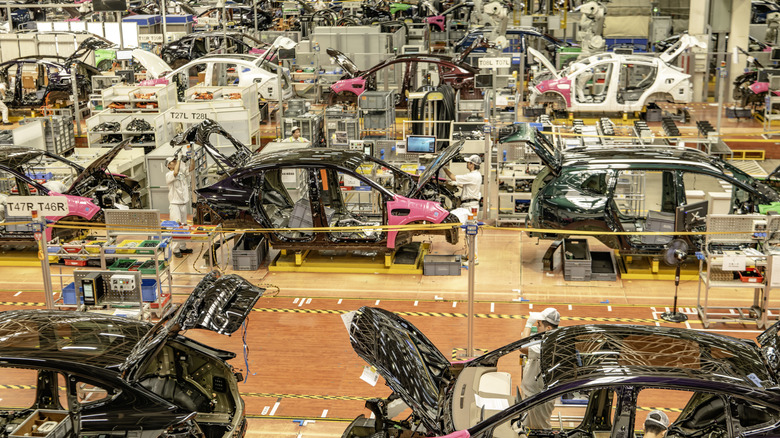
We mentioned earlier that tariffs are a major way to protect a domestic industry from being destroyed by cheap foreign imports. We've seen this happen with cheap Chinese textiles destroying the clothing industries all over the world or with toys, electronics, power tools: you name it! A huge proportion of U.S. manufacturing has been offshored due to low labor costs and less red tape in other countries. The Trump administration's unprecedented application of heavy tariffs across multiple industries has not resulted in "reshoring" so far, as had been the hope.
Whether the motivations behind Chinese EV tariffs are rational or not, these cars pose a real threat to the domestic U.S. car manufacturing industry. Cars are one of the few high-tech products still made in the USA. If cheap Chinese EVs start coming in as a real alternative, people are likely to vote with their wallets rather than out of patriotism.
What's even more worrying is that China might find a backdoor into the U.S. by setting up manufacturing facilities in countries like Mexico, which would offer a way to sell its EVs in the U.S. This works by exploiting current North American trade rules and could be exactly what the tariffs were meant to avoid. The threat is exacerbated by China's history of flooding foreign markets with subsidized, cheap products to undermine its international competitors.
Dependence on Chinese manufacturing
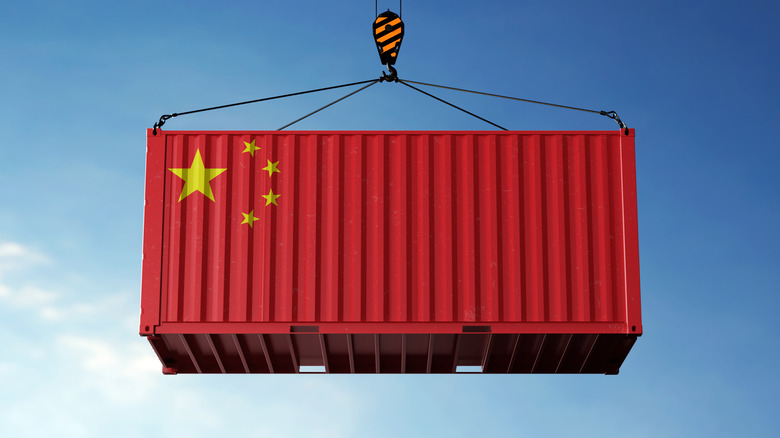
If China actually finds a way to flood the U.S. market with cheap EVs, a long-term consequence, if U.S. EV makers fail to compete, is dependence on China for almost all car manufacturing. This is scary for the same reason the CHIPS Act exists. This government initiative provided $53 billion to incentivize microprocessor makers to establish chip fabrication facilities in the USA. The importance of this comes down to strategic resources. Everything needs microchips these days, and if all your chips come from outside the country, you are at the mercy of forces beyond your control.
Likewise, if U.S. vehicle manufacturing effectively disappears, that removes a major strategic resource. Transport is crucial to any economy, and having your vehicles all come from other countries has obvious issues. This is why Chinese EVs have been called an "existential threat," and the consequences would go deeper than you'd think at first glance.
The U.S. auto industry supports a vast network of interconnected factories, suppliers, dealerships, logistics services, and, of course, millions of jobs. Despite car manufacturing being a highly automated industry, it directly employs over 4.5 million people and millions more indirectly. Historically, the auto industry has also been a major driver of the U.S. economy. America is a car country, and if it's not making its own cars anymore, that's a drastic change to the order of things.
Uncertain long-term support
You've probably seen many online videos showing Chinese EVs experiencing catastrophic battery fires, and this (very reasonably) leads people to be concerned about the quality and after-sales support that Chinese EVs in the U.S. would have. As we mentioned earlier, for any cars to be legally sold in the U.S., they must undergo safety testing to show they are at least as roadworthy as any domestic vehicle, but a car is more than just the actual vehicle sitting in your driveway.
It doesn't matter how good an individual car may be if it has a terrible support network. All vehicles eventually break down or need maintenance, so what about spare parts? Who will service these vehicles? What if Chinese EVs come in and then disappear again? Leaving U.S. customers holding the proverbial bag?
Ironically, for U.S. customers to have any level of trust in these vehicles, companies like BYD, Geely, and SAIC will have to invest in the U.S. itself. They'll need to build service infrastructure, hire U.S. citizens to man dealerships and workshops, and build all the other elements that a healthy car brand operating in the U.S. needs. It's an open question whether the U.S. government would even want this level of establishment, and there are always complicated corporate shell games that can be played. However, we may all find out together as the possibility of Chinese EVs entering the United States looms.